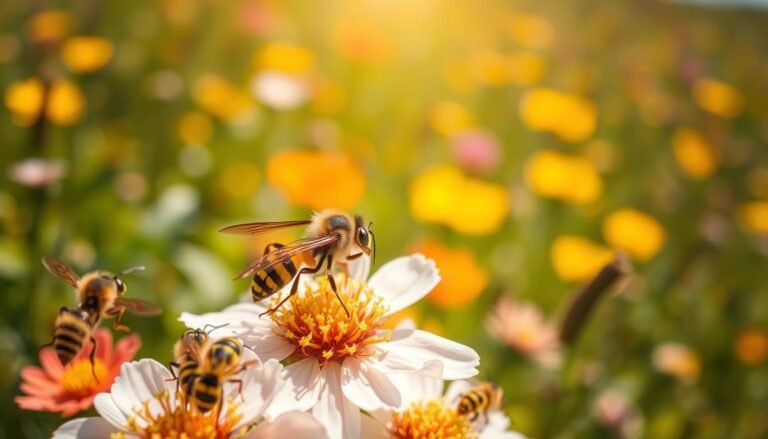
Sit quietly and patiently watch a patch of goldenrod or thistle in late summer, and you’ll eventually notice something most casual observers genuinely never do: not every insect moving among the flowers is there for nectar. Ambush bugs, a specialized group within the larger assassin bug family, spend their entire adult lives lying in wait inside flowers to catch and kill visiting pollinators, honeybees included. This guide covers what assassin bugs and ambush bugs genuinely are, exactly why they’re not bees, wasps, or beetles despite the superficial visual confusion, precisely how their ambush hunting strategy actually works, and what their presence really means for pollinators and gardeners alike.
Table of Contents
- What Assassin Bugs and Ambush Bugs Actually Are
- Identification: Hooked Front Legs and a Widened Abdomen
- The Hunt: Camouflage, Patience, and a Lethal Strike
- A Genuine Predator of Bees and Other Pollinators
- Why They’re a “True Bug,” Not a Beetle or Wasp
- Beyond Ambush Bugs: Assassin Bugs as Garden Pest Control
- How They Compare to Other Insects on This Site
- Common Mistakes
- Sit-and-Wait Predation: A Different Strategy From Most Bee-Product Content on This Site
- Frequently Asked Questions
What Assassin Bugs and Ambush Bugs Actually Are
Assassin bugs belong to the family Reduviidae, a large group of predatory true bugs found worldwide. Ambush bugs, the group most relevant to pollinator watchers, form a specialized subfamily (Phymatinae) within that larger family, with roughly 290 species concentrated mainly in the tropical Americas and parts of Asia. Unlike the bees and wasps covered elsewhere on this site, assassin and ambush bugs aren’t in the order Hymenoptera at all; they’re true bugs, order Hemiptera, a completely different insect lineage that happens to share a superficial resemblance to some of the flower-visiting insects covered throughout this identification cluster.
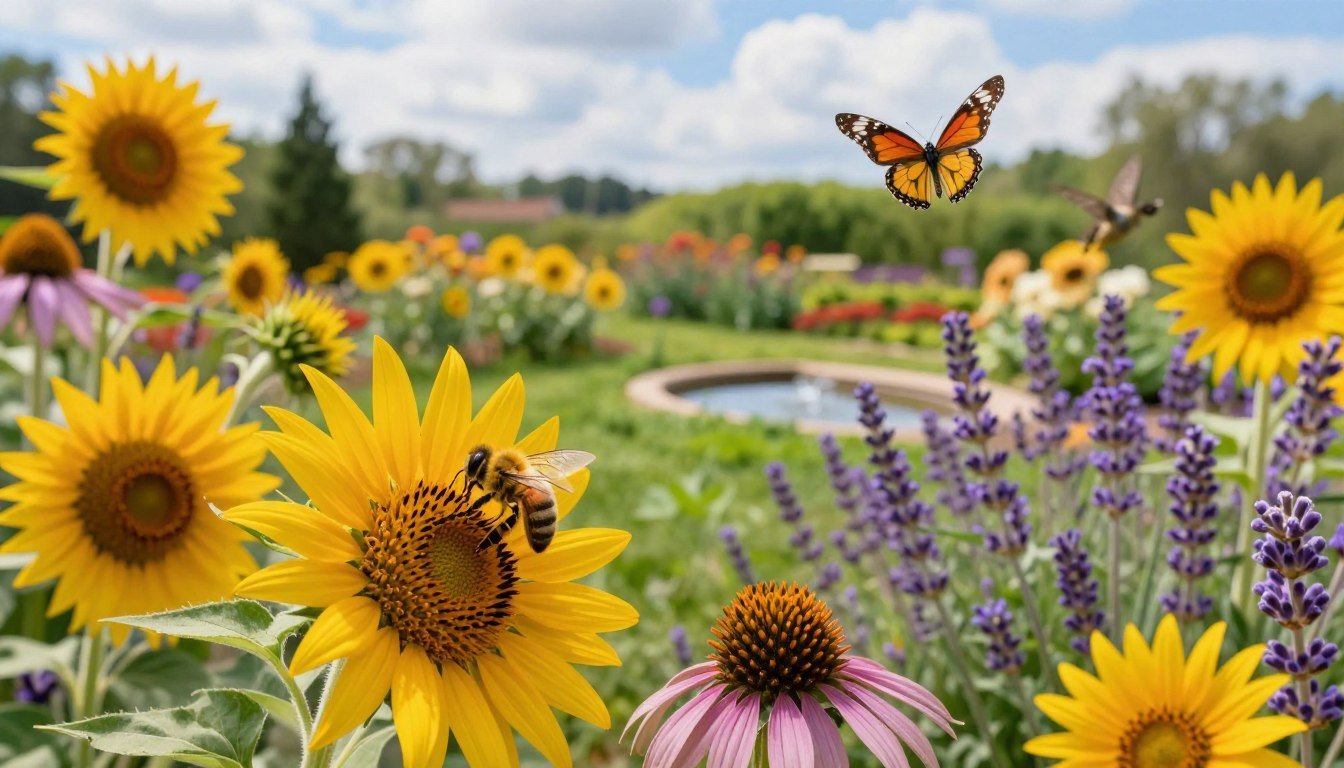
Identification: Hooked Front Legs and a Widened Abdomen
Ambush bugs are genuinely small, rarely exceeding half an inch, with a distinctive body shape that separates them from anything else covered on this site: thick, hooked front legs with a greatly widened femur section built for grabbing prey, clubbed antennae, and a broad, angular abdomen that extends noticeably wider than the folded wings above it. Their mottled yellow, green, or brown coloring provides genuinely effective camouflage against the flowers they hide in, which is precisely why most people never notice them at all despite how commonly they’re actually present on late-summer blooms like goldenrod and thistle.
Can ambush bugs actually change color to match different flowers, or is their coloring fixed?
Individual ambush bugs don’t actively change color the way some camouflaging animals can, but the natural range of coloring across the population, yellows, greens, and mottled browns, gives them enough variation as a group to blend effectively into a range of different flower types they’re commonly found on.
The Hunt: Camouflage, Patience, and a Lethal Strike
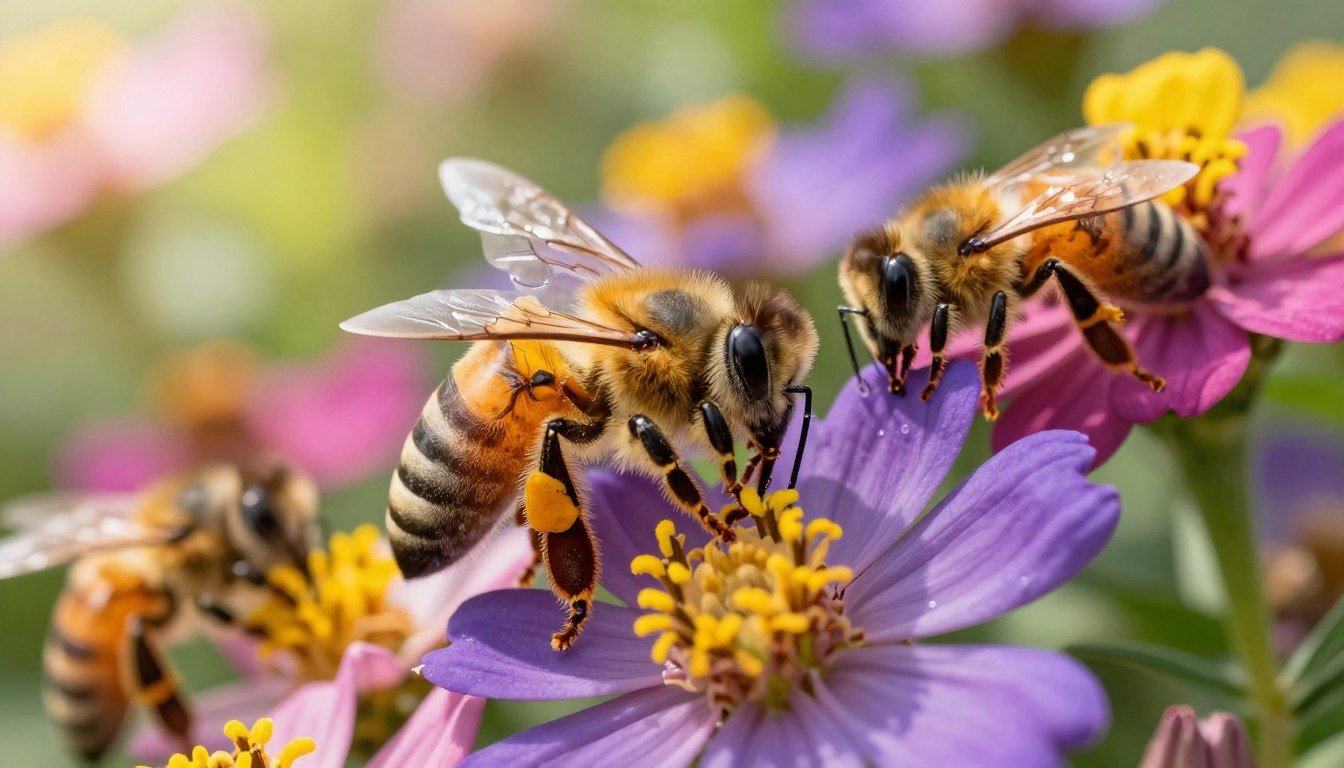
An ambush bug’s hunting strategy is built entirely around stillness and disguise rather than active pursuit. It positions itself inside or beneath a flower and remains motionless, sometimes for hours at a stretch, waiting for a visiting insect to come within striking range while it feeds on nectar or pollen. When prey gets close enough, the ambush bug strikes with its powerful, scissor-like front legs, seizing the victim in an instant, then delivers a lethal bite with its piercing mouthpart, injecting saliva that both immobilizes the prey and begins digesting its internal tissue before the ambush bug feeds. Remarkably, ambush bugs are capable of successfully overpowering prey up to ten times their own body size, a genuinely impressive predatory feat for such a small insect.
Do ambush bugs prefer certain flower types, and does that create an actual foraging risk pattern for bees?
Yes, they show a genuine preference for composite flowers in the daisy and sunflower family, including goldenrod and thistle, which are also popular late-season forage for honeybees and native bees, creating a real overlap where the two groups regularly interact, though this overlap still doesn’t translate into a meaningful population-level threat given how few prey any single ambush bug actually catches.
A Genuine Predator of Bees and Other Pollinators
Unlike most of the insects covered in this site’s identification cluster, which turn out to be harmless or beneficial despite an intimidating reputation, ambush bugs are a genuine, documented predator of pollinators, including honeybees, bumblebees, wasps, butterflies, moths, and flies, all found among their recorded prey. This is genuinely worth stating plainly and honestly, without exaggeration in either direction: individual ambush bugs killing individual bees is a real, naturally occurring part of the food web, not a myth or misidentification. At the same time, ambush bug populations are naturally limited (a single insect can only catch one prey item at a time and needs to digest between hunts) and nowhere near numerous or coordinated enough to represent a meaningful threat to overall pollinator populations or to a managed honeybee colony’s productivity, functioning instead as one ordinary predator among many in a functioning ecosystem.
Do beekeepers need to actively manage or worry about ambush bugs near their hives?
Generally no; ambush bugs hunt from within flowers rather than near hive entrances the way some genuine hive-focused predators covered elsewhere on this site do, and their impact on foraging worker bees is limited enough that no standard beekeeping management practice specifically targets them.
Why They’re a “True Bug,” Not a Beetle or Wasp
The term “true bug” refers specifically to the insect order Hemiptera, characterized by piercing-sucking mouthparts and a distinctive wing structure, entirely separate from beetles (order Coleoptera) or the bees and wasps (order Hymenoptera) covered throughout the rest of this identification cluster. This taxonomic distinction matters practically: an ambush bug’s threat to a person is essentially nonexistent, since its piercing mouthpart is built for subduing small insect prey, not for stinging or biting a human, and reports of ambush bugs biting people defensively when handled are rare and generally described as only mildly uncomfortable rather than genuinely painful or dangerous.
What time of year are ambush bugs most active?
Late summer into fall is peak season across most of their range, coinciding directly with the goldenrod and thistle bloom they favor, with sightings dropping off considerably once those flowers finish blooming and cooler weather sets in.
Beyond Ambush Bugs: Assassin Bugs as Garden Pest Control
It’s worth separating the flower-dwelling ambush bugs from the broader assassin bug family they belong to, since most other assassin bug species don’t specialize in hunting pollinators at all. Many assassin bug species outside the ambush bug subfamily are valued, actively encouraged predators in integrated pest management, hunting caterpillars, aphids, beetles, and other genuine garden pests rather than pollinators specifically. This creates a genuinely nuanced picture worth stating honestly: the ambush bugs most likely to be found on flowers do prey on bees among other insects, while their broader assassin bug relatives found elsewhere in a garden are more often net-beneficial predators of the same pests gardeners are already trying to control.
How They Compare to Other Insects on This Site
Assassin and ambush bugs are a genuinely different case from almost everything else covered in this site’s identification cluster. Unlike the harmless, frequently misidentified bees and wasps discussed in guides like this site’s complete bee vs. wasp identification guide, ambush bugs are an entirely different insect order and a documented, if minor, predator of the very pollinators this site otherwise focuses on protecting and supporting. This makes them one of the few entries in this cluster where the honest answer isn’t “it’s actually harmless,” but rather “it’s a real predator, just not a significant threat at the population level.”
Are ambush bugs considered rare, or genuinely common in most gardens?
They’re genuinely common wherever their preferred late-season composite flowers grow, particularly goldenrod and thistle, though their extremely effective natural camouflage means most gardeners genuinely and significantly underestimate just how frequently they’re actually present compared to how rarely they’re ever actually noticed or correctly identified.
Do male and female ambush bugs look different from each other?
Yes, noticeably; females tend to be considerably larger and more heavily built than males, a size difference reflecting the greater physical investment involved in producing eggs, and it’s typically the larger females that are more frequently spotted actively hunting on flowers, since their size also allows them to tackle somewhat bigger prey than smaller males are able to handle.
Do gardeners intentionally attract or discourage ambush bugs the way they might for other beneficial or pest insects?
Rarely deliberately either way; because their overall ecological impact is modest and mixed (some pollinator predation offset by some general pest predation), most gardening guidance simply treats them as a naturally occurring, low-priority part of a diverse flower garden rather than a species worth actively managing in either direction.
Common Mistakes
The most common mistake is not noticing ambush bugs at all, given how effectively their camouflage blends into typical late-summer flower colors, meaning most gardeners walk past them on a fairly regular basis without ever realizing a genuine predator is actively working the very same flowers their own bees happen to be visiting at that moment. Another mistake is overreacting to finding one, assuming it represents a serious threat requiring removal, when a single ambush bug preys on a comparatively small number of insects over its lifetime and poses no meaningful risk to an overall pollinator population or a managed hive. People also sometimes confuse a spotted ambush bug with a small beetle or a young, wingless wasp based on its compact, angular body shape, when the distinctive hooked front legs are the more reliable identifying feature.
Sit-and-Wait Predation: A Different Strategy From Most Bee-Product Content on This Site
Ambush bugs rely on what entomologists call a “sit-and-wait” or ambush predation strategy, remaining stationary and camouflaged rather than actively searching for prey the way many other predatory insects do. This is a genuinely different approach from the active hunting strategies covered elsewhere in this site’s identification cluster, including the pursuit-and-paralyze technique used by digger wasps and cicada killers, or the direct hawking behavior of predatory hornets described in this site’s coverage of invasive hornet species. An ambush predator’s success depends entirely on effective camouflage and patience rather than speed, strength, or active tracking, a genuinely different evolutionary solution to the same basic challenge of catching moving prey.
Sources
For additional authoritative detail on this topic, see University of Maryland Extension’s guide to social wasps.
Frequently Asked Questions
One last observation worth mentioning: the same camouflage and patience that make ambush bugs an effective predator of pollinators also make them genuinely enjoyable to spot and photograph once someone actually knows what to look for, and late-summer goldenrod patches remain one of the more reliable places to practice finding them in the wild.
Is there any way an ambush bug’s presence could actually help a garden overall?
Indirectly, yes, since it also preys on a range of other flower-visiting insects beyond bees, including some genuine plant pests, so while its predation on individual pollinators is a real cost, it contributes in a small way to the same general balance of predator-and-prey pressure that keeps any healthy garden ecosystem functioning rather than being purely a net negative for the garden as a whole.
Do assassin bugs and ambush bugs bite people?
Rarely, and generally only in self-defense if directly handled; the bite is described as uncomfortable rather than dangerous, though some larger assassin bug species outside the ambush bug subfamily can deliver a more noticeably painful defensive bite.
Should I remove ambush bugs from my garden to protect my bees?
Generally not necessary. Their predation on individual pollinators is a normal part of a functioning ecosystem, and their naturally low numbers and slow hunting pace mean they don’t pose a meaningful threat to overall bee populations or hive productivity.
How can I tell an ambush bug from a small spider hiding in a flower?
Ambush bugs have six legs and clearly segmented antennae, unlike the eight legs and lack of antennae found on flower-hiding crab spiders, which occupy a broadly similar predatory niche but belong to an entirely different animal group.