Last Updated September 16, 2026
The fastest reliable way to tell them apart: bees are fuzzy with round, hairy bodies built for carrying pollen, wasps and hornets have smooth, shiny bodies with almost no hair because they don’t need to carry pollen at all. That single visual cue — fuzzy versus smooth — resolves more mix-ups than color pattern does, since black-and-yellow striping shows up on species in all three groups. From there, nest location, flight pattern, and diet each add more confidence, which matters because what you should actually do next depends heavily on which one you’re looking at.
Key Takeaways
- Fuzzy, hairy body = bee. Smooth, shiny body = wasp or hornet. This one visual cue is more reliable than color, since yellow-and-black striping appears across all three groups.
- Bees fly with their legs tucked in tight against their body; wasps and hornets let their legs dangle visibly during flight.
- Nest location is a strong clue: honey bees nest in enclosed cavities (trees, wall voids) building wax comb, bumblebees favor abandoned ground burrows, yellowjackets commonly nest underground or in wall voids, and paper wasps build open, umbrella-shaped combs under eaves with no outer covering.
- Hornets and yellowjackets can sting repeatedly and are more likely to defend territory aggressively; most bees sting once (and honey bees die afterward) and are generally less defensive away from their nest.
- The bald-faced hornet, despite its name, is actually a yellowjacket relative, not a true hornet — a mix-up even some pest-control sites get wrong.
Table of Contents
- The Fastest Way to Tell Them Apart
- Two Assumptions That Trip People Up
- What Actual Bees Look Like
- What Actual Wasps Look Like
- Hornets: Often Confused, Genuinely Different
- Nest Location Is Often the Fastest Clue
- Why the Difference Actually Matters
- A Few Species Worth Knowing by Name
- When You’re Genuinely Not Sure
- Frequently Asked Questions
The Fastest Way to Tell Them Apart
| Trait | Bees | Wasps | Hornets |
|---|---|---|---|
| Body texture | Fuzzy, hairy | Smooth, shiny | Smooth, shiny |
| Body shape | Stout, rounded | Slender, narrow waist | Longer, slender, larger head |
| In flight | Legs tucked in | Legs dangle visibly | Legs dangle visibly |
| Diet | Pollen and nectar (vegetarian) | Other insects, carrion, sweets (carnivorous) | Other insects, carrion, sweets (carnivorous) |
| Typical nest | Enclosed cavity with wax comb, or ground burrow (bumblebees) | Open umbrella comb under eaves, or ground/wall voids (yellowjackets) | Large enclosed paper nest in trees or eaves |
| Sting | Once, usually (honey bees); can’t reuse stinger | Repeatedly | Repeatedly, more painful |
Two Assumptions That Trip People Up
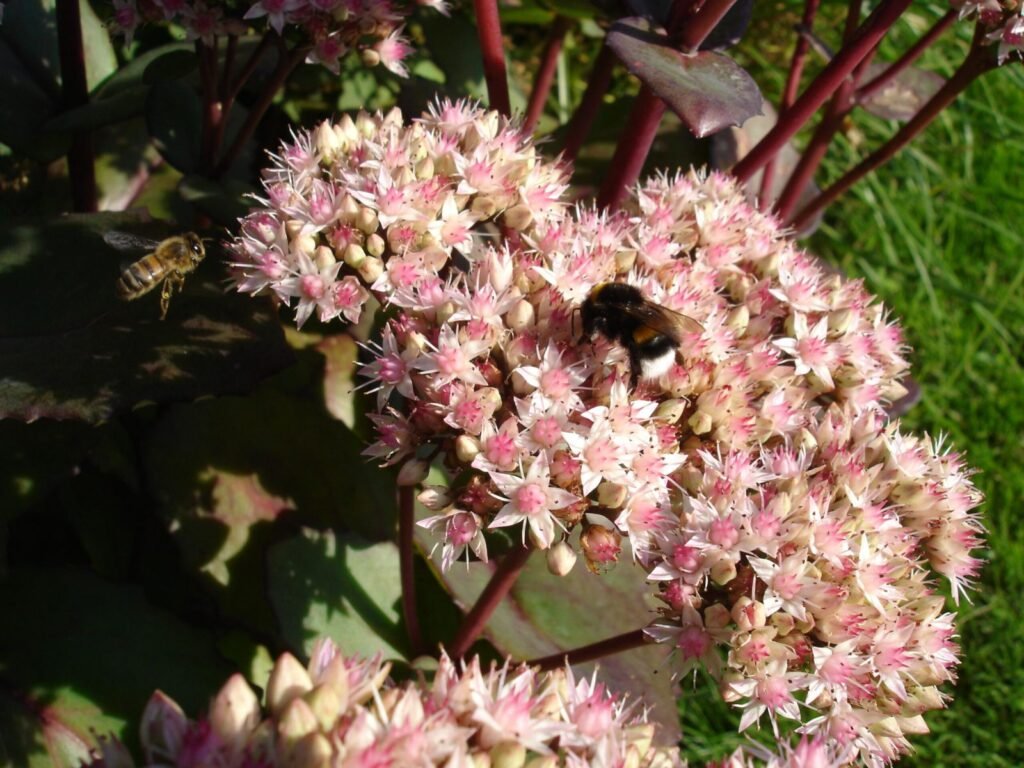
“Bees always have at least a few branched, called plumose, hairs somewhere on their bodies…Wasps don’t have branched hairs.”
— Pollinator Partnership
Two shortcuts people rely on turn out to be less reliable than they seem. The first is color: “black and yellow” gets applied to bees as a default, but plenty of wasps and hornets share that exact palette, and some bees (many native bee species in particular) aren’t yellow-and-black at all. Color alone just isn’t a strong signal without body texture to back it up. The second is size and fear response: people often assume the biggest, loudest-buzzing insect must be the most dangerous, but a hornet’s size doesn’t automatically mean more danger than a smaller, more defensive yellowjacket nest you’ve stumbled too close to — nest proximity and the insect’s current state of agitation matter more than raw size.
What Actual Bees Look Like
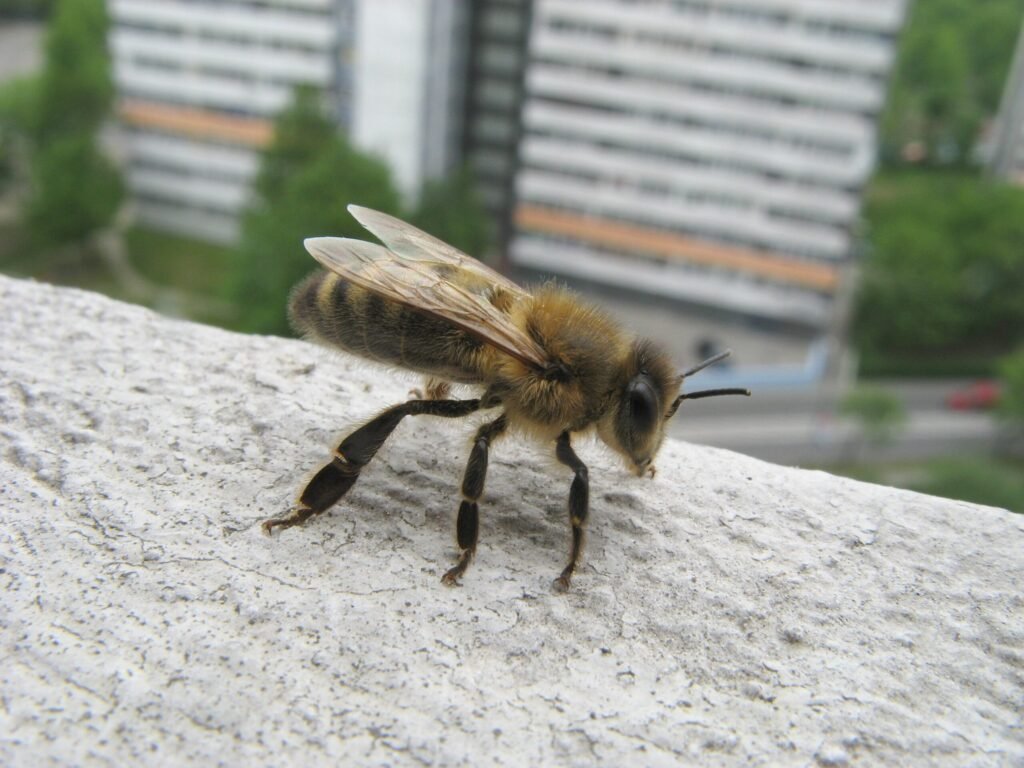
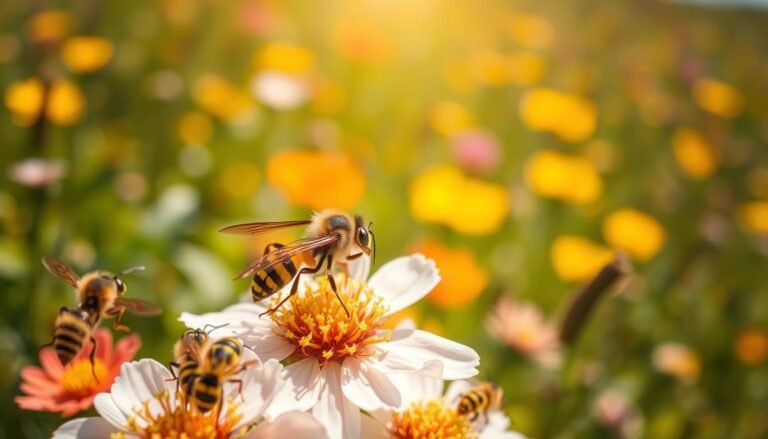
The two bees homeowners encounter most are honey bees and bumblebees, and both share the defining “fuzzy” trait, though for the same underlying reason: that hair is functional, not decorative, since it’s what lets a foraging bee pick up and transport pollen from flower to flower. Honey bees are golden-brown to darker amber with fairly faint, fuzzy striping, roughly the size of a grain of rice, and live in large colonies — tens of thousands of bees — inside enclosed cavities where they build sheets of wax comb. Bumblebees are noticeably larger and rounder, often described as looking almost like flying pom-poms, with bold black-and-yellow (sometimes orange) banding, and they nest in much smaller colonies, often in an abandoned rodent burrow or a similar existing cavity in the ground. Both are generally calm away from the nest and sting only defensively — honey bees in particular lose their stinger in the act and die afterward, which is a real biological cost that makes them reluctant to do it except as a last resort.
What Actual Wasps Look Like
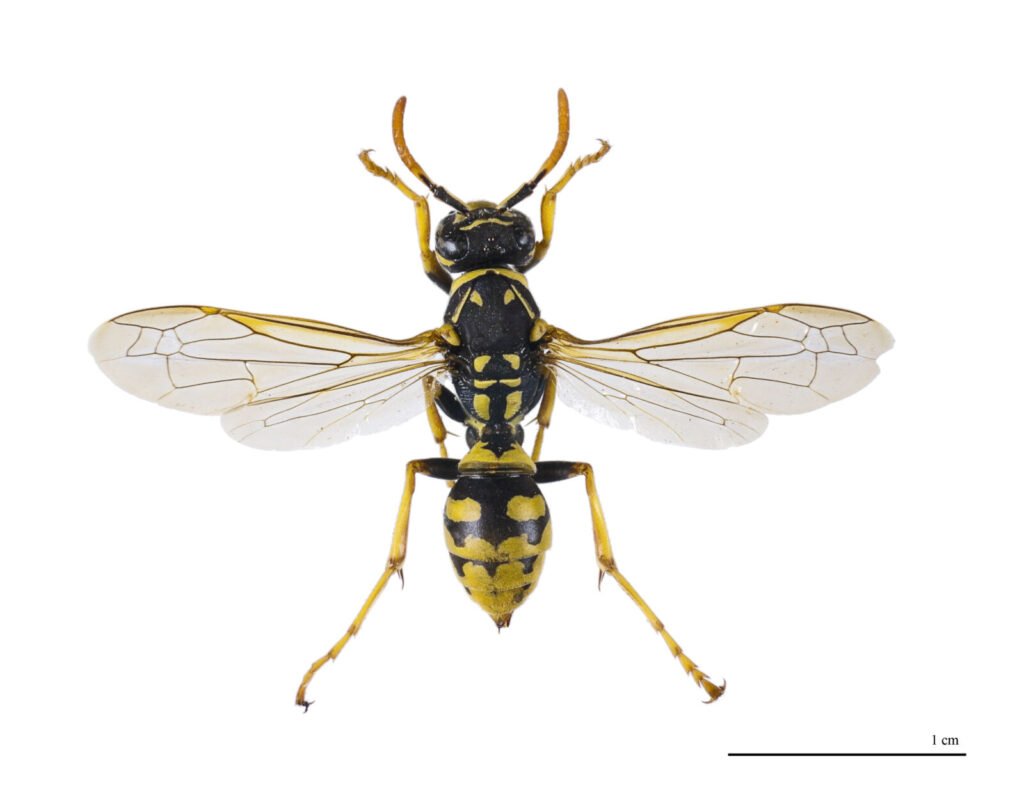
Paper wasps and yellowjackets are the two wasps most likely to turn up around a house, and both have the smooth, narrow-waisted body that separates wasps from bees at a glance. Paper wasps are slender with long legs that dangle noticeably in flight, and they build small, open, umbrella-shaped nests — visible individual hexagonal cells with no outer covering — typically hanging under eaves, deck railings, or porch ceilings. Yellowjackets are smaller, stockier, and more boldly striped, and unlike paper wasps, they usually build enclosed paper nests underground, in wall voids, or in other hidden cavities, which is part of why stepping too close to a below-ground entrance (easy to miss in grass) is a common way people get stung multiple times at once. Both are carnivorous, hunting other insects to feed their young, which is why wasps show up around picnics and trash cans far more than bees do — they’re after protein and sugar, not pollen.
Hornets: Often Confused, Genuinely Different
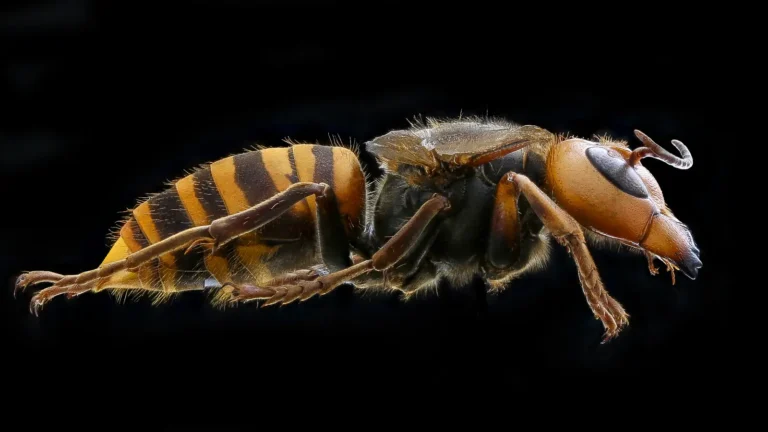
True hornets are essentially large wasps — smooth-bodied, narrow-waisted, and typically the largest of the three groups discussed here, with a noticeably larger head and vertex (the area behind the eyes) than a wasp of similar length. They build large, enclosed, football-shaped paper nests, usually well off the ground in trees or under roof eaves. One genuinely useful correction worth knowing: the “bald-faced hornet,” despite the name almost every pest-control site uses without qualification, isn’t a true hornet at all — it’s actually a close relative of yellowjackets. It’s a small, understandable mix-up, but it matters if you’re trying to look up accurate information about what you’re dealing with, since true hornet species (like the European hornet, established across the eastern U.S.) behave somewhat differently than a bald-faced hornet does.
Nest Location Is Often the Fastest Clue
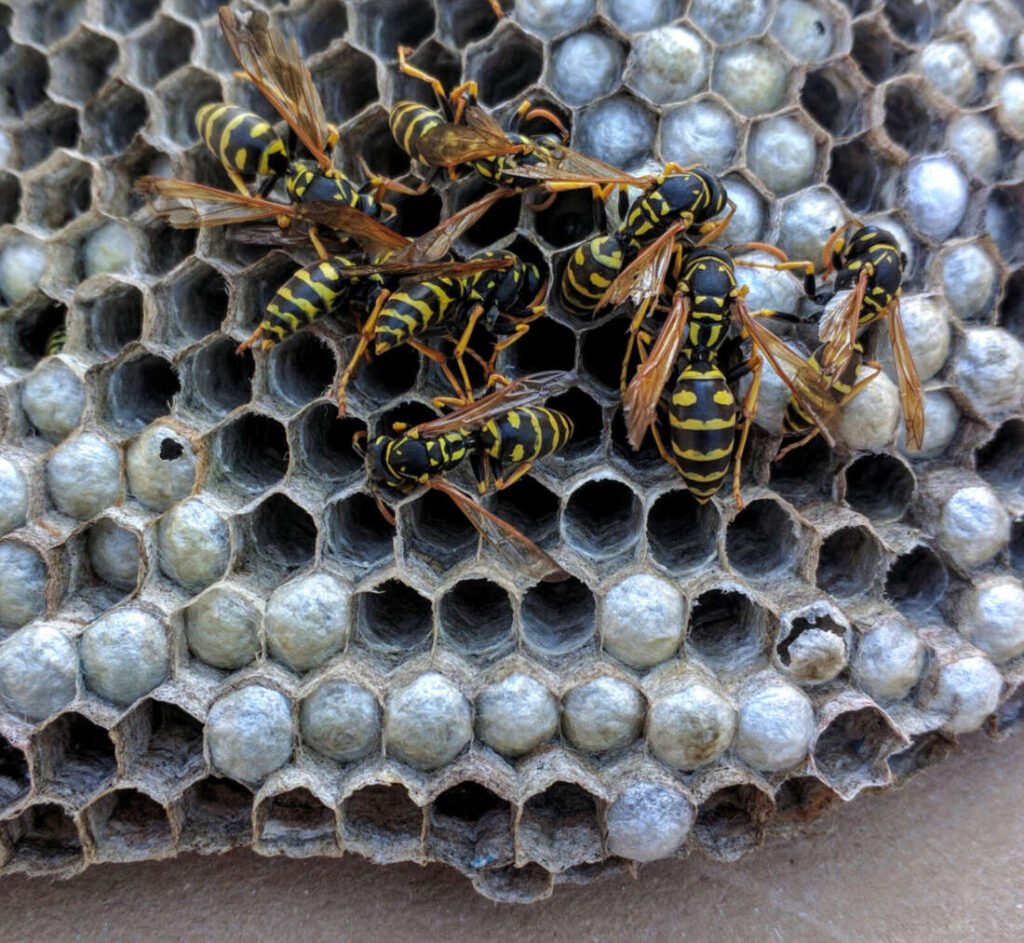
If you can see the nest without getting close enough to be at risk, its shape and location alone often settle the identification faster than looking at individual insects flying past. An enclosed cavity — inside a tree, a wall, a chimney — with bees flying a steady line in and out most likely means honey bees. An open, umbrella-shaped comb with visible hexagonal cells hanging under an eave or railing, no outer shell, is a paper wasp nest. A hole in the ground with steady insect traffic is very likely yellowjackets (bees essentially never nest in open ground, with bumblebees in a hidden burrow being the main partial exception). And a large, enclosed, grey papery ball high in a tree or under roofline is either a true hornet or, again, more often the bald-faced hornet.
Why the Difference Actually Matters
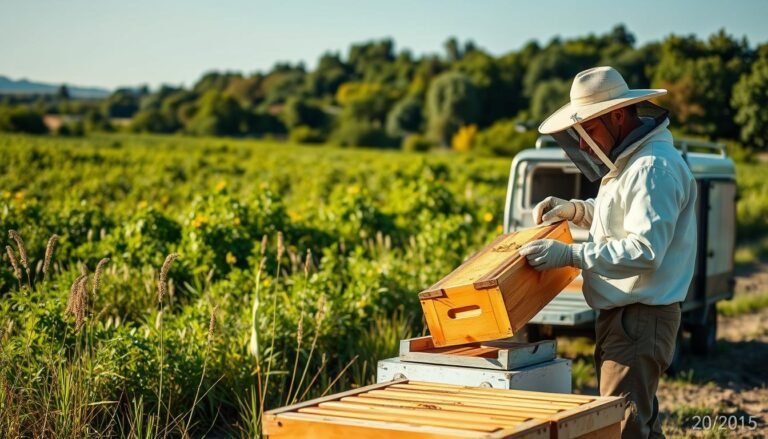
Getting this identification right changes who you should call and how urgently. A honey bee colony in a wall is valuable and worth relocating alive — see our guide on what to do when you find bees in a wall, attic, or yard for the swarm-versus-colony distinction and next steps. A yellowjacket or wasp nest, by contrast, is generally handled as straightforward extermination by a pest control company rather than a live-removal beekeeper, since these insects aren’t in decline the way honey bees are and don’t represent the same conservation consideration. Confusing the two in a request for help can genuinely mean the wrong specialist shows up, or a beekeeper drives out to a call that isn’t actually honey bees at all.
A Few Species Worth Knowing by Name
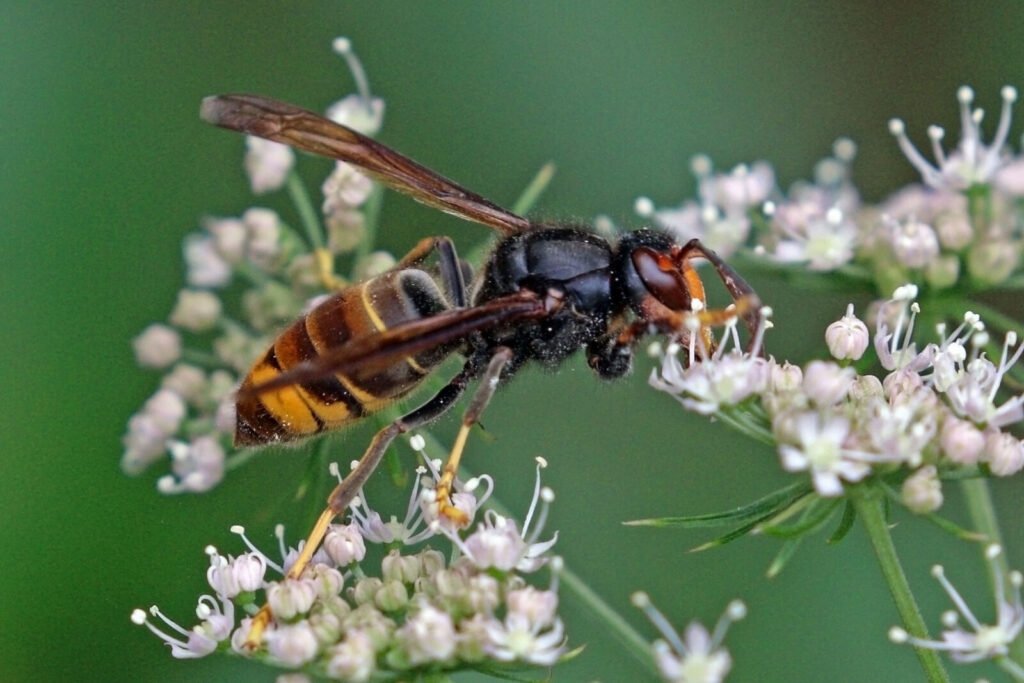
Most “bee versus wasp” questions in the U.S. involve the common species covered above, but a couple of specific ones are worth knowing by name because they’re either newly established or actively expanding their range. The European hornet is the true hornet species actually established across the eastern U.S., predating honey bees at hive entrances at night, which makes it a genuine beekeeping concern beyond just a homeowner nuisance. More recently, the yellow-legged hornet — a species new to the U.S. and considered a serious invasive threat to honey bee colonies — has been actively spreading and is a real reason to report a suspected sighting to your state’s department of agriculture (or directly to USDA APHIS, which tracks confirmed detections and provides state-specific reporting contacts) rather than just handling it yourself, since early detection genuinely matters for containment. If you want to go deeper on any single species mentioned in this guide, our full wasp and stinging-insect comparison chart links out to a dedicated identification page for each one.
When You’re Genuinely Not Sure
If a photo from a safe distance still leaves you uncertain, you have a real, free option most homeowners don’t know about: Texas A&M’s Department of Entomology, through the Texas Apiary Inspection Service, accepts photo submissions through their online insect identification form for exactly this kind of question, and university extension entomology departments in most other states offer something similar. This beats guessing from a generic online photo comparison, since an actual entomologist looking at your specific photo accounts for regional species variation that a general article can’t.
For how their stings differ, see bee sting vs wasp sting.
To report a sighting, see reporting a yellow-legged hornet in the UK.
To tell them apart, see ground-nesting yellowjackets vs bumble bees.
Found a nest? See how to deal with a wasp or hornet nest safely.
See how to identify an Asian giant hornet and its look-alikes.
Frequently Asked Questions
What’s the single easiest way to tell a bee from a wasp?
Body texture. Bees are fuzzy and hairy because they carry pollen; wasps and hornets are smooth and shiny because they don’t.
Is a hornet just a big wasp?
Essentially, yes — true hornets are a specific group within the wasp family, generally larger with a bigger head. The commonly seen “bald-faced hornet” is actually a yellowjacket relative, not a true hornet.
Do all bees die after they sting?
Only honey bees, and only when stinging a mammal with elastic skin that traps the barbed stinger. Bumblebees, wasps, and hornets can all sting repeatedly without dying.
How can I tell what kind of nest I’m looking at without getting close?
Shape and location are strong clues from a safe distance: an open umbrella-shaped comb under an eave is a paper wasp nest, a hole in the ground with steady traffic is likely yellowjackets, and a large enclosed papery ball is a hornet or bald-faced hornet nest.
Are wasps and hornets actually more dangerous than bees?
They tend to be more defensive of their nest and territory, and both can sting repeatedly, which adds real risk in a nest encounter. Away from the nest, most stinging insects in all three groups are far less likely to sting unprovoked.
More detail on this is available from Michigan State University Extension.
Related Reading
Image credits: Photo: "Paper Wasp Nest Texas" by Sarah Gaunt (Holyphoton), licensed CC BY-SA 4.0, via Wikimedia Commons.