Yes, but mostly under specific conditions — high hive density, scarce local forage, or placement near sensitive wild-bee habitat — not simply because someone keeps a hive or two in an ordinary backyard. This is a genuinely researched, sometimes uncomfortable question for a beekeeping-focused site to cover honestly, so this article works directly from the actual peer-reviewed literature rather than either dismissing the concern or overstating it. The honest picture is more nuanced than either “honeybees are harmless” or “honeybees are wiping out wild bees,” and the difference matters for anyone deciding whether, or how, to keep bees responsibly.
Key Takeaways
- A 2017 systematic review of 146 studies found managed honeybees had a negative effect on wild bees in 53% of competition studies and 70% of pathogen-transmission studies — but the same review notes most of those studies measured the potential for impact, not confirmed harm to wild bee populations.
- The often-cited “40 hives = the pollen of 4 million solitary bees” statistic comes from a commercial-scale apiary placed on wildland for three months, not a backyard setup — a single strong colony’s seasonal pollen use is closer to 100,000 solitary-bee equivalents.
- A 2023 Oregon State University Extension review concluded that claims backyard beekeeping causes local native bee extinctions “are not well supported by the evidence,” particularly in urban areas where rare native species typically don’t live.
- Disease spillover — honeybees can pass viruses like deformed wing virus to bumblebees through shared flowers — is a documented risk that’s separate from, and less dependent on hive count than, resource competition.
- The conservation organization Buglife recommends roughly 5 acres (2 hectares) of quality forage habitat per hive; parts of London have been found to have up to four times more hives than local gardens and parks can support.
Table of Contents
- The Short Answer: It Depends on Density, Location, and Resources
- What a Major Review of 146 Studies Actually Found
- What the Newest 2025-2026 Research Adds
- The Competition Question: How Much Forage Does a Hive Really Take?
- Disease Spillover: A Separate Risk From Competition
- What Urban and Backyard-Specific Research Says
- How Much Space Does a Hive Actually Need?
- When the Risk Is Smallest — and When It Isn’t
- What a Responsible Backyard Beekeeper Can Actually Do
- The Bigger Picture: Habitat Loss Is the Larger Driver
- Frequently Asked Questions
The Short Answer: It Depends on Density, Location, and Resources
The research doesn’t support a single yes-or-no answer, and any source that gives one flatly is oversimplifying. What the evidence does support is that impact scales with three factors: how many hives are concentrated in one area relative to available forage, how scarce floral resources already are locally, and whether hives sit near habitat that supports rare or specialist wild bee species. A single well-managed hive in a resource-rich suburban yard with a long, diverse bloom season is a very different scenario from dozens of commercial hives trucked onto a wildland reserve with limited native flora — and most of the research finding serious harm comes from something closer to the second scenario, not the first.
What a Major Review of 146 Studies Actually Found
The most comprehensive answer available comes from a 2017 systematic review by Rachel Mallinger, Hannah Gaines-Day, and Claudio Gratton at the University of Wisconsin-Madison, published in PLOS One, which pulled together 146 peer-reviewed studies spanning more than a century of research (1900–2016) on managed bees and their effects on wild bees. Breaking results down by mechanism:
- Resource competition (72 studies): 53% found a negative effect on wild bees, 28% found no effect, and 19% found mixed results.
- Plant community changes (41 studies): results split evenly, with 36% positive, 36% negative, and the remainder no effect or mixed.
- Pathogen transmission (27 studies): 70% found a negative effect, the strongest and most consistent signal of the three mechanisms.
The review is also honest about its own limits, noting that most studies across all three areas documented the potential for impact — altered foraging behavior, reduced visitation to certain flowers — without actually measuring a confirmed drop in wild bee fitness, abundance, or population-level diversity. It also doesn’t separate backyard-scale beekeeping from commercial or high-density operations, treating “managed bees” as one category rather than breaking out the effect of one hobbyist hive specifically. That’s an important caveat: the review is genuine evidence that the concern is real and worth taking seriously, not proof that any given backyard hive is causing measurable harm.
What the Newest 2025-2026 Research Adds
Two more recent studies genuinely sharpen this picture, and they don’t fully agree with each other — which is itself worth being upfront about rather than picking whichever one supports a preferred conclusion.
The strongest causal evidence yet comes from a 2025 Current Biology study by researchers at the University of Florence and University of Pisa, working on the small, protected Italian island of Giannutri (2.6 km²). With rare access to the island’s entire 18-hive apiary, the team ran a genuine controlled experiment: temporarily closing hive entrances for 11 hours a day during the peak wild-bee foraging season, then measuring what changed. The results were striking — nectar volume rose 60% and pollen availability rose 30% in the plants most visited by pollinators during those honeybee-exclusion windows, and the two wild bee species studied (the solitary bee Anthophora dispar and the bumblebee Bombus terrestris) showed a roughly 80% population decline attributable to honeybee competition over the study period. Because this was a real exclusion experiment rather than an observational correlation, it’s considered stronger causal evidence than most of what came before it. The full study is published in Current Biology.
Set against that, a 2026 systematic review in the Journal of Apicultural Research by Gratzer, Becker, and Brodschneider took a broader, more cautious look across 83 existing field studies (30 from regions where honeybees are native, 53 from regions where they’ve been introduced). Its headline finding: floral resource overlap between honeybees and wild bees is genuinely widespread, but direct evidence of harm to wild bee fitness is much rarer and more context-dependent than the overlap alone would suggest — only 4.8-12.0% of the 83 studies actually measured direct fitness outcomes like survival or reproduction, and negative effects showed up in just 12.5-30.0% of that smaller subset. Most of the broader literature, in other words, still relies on indirect indicators (like reduced flower visitation) rather than proof of an actual population-level impact. A summary of the review is available via COLOSS, the international honeybee research association.
Both findings can be true at once without contradicting each other: honeybee competition can be a real, sometimes severe, locally decisive pressure — exactly what the Giannutri exclusion experiment demonstrated under specific island conditions with a dense apiary and limited forage — while also being an effect that most of the wider published literature hasn’t rigorously measured or confirmed at the population level. The honest updated takeaway is that competition is more strongly proven as a real mechanism than it was a few years ago, but the newer systematic review is a useful check against assuming that mechanism plays out with equal severity everywhere.
The Competition Question: How Much Forage Does a Hive Really Take?
The most concrete numbers on resource competition come from Jim Cane and Vincent Tepedino’s 2017 analysis in Conservation Letters, which calculated that a strong honeybee colony foraging from June through August collects roughly as much pollen as would be needed to raise 100,000 progeny of an average solitary bee. Scaled up, a 40-hive commercial apiary placed on wildland for that same three-month window collects a pollen volume equivalent to what roughly 4 million solitary wild bees would need.
That 4-million-bee figure gets cited often, but it describes a 40-hive commercial operation on wildland — not a hobbyist’s one or two backyard hives. Applying the same math to a single hive gives a per-colony figure closer to 100,000 solitary-bee pollen-equivalents over a full season, which is a genuinely useful number for scale, but it’s still not nothing: it means even a single hive is a real forager in the local pollen economy, particularly where floral resources are already limited. The honest takeaway is that competition is a real, measurable mechanism, and it scales roughly linearly with hive count — which is exactly why density, not the mere presence of beekeeping, is the actual variable that matters.
Disease Spillover: A Separate Risk From Competition
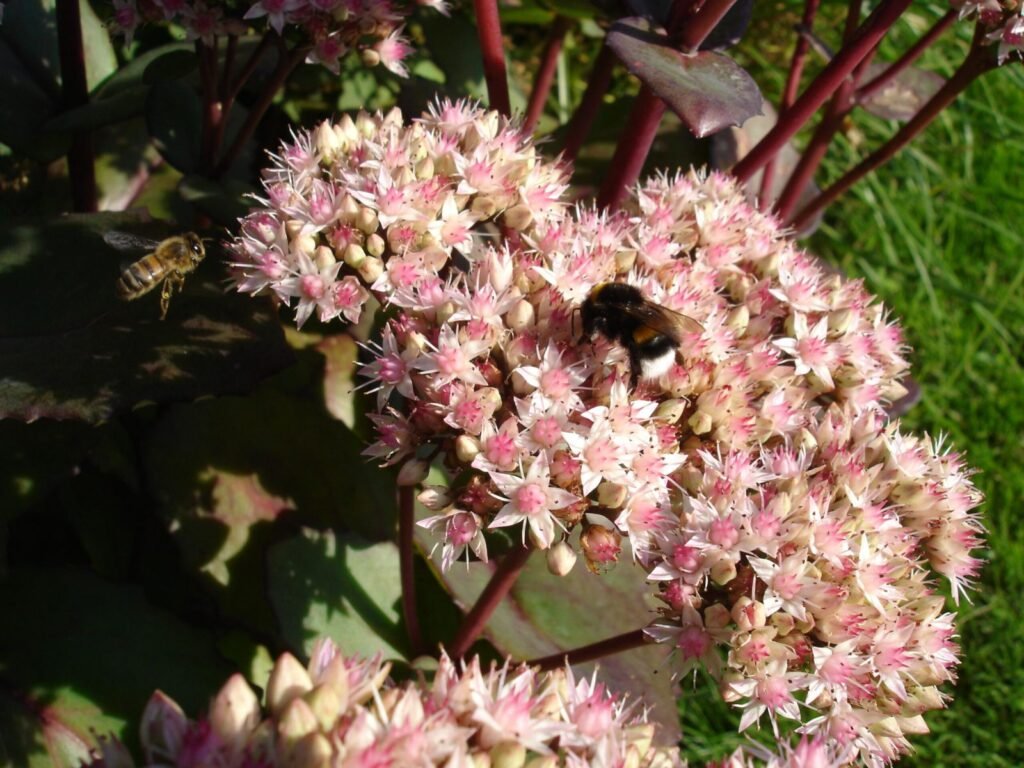
Resource competition isn’t the only mechanism, and it’s not necessarily the most consistent one — the same 146-study review found pathogen transmission had the strongest, most consistent negative signal of the three categories it examined (70% of studies). Deformed wing virus, a well-documented honeybee pathogen, has been shown to pass from honeybees to bumblebees through shared use of the same flowers — a pattern examined in more detail in this site’s guide to viral spillover between wild and managed bees — and managed honeybee colonies can act as reservoirs that amplify and spread pathogens more broadly through a local bee community than either species would on its own. This risk is meaningfully reduced by basic responsible beekeeping — regular mite and disease monitoring, not moving equipment between apiaries without cleaning it, and not keeping visibly diseased colonies going — but it’s a genuinely separate concern from forage competition, and one every beekeeper has some direct control over regardless of hive count.
What Urban and Backyard-Specific Research Says
Because so much of the foundational research comes from commercial or wildland contexts, it’s worth looking specifically at what’s been studied about urban and backyard-scale beekeeping. A 2023 review from Oregon State University Extension looked directly at this question and reached a notably measured conclusion: claims that backyard beekeeping will cause local native bee extinctions “are not well supported by the evidence,” particularly in cities and suburbs, where many of a region’s rarer or more specialized native bee species typically don’t live in the first place (they tend to need undisturbed soil, specific host plants, or intact wildland habitat that urban lots rarely provide). Separately, a density study in Montreal — cited by the Xerces Society in its own coverage of this question — found that wild bee species richness tended to decline as honeybee abundance increased in the same urban area, a finding that lines up with the systematic review’s competition data rather than contradicting it.
How Much Space Does a Hive Actually Need?
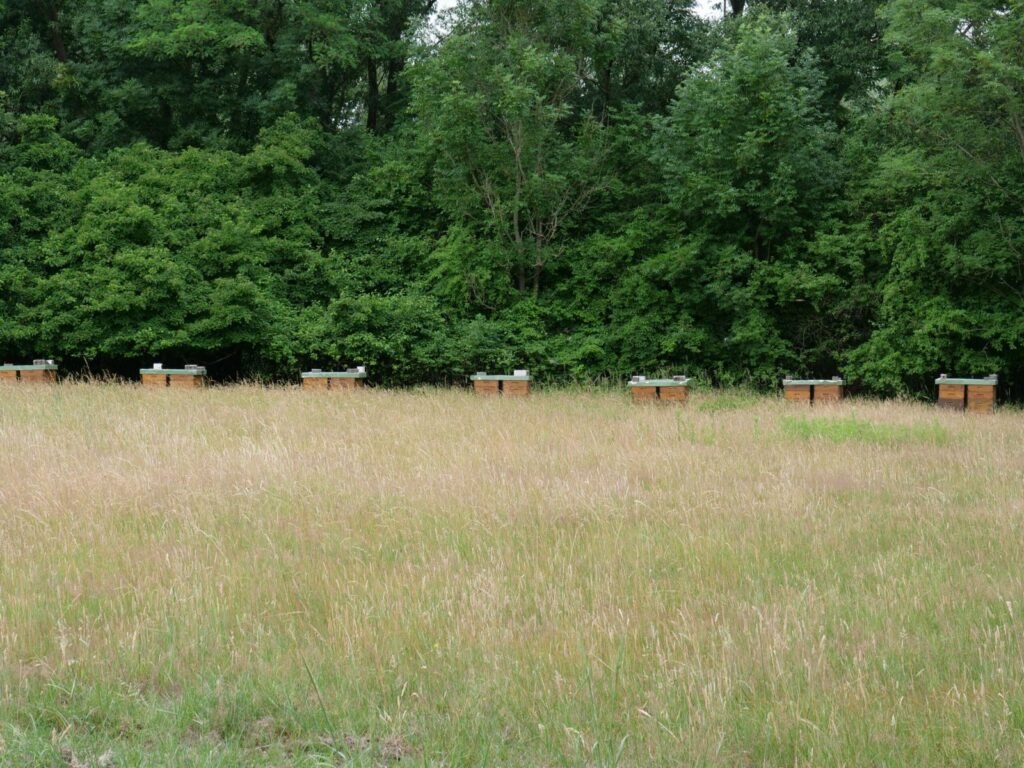
If density is the real variable, it helps to have an actual number to compare against. The conservation organization Buglife recommends roughly 5 acres (2 hectares) of quality flowering habitat per hive to keep forage genuinely adequate — several times the size of a typical U.S. residential lot, which puts a single backyard hive’s real forage footprint well beyond most yards alone (this is exactly why nearby gardens, parks, and neighboring yards matter as much as a beekeeper’s own property). The risk of local oversaturation is real in practice, not just theoretical: the London Beekeeping Association has documented parts of that city with roughly four times as many hives as the area’s gardens and parks can realistically support, a pattern driven by beekeeping’s popularity growing faster than urban forage has. There’s no single official cap on backyard hive count in most U.S. jurisdictions, but the Buglife figure is a genuinely useful mental benchmark for judging whether a given neighborhood is approaching saturation.
When the Risk Is Smallest — and When It Isn’t
Putting the research together, a consistent pattern emerges across sources: the risk to wild bees is smallest when floral resources are plentiful and diverse, hive density stays low relative to available forage, and hives are kept well away from habitat supporting rare or specialist native bee species — and it’s largest in the opposite conditions: scarce or monoculture forage, high hive density relative to habitat, and proximity to sensitive wildland or protected areas where rare species have nowhere else to go. A backyard beekeeper in a flower-rich suburb with one or two well-managed hives sits close to the lower-risk end of that spectrum; a commercial operator trucking dozens of hives onto a nature reserve for pollination contracts sits close to the higher-risk end. Treating those as the same question, or expecting a single universal answer to cover both, is where a lot of both overly reassuring and overly alarming takes on this topic go wrong.
What a Responsible Backyard Beekeeper Can Actually Do
- Keep hive count proportional to your area’s actual forage, not just your own property — check whether your neighborhood already has many hives before adding more, especially in dense urban settings.
- Plant more forage than your bees alone will use — a genuinely diverse, season-long planting plan (see this site’s guide to native plants for pollinators) helps offset a hive’s forage footprint rather than just adding to demand on existing flowers, and native plants specifically tend to support wild bee species that honeybees can’t substitute for.
- Avoid siting hives near sensitive wildland, restored prairie, or known rare-species habitat, where competition risk is highest and wild bee populations have the least ability to simply forage elsewhere.
- Practice real disease management — regular mite monitoring, not reusing unclean equipment across colonies, and retiring rather than propping up chronically diseased hives — since pathogen spillover showed the strongest research signal of any mechanism.
- Support wild bee habitat directly, not just honeybee-focused efforts — leaving some bare, undisturbed ground for ground-nesting solitary bees and reducing pesticide use (see this site’s guide to pesticide-free lawn care for bees) benefits wild bee species in ways that keeping honeybees alone doesn’t.
The Bigger Picture: Habitat Loss Is the Larger Driver
None of this research suggests honeybee competition is the primary cause of wild bee decline — the scientific consensus, including from organizations like the Xerces Society that study this question closely, still points to habitat loss, pesticide exposure, and climate change as the larger, better-established drivers of wild bee population trends. Honeybee competition is better understood as a real, context-dependent, additional pressure — one worth managing responsibly, especially in already-stressed or resource-poor environments — rather than the central threat to wild bees. A backyard beekeeper who also plants forage, avoids oversaturating their neighborhood, and manages disease well is very likely doing net-positive work for pollinators overall, even accounting for the real, if usually modest, competitive footprint of their own hives.
For the bigger picture beyond wild bees, see whether beekeeping is sustainable overall.
Frequently Asked Questions
Does keeping a backyard beehive hurt wild bees?
It depends mainly on hive density, local forage availability, and proximity to sensitive habitat — a single well-managed hive in a flower-rich yard carries much lower risk than dozens of hives concentrated on forage-poor land, according to the research this article reviews.
How much pollen does a single beehive actually use?
A strong honeybee colony foraging through a full season collects roughly as much pollen as about 100,000 solitary bees would need — a real amount, but far below the widely cited “4 million solitary bees” figure, which actually describes a 40-hive commercial apiary, not a backyard hive.
Can honeybees spread disease to wild bees?
Yes. Deformed wing virus, a well-documented honeybee pathogen, has been shown to pass to bumblebees through shared flowers, and the same 146-study systematic review found pathogen transmission had the strongest, most consistent negative signal of any mechanism studied.
How much forage does one beehive need?
The conservation organization Buglife recommends roughly 5 acres (2 hectares) of quality flowering habitat per hive — several times larger than a typical residential lot, which is why neighboring gardens and parks matter as much as a beekeeper’s own yard.
What is the biggest threat to wild bees, if it is not honeybees?
Habitat loss, pesticide exposure, and climate change remain the larger, better-established drivers of wild bee decline, according to organizations like the Xerces Society — honeybee competition is a real but secondary, context-dependent pressure.
Last updated: September 13, 2026 — added newer 2025-2026 research (Giannutri Island exclusion study and a 2026 systematic review).
Sources
- Mallinger, R.E., Gaines-Day, H.R., Gratton, C., “Do managed bees have negative effects on wild bees? A systematic review of the literature,” PLOS One (2017), via journals.plos.org
- Cane, J.H. and Tepedino, V.J., “Gauging the Effect of Honey Bee Pollen Collection on Native Bee Communities,” Conservation Letters (2017)
- Oregon State University Extension Service, The Impact of Beekeeping on Native Bees in Urban Settings (2023)
- Xerces Society, Want to Save the Bees? Focus on Habitat, Not Honey Bees
- University of Florence / University of Pisa, “Island-wide removal of honeybees reveals exploitative trophic competition with strongly declining wild bee populations,” Current Biology (2025), via cell.com
- Gratzer, K., Becker, D., Brodschneider, R., “Systematic review finds resource overlap but few direct effects of honey bees on wild bees,” Journal of Apicultural Research (2026), summarized via COLOSS
Related Reading
Image credits: Photo: Mnemo, CC BY-SA 3.0, via Wikimedia Commons; Photo: Leonhard Lenz, CC BY-SA 4.0, via Wikimedia Commons; Photo: Martin Olsson (Mnemo), via Wikimedia Commons, CC BY-SA 3.0.