Last Updated September 14, 2026
Most store-bought bumblebee nest boxes sit empty: published occupancy studies on the wooden or plastic surface-mounted boxes typically sold for gardens have found occupancy rates as low as 0–1.5%, far below the marketing on the packaging. That doesn’t mean nothing works — some designs and installation methods do meaningfully better — but a bumblebee house is a much weaker bet for actually hosting a colony than a solitary-bee house is for mason or leafcutter bees, and gardeners buying one for that reason alone are usually better served putting the effort into habitat instead.
Key Takeaways
- Older North American studies from before 1978 found 10–40% occupancy in artificial bumblebee domiciles, but more recent UK research (post-1989) has repeatedly found occupancy rates of only 0–1.5% for typical garden nest boxes.
- A 2025 study on a redesigned artificial nestbox called BeeBox reported roughly 17% occupancy, and other researchers using improved placement methods have achieved meaningfully higher rates than the low end — design and installation genuinely matter.
- Underground or partially buried designs generally underperform above-ground designs in recent occupancy studies, though neither design consistently performs well without careful placement.
- Queen bumblebees searching for a nest site rely on scent cues from old rodent burrows far more than on box shape or material, which is part of why so many artificial boxes go unused even when placed in reasonable-looking habitat.
- For gardeners whose real goal is supporting bumblebees rather than specifically hosting a nest, planting a season-long sequence of flowering forage reliably does more good than an unused box, since foraging habitat benefits every bumblebee passing through, not just a queen who happens to find the box.
Table of Contents
- What the Research Actually Shows
- Why So Many Boxes Sit Empty
- Which Designs and Placements Do Better
- A Better Use of the Same Effort
- Occupancy Rates Across Studies, Side by Side
- Frequently Asked Questions
What the Research Actually Shows
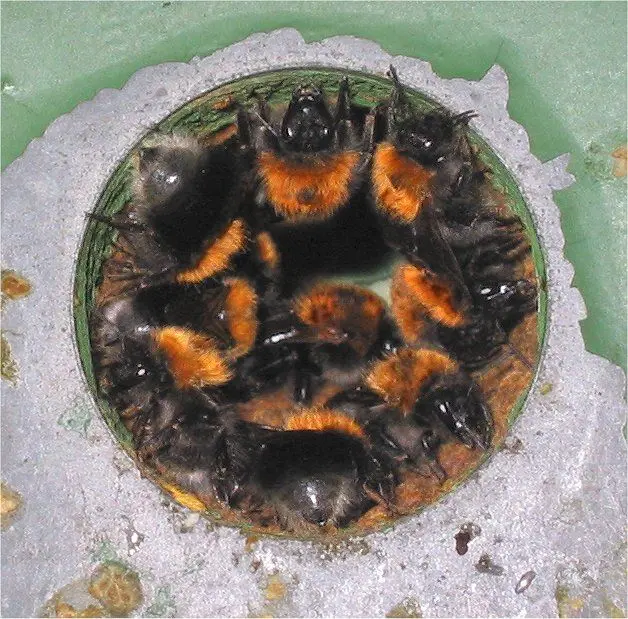
Bumblebee nest boxes have been tested formally since at least the 1970s, and the picture that’s emerged is inconsistent enough that it’s fair to call the marketing on most retail bumblebee houses overstated. Older studies conducted in the USA and Canada before 1978 reported relatively encouraging occupancy — somewhere between 10% and 40% of boxes used in a season. But more recent, more rigorously controlled UK research conducted after 1989 has found dramatically lower success: occupancy rates as low as 0% to 1.5% for the kind of wooden or plastic surface-mounted boxes currently sold in garden centers and online for exactly this purpose. One recent survey of artificial domiciles in Ontario, Canada found only 13.3% of above-ground domiciles and just 4.1% of underground domiciles were ever occupied by a colony. Newer designs are showing some improvement — a 2025 study of a purpose-built research nestbox called BeeBox reported around 17% occupancy — but even that improved figure means roughly five out of six boxes still go unused in a season.
“The difference could be because there were more bees around when those studies were done. There might have been up to ten times as many bees 30 years ago.”
— Professor Dave Goulson, bumblebee researcher, quoted in Phys.org, on why older North American nest box studies found much higher occupancy than recent UK research
That explanation matters for how to read the numbers: the gap between the encouraging pre-1978 figures and today’s much lower ones may not be purely about box design at all — it likely also reflects a genuinely smaller pool of queens searching for nest sites each spring than there was a generation ago, which is itself a reason to invest in pollinator habitat broadly rather than treating a nest box as the whole solution.
Why So Many Boxes Sit Empty
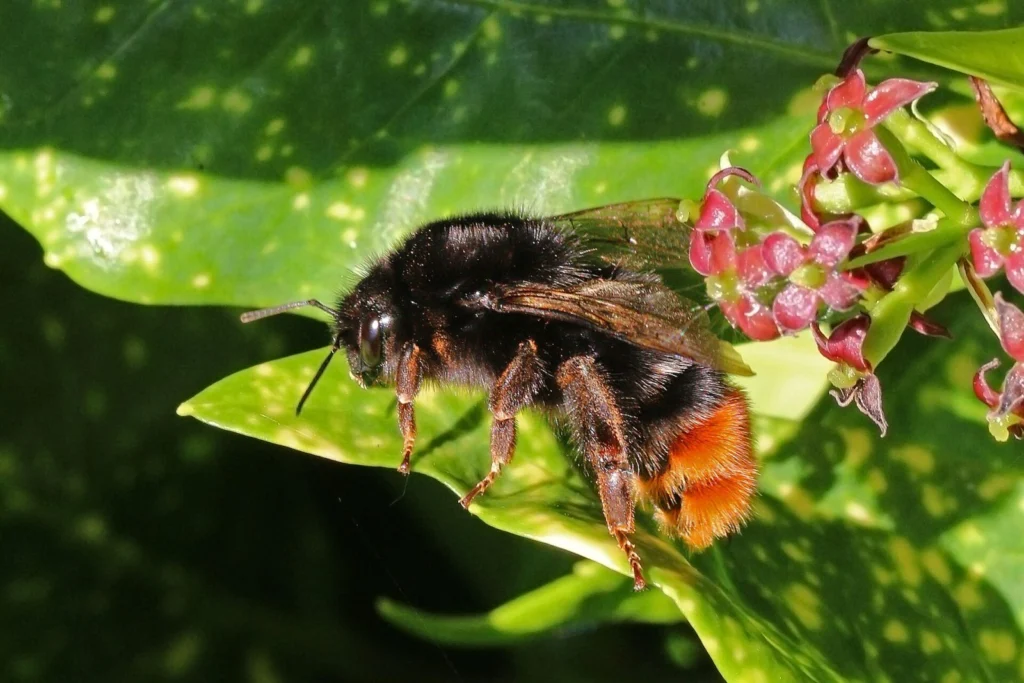
The mismatch comes down to how a queen bumblebee actually searches for a nest site each spring. After emerging from hibernation, a queen investigates cavities using scent — she’s specifically drawn to sites that smell like an old rodent burrow, since abandoned mouse or vole nests provide the insulating dry grass and the confined, defensible space bumblebee colonies need. A clean wooden box, however well-built, simply doesn’t carry those cues, and a queen exploring an artificial box that smells like nothing in particular (or like fresh-cut wood) is often unimpressed and moves on within minutes. Box placement compounds the problem: garden centers commonly recommend a decorative spot near a patio or flower bed, but queens are searching hedge bottoms, compost heap edges, tussocky grass, and other rough, sheltered ground-level cover that most tidy gardens simply don’t have much of.
Which Designs and Placements Do Better
The research does point to some concrete improvements over the basic decorative box. Studies compiled by the Conservation Evidence project at the University of Cambridge — an ongoing synthesis of what conservation interventions are actually supported by evidence — note that success depends heavily on box design, correct placement, and which bumblebee species are locally present, and that some researchers using rodent-scent bait or more deliberate placement in genuinely rough, sheltered ground cover have achieved meaningfully higher occupancy than the low end of the range. Some more recent research has specifically tested adding rodent odor bait to boxes as a way of replicating the scent cues a queen is already searching for, with encouraging early results, though it isn’t yet standard practice in commercial boxes. The practical takeaway is that a box tucked into an undisturbed, insulated, ground-level spot — ideally near existing rough vegetation, away from human foot traffic and direct summer sun — has a real, if still modest, chance of success, while a decorative box mounted on a patio wall largely does not.
A Better Use of the Same Effort
For most gardeners, the actual goal behind buying a bumblebee house is supporting bumblebees generally, not specifically hosting a colony in that exact box — and on that measure, habitat almost always outperforms a box. A continuous sequence of early-spring through late-fall blooms feeds every bumblebee that passes through a garden, queen or worker, whether or not any of them ever nest there, and leaving a genuinely undisturbed, slightly messy corner of rough grass or brush does more to provide real nest habitat than most purpose-built boxes manage. This site’s guide to building a pollinator garden at home covers exactly this kind of season-long planting approach in more detail, and it’s a lower-risk, higher-payoff use of the same time and money a bumblebee box would otherwise cost.
Occupancy Rates Across Studies, Side by Side
| Study / Era | Location | Design | Occupancy Rate |
|---|---|---|---|
| Pre-1978 studies | USA & Canada | Mixed early designs | 10-40% |
| 1989-1991 trial (654 boxes) | Cambridgeshire, UK | Wooden, raised & ground-level | 1.5% |
| Ontario domicile survey | Ontario, Canada | Above-ground | 13.3% |
| Ontario domicile survey | Ontario, Canada | Underground | 4.1% |
| Ontario domicile survey | Ontario, Canada | False-underground | 0% |
| BeeBox (2025) | Lancaster, UK | Purpose-built research nestbox | ~17% |
Wild colonies are covered in what to do with a wild bumble bee nest.
Frequently Asked Questions
Are bumblebee nest boxes a waste of money?
Not entirely, but expectations should be modest — published occupancy rates for typical retail boxes run from roughly 0% to the high teens, so most boxes in most gardens will never be used, even when placed reasonably well.
Where should I place a bumblebee box to maximize the odds?
Ground level or slightly below, tucked into undisturbed, sheltered cover such as a hedge base or rough grass, away from foot traffic and direct hot sun — mimicking the abandoned rodent-burrow conditions queens actually search for.
Does adding rodent scent to a box really help?
Early research suggests it can improve occupancy by better matching the scent cues queens use to identify a promising nest site, though it isn’t yet a standard feature of commercially sold boxes.
Is it better to focus on flowers instead of a nest box?
For most gardeners whose real goal is supporting bumblebees generally, yes — season-long flowering forage benefits every bumblebee that visits, while an unused nest box benefits none.
Do honeybee hives and bumblebee boxes work the same way?
No. Honeybee colonies are permanent, multi-year colonies managed in a hive by a beekeeper, while a bumblebee nest is a single-season colony started fresh each spring by one queen, which is a large part of why the housing needs are so different.
Related Reading
Image credits: Photo: Rasbak, CC BY-SA 3.0, via Wikimedia Commons.