Bee balm (Monarda) is one of the few garden plants that supports both generalist pollinators and true specialist bees that visit almost nothing else — but which species you plant changes the growing conditions, disease risk, and even which pollinators show up. The genus splits into three garden-relevant species with real differences in hardiness, moisture needs, and mildew resistance, and getting that choice right matters more than any other single decision in growing it well.
Key Takeaways
- Three Monarda species are commonly grown for pollinators: scarlet bee balm (M. didyma, zones 4a–9b), wild bergamot (M. fistulosa, zones 3a–9b), and spotted bee balm (M. punctata, zones 3a–8b) — each with different soil and moisture needs.
- Per the North Carolina State Extension Gardener Plant Toolbox, all three species support the specialist bee Dufourea monardae, which has been recorded almost exclusively on Monarda — a level of pollinator specificity most garden plants can’t claim.
- Powdery mildew is the single biggest obstacle to growing bee balm well; airflow and cultivar choice matter far more than any fungicide.
- Mildew-resistant cultivars like ‘Jacob Cline,’ ‘Marshall’s Delight,’ and ‘Raspberry Wine’ let gardeners keep the pollinator value without the disfigured summer foliage older varieties are known for.
- Spotted bee balm (M. punctata) is the least-known of the three but is unusually attractive to predatory wasps in addition to bees — a genuine pest-management side benefit few plant lists mention.
Table of Contents
- Which Bee Balm Species Should You Actually Plant?
- Why Bee Balm Is More Than “Just Another Bee Plant”
- Mildew-Resistant Cultivars Worth Choosing
- How to Plant and Grow Bee Balm
- Managing Powdery Mildew (the Real Challenge)
- Mistakes That Undercut Bee Balm’s Pollinator Value
- Frequently Asked Questions
Which Bee Balm Species Should You Actually Plant?
Garden centers usually sell “bee balm” as a single generic category, but three distinct native species end up in that bucket, and the differences are large enough to matter for a real planting decision — not just a botanical footnote.
| Species | Common name | USDA zones | Native range | Soil/water | Mature size |
|---|---|---|---|---|---|
| Monarda didyma | Scarlet bee balm, Oswego tea | 4a–9b | Eastern North America, especially Appalachian bottomlands and streambanks | Rich, consistently moist soil; least drought-tolerant of the three | 2–4 ft tall, 2–3 ft wide |
| Monarda fistulosa | Wild bergamot | 3a–9b | Canada to northeastern Mexico; the most widespread of the three | Tolerates clay, shallow rocky soil, and occasional drought | 2–4 ft tall, 2–3 ft wide |
| Monarda punctata | Spotted bee balm, horsemint | 3a–8b | Eastern US coastal plain and sandy prairies, New Jersey to Texas | Sandy, fast-draining soil; genuinely drought-tolerant | 1.5–2 ft tall, 9–12 in. wide |
Source: North Carolina State Extension Gardener Plant Toolbox profiles for each species. If the planting site has rich, moisture-retentive soil, M. didyma is the showiest choice for hummingbirds. If the soil is average garden loam or clay, M. fistulosa is the more forgiving, more widely adaptable option. If the site is sandy and dry, M. punctata is the species actually suited to it, rather than fighting a moisture-loving species against its site.
Why Bee Balm Is More Than “Just Another Bee Plant”
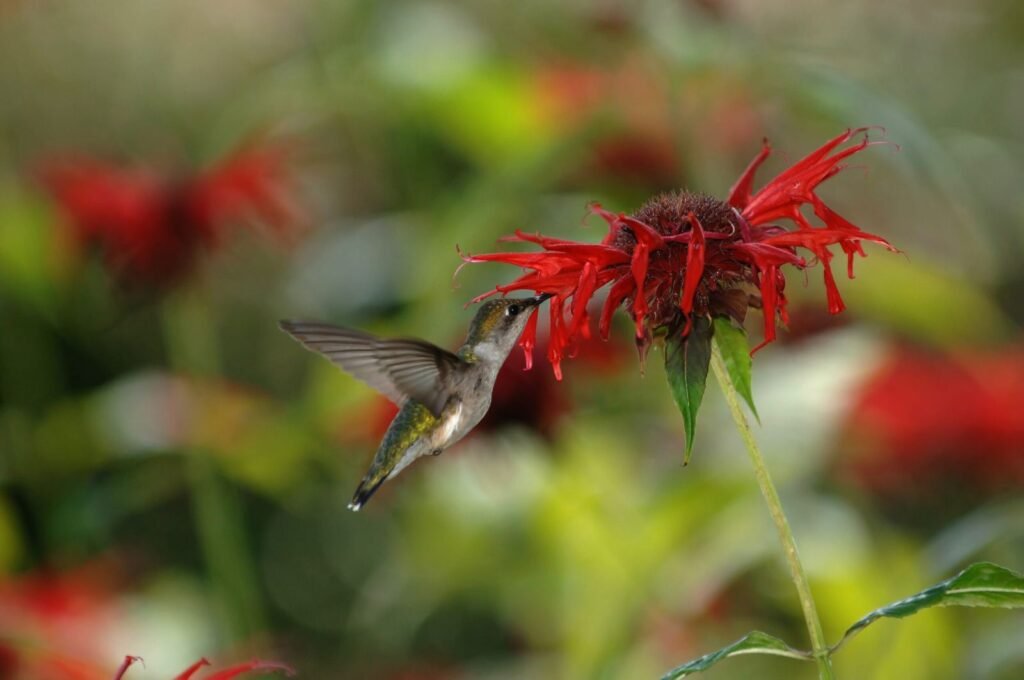
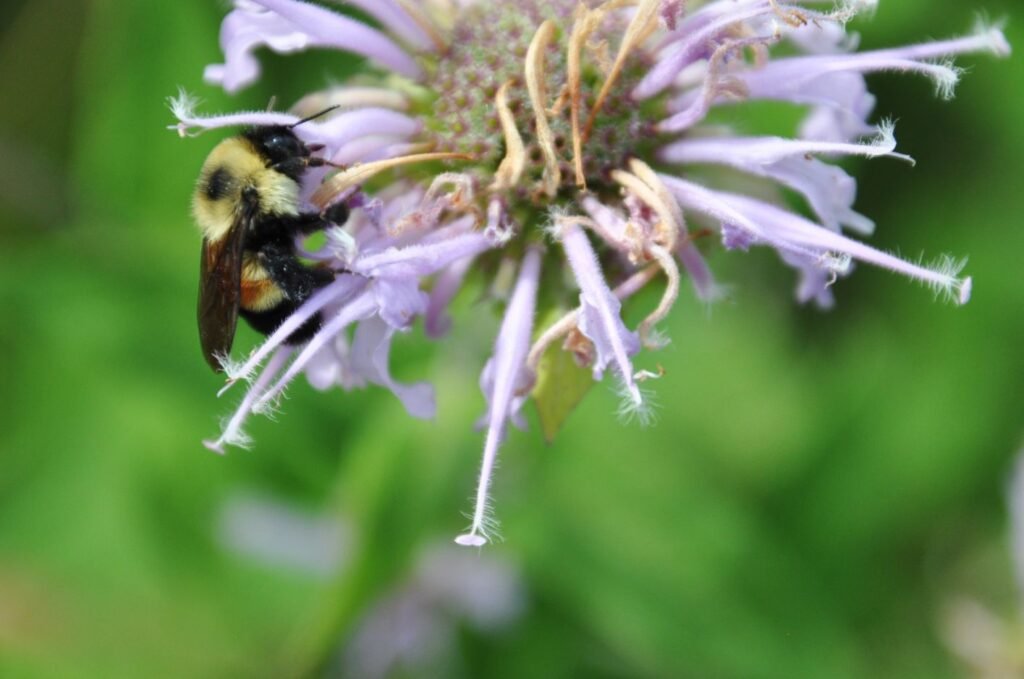
Most “plants bees love” lists mention bee balm in passing alongside coneflower and lavender, without explaining what actually makes it distinctive. The real story is more specific than generic bee appeal: bee balm’s tubular, two-lipped flowers are shaped for long-tongued foragers, which is why bumblebees and hummingbirds tend to dominate a bee balm patch more than honeybees do, and because the flowerheads open in a ring and keep producing new blooms across several weeks, they provide an unusually continuous nectar source rather than a single short pulse.
The more genuinely notable fact, documented by the North Carolina State Extension Gardener Plant Toolbox, is that Monarda supports specialist bee species that visit almost nothing else — Dufourea monardae above all, along with Perdita gerhardi and Protandrena abdominalis. A specialist bee restricts its pollen-collecting almost entirely to one plant genus; removing that plant from a region can functionally remove the bee. Very few plants sold at an ordinary garden center carry that level of ecological specificity — most “pollinator plants” support generalist bees that would forage somewhere else anyway. Bee balm’s native bees also nest in its dead, hollow stems over winter, which is a second, easy-to-miss reason to leave stems standing into spring rather than cutting the plant back in fall.
Monarda punctata in particular has a side benefit rarely mentioned outside native-plant circles: it’s unusually attractive to predatory and parasitic wasps in addition to bees, per plant-toolbox and native-plant-nursery observations. Those wasps prey on garden pests, so a spotted-bee-balm planting can do double duty as a low-key pest-management tool, not just a nectar source.
Wild bergamot’s pollinator value also shows up in conservation records: the U.S. Fish and Wildlife Service has photo-documented the rusty-patched bumblebee (Bombus affinis) — a species federally listed as endangered under the Endangered Species Act since 2017 — foraging on Monarda fistulosa in the wild. Planting a species this bee is documented using is a small but real, verifiable way a home garden connects to an actual endangered-species conservation effort, not just generic “help the bees” messaging.
Mildew-Resistant Cultivars Worth Choosing
Cultivar choice affects disease resistance far more than it affects pollinator value — bees don’t care about a cultivar name, but a plant that collapses to mildew by August stops flowering and stops feeding anyone. These are the cultivars most consistently cited for resistance:
- ‘Jacob Cline’ (M. didyma): Scarlet-red, the most widely available mildew-resistant cultivar in the US nursery trade, and a reliable hummingbird magnet.
- ‘Marshall’s Delight’ (hybrid): Clear pink blooms, bred specifically for powdery mildew resistance.
- ‘Raspberry Wine’ (hybrid): Deep raspberry-red flowers on dark stems, strong resistance reported by multiple nurseries.
- ‘Petite Delight’ (M. didyma hybrid): A compact, container-friendly option with fair resistance to downy mildew, useful where a full-size 3–4 ft plant doesn’t fit.
Straight species plants (unbred M. fistulosa or M. punctata grown from native-plant-nursery stock) are also a reasonable choice specifically because they support the specialist bees discussed above at least as well as, and sometimes better than, ornamental hybrids bred primarily for flower color — a genuine trade-off worth knowing about before assuming “improved” always means “better for pollinators.”
How to Plant and Grow Bee Balm
- Match species to site, not the other way around. Per the comparison table above, don’t plant moisture-loving M. didyma in a dry, sandy bed and expect it to thrive — choose the species suited to the actual soil and rainfall on hand.
- Full sun to light afternoon shade. All three species flower best with at least six hours of direct sun; afternoon shade in hot-summer climates reduces heat stress without sacrificing much bloom.
- Space plants generously. Bee balm spreads by underground stolons and forms colonies; crowding is the single biggest driver of powdery mildew, so following mature-width spacing (roughly 18–24 inches for most cultivars) matters more here than for most perennials.
- Divide every 2–3 years. Lift and divide clumps in spring to keep the planting vigorous and to prevent the center of an older clump from dying out and encouraging fungal problems.
- Water at the soil line, not overhead. Overhead watering or sprinkler irrigation wets the foliage and is one of the most direct, avoidable triggers for powdery mildew.
- Leave stems standing through winter. As noted above, native bees nest in the dead hollow stems — cutting the plant to the ground in fall removes overwintering habitat for the same specialist bees the plant is grown to support.
For a visual look at the spacing and airflow practices covered above, this video from Plant Vibrations walks through growing Monarda specifically with mildew prevention in mind:
Managing Powdery Mildew (the Real Challenge)
Every credible source on growing bee balm converges on the same point: powdery mildew, not pests, is the main obstacle. It shows up as a gray-white dusty coating on leaves, usually mid-to-late summer, and while it rarely kills an established plant outright, it disfigures the foliage and can reduce vigor and bloom in following seasons.
The fixes are almost entirely cultural rather than chemical: choose a resistant cultivar (see above), give plants full sun and real airflow by not overcrowding them, water the soil rather than the leaves, and thin out overly dense clumps in spring. Removing and discarding (not composting) visibly infected foliage at the end of the season reduces the fungal spores that overwinter and reinfect the planting the following year. Fungicides exist for severe cases, but for a pollinator-focused planting, cultural prevention is both simpler and avoids the risk of harming the very bees and wasps the plant is grown to attract.
Mistakes That Undercut Bee Balm’s Pollinator Value
- Choosing a cultivar for flower color alone. A double-flowered or unusually bred cultivar can look striking but sometimes offers foragers less accessible nectar/pollen than a simpler-flowered straight species or an established resistant cultivar — check a cultivar’s actual pollinator reputation, not just its bloom photo.
- Fall cleanup that removes all standing stems. As covered above, this destroys overwintering habitat for the plant’s own specialist bees — leave stems until they naturally break down in spring.
- Planting the wrong species for the site’s moisture. Putting thirsty M. didyma in a dry, sandy bed (or drought-tolerant M. punctata in a constantly wet spot) sets the planting up to struggle regardless of how well everything else is done.
- Treating mildew with fungicide as a first response. Spacing, airflow, and cultivar choice solve most mildew problems without introducing a chemical treatment into a bed meant to support pollinators.
Frequently Asked Questions
Is bee balm actually good for bees, or is that just the name?
It’s genuinely good for bees, not just a marketing name. Beyond attracting generalist bumblebees and honeybees, Monarda supports at least three documented specialist bee species — most notably Dufourea monardae — that forage almost exclusively on this genus, per North Carolina State Extension’s plant profiles.
Which bee balm species should I plant?
Monarda didyma for rich, consistently moist soil and maximum hummingbird appeal; M. fistulosa for average garden soil, clay, or periodic drought (the most forgiving choice for most gardens); M. punctata for sandy, dry sites and an added bonus of attracting predatory wasps.
How do I stop my bee balm from getting powdery mildew?
Choose a resistant cultivar such as ‘Jacob Cline,’ ‘Marshall’s Delight,’ or ‘Raspberry Wine,’ space plants for real airflow, water at the soil line instead of overhead, and divide crowded clumps every 2–3 years. These cultural steps do more than any fungicide.
Should I cut bee balm back in fall?
It’s better not to. Native bees that specialize on Monarda nest inside the dead, hollow stems over winter, so leaving the stems standing until they naturally break down in spring preserves habitat the plant is specifically valuable for.
Is bee balm invasive or aggressive in a garden bed?
Bee balm spreads by underground stolons and can form expanding colonies, which some gardeners consider aggressive in a small bed. It isn’t classified as ecologically invasive in its native range, but dividing clumps every 2–3 years keeps it in bounds in a formal garden setting.
Do hummingbirds really visit bee balm?
Yes, reliably — scarlet-flowered Monarda didyma in particular is a well-documented hummingbird plant, since hummingbirds are strongly drawn to red tubular flowers shaped for a long, narrow bill and tongue.
More detail on this is available from Xerces Society.
Related Reading
Image credits: Photo: Hedwig Storch, CC BY-SA 3.0, via Wikimedia Commons.