Yes — lavender is one of the most consistently effective bee-attracting plants a home gardener can grow, but not all lavender is equal, and the plant isn’t equally popular with every kind of bee. A 2014 University of Sussex trial that planted 13 lavender cultivars side by side and counted insect visits found some varieties pulled in nearly four times more pollinators than others — the species and cultivar you choose matters just as much as the decision to plant lavender at all.
Key Takeaways
- Lavender attracts bees through a combination of strong scent, high nectar volume, and a tubular flower shape long-tongued bees are well adapted to — but the effect varies sharply by species and cultivar.
- A peer-reviewed University of Sussex trial (Garbuzov & Ratnieks, 2014, Functional Ecology) found Lavandula × intermedia (Dutch/lavandin hybrid) cultivars averaged 2.91 insect visits per square-metre snapshot, versus just 0.88 for L. angustifolia (English lavender) — over three times more.
- Within that same trial, the cultivar ‘Gros Bleu’ drew more than twice the visits of ‘Old English,’ showing cultivar choice alone can matter as much as species choice.
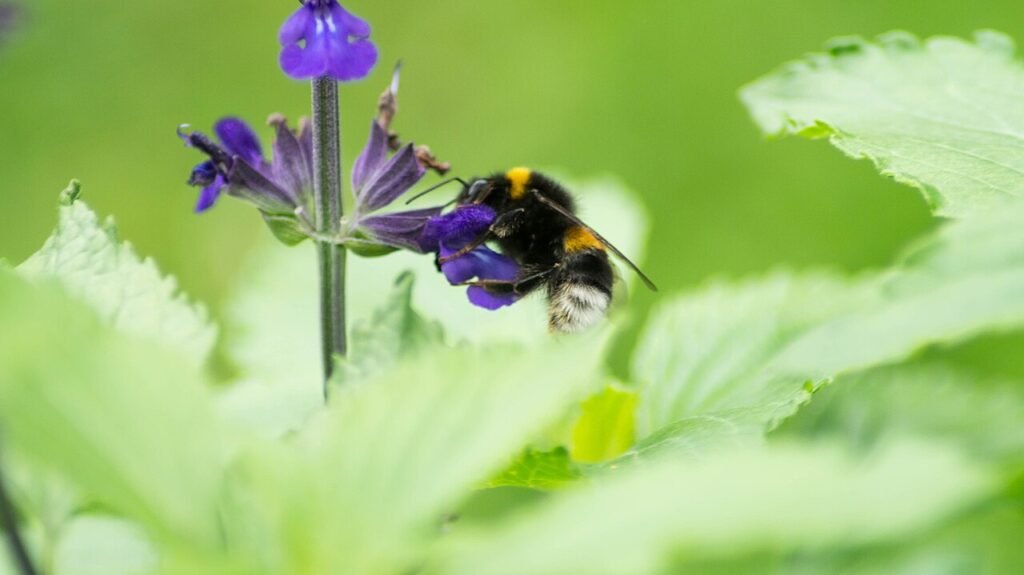
- Bumblebees generally favor lavender more heavily than honeybees do, because their longer tongues reach nectar at the base of the narrow flower tube more efficiently.
- Lavender’s real practical value to a pollinator garden is timing: it blooms in mid-to-late summer, exactly when many other nectar sources have dried up and bees are most short on forage.
Table of Contents
- Why Lavender Attracts Bees in the First Place
- What the Actual Research Shows
- Not All Lavender Is Equal: Comparing the Species
- Honeybees vs. Bumblebees: Who Actually Prefers Lavender
- Best Lavender Cultivars to Plant for Bees
- Why Lavender’s Bloom Timing Matters More Than People Realize
- How to Plant and Grow Lavender for Maximum Bee Visits
- Mistakes That Quietly Reduce Bee Visits
- Frequently Asked Questions
Why Lavender Attracts Bees in the First Place
Lavender checks three boxes that matter most to a foraging bee: a scent strong enough to detect from a distance, flowers packed densely along each spike so a bee can visit dozens in one stop, and nectar production high enough to make the trip worthwhile. The flower’s shape — a narrow tube opening into a small hooded lip — also plays a role in which bees actually get the reward efficiently, a point that turns out to matter more than most casual “bee-friendly plant” lists mention.
None of that is unique to lavender among Mediterranean herbs; rosemary, thyme, oregano, and sage share a similar family (Lamiaceae) and a similar general appeal to bees. What sets lavender apart in practice is bloom volume — a single mature shrub can carry hundreds of flower spikes — combined with a bloom window that lands at a genuinely useful time of year, covered in more detail below.
What the Actual Research Shows
Most “does lavender attract bees” content repeats the same unsourced claim — that bees love lavender — without ever pointing to real data. There is real data. Researchers Mihail Garbuzov and Prof. Francis Ratnieks at the Laboratory of Apiculture and Social Insects (LASI), University of Sussex, ran a controlled trial planting 13 common lavender cultivars from three species side by side across multiple trial sites, counting insect visits at regular intervals through the flowering season. The results were published in the journal Functional Ecology in 2014.
The headline finding: Lavandula × intermedia — the Dutch/lavandin hybrid group — averaged 2.91 insects per square-metre snapshot, more than three times the 0.88 recorded for L. angustifolia (English lavender). Within the intermedia group alone, the cultivar ‘Gros Bleu’ drew over twice the visits of ‘Old English.’ Notably, the researchers found that neither total bloom duration nor corolla tube length reliably predicted which cultivars won — visitation differences came down to something about the flowers themselves that a shopper reading a plant tag can’t easily see.
This is the actual differentiator worth acting on: if the goal is maximum bee traffic, species and cultivar selection matters more than simply “buying lavender,” and lavandin hybrids are the safer bet over ordinary English lavender.
Not All Lavender Is Equal: Comparing the Species
Garden centers sell three lavender groups under one generic label, and they differ meaningfully — in hardiness, bloom time, and bee appeal.
| Species | Common name | Bee appeal (per Sussex trial) | US hardiness | Bloom time |
|---|---|---|---|---|
| Lavandula angustifolia | English lavender | Lowest of the three groups tested | Zones 5–9 | Early-to-mid summer, often reblooming |
| Lavandula × intermedia | Lavandin / Dutch lavender | Highest of the three groups tested — ~3x English lavender | Zones 5–8 | Mid-to-late summer |
| Lavandula stoechas | Spanish/French lavender | Lower sugar concentration, fewer visits in most trials | Zones 7–9 (less cold-hardy) | Longest bloom window, but less rewarding per visit |
A practical wrinkle: lavandin (L. × intermedia) is a sterile hybrid between English and Portuguese lavender, bred largely for the perfume and essential-oil industry because of its high oil yield — the same trait that happens to correlate with strong bee appeal. It’s also generally the larger, showier plant in a border, which is a reasonable secondary reason to prefer it if you’re choosing lavender for a pollinator bed specifically.
Honeybees vs. Bumblebees: Who Actually Prefers Lavender
Watch a lavender bed for ten minutes in summer and bumblebees usually outnumber honeybees, and there’s a real mechanical reason: bumblebees have noticeably longer tongues (proboscises) than honeybees, which suits lavender’s narrow floral tube. A honeybee can and does forage on lavender, but it often has to work harder — or resorts to “nectar robbing” by biting into the side of the flower tube near the base rather than entering from the front — to reach nectar a bumblebee’s longer tongue accesses directly.
That doesn’t make lavender a bad honeybee plant. It’s still a reliable mid-to-late-summer nectar source that shows up regularly in honey-bee forage guides, and a hive kept within normal foraging range of a lavender planting will use it. It simply means a lavender bed tends to skew more bumblebee-heavy than, say, a bed of clover or borage, and gardeners hoping specifically to support a honeybee colony shouldn’t rely on lavender alone.
Best Lavender Cultivars to Plant for Bees
- ‘Grosso’ (L. × intermedia): The most widely sold lavandin cultivar in the US, large and vigorous, closely related to the high-performing ‘Gros Bleu’ type tested at Sussex.
- ‘Phenomenal’ (L. × intermedia): Bred for heat and humidity tolerance beyond typical lavandin, useful in regions where English lavender struggles with wet summers.
- ‘Provence’ (L. × intermedia): Another common commercial lavandin, similar profile to ‘Grosso.’
- ‘Munstead’ and ‘Hidcote’ (L. angustifolia): The two most widely available English lavender cultivars — smaller, more cold-hardy (reliable to zone 5), and still a genuinely useful bee plant even though the Sussex data puts the species group behind lavandin overall.
If space allows for only one shrub and the priority is maximum bee traffic, a lavandin cultivar like ‘Grosso’ or ‘Phenomenal’ is the better-supported choice. If cold hardiness in a zone 5–6 garden is the deciding factor, ‘Munstead’ or ‘Hidcote’ remain solid, well-tested options.
Why Lavender’s Bloom Timing Matters More Than People Realize
The LASI research group’s own stated reason for studying garden plants like lavender wasn’t idle curiosity — it grew out of earlier findings that late summer and early autumn are genuinely difficult periods for honeybee colonies to find forage, after spring’s flush of tree and shrub bloom has passed and before autumn-flowering plants take over. Lavender’s mid-to-late-summer bloom window lands squarely inside that gap.
This is the practical reason a pollinator garden benefits from lavender specifically, rather than just “more flowers”: it’s not competing with spring bulbs and fruit-tree blossom for the same bees at the same time. A garden with spring bulbs, early-summer perennials, and a lavender planting for the mid-to-late-summer lull, followed by asters or goldenrod into fall, covers the calendar far better than a garden front-loaded entirely with spring color.
How to Plant and Grow Lavender for Maximum Bee Visits
- Full sun, always. Lavender is a Mediterranean plant and produces less nectar, and blooms less densely, in partial shade.
- Well-drained soil is non-negotiable. Lavender tolerates poor, sandy, even rocky soil far better than it tolerates wet feet — heavy clay without amendment is the most common reason a planting struggles or rots over winter.
- Don’t over-fertilize. Excess nitrogen pushes leafy growth at the expense of flower production, which directly reduces the nectar available to bees.
- Deadhead spent flower spikes. Removing finished blooms encourages a second, smaller bloom flush later in the season on many cultivars, extending the bee-forage window.
- Check nursery stock for systemic pesticide treatment before buying. Some big-box nursery plants, lavender included, have historically been treated with neonicotinoid seed or soil treatments that persist in nectar and pollen; asking the nursery directly, or buying from a grower who states plants are neonicotinoid-free, avoids undermining the entire point of planting for bees.
Mistakes That Quietly Reduce Bee Visits
A few common choices quietly work against the goal of attracting bees, even in an otherwise healthy lavender planting:
- Heavy pruning at the wrong time. Cutting lavender back hard in fall (rather than after the first bloom flush, or lightly in early spring) removes next season’s flowering wood on many cultivars.
- Planting in isolated, single specimens far from other bee forage. Bees forage more efficiently, and a bed reads as more worthwhile to visit, when lavender is planted in a mass or drift rather than one lone plant surrounded by non-flowering shrubs.
- Spraying nearby plants with insecticide during lavender’s bloom window. Drift from even a “bee-safe” labeled product applied to an adjacent lawn or rose bed can affect foragers working the lavender a few feet away.
Frequently Asked Questions
Does lavender really attract bees, or is that just a gardening myth?
It’s genuinely true and backed by peer-reviewed data, not just folklore. A University of Sussex trial that counted insect visits across 13 lavender cultivars confirmed real, measurable bee attraction — though the strength of the effect varies a great deal by species and cultivar.
Which lavender is best for attracting the most bees?
Lavandula × intermedia (lavandin/Dutch lavender) cultivars like ‘Grosso,’ ‘Phenomenal,’ and ‘Provence’ outperformed English lavender by roughly three times in controlled trial counts. If maximizing bee visits is the goal, lavandin is the better-supported choice over standard English lavender.
Do bees prefer lavender over other flowers?
Lavender ranks among the more attractive garden plants tested in pollinator-visitation studies, but it isn’t universally “the best” — its real strength is a bloom window that lands during a genuine summer forage gap for bees, not necessarily out-competing every other flower head-to-head.
Is lavender better for honeybees or bumblebees?
Bumblebees generally visit lavender more heavily than honeybees do, because their longer tongues are better suited to reaching nectar in lavender’s narrow floral tube. Honeybees still use lavender as forage, but often work harder for the same reward.
Will planting lavender bring bees closer to my house or patio?
Bees foraging on lavender are focused on the flowers, not on people, and are very unlikely to sting unless directly handled or stepped on. Placing lavender a short distance from high-traffic seating areas, rather than right against a doorway, is a reasonable compromise for anyone uneasy around foraging bees.
How long does lavender bloom, and when should I plant it?
Most lavender blooms for several weeks in mid-to-late summer, with English lavender cultivars often reblooming lightly after deadheading. Plant in spring or early fall in well-drained soil and full sun for the best establishment before the first bloom season.
This is covered in more depth by the University of Sussex’s Laboratory of Apiculture and Social Insects.
Related Reading
Image credits: Photo: Martin Falbisoner, licensed CC BY-SA 4.0, via Wikimedia Commons.