Most seed bombs thrown onto neglected ground never actually grow into anything — not because the recipe was wrong, but because compacted soil, competing grasses, and light-sensitive seeds sealed inside dense clay are working against them from the start. That’s an uncomfortable fact most seed-bomb tutorials skip entirely, but understanding why they fail is exactly what makes it possible to actually succeed with one, especially when the seeds inside are meant to support real pollinator habitat rather than just look nice in a jar.
Key Takeaways
- Seed bombs tossed onto random neglected, compacted ground have a documented tendency to fail — a realistic assessment worth knowing before assuming a scattered handful will reliably turn into flowers.
- Using regionally native seed, not a generic “wildflower mix,” matters for real ecological reasons: many mass-market mixes contain non-native or even invasive species.
- Many native wildflower seeds require a period of cold, moist stratification before they’ll germinate at all — which is also why fall-made, fall-thrown seed bombs generally outperform spring ones.
- Some wildflower seeds need light to germinate, meaning a seed buried too deep inside a dense, unbroken clay ball may simply never sprout.
- Placing seed bombs in a prepared bed or pot with reasonable soil, sun, and moisture conditions works far more reliably than scattering them onto neglected ground and hoping.
Table of Contents
- Why Most Seed Bombs Actually Fail
- Why the Seed Source Matters More Than the Recipe
- How to Make a Seed Bomb That Has a Real Chance
- Timing: Why Fall Beats Spring for Most Native Seed
- Where to Actually Use Them
- Mistakes That Doom a Seed Bomb Before It’s Thrown
- Frequently Asked Questions
Why Most Seed Bombs Actually Fail
The idea behind a seed bomb is appealing enough that it’s easy to skip past whether it actually works: a small ball of clay, compost, and seed, tossed onto bare ground, that’s supposed to protect the seed until rain dissolves the ball and lets it germinate in place. In practice, a large share of seed bombs thrown this way never produce anything, and the reasons are specific rather than random. According to a candid breakdown from longtime beekeeping writer Rusty Burlew at Honey Bee Suite, compacted soil — the kind found on most neglected urban lots, roadsides, and trampled ground — can physically prevent tender young roots from penetrating at all, regardless of how good the seed inside was. Site conditions that made the ground bare and neglected in the first place (too shady, too wet, too dry, contaminated, or simply already dominated by aggressive grasses) don’t go away just because a seed ball landed there, and previously fertilized ground in particular tends to favor fast-growing grasses that outcompete slower wildflower seedlings before they can establish.
A more technical problem affects the seed bomb concept itself: many wildflower seeds actually require light to germinate, and a seed embedded deep inside a dense, intact ball of clay may simply never receive enough of it unless the ball breaks apart cleanly and completely. Add ongoing disturbance most guerrilla-gardening advice doesn’t mention — seed predation by birds and rodents, municipal herbicide spraying along roadsides, foot and vehicle traffic — and it becomes clear why a seed bomb’s real success rate in truly random, neglected locations is genuinely lower than the craft-blog version of this project usually suggests.
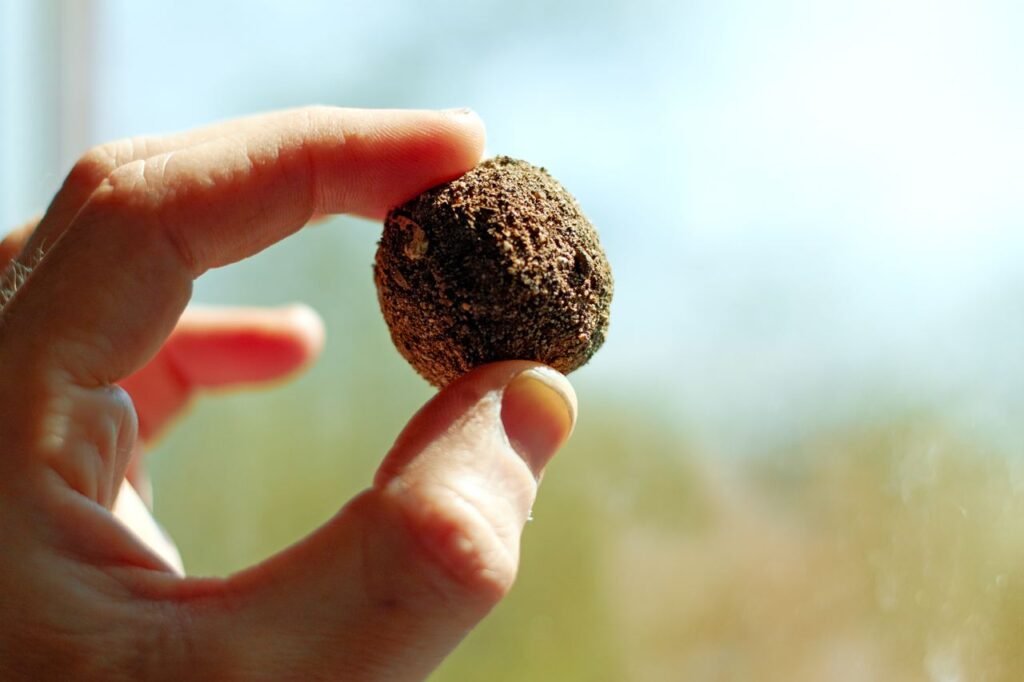
Featured photo: native milkweed seed balls made to support monarch habitat. Photo: Mara Koenig/USFWS, public domain, via Wikimedia Commons.
Why the Seed Source Matters More Than the Recipe
The clay-compost-water ratio gets most of the attention in seed bomb tutorials, but the seed itself matters more for real pollinator value. Generic mass-market “wildflower mix” seed packets frequently include non-native ornamentals and, in real documented cases, species considered invasive or seriously problematic in parts of North America. The clearest example: University of Illinois researchers traced Palmer amaranth — an aggressive agricultural weed capable of producing more than half a million seeds per plant — to contaminated pollinator-habitat seed mixes that had been sold as “100% weed-free” and planted across Illinois, Iowa, Minnesota, Indiana, and Ohio. Sourcing seed labeled for a specific eco-region, or from a pollinator-conservation nonprofit like the Xerces Society that produces regional native seed mixes, gives both a higher success rate (since it’s suited to local soil and climate) and genuine ecological value a generic mix doesn’t reliably provide.
For anyone specifically hoping to support monarch butterflies, milkweed (Asclepias species appropriate to the region) is the obvious anchor seed, since it’s the only genus monarch caterpillars can feed on — but even here, species selection matters regionally, and a monarch-focused seed ball should use the milkweed species native to the area it’s meant for rather than whichever species happens to be commercially available nationwide.
How to Make a Seed Bomb That Has a Real Chance
- Mix roughly 5 parts compost to 3 parts clay powder (or natural clay soil) to 1 part native seed by volume, a commonly used working ratio, then add water gradually until the mixture holds together without being sticky or runny.
- Roll into balls about the size of a marble to a large grape — big enough to hold together, small enough to dry fully.
- Dry for 24 to 48 hours somewhere out of direct sun before storing or using them, so they hold their shape and don’t crumble in handling.
- Break the ball apart slightly, or crumble it directly into prepared soil, rather than relying on it to dissolve intact from rain alone — this directly addresses the light-requirement and disintegration problems described above.
- Place in a genuinely prepared spot — a garden bed, a large planter, or loosened bare soil with reasonable sun and moisture — rather than counting on random neglected ground to provide the conditions the seed actually needs.
Timing: Why Fall Beats Spring for Most Native Seed
Many native wildflower species have a built-in dormancy mechanism requiring a period of cold, moist conditions — cold stratification — before they’ll germinate, a natural adaptation that prevents seed from sprouting right before winter kills the seedling. Making and placing seed bombs in fall lets this stratification happen naturally over winter, with germination following in spring once conditions warm; seed bombs made and thrown in spring, by contrast, may sit dormant through an entire growing season waiting for the following winter’s cold period, or may fail to germinate at all if the species has a strict stratification requirement. Fall timing also gives seedlings a head start early the following spring, before some fast-growing weedy competitors get established.
Where to Actually Use Them
Given the failure modes above, a seed bomb genuinely intended to support pollinators does better as a deliberate planting tool for a specific, at least somewhat prepared spot — a garden bed, a large container, a loosened patch of bare soil at the edge of an existing garden — than as something thrown at random into unmanaged land in hopes it takes. This isn’t a very different mindset from actual gardening; it’s closer to a convenient, pre-measured way to sow a small patch of native seed than a magic bullet for greening genuinely neglected land. Our balcony and container pollinator garden guide covers a similar version of this same principle: matching realistic site conditions to what’s actually being planted, rather than hoping a plant will simply make do.
Guerrilla gardening on land that isn’t your own carries its own separate consideration: throwing seed onto public or private property without permission is a legal gray area in many places regardless of the plant species, and some municipalities actively spray or mow roadside areas in ways that would remove any seedlings anyway — a genuinely prepared spot on land you actually control avoids both the ecological and legal uncertainty at once.
Mistakes That Doom a Seed Bomb Before It’s Thrown
- Using a generic national “wildflower mix” without checking its contents. Some mass-market mixes include non-native or even invasive species that outcompete the native plants local pollinators need.
- Throwing seed bombs onto compacted, neglected, or already-vegetated ground and expecting reliable results. This is the single biggest reason seed bombs have a reputation for not working.
- Making seed bombs in spring for species that need winter cold stratification. Without that cold period, some native seed simply won’t germinate the same season, or at all.
- Relying on an intact clay ball to dissolve and release light-requiring seed on its own. Crumbling the ball into the soil surface gives light-dependent seeds a real chance to actually receive light.
- Skipping regional seed sourcing. A native plant society or region-specific native seed supplier gives both better germination odds and better real pollinator value than a generic nationwide seed packet.
Frequently Asked Questions
Do seed bombs actually work?
Sometimes, but their real success rate is lower than most tutorials suggest when thrown onto random, neglected, or compacted ground. They work far more reliably when used more like an actual gardening tool — placed in a prepared bed or pot with reasonable soil, sun, and moisture — than as something scattered and left to chance.
What’s the right seed-to-clay-to-compost ratio?
A commonly used working ratio is about 5 parts compost to 3 parts clay to 1 part seed by volume, with just enough water added to make the mixture hold together without being sticky. Exact ratios can vary somewhat depending on the specific clay and compost used.
Should I use a generic wildflower mix or native seed specifically?
Native, regionally appropriate seed is the better choice. Generic mass-market wildflower mixes sometimes include non-native or invasive species that can outcompete the native plants local pollinators actually depend on, and native seed is also typically better adapted to succeed in local soil and climate conditions.
Why do my seed bombs never sprout?
The most common reasons are compacted or otherwise poor soil at the site, seeds that needed a period of cold stratification they never got, or light-requiring seeds trapped inside an intact clay ball that never broke apart enough to let light reach them.
Is fall or spring better for making and using seed bombs?
Fall is generally better for native wildflower species that need cold, moist stratification before germinating — making and placing seed bombs in fall lets that process happen naturally over winter, with germination following in spring.
Is it legal to throw seed bombs on public land or someone else’s property?
This is a legal gray area in many places regardless of the seed used, since it involves introducing plants onto land without the owner’s permission. Using seed bombs on land you actually control avoids this uncertainty entirely, and also avoids losing seedlings to routine municipal mowing or spraying.