Table of Contents
- The Short Answer: It’s Rarer Than You’d Think
- Plants Genuinely Toxic to Bees Themselves
- Plants Where the Honey, Not the Bee, Is the Problem
- Plants That Are Only Risky During Drought or Dearth
- Why Bees Usually Avoid These Plants Anyway
- “Mad Honey”: A Real but Rare Phenomenon
- What to Actually Do About It
- The Bigger Real Risk: Pesticides, Not Toxic Plants
- Regional Variation Matters
- A Note on Comparable Risks in Other Animals
- If You Keep Bees Near These Plants
- What’s Still Not Fully Understood
- Common Mistakes
- FAQ
The Short Answer: It’s Rarer Than You’d Think
A real, if short, list of plants produce nectar or pollen that’s genuinely toxic to honey bees, or that results in honey toxic to people even when the bees themselves tolerate it fine. But actual poisoning cases are uncommon in practice, mainly because bees are selective foragers that generally prefer more abundant, easier nectar sources when they’re available — meaning the presence of a toxic plant in a landscape rarely translates into real harm unless foraging conditions are already poor. This article covers what’s genuinely documented as risky, what the risk actually depends on, and why most of these plants don’t need to be ripped out of an existing garden.
Plants Genuinely Toxic to Bees Themselves
Rhododendron (heath family, Ericaceae) contains grayanotoxins — highly oxygenated compounds the plant produces as a natural insect defense — that can harm bees directly, not just produce toxic honey. Oleander is toxic to honeybees and many butterfly species as well; its toxins are notably persistent and can become concentrated within a hive over time as bees continue bringing in contaminated nectar. Summer titi (Cyrilla racemiflora) is specifically associated with a documented condition called purple brood disease, affecting developing larvae rather than adult bees. Jimsonweed and yellow jessamine are also commonly named on toxic-plant lists as risks to bees themselves.
Plants Where the Honey, Not the Bee, Is the Problem
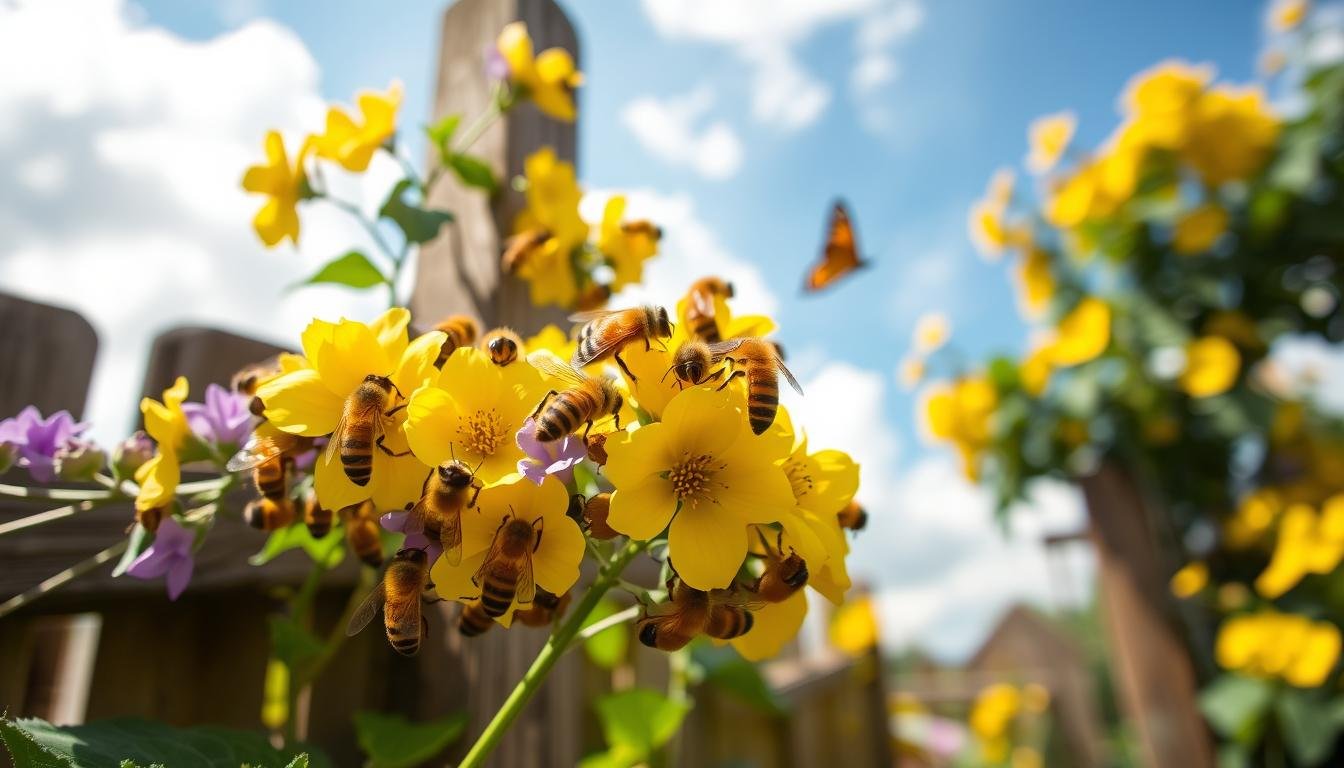
Mountain laurel (Kalmia latifolia) is the clearest example of this distinction, and one most casual “toxic plants” lists blur together with the previous category. Mountain laurel contains andromedotoxin (a grayanotoxin relative), and while it can affect people who consume the resulting honey, bees themselves generally tolerate the nectar without harm. This split matters practically: a plant being “toxic” doesn’t automatically mean it’s dangerous to your colony — sometimes the concern is entirely about what happens if a person eats honey made predominantly from it, which in practice is genuinely rare given how little of it typically ends up in any honey crop.
Plants That Are Only Risky During Drought or Dearth
A distinct and often-overlooked category: some otherwise perfectly good bee plants become risky only under specific stress conditions. American basswood (Tilia americana), normally an excellent, widely recommended bee tree, has been associated with bee harm specifically during drought conditions, when nectar composition or concentration may shift in ways that become problematic. California buckeye (Aesculus californica) shows a similar pattern, with drought conditions cited as the period of greatest risk. The practical takeaway here is genuinely useful and often missed: it’s not that these are simply “bad bee plants” to avoid altogether — they’re conditionally risky specifically when bees have fewer alternative forage options and may rely on them more heavily than usual, which is exactly what happens during a nectar dearth. Understanding this distinction — constant risk versus situational risk — is more useful for actually managing an apiary than a flat yes/no toxicity label ever could be. See how to feed bees during a nectar dearth for the broader picture of managing colonies through exactly these stress periods.
Why Bees Usually Avoid These Plants Anyway
Under normal foraging conditions with a healthy variety of blooms available, bees tend to prefer more abundant, easily accessible nectar sources over the plants on this list, effectively self-selecting away from the riskiest options most of the time. This is part of why experienced beekeeping guidance consistently says there’s no need to eradicate existing rhododendrons, azaleas, or mountain laurel from an established landscape — the presence of the plant alone rarely translates into a real problem, since bees aren’t forced to forage there when better options exist nearby.
“Mad Honey”: A Real but Rare Phenomenon
Grayanotoxin-containing honey has a name in folk and historical literature — “mad honey” — and there are documented historical accounts, including its reported use as an early form of chemical deterrent against invading armies, of the intoxicating and sometimes dangerous effects concentrated grayanotoxin honey can have on people. In modern beekeeping in most regions, this remains a genuine curiosity more than a practical daily concern, since achieving a honey crop concentrated enough in grayanotoxin to cause real symptoms generally requires a fairly specific, heavily rhododendron- or mountain-laurel-dominated forage area rather than typical mixed suburban or rural foraging conditions.
What to Actually Do About It
- Don’t panic-remove existing plants. Established rhododendron, azalea, or mountain laurel plantings are not an emergency — leave them unless you have a specific, documented reason for concern.
- Be more cautious about new large-scale plantings of species on this list, especially if you’re establishing a dedicated pollinator garden near an apiary, simply as a reasonable precaution rather than a strict prohibition.
- Watch colony behavior during droughts or dearths specifically if basswood, buckeye, or similar conditionally-risky species are heavily present nearby, since that’s when the actual risk window opens.
- If you suspect honey from a heavily rhododendron/mountain-laurel-dominated area, use appropriate caution before consuming or selling it without knowing its floral source.
The Bigger Real Risk: Pesticides, Not Toxic Plants
Worth stating plainly: pesticide exposure is a far more common and significant threat to bee health in most gardens and landscapes than any naturally toxic plant on this list. A garden free of pesticides but containing an established rhododendron is meaningfully safer for bees than a pesticide-treated garden full of “bee-friendly” plants. If safety is the actual goal, avoiding pesticide use — not removing naturally toxic ornamental plants — is where the real impact is. If you’re building a garden with pollinator safety in mind more broadly, see best plants for honey production in the USA and how to build and maintain a mason bee house for other ways to make a garden genuinely useful to bees rather than just decorative.
Regional Variation Matters
Which of these plants actually grows near your apiary, and in what density, varies enormously by region — rhododendron and mountain laurel are far more relevant concerns in parts of the Appalachian and Pacific Northwest United States where they grow abundantly in the wild than in regions where they’re rare or purely ornamental. Similarly, California buckeye is obviously a California-specific concern, not a nationwide one. Rather than treating this as a fixed universal list to worry about everywhere, it’s more useful to find out which of these species are actually common in your specific area — a local extension office or beekeeping association is generally the best source for region-specific plant risk information, since national lists necessarily generalize across very different growing conditions. A regional native plant society or your state’s agricultural extension service is usually a faster, more accurate resource for this than searching generically online.
A Note on Comparable Risks in Other Animals
Interestingly, several of the plants toxic to bees or their honey are also well-documented as toxic to livestock and pets, which is sometimes a more familiar frame of reference for gardeners. Rhododendron, oleander, and mountain laurel all appear on standard livestock and pet toxic-plant lists independent of any bee-specific concern, generally due to the same or related toxic compounds affecting mammalian physiology in different but sometimes overlapping ways. This cross-species pattern is one reason the toxicity of plants like oleander has been well documented for a very long time, independent of beekeeping specifically — it was recognized as broadly hazardous to animals and people well before its bee-specific effects were studied in detail. If you already know a plant is commonly flagged as toxic to dogs, cats, or grazing animals, that’s often a reasonable signal it’s worth checking for bee-specific concerns too, even though the actual mechanism and risk level can differ meaningfully between species.
Common Mistakes
| Mistake | Why it matters |
|---|---|
| Ripping out established toxic-listed plants unnecessarily | Bees usually avoid them anyway when better forage exists — the removal often isn’t needed and sacrifices otherwise fine landscaping |
| Treating “toxic to bees” and “produces honey toxic to humans” as the same thing | Mountain laurel is the clearest example where these are genuinely different — mixing them up leads to unnecessary alarm |
| Ignoring drought/dearth-conditional risk from otherwise good bee plants | Basswood and buckeye are valuable bee forage most of the time — the risk is specifically situational, not constant |
| Focusing on toxic plants while ignoring pesticide exposure | Pesticides are a far more significant, common threat to bee health than naturally occurring plant toxins |
If You Keep Bees Near These Plants
Beekeepers whose apiaries sit within foraging range of a significant rhododendron, mountain laurel, or similar stand don’t typically need to relocate hives over it, but a little situational awareness is reasonable. During years or seasons with unusually poor overall bloom, when bees may be more likely to turn to less-preferred forage out of necessity, keeping half an eye on colony behavior and honey color/flavor from that period isn’t unreasonable. If you ever notice a genuinely unusual honey batch (odd color, smell, or flavor) from a location known to have heavy toxic-plant bloom nearby, it’s reasonable caution to hold off on selling or heavily consuming that specific batch until you’re confident about its source, rather than assuming every harvest is automatically fine regardless of what was blooming nearby that season. This is simple, low-cost caution, not a reason to view toxic-plant proximity as a serious ongoing threat to routine beekeeping.
What’s Still Not Fully Understood
It’s worth being honest that the science here isn’t complete for every plant on typical toxic lists — some entries persist across beekeeping references more from historical anecdote and older documentation than from extensive modern controlled research, and exact toxin concentrations, dose thresholds, and species-specific sensitivity aren’t uniformly well-quantified across every plant mentioned. This doesn’t mean the lists are wrong, but it does mean treating them as a general caution framework rather than a precise, universally-quantified hazard chart is the more accurate way to use this kind of information — consistent with how genuinely careful sources present it, hedging on specifics while still flagging real, documented risk categories. If a specific plant on your property has you genuinely concerned, contacting a local extension office with that exact species and your regional context will get you a more precise answer than any general list, including this one, can provide.
Sources
Toxic plant information reflects published bee-health extension resources and established beekeeping references on poisonous plants, including documented grayanotoxin mechanisms and historical “mad honey” accounts. This is general information, not a substitute for local extension guidance on plants specific to your region. See the Xerces Society’s Pollinator Conservation Program for additional authoritative detail.
FAQ
Should I remove rhododendrons because they’re toxic to bees?
Generally no — bees typically avoid rhododendron nectar when better forage is available, and established plantings rarely cause real harm. Removal isn’t necessary for most home gardens.
Is mountain laurel honey dangerous?
It can be, to humans, in concentrated amounts — this is the “mad honey” phenomenon — but the bees themselves generally tolerate mountain laurel nectar without harm. It’s the honey, not the bees, that carries the risk.
Why are basswood and buckeye sometimes called toxic if they’re good bee plants?
Both are normally excellent, widely recommended bee forage — the toxicity concern is specifically tied to drought conditions, not a constant risk under normal foraging.
What’s the biggest real threat to bee health from plants and gardens?
Pesticide exposure, by a wide margin — a pesticide-free garden with some naturally “toxic-listed” plants is generally safer for bees than a pesticide-treated garden of otherwise bee-friendly species.