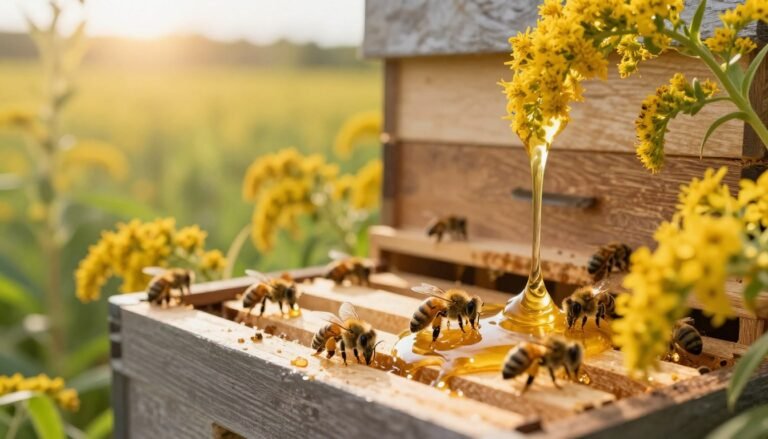
A USDA estimate puts it in stark terms: roughly 300 mason bees can pollinate an acre of apple trees as effectively as two full honeybee colonies, somewhere around 90,000 individual honeybees. That gap in efficiency is the entire reason mason bees have become one of the most talked-about pollinators among home orchardists and small-scale fruit growers over the past decade. This guide covers what mason bees actually are as a species, why they pollinate so much more efficiently than honeybees, their solitary lifecycle, and how they fit alongside honeybees rather than replacing them. For the practical side of setting up a mason bee house once you understand the biology, see this site’s dedicated guide to building and maintaining a mason bee house.
Table of Contents
- What Mason Bees Actually Are
- Why They Outpollinate Honeybees
- The Solitary Lifecycle: No Hive, No Queen, No Colony
- Commercial Use in Almond and Apple Production
- Mason Bees vs. Honeybees: A Direct Comparison
- Why Orchards Do Best With Both
- Attracting Wild Mason Bees Without Buying Cocoons
- Threats: Parasitic Wasps, Mites, and Mold
- A Close Relative: Leafcutter Bees
- Common Mistakes
- Frequently Asked Questions
What Mason Bees Actually Are
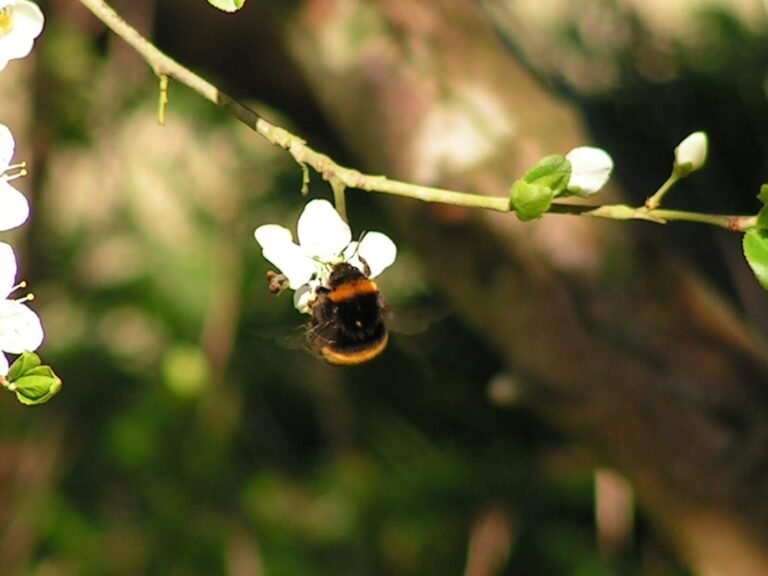
Mason bees belong to the genus Osmia, part of the family Megachilidae. The species most relevant to North American gardeners and orchardists is the blue orchard bee (Osmia lignaria), native across most of the continent, split into a western subspecies (Osmia lignaria propinqua) and an eastern one (Osmia lignaria lignaria). Despite the name, they’re not blue at a glance; they appear black in most lighting but show a metallic, iridescent blue-green sheen up close, and females are roughly honeybee-sized but noticeably rounder and stockier.
The name “mason” comes from nesting behavior: females use mud to seal individual brood cells inside a hollow cavity, a habit that gives the species its common name the same way it does for unrelated mason wasps. They’re cavity-nesters, not diggers, using existing hollow stems, reeds, or narrow tunnels rather than excavating their own nest sites the way many other native bees do.
Why They Outpollinate Honeybees
The core mechanical reason comes down to how each species carries pollen. Honeybees collect pollen deliberately and pack it into tidy pollen baskets (corbiculae) on their hind legs, moistening it with nectar so it sticks together and stays put during flight, which means very little of that pollen brushes off onto the next flower. Mason bees carry pollen completely differently: they collect it dry, on a dense patch of specialized hairs called a scopa on the underside of their abdomen. Because it’s dry and loosely held rather than packed and moistened, mason bee pollen falls off constantly as the bee moves from bloom to bloom, which is exactly what plants need for effective cross-pollination. A mason bee is, in effect, a slightly careless pollen-carrier, and that carelessness is precisely why it’s so much more efficient than the honeybee’s tidier, more pollen-conservative approach.
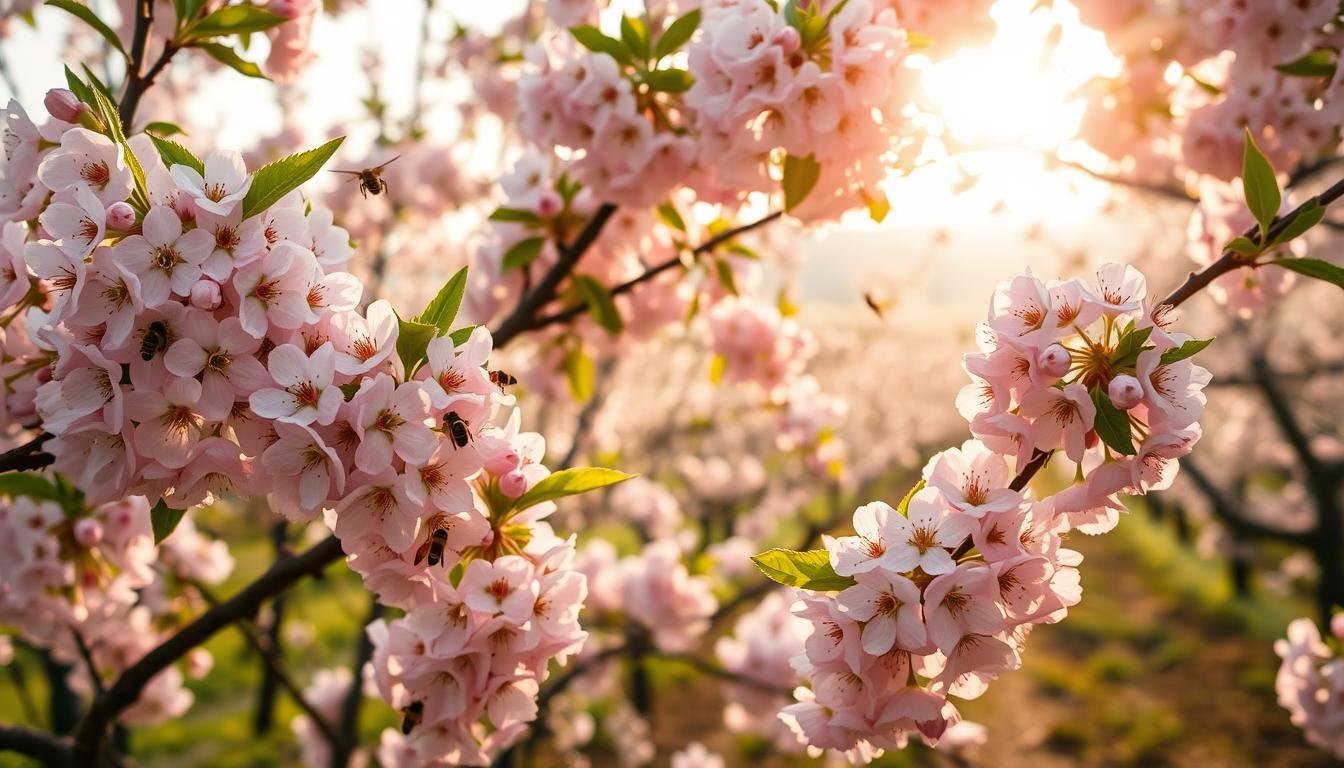
Mason bees also fly in cooler, cloudier, and windier conditions than honeybees will tolerate, often active at temperatures 3 to 4°F lower than what gets a honeybee colony flying, and they emerge from their overwintering cocoons specifically timed to early spring fruit tree bloom, when honeybee colonies are often still small and slow to build up after winter. This timing advantage compounds the raw efficiency advantage for early bloomers like apple, cherry, pear, and almond.
The Solitary Lifecycle: No Hive, No Queen, No Colony
This is the single biggest conceptual difference from honeybees, and it changes everything about how mason bees are “kept.” There is no hive, no queen, no worker caste, and no colony in the honeybee sense at all. Every single female mason bee is fertile and works entirely alone, provisioning her own nest with no help from any other bee.
A female emerges in early spring already mated (having mated near the nest site shortly after emergence), and spends the next four to six weeks of her adult life doing everything herself: finding a suitable hollow cavity, collecting pollen and nectar to provision each individual brood cell, laying a single egg on top of that food supply, and sealing the cell with a mud partition before moving on to provision the next cell in the same tunnel. She typically lays female eggs toward the back of the tunnel and male eggs toward the front, since males emerge first the following spring and need to exit before the females behind them. After roughly four to six weeks of this solitary work, the adult female dies; there’s no overwintering adult population at all. The eggs develop into larvae that spin cocoons and remain dormant through summer, fall, and winter as fully formed adult bees inside the cocoon, only emerging the following spring when temperatures warm, completing a strictly one-generation-per-year cycle.
Commercial Use in Almond and Apple Production
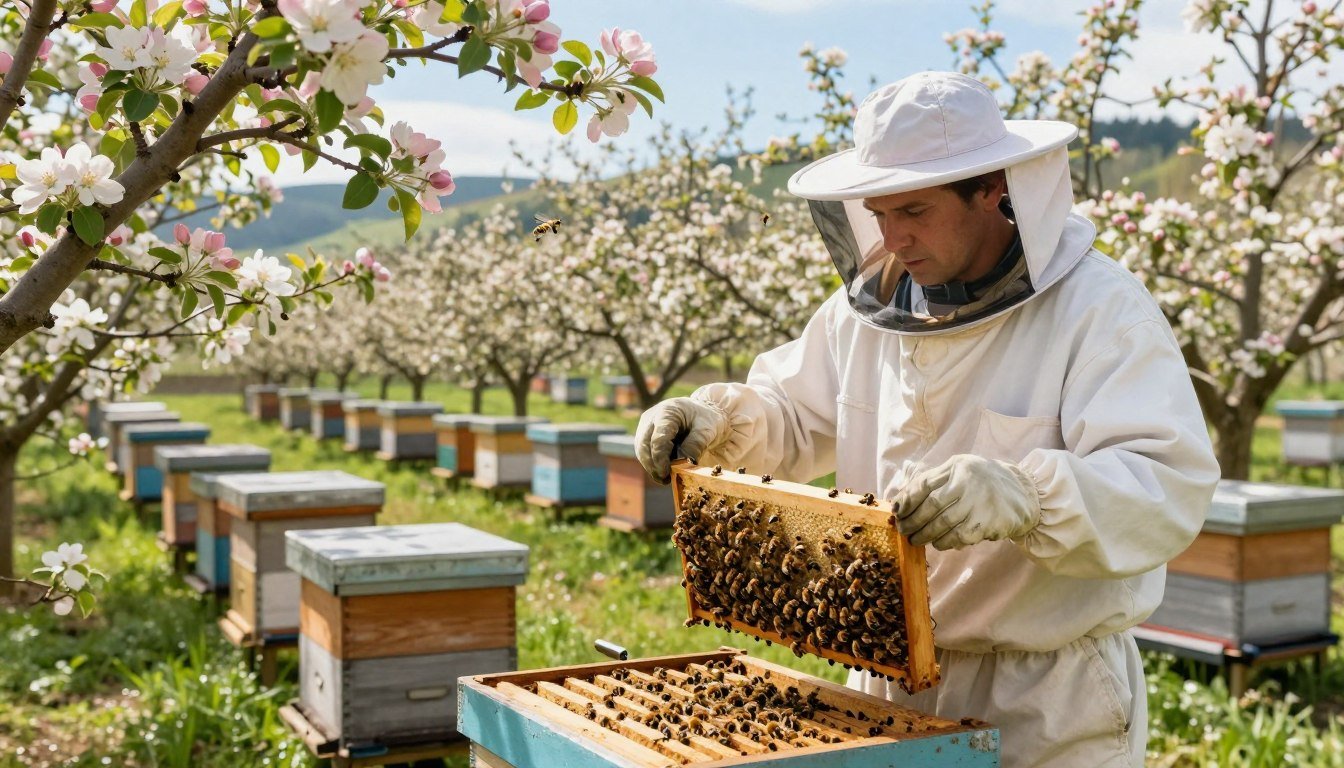
Beyond backyard orchards, mason bees have a growing but still comparatively small role in commercial fruit and nut production. Some commercial apple growers, particularly in the Pacific Northwest, now supplement rented honeybee colonies with mason bee cocoons specifically to cover the early, often cool and unpredictable bloom window when honeybee foraging can be inconsistent. The scale is still nowhere near honeybee rental in row-crop terms; commercial almond pollination, for instance, remains overwhelmingly dependent on trucked-in honeybee colonies simply because of the sheer forager numbers a bloom that size requires, numbers no solitary bee species can realistically match. Mason bees are better understood, at present, as a targeted efficiency booster for specific early-blooming crops and smaller operations rather than a wholesale replacement for commercial honeybee pollination contracts.
Mason Bees vs. Honeybees: A Direct Comparison
Social structure: Honeybees are eusocial with a queen, workers, and drones cooperating in one colony. Mason bees are solitary; every female is reproductively independent.
Honey and wax: Honeybees produce storable honey and build wax comb. Mason bees produce neither; there is nothing to harvest from a mason bee nest.
Stinging: Female mason bees can sting but rarely do, since they have no hive or honey stores to defend and are, by nature, remarkably docile even when handled directly. Males cannot sting at all.
Season of activity: Mason bees are active for a short, intense 4-to-6-week window in early spring and are then gone for the year. Honeybee colonies remain active from spring through fall.
Management: Honeybees require ongoing hive management, feeding decisions, disease monitoring, and winter preparation. Mason bees require only a suitable nesting cavity and, ideally, seasonal cocoon cleaning to reduce mite and mold buildup, ballpark far less hands-on labor across a full year.
Why Orchards Do Best With Both
It’s tempting to read the efficiency numbers and conclude mason bees simply make honeybees unnecessary for orchard pollination, but the research doesn’t actually support that conclusion. A study on sweet cherry pollination found that fruit set improved meaningfully when both mason bees and honeybees were present together in the same orchard, but not when either species was present alone, suggesting a genuine synergistic effect rather than straightforward substitution. Honeybee colonies bring overwhelming forager numbers and a longer working season; mason bees bring superior per-bee efficiency and reliable activity during the narrow, weather-sensitive window when many fruit trees actually bloom. For a home orchardist or small farm, the practical takeaway from the current research is to treat mason bees as a complement to honeybee pollination rather than a replacement for it, particularly for early-blooming fruit trees where a honeybee colony may not yet be at full foraging strength.
Attracting Wild Mason Bees Without Buying Cocoons
Buying starter cocoons isn’t actually necessary in most regions with existing wild Osmia populations; simply putting up appropriate nesting habitat is often enough to draw in local wild mason bees on its own. A bundle of hollow reeds, paper nesting tubes, or a wooden block drilled with holes roughly 5/16 inch in diameter and 3 to 6 inches deep, placed in a spot that gets morning sun and is sheltered from rain, will frequently attract wild females within the first season or two if mason bees are already present in the surrounding area. Planting or preserving a diversity of early-spring-blooming trees and shrubs nearby matters just as much as the housing itself, since a nesting site with no nearby forage within a few hundred feet of flight range won’t get used regardless of how well built it is. Readers interested in how mason bees fit into the broader landscape of native, non-honeybee pollinators can find additional species-level context in this site’s overview of native bee species found across the United States.
Threats: Parasitic Wasps, Mites, and Mold
Because a female mason bee provisions each brood cell and then seals it and moves on without ever returning to guard it, mason bee nests face a distinct set of threats that honeybee colonies, with a constant population of guard bees, don’t face in the same way. Tiny parasitic wasps, particularly in the genus Monodontomerus, lay their own eggs inside a sealed mason bee cell, and their larvae consume the developing bee before it ever emerges. Pollen mites (Chaetodactylus species) can build up inside nesting tubes over successive seasons, competing with mason bee larvae for pollen stores and, in heavy infestations, killing them outright. Mold and chalkbrood-like fungal issues can also develop inside cells if a nesting cavity stays too damp. This combination is exactly why guides on maintaining a mason bee house, including this site’s dedicated housing guide, emphasize harvesting and cleaning cocoons at the end of each season rather than leaving the same nesting material in place year after year, since reused, uncleaned nesting tubes are the single biggest driver of rising mite and parasite loads over time.
A Close Relative: Leafcutter Bees
Mason bees are often confused with their close relatives, leafcutter bees, which use cut leaf pieces instead of mud to build brood cell partitions and are active later in the season. One particular leafcutter species is also commercially significant in its own right, playing an outsized role in alfalfa seed farming. See this site’s guide to leafcutter bee biology and the alfalfa pollination industry for the full comparison.
Common Mistakes
A common misconception is assuming mason bees can be “kept” the way honeybees are, with ongoing feeding or hive management; in reality, once a suitable nesting cavity and nearby forage are in place, there’s very little active management involved beyond seasonal cocoon care. Another frequent mistake is expecting mason bees to produce honey or to defend a home the way honeybees do; neither applies, since there’s no colony, no honey stores, and essentially nothing worth aggressively defending. People also sometimes purchase or move mason bee cocoons across very different climate regions without checking whether the specific subspecies is regionally appropriate, which can disrupt local wild Osmia populations and doesn’t guarantee the transplanted bees will thrive on a different regional bloom schedule.
Sources
For additional authoritative detail on this topic, see the Xerces Society’s Pollinator Conservation Program.
Frequently Asked Questions
What time of year should I put out a mason bee house?
Nesting material should be in place before local fruit trees begin blooming, typically by early to mid-spring depending on regional climate, since mason bees emerge and begin nesting in near lockstep with early bloom and won’t wait around for housing that goes up late.
How many mason bee cocoons should I start with?
Most first-time setups start with somewhere between 10 and 20 cocoons, which is generally enough to establish a small local presence without an unreasonable up-front cost, and populations typically build on their own in subsequent years if adequate nesting habitat and nearby forage remain in place year after year without gaps.
Do mason bees make honey?
No. Mason bees have no colony structure and don’t produce or store honey of any kind; there’s nothing to harvest from a mason bee nest.
Are mason bees aggressive or dangerous?
No, they’re considered one of the gentlest bees to be around. Females can sting if directly and firmly handled, but they have no hive or food stores to defend and are not prone to stinging defensively the way honeybees or wasps are.
Can I keep mason bees in my backyard alongside honeybee hives?
Yes, and the research on orchard pollination suggests doing so can actually improve fruit set compared to either species alone, particularly for early-blooming fruit trees.
Do mason bees need a beekeeping license or registration like honeybee hives?
No, in the overwhelming majority of jurisdictions, since mason bees aren’t livestock in the same regulatory sense honeybee colonies often are, and putting up a nesting block carries none of the zoning or registration requirements that keeping honeybee hives sometimes does in urban or suburban areas, which makes mason bees a genuinely low-barrier entry point for anyone curious about supporting pollinators without committing to full-scale beekeeping.