Last Updated September 14, 2026
In the arid Southwest, prickly pear and other cactus flowers rely heavily on one group of hard-working specialists: cactus bees in the genus Diadasia. Genuinely well-adapted to a demanding desert lifestyle and a narrow floral menu, these native bees share the extreme host-plant loyalty of the squash bee already covered on this site, just built around cactus flowers instead of cucurbits. For readers outside the Southwest, where to see native bees in U.S. national parks covers several desert parks where cactus bees turn up.
Key Takeaways
- Cactus bees (genus Diadasia) are ground-nesting native bee specialists of the arid Southwest, with several species oligolectic on prickly pear and related cacti.
- Dense hind-leg hair lets them carry the unusually large, loosely-packed pollen loads cactus flowers produce — a genuine identification cue.
- Not every Diadasia species specializes on cactus: a 2005 genus-wide study found most of the roughly 30 North American species are each tied to one of five different plant families, including mallows and sunflowers.
- Research comparing pollinators found solitary cactus bees more efficient prickly pear pollinators than honeybees, largely due to their timing and sheer local abundance during a cactus’s brief bloom window.
- Their tight synchronization with a short cactus bloom window is also their biggest long-term vulnerability, since climate-driven shifts in bloom timing could outpace the bee’s own emergence timing.
Table of Contents
- What Are Cactus Bees?
- Specializing on Cactus Flowers Specifically
- Identification: Built for Heavy Pollen Loads
- Dense Ground-Nesting Aggregations
- A Short, Bloom-Timed Active Season
- Why Cactus Flowers Depend on Them
- Cactus Bees vs. Honeybees on the Same Flowers
- Male Cactus Bee Behavior
- Not Every Diadasia Species Specializes on Cactus
- Sting Risk to People and Pets
- Cactus Bees vs. Other Ground-Nesting Native Bees
- Common Identification Mistakes
- Frequently Asked Questions
What Are Cactus Bees?
Cactus bees belong to the genus Diadasia, a group of solitary, ground-nesting native bees found primarily across the arid and semi-arid regions of the southwestern United States, extending into parts of the Great Plains and Mexico. As solitary bees, each female builds and provisions her own nest independently, without a shared colony structure or worker caste.
Specializing on Cactus Flowers Specifically
Several Diadasia species show strong oligolectic specialization on cactus flowers, particularly prickly pear (Opuntia species) and related cacti, foraging almost exclusively on this narrow plant group during their active season. This extreme host-plant loyalty places cactus bees in the same general category of specialization as the squash bee, though built around an entirely different, arid-adapted floral resource that reflects the harsher, more resource-limited desert environment these bees call home.

Identification: Built for Heavy Pollen Loads
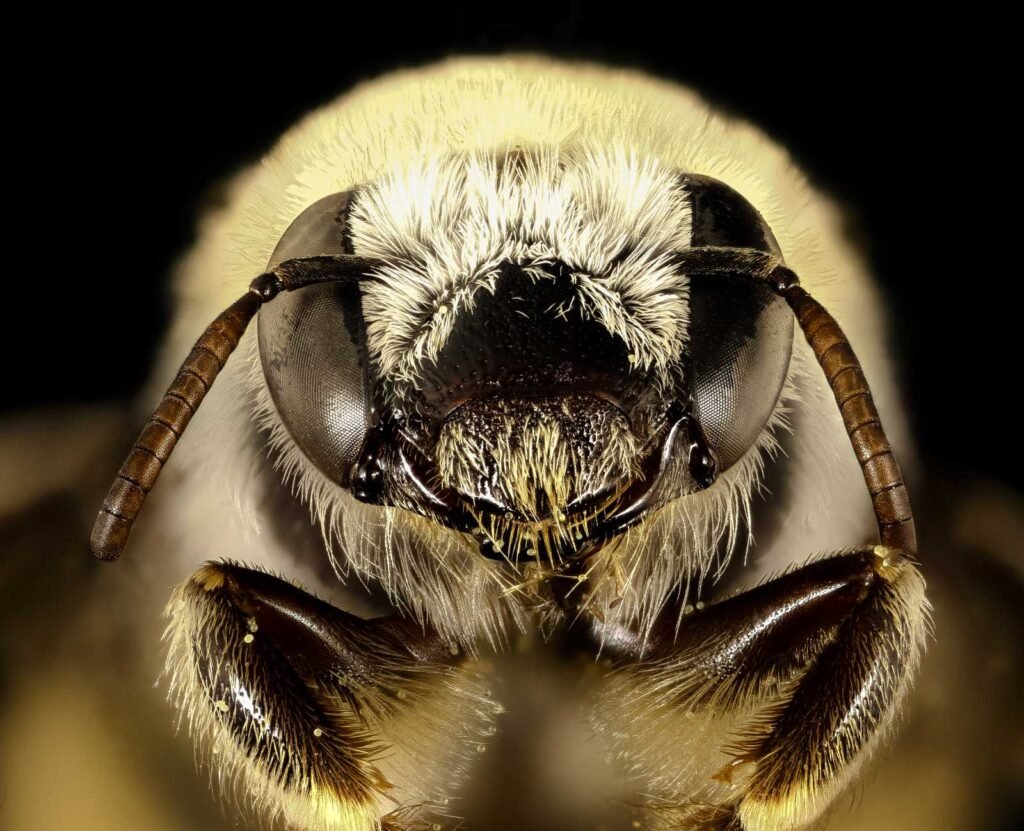
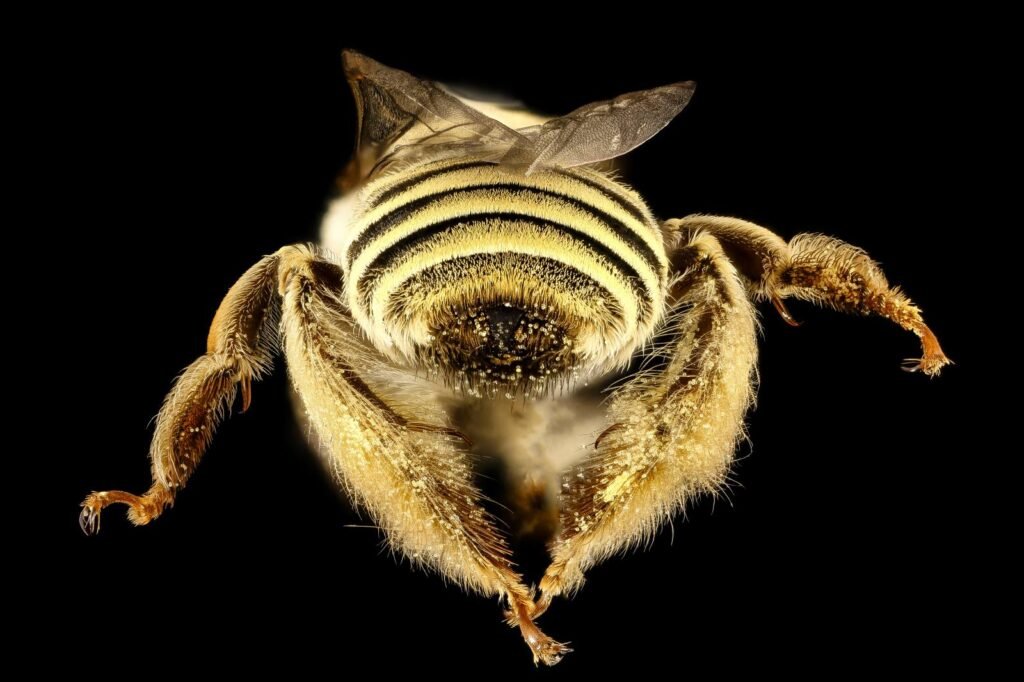
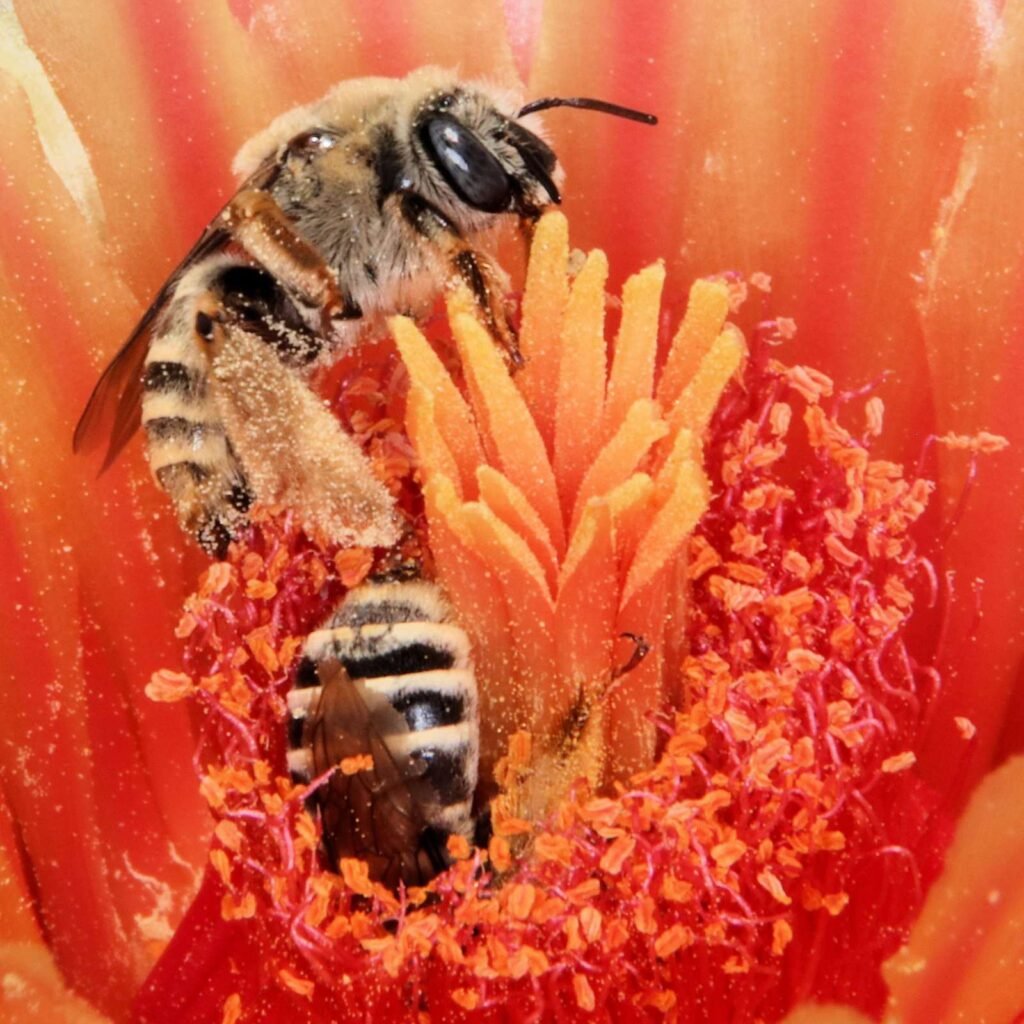
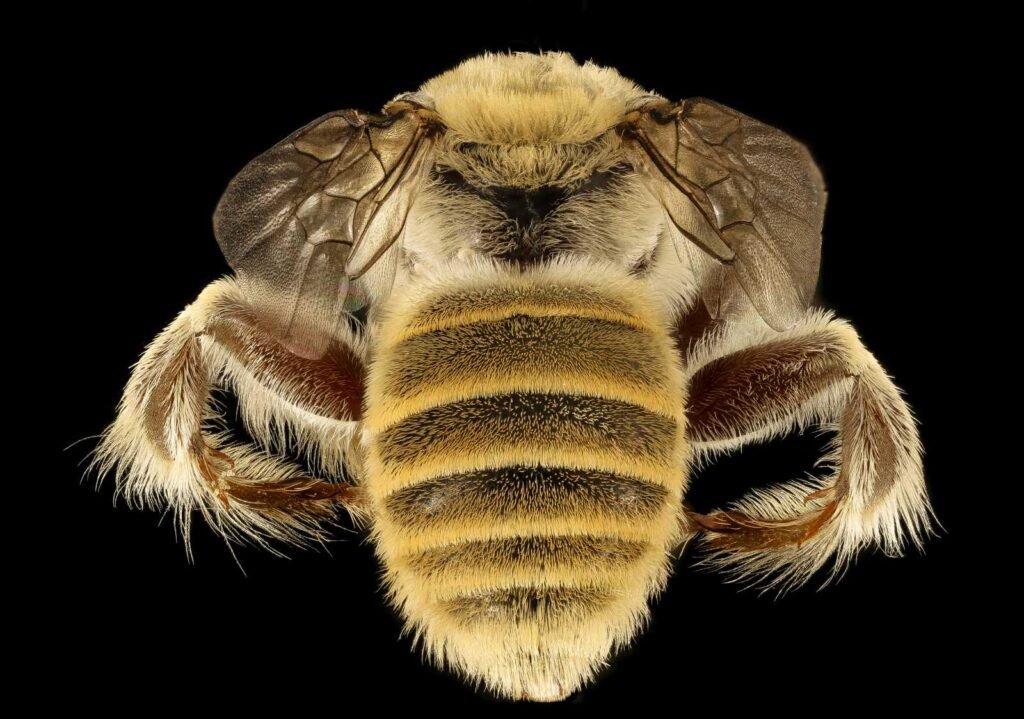
Cactus bees are medium-to-large native bees with notably dense hair on their hind legs, an adaptation suited to collecting the unusually large quantities of pollen that cactus flowers produce. Cactus flowers are known for their abundant, loosely-packed pollen, and a foraging cactus bee’s heavily pollen-laden legs after a visit to a blooming prickly pear can be a genuinely striking sight, reflecting just how much pollen these flowers offer relative to many other plants.
Dense Ground-Nesting Aggregations
Like alkali bees and mining bees already covered on this site, cactus bees often nest in dense ground aggregations, with large numbers of individual females digging separate burrow nests in close proximity within suitable open, sandy or well-drained desert soil. These aggregations can become locally dense enough to be visually striking, sometimes described informally as small “bee cities” scattered across open desert ground during peak activity. This dense-aggregation nesting style is shared with digger bees, another ground-nesting native genus covered on this site.
A Short, Bloom-Timed Active Season
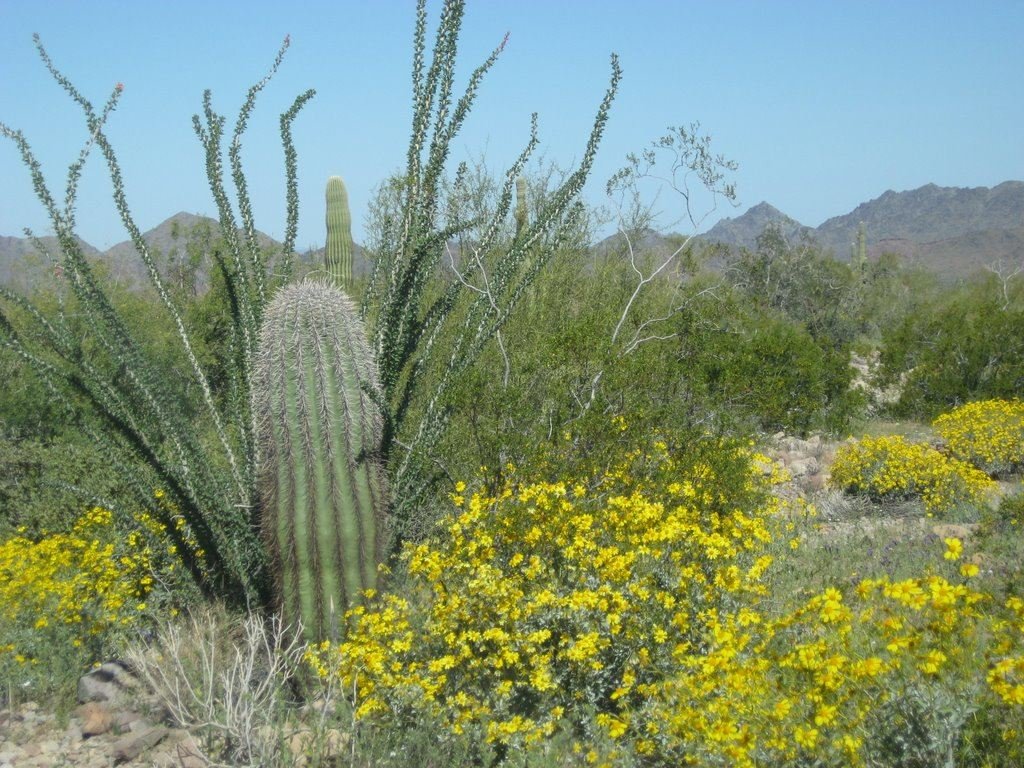
Because cactus bees are so tightly tied to their host plant, their active season closely tracks cactus bloom timing, which in many desert cactus species is itself a relatively brief window, often just days to a few weeks in late spring or early summer depending on species and region. This tight synchronization between bee activity and a narrow bloom period is a genuinely demanding evolutionary balancing act, one that leaves comparatively little margin for error or mismatched timing between the bee’s life cycle and its host flower’s brief window.
Why Cactus Flowers Depend on Them
Desert ecosystems generally support fewer overall pollinator options than more temperate, plant-diverse regions, making specialist pollinators like cactus bees genuinely important to reliable cactus reproduction rather than simply one convenient option among many. Prickly pear and related cacti benefit from cactus bee visits not just for pollination itself, but from the sheer volume of visits a locally abundant aggregation can generate during a cactus’s brief bloom window, something a smaller or more generalist pollinator population might struggle to match.

Cactus Bees vs. Honeybees on the Same Flowers
Honeybees will visit cactus flowers when available and can pick up some pollen in the process, but they aren’t considered as efficient or reliable a cactus pollinator as specialized cactus bees, whose body structure, timing, and sheer local abundance during bloom are specifically adapted to this narrow floral resource. This is a useful, concrete illustration of a broader point relevant to beekeepers: managed honeybees are valuable generalist pollinators, but they don’t automatically replace the ecological role of a native specialist that evolved alongside one specific plant group. See competition between honeybees and native bees for more on this dynamic.
Not Every Diadasia Species Specializes on Cactus
It’s worth noting honestly that not every species within the genus Diadasia specializes on cactus flowers specifically; some related species instead specialize on mallow-family flowers (Malvaceae) rather than cacti. The common name “cactus bee” is most accurately applied to the cactus-foraging species within the genus rather than to every Diadasia species as a whole — some, like Diadasia diminuta, specialize on globe mallow (Malvaceae) instead, a distinction worth keeping straight for anyone researching the genus further.
Male Cactus Bee Behavior
Male cactus bees don’t participate in nest-building or provisioning, following the same general division of labor seen across nearly all solitary bees, and instead spend much of their brief adult life seeking out mates, often patrolling near nesting aggregations or directly at cactus blooms where females are foraging. This mate-seeking behavior can make male activity around a dense cactus bee aggregation appear even busier than the nesting activity of females alone would suggest.
Sting Risk to People and Pets
Cactus bees pose essentially no meaningful sting risk to people. As solitary bees with no colony to defend, they are not aggressive, and given their remote desert habitat and short active season, most people are unlikely to encounter them at all outside specific cactus-bloom conditions in the Southwest.
Cactus Bees vs. Other Ground-Nesting Native Bees
| Feature | Cactus Bee | Alkali Bee | Mining Bee |
|---|---|---|---|
| Habitat | Arid Southwest desert | Alkaline western valleys | Widespread, varied |
| Host plant | Cactus (mainly prickly pear) | Alfalfa | Varied, often early bloomers |
| Nesting style | Dense ground aggregations | Dense ground aggregations | Ground, less densely aggregated |
| Active season | Short, tied to cactus bloom | Summer | Early spring |
Common Identification Mistakes
The most common mistake is assuming any bee seen visiting a cactus flower must be a specialized cactus bee, when generalist bees, including honeybees, will also opportunistically visit cactus blooms without being true specialists on them. A second common mistake is treating “cactus bee” and “Diadasia” as fully interchangeable terms, when in fact the genus includes species specialized on entirely different, non-cactus host plants as well.
Frequently Asked Questions
Are cactus bees dangerous to people?
No. Like most solitary native bees, cactus bees are not aggressive and pose essentially no meaningful sting risk under normal circumstances. They have no colony to defend, so even a busy nesting aggregation in bare ground is generally safe to stand near and watch.
Where in the US are cactus bees most likely to be found?
They are concentrated in the arid and semi-arid Southwest, extending into parts of the Great Plains. In practice they turn up wherever two things overlap: suitable cactus habitat for forage, and open, well-drained desert soil that females can dig their nest burrows into.
Can gardeners outside desert regions attract cactus bees?
Realistically, no — their strong dependence on cactus bloom and desert nesting conditions means they aren’t a practical species to attract in most non-desert gardens, unlike more habitat-flexible native bees covered elsewhere on this site.
Do cactus bees compete with honeybees for cactus flower resources?
Some overlap is possible where honeybees are present and cacti are blooming, though cactus flowers’ abundant pollen supply generally means this isn’t documented as a significant competitive pressure on cactus bee populations.
How long does a cactus bee nesting aggregation typically remain active each year?
Activity is generally tied closely to the host cactus’s bloom window, so an aggregation is typically busiest for a period of days to a few weeks each year, after which adult activity tapers off until the following year’s bloom cycle brings a new generation of adults out of the ground.
Are cactus bees considered rare or endangered?
Cactus-specializing Diadasia species aren’t generally documented as endangered within their established range, though as with any narrowly specialized species, their populations remain tied to the health and availability of suitable cactus habitat, making habitat loss a more direct concern for them than for a more generalist native bee.
Do cactus bees pollinate saguaro cacti as well as prickly pear?
Saguaro flowers rely on a broader mix of pollinators, including bats, birds, and various bee species, and while cactus bees can visit saguaro blooms, prickly pear is more consistently cited as the primary documented host for cactus-specializing Diadasia species specifically.
Could climate change affect cactus bee populations over time?
Because their active season is so tightly tied to a narrow cactus bloom window, shifts in bloom timing driven by changing temperature or precipitation patterns could realistically create a mismatch between when cacti flower and when cactus bees emerge — a genuine long-term concern shared broadly across many tightly synchronized plant-pollinator relationships.
Sources: “The importance of native bees, especially cactus bees (Diadasia spp), in the pollination of cactus pears,” Journal of the Professional Association for Cactus Development, Wild Bees of Texas: Diadasia, and the USGS Native Bee Inventory and Monitoring Lab.