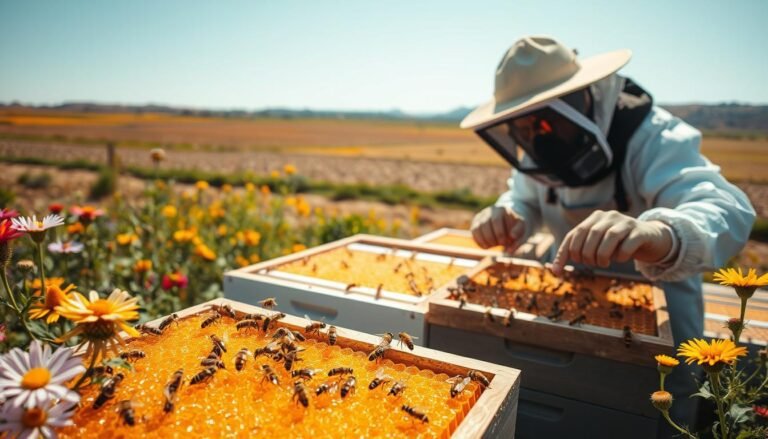
Beekeeping works in the hot, arid Southwest, but it’s a genuinely different discipline from beekeeping in a temperate climate — the core challenge isn’t cold winters, it’s a long summer nectar dearth combined with heat that can physically deform comb if a hive isn’t managed for it. Water becomes as important a beekeeping input as forage, and the region’s bloom calendar is compressed into two short windows around a hard summer gap. This guide covers what actually changes about hive management in Arizona, southern Nevada, New Mexico, and the wider desert Southwest — not generic hot-weather tips, but the specific water, ventilation, timing, and stock decisions this climate demands.
Key Takeaways
- Water, not just shade, is the defining management difference in the desert Southwest — low humidity makes natural water sources scarcer and evaporates a colony’s own cooling efforts faster than in humid climates.
- Honeycomb doesn’t need to hit its full 145–147°F melting point to fail: wax begins softening around 110°F, and sustained internal hive temperatures above 100°F already threaten brood and comb structure, so ventilation matters well before things get “melting hot.”
- The Southwest’s forage calendar is compressed into two windows around a hard summer gap: citrus bloom around March, then mesquite and acacia through roughly July, then a dearth through September, followed by a possible second wildflower/mesquite bloom and creosote into November if rains cooperate.
- Parts of the Southwest, notably Arizona and southern portions of neighboring states, have established Africanized honey bee populations — a real regional consideration for sourcing stock and handling wild swarms that beekeepers in most other U.S. regions don’t need to plan around.
- Local, regionally specific support exists and is worth using rather than generic online advice: the Arizona Apicultural Society, the Southern Arizona Beekeepers Association, and the University of Arizona Cooperative Extension all run desert-specific beekeeping education.
Table of Contents
- What Makes the Desert Southwest Different for Bees
- Water: The Single Biggest Management Difference
- Keeping the Hive Cool: Ventilation, Shade, and Hive Color
- How Hot Is Too Hot? What Actually Happens to Comb
- The Southwest’s Bloom Calendar and the Summer Dearth
- Choosing Bee Stock — and the Africanized Bee Reality
- Where to Get Local, Region-Specific Support
- Frequently Asked Questions
What Makes the Desert Southwest Different for Bees
Beekeepers moving into Arizona, southern Nevada, New Mexico, or the desert parts of West Texas and inland Southern California from a more temperate region tend to expect the heat to be the whole story. In practice, it’s the combination of heat with very low humidity and a long hot-season nectar dearth that actually reshapes hive management here. Days routinely exceed 100°F for months at a stretch, nights can still swing surprisingly cool by comparison, and the dry air that makes the heat more bearable for people also means less atmospheric moisture for bees to draw on and faster evaporation of the water bees use for evaporative cooling inside the hive.
Water: The Single Biggest Management Difference
In a humid climate, water for cooling the hive is often assumed to be nearby and reliable. In the desert Southwest, it frequently isn’t, and a colony that has to fly farther for water spends more energy and time on a task that’s already working against faster evaporation once it’s back at the hive. Reliable, close, consistent water sources are treated as seriously as forage here — many desert beekeepers place a dedicated water source within the apiary itself (with something for bees to land on, since they can’t land directly on open water without drowning), and some provide water directly to weaker colonies via frame feeders during the hottest, driest stretches when normal foraging for water becomes unreliable.
Keeping the Hive Cool: Ventilation, Shade, and Hive Color
Beyond water, the practical toolkit for desert heat management is mostly about airflow and reflectivity rather than insulation, which is the opposite instinct from cold-climate beekeeping:
- Consistent shade — natural (a tree) or built — especially for the hottest afternoon hours, without fully blocking morning sun bees use to warm up and start foraging.
- Screened bottom boards to improve passive airflow through the hive rather than relying only on the entrance.
- Ventilation gaps or offset lids during peak summer to let excess heat escape from the top of the hive, where it naturally rises.
- Light or white-painted hive exteriors to reflect rather than absorb solar heat, a straightforward but genuinely effective adjustment from the darker colors sometimes used in colder regions to help hives warm up in spring.
How Hot Is Too Hot? What Actually Happens to Comb
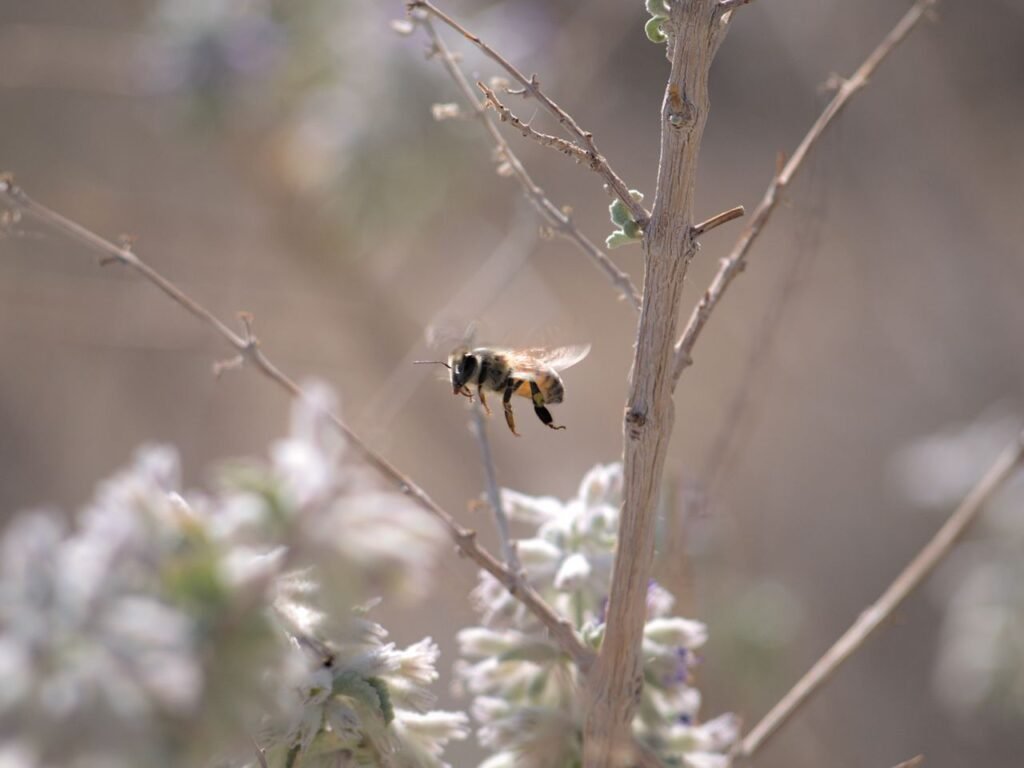
It’s a common oversimplification that comb “melts” once temperatures cross some single threshold. The more accurate picture: beeswax’s full melting point is around 145–147°F, but it begins softening well before that, around 110°F — and sustained internal hive temperatures above roughly 100°F already put stress on brood viability and comb structural integrity, particularly comb loaded with honey and brood weight, which can sag, stretch, or collapse under its own weight once the wax softens, even without ever reaching a true melt. This is exactly why ventilation and shade matter well before a thermometer says “extreme” — the failure point for a hive’s internal structure is lower than the number most people associate with wax actually melting.
The Southwest’s Bloom Calendar and the Summer Dearth
Rather than a long, gradually building single growing season, the desert Southwest’s forage calendar tends to run in two separated windows around a genuine gap:
- Early spring (roughly March): Citrus bloom is a major, reliable early source in agricultural areas.
- Spring into early summer (through roughly July): Mesquite and acacia carry the bulk of the main flow in much of the region.
- Mid-to-late summer (roughly through September): A hard nectar dearth, driven by heat and lack of rain, during which colonies commonly need supplemental sugar syrup if stores run low rather than relying on natural forage.
- Late summer into fall: A possible second, smaller bloom from wildflowers and mesquite, and creosote blooming into November if seasonal rains are decent that year — not guaranteed the way the spring flow is.
Planning feeding and inspection schedules around this two-window pattern, rather than assuming a single continuous growing season the way a beekeeper from a temperate region might, is one of the more consequential local adjustments for colony survival here.
Choosing Bee Stock — and the Africanized Bee Reality
Italian and Carniolan stock are commonly recommended for the region for their general heat tolerance and manageable temperament. There’s also a regional consideration that doesn’t apply to most of the country: parts of the Southwest, Arizona in particular, have established populations of Africanized honey bees, a hybrid strain more defensive than typical European stock. This matters practically in two ways — sourcing purchased bees from a reputable supplier who can verify European-derived stock, and treating an unknown wild swarm in the region with more caution than a beekeeper in, say, the Upper Midwest would need to, since visual identification alone can’t reliably distinguish the two.
Where to Get Local, Region-Specific Support
Generic beekeeping advice often assumes a temperate climate by default, which makes locally grounded support genuinely valuable in the desert Southwest specifically. The Arizona Apicultural Society and the Southern Arizona Beekeepers Association (SAZBA) both run regular local meetings and education aimed at Sonoran Desert conditions, and SAZBA works directly with the University of Arizona Cooperative Extension, which has run hands-on desert beekeeping courses and received USDA funding specifically for urban beekeeping education in Maricopa County. Connecting with a local club or extension program before your first hot season is one of the most practical steps a new desert beekeeper can take.
For the research behind afternoon shade for hives in the desert Southwest, see our placement guide.
Frequently Asked Questions
Is beekeeping actually viable in the desert Southwest?
Yes, with adjusted management. The core adaptations are prioritizing water access, shade and ventilation, and planning around the region’s compressed two-window bloom calendar and summer dearth, rather than assuming standard temperate-climate practices apply unchanged.
What temperature is actually dangerous for a hive?
Comb doesn’t need to reach its full 145–147°F melting point to be damaged — wax softening begins around 110°F, and sustained internal hive temperatures above about 100°F already stress brood and comb structure.
Do desert bees need supplemental feeding?
Often yes, during the mid-to-late summer dearth (roughly July through September) when natural forage is scarce and stores can run low faster than in climates with a more continuous growing season.
Are Africanized bees a real concern for Southwest beekeepers?
Yes, in parts of the region, notably Arizona. This mainly affects sourcing decisions (buying from suppliers who can verify European stock) and how much caution to use with an unidentified wild swarm, since the two can’t be reliably told apart by appearance alone.
What color should hives be painted in a hot climate?
Light or white exteriors are generally recommended to reflect rather than absorb solar heat, the opposite of the darker colors sometimes used in colder regions to help hives warm faster in early spring.
Where can a new desert beekeeper get local, region-specific help?
The Arizona Apicultural Society, the Southern Arizona Beekeepers Association, and the University of Arizona Cooperative Extension all offer education and support specifically oriented to Sonoran Desert conditions.
For more background on this, see University of Arizona Cooperative Extension.
Related Reading
This connects closely with what we cover in our guide on comparing cold-climate vs warm-climate hive design tweaks.
Image credits: Photo: Saguaro cactus at sunrise, Scottsdale, AZ. Photo by Ray Redstone, licensed CC BY-SA 4.0, via Wikimedia Commons.