Last Updated September 15, 2026
The U.S. National Park System is one of the best places in the country to actually see wild native bees, not managed honey bees — roughly 4,000 native bee species live in North America, nearly 70% of them nesting alone in the ground rather than in hives, and a multi-year National Park Service survey of 46 park units identified around 685 species from more than 43,000 individual bees sampled. This guide covers what that research actually found, which parks have documented native-bee programs, and how to actually spot ground-nesting and other native bees on a visit — a genuinely different activity from anything covered in this site’s honey-bee-focused content.
Everything else on this site about “seeing bees” assumes you’re looking at a managed honey bee colony. Native bees are a different story almost entirely — solitary, usually unnoticed, and the subject of real, ongoing federal research that most park visitors walk right past.
Key Takeaways
- North America has roughly 4,000 native bee species, compared to the single non-native honey bee species (Apis mellifera) most people picture when they hear “bee.”
- A 2010–2013 NPS-coordinated survey across 46 park units ran 809 standardized bee-bowl transects, sampled more than 43,000 bees, and identified approximately 685 species — including a likely undescribed species found at Santa Monica Mountains National Recreation Area.
- Nearly 70% of native bee species nest as individuals in bare or sparse soil, not in hives or colonies — meaning “protecting bees” in a park context often means leaving patches of bare ground undisturbed, not adding hives.
- The USGS Native Bee Inventory and Monitoring Lab, based in Beltsville, Maryland, processes bee specimens from national parks, national wildlife refuges, and other federal land to build species baselines and track change over time.
- You’re most likely to actually see native bees on flowering plants in sunny, open areas — not in visitor centers or paved areas — and a single sunflower can support more than 100 foraging bees over its bloom period.
Table of Contents
- What the National Park Service’s Multi-Park Bee Survey Actually Found
- Why Most Native Bees Go Unnoticed
- Where and How to Actually See Them on a Visit
- How This Differs From Everything Else Native-Bee-Related on This Site
- Frequently Asked Questions
What the National Park Service’s Multi-Park Bee Survey Actually Found
Between 2010 and 2013, a research team led by Jessica Rykken (Harvard University) together with Ann Rodman (Yellowstone National Park) and Sam Droege and Ralph Grundel (both USGS) ran a coordinated native-bee survey across 46 National Park Service units — 30 parks, preserves, and monuments; 10 lakeshores and seashores; and 6 recreation areas — spanning every NPS region in the lower 48 states except the National Capital Region, plus sites in Alaska and the Virgin Islands. Named participating parks include Yellowstone, Glacier, Great Basin, Mojave, Petrified Forest, and Assateague Island. The goal was to compare bee communities in climate-vulnerable habitats — high elevation, arid, and coastal sites — against more common habitat types, to give park managers an actual baseline before climate-driven changes make one harder to establish.
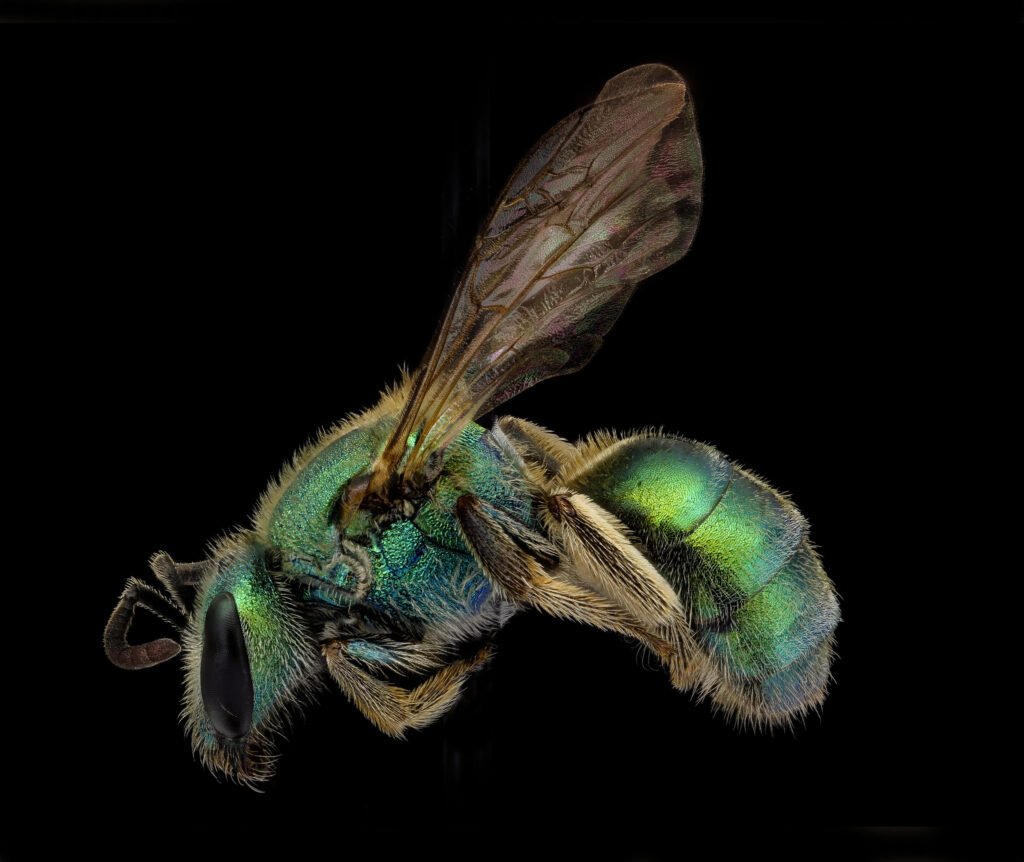
The method was simple and standardized across every site: 30 brightly colored “bee bowls” (small cups painted blue, yellow, and white to mimic flowers, filled with soapy water) set out along a transect spaced 5 meters apart, run for 24-hour periods, five times a year from early spring through fall. Across all 46 parks, that added up to 809 separate transects and more than 43,000 bees sampled. Researchers identified roughly 685 species across 43 genera. The single most commonly collected bee across every site was the green sweat bee (Augochlorella aurata), accounting for 2,012 individuals — about 4.6% of the entire sample. A coastal specialist, Lasioglossum marinum, turned up across seven different Atlantic-coast parks. Perhaps the most striking result: at Santa Monica Mountains National Recreation Area, researchers collected what appears to be a new, previously undescribed species resembling a cactus bee.
Why Most Native Bees Go Unnoticed
The reason native bees are so undercounted by casual observers isn’t rarity — it’s biology. Nearly 70% of North America’s native bee species nest as solitary individuals in the ground, not in a hive or visible colony structure. A single female digs her own nest tunnel, provisions it with pollen, lays eggs, and never interacts with a “colony” the way honey bees do. There’s no swarm, no hum, no obvious hive to notice — just small holes in bare, sunny soil that most visitors walk past without a second look. This is also why native-bee conservation on park land often looks like inaction from the outside: leaving a patch of bare ground unmowed and unplanted is frequently the single most useful thing a park can do for ground-nesting species, even though it looks like neglect rather than habitat management.
Where and How to Actually See Them on a Visit
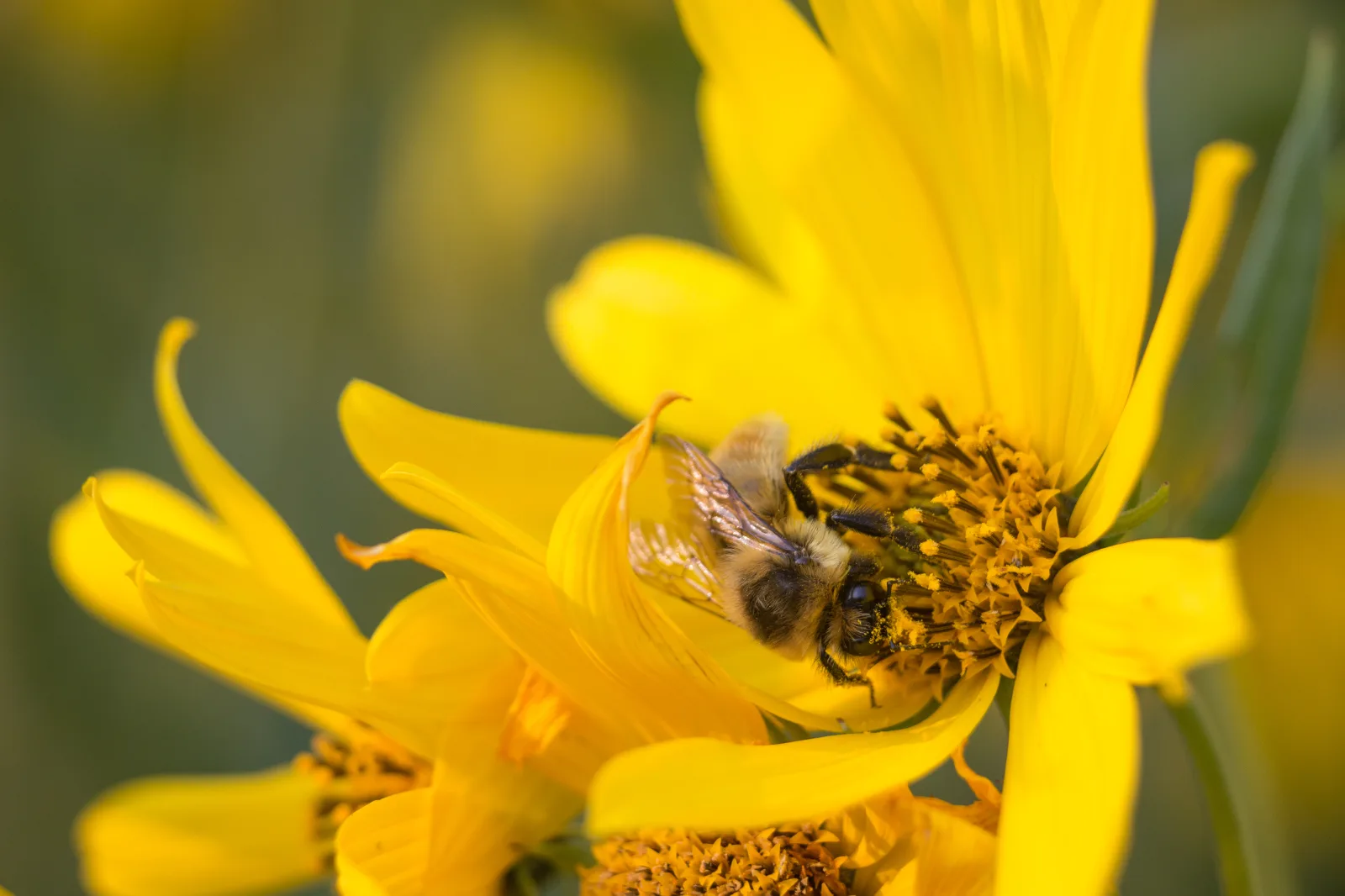
Native bees are easiest to find on flowering plants in full sun, especially native wildflowers rather than ornamental garden plantings — a single large sunflower head can host more than 100 individual foraging bees over the course of its bloom, making sunflower and other composite-family flowers (asters, coneflowers) a reliable place to start looking. Look for areas of exposed, sunny bare soil near flowering patches for ground-nest entrances, small round holes sometimes with a tiny mound of excavated dirt at the edge. Desert parks in particular — the Sonoran and Mojave regions especially — are known among researchers for unusually high native bee diversity relative to their harsh appearance, since dry, sparsely vegetated soil is exactly the nesting substrate most ground-dwelling species need.
If you want to go beyond casual observation, the USGS Native Bee Inventory and Monitoring Lab (part of the USGS Eastern Ecological Science Center, based in Beltsville, Maryland, and led by research biologist Sam Droege) processes bee specimens collected from national parks, wildlife refuges, and other federal land specifically to build long-term species baselines — the same kind of monitoring effort that produced the 46-park survey above. Their identification guides and specimen photography are built for exactly the kind of amateur naturalist curious enough to want to know which of the 4,000 species they just photographed.
How This Differs From Everything Else Native-Bee-Related on This Site
This site’s existing bee and honey museum guide and bee farm tours guide both cover managed-honey-bee tourism — visiting an apiary, a museum, or a working farm built around Apis mellifera. National parks are the inverse: essentially no managed hives (most parks actively discourage introducing non-native honey bees, since they can outcompete native species for forage), and the entire value is in the wild, undomesticated bee diversity most visitors never notice. If declining pollinator populations are a topic of interest beyond native bees specifically, our piece on the Rusty Patched Bumble Bee — America’s first federally endangered bumble bee species — covers a related but distinct conservation story with direct relevance to several of the same climate-vulnerable habitats this survey targeted.
Frequently Asked Questions
Are honey bees allowed in national parks?
Generally no for new introductions — the National Park Service’s mission is preserving native ecosystems, and honey bees are a non-native managed species that can compete with native bees for limited forage. Policy varies by park and by whether pre-existing agreements are in place, so this isn’t a uniform blanket rule everywhere.
What’s the easiest native bee species for a beginner to identify?
Bumble bees (genus Bombus) are the largest, slowest-flying, and most visually distinct native bees for a beginner, since their large size and fuzzy coloring make them far easier to observe closely than the smaller sweat bees, mining bees, or leafcutter bees that make up most of the 4,000-species total.
Do national parks have citizen-science programs for reporting bee sightings?
Broader pollinator- and insect-focused citizen science platforms like iNaturalist are commonly used by park visitors and researchers alike to log sightings, and observations from park land regularly feed into exactly the kind of species-baseline research the USGS Bee Lab conducts, even outside a park’s own formal survey periods.
Is it safe to get close to a ground-nesting bee’s tunnel?
Yes, in almost all cases — the vast majority of native bee species are solitary and non-aggressive, since without a colony or stores to defend, stinging offers them little benefit and most species rarely sting people even under direct handling. This is a genuine behavioral difference from defensive honey bee colonies.
What’s the best time of year to see native bees in a national park?
Spring through mid-summer is generally most productive at lower elevations, since that’s when the widest range of wildflowers is blooming; high-elevation parks like Yellowstone or Glacier tend to peak later, into July and August, once snowmelt clears and alpine flowers open.
How can I tell a native bee apart from a honey bee while visiting?
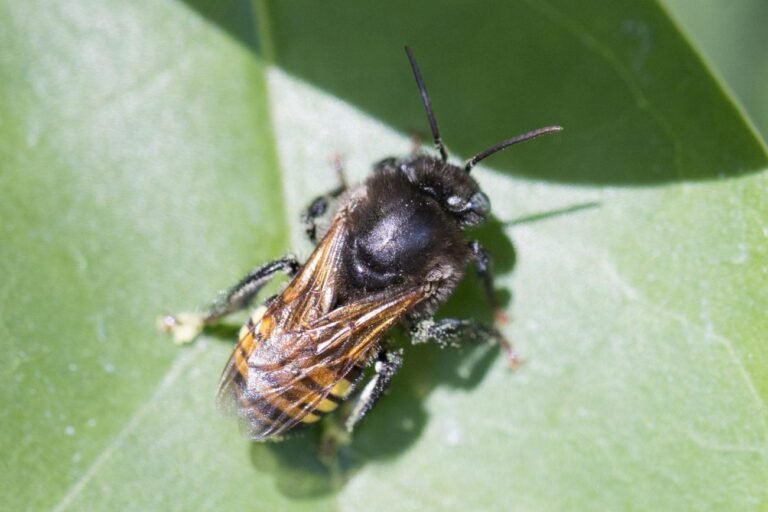
Honey bees are a fairly uniform golden-brown and always found in large numbers near a hive. Native bees vary enormously by comparison — many sweat bees are metallic green or blue, mining bees are often fuzzy and solitary, and most native species are seen alone or in small numbers on a single flower rather than in a coordinated group.
The next time you’re in a national park and see a small, unremarkable insect working a wildflower, there’s a real chance it’s one of roughly 4,000 native bee species most visitors never learn to recognize — and a reasonable chance it hasn’t been formally documented at that specific park at all.