Last Updated September 15, 2026
Apiary volunteering — working on a real bee farm in exchange for food, lodging, and hands-on experience rather than a paycheck — is a genuine, long-established practice, most commonly organized through WWOOF (World Wide Opportunities on Organic Farms), a real work-exchange network operating since 1971 across more than 130 countries. Here’s how it actually works, what a typical placement looks like, and what to verify before committing time and travel to one.
Key Takeaways
- WWOOF is a real, long-running work-exchange organization (founded 1971) connecting volunteers with host farms — including some that specifically keep bees — in exchange for food, lodging, and skill-building rather than wages.
- Typical WWOOF workdays run five to six hours, and hosts explicitly do not pay a salary — this is a skills-and-experience exchange, not paid seasonal farm labor.
- Not every WWOOF host farm includes beekeeping specifically — apiary work is one of many possible activities across the network’s host farms, so you need to search or filter for it directly rather than assuming any given host keeps bees.
- Workaway is a similar, separately operated work-exchange platform worth checking alongside WWOOF, though verify any specific host’s current listing and reviews directly rather than assuming availability.
- Treat any work-exchange placement like any other volunteer commitment abroad: verify the host’s reviews, confirm exactly what’s provided (food, lodging, training) versus what you’re expected to bring, and understand you are not an employee with standard labor protections.
Table of Contents
- How Apiary Volunteering Actually Works
- What a Typical Placement Actually Involves
- What to Verify Before Committing
- Setting Realistic Expectations
- WWOOF vs. Workaway: Cost and Structure
- Frequently Asked Questions
How Apiary Volunteering Actually Works
WWOOF (World Wide Opportunities on Organic Farms) is the most established real network for this kind of placement — a grassroots organization that has paired volunteers with host farms since 1971, now spanning more than 130 countries and over 100,000 volunteers connected to more than 12,000 host farms. The basic structure is a direct exchange: volunteers work an average of five to six hours a day, and in return the host provides food, lodging, and hands-on learning — there is no wage involved, which is the core distinction between this and paid seasonal farm labor. Beekeeping is one of many activities WWOOF hosts can offer alongside general farm work, gardening, or livestock care, so an apiary-specific placement means searching the network’s country-specific listings for hosts that explicitly mention bees rather than assuming any given farm keeps them. Workaway operates on a broadly similar work-exchange model and is worth checking as a second real option, though — as with any host on any platform — you should verify a specific listing’s current activity and reviews directly rather than assuming it matches a general description of the platform.
What a Typical Placement Actually Involves
A genuine apiary-focused work exchange typically combines real beekeeping tasks with general farm responsibilities, since very few host farms run bees as their sole activity. Expect a mix of: assisting with hive inspections alongside the host beekeeper, help with honey harvest and extraction during the relevant season, general apiary maintenance (equipment cleaning, hive assembly, site upkeep), and — depending on the specific host — other farm duties unrelated to bees entirely, since “organic farm” hosts on WWOOF specifically often run diversified operations rather than a single-focus apiary business. This variety is normal and expected for the work-exchange model; it’s part of what distinguishes it from a dedicated beekeeping apprenticeship or paid seasonal apiary job.
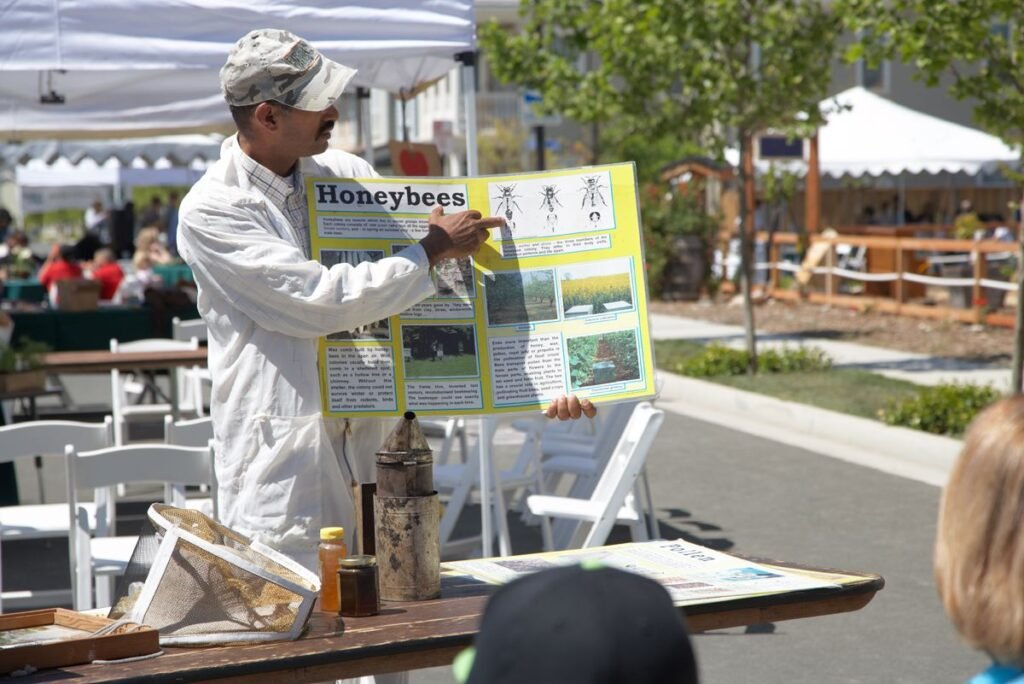
“Together we cleaned and disinfected scores of hive boxes, frames, and supers at the miellerie (honey house).”
— Kristina Goetz, describing her own WWOOF beekeeping placement in the foothills of the Pyrenees, France, in Small Farmer’s Journal
What to Verify Before Committing
Because you’re exchanging real labor and travel time for an unpaid arrangement, verify these specifics directly with any host before committing:
- What’s actually provided — confirm food and lodging arrangements in writing (a shared farmhouse room, a separate cabin, camping) and whether any additional costs fall on you.
- How much genuine beekeeping work is involved — ask directly what proportion of the work is apiary-specific versus general farm labor, since listings can describe “beekeeping” as one of several activities without specifying how central it actually is.
- Recent, specific reviews from past volunteers — look for reviews that mention concrete, current details rather than vague praise, and be cautious of a listing with no recent activity at all.
- Safety and insurance basics — ask what protective beekeeping gear is provided, whether the host carries any liability coverage for volunteers, and what their sting-allergy policy is.
- Visa and legal status for your specific country — work-exchange arrangements interact differently with tourist visa rules depending on the country; verify this directly rather than assuming a “volunteer, not employee” framing exempts you from all visa considerations everywhere.
Setting Realistic Expectations
Apiary volunteering is genuinely valuable for building real hands-on experience and meeting working beekeepers, but it isn’t a substitute for formal training, and it isn’t paid work. It suits someone who wants immersive, real farm-and-apiary experience in exchange for their labor and time — often while traveling — more than someone looking for structured beekeeping education or an income source. If formal, credentialed instruction is the actual goal rather than hands-on immersion, a state or regional beekeeping association’s certification program is usually a more direct path.
WWOOF vs. Workaway: Cost and Structure
The two platforms mentioned above are structured very differently when it comes to actually joining, which matters if you’re planning to travel to more than one country:
| Platform | Membership Model | Price | Reach | Finding Bee-Specific Hosts |
|---|---|---|---|---|
| WWOOF | Separate national membership per country (no single global account) | Varies by country’s national organization — a new membership is required for each country you WWOOF in | 130+ countries via national organizations plus WWOOF Independents | Search each country’s own listings for hosts that specifically mention beekeeping |
| Workaway | Single global membership | €59/year for a solo account, €69/year for a couple/friends account (confirmed directly on workaway.info) | 170+ countries under one account | Filter or search listings for “beekeeping” or “apiary” |
Neither platform guarantees a bee-specific placement just by joining — in both cases, beekeeping is one activity among many that an individual host may or may not actually offer, so the membership fee buys you access to search and contact hosts, not a guaranteed apiary placement. If you’re planning to WWOOF in several countries on one trip, Workaway’s single global membership can work out cheaper and simpler than buying a separate WWOOF membership per country.
Frequently Asked Questions
Is WWOOF a legitimate organization?
Yes — WWOOF (World Wide Opportunities on Organic Farms) is a real, established work-exchange network that has operated since 1971 and now spans more than 130 countries.
Do apiary volunteers get paid?
No. The WWOOF model, and most similar work-exchange arrangements like Workaway, are explicitly unpaid — volunteers work in exchange for food, lodging, and hands-on learning, not wages.
Will I definitely work with bees if I sign up for a WWOOF placement?
Not automatically — beekeeping is one of many activities different WWOOF host farms may offer. You need to search specifically for hosts that mention apiary work in their listing rather than assuming any organic farm placement includes it.
Is apiary volunteering safe if I’ve never worked with bees before?
Reputable hosts provide protective gear and hands-on instruction alongside the work itself, similar in spirit to a beginner beekeeping workshop. The main things to verify directly with any specific host are what gear is provided and what their policy is for anyone with a known bee-sting allergy.
How is this different from a paid seasonal beekeeping job?
A work-exchange placement like WWOOF explicitly trades labor for food, lodging, and experience rather than a wage, and it’s typically less structured than paid seasonal apiary work, which usually involves a formal employment arrangement, set pay, and often more specialized, higher-volume tasks.
How much does it cost to join WWOOF or Workaway?
Workaway charges a single global membership fee — confirmed on its own site at €59/year for one person or €69/year for a couple/friends account, covering all 170+ countries under one account. WWOOF works differently: each country has its own national WWOOF organization with its own separate membership fee, so a multi-country trip means buying more than one WWOOF membership.
Do I need prior beekeeping experience to volunteer?
No — most hosts expect to teach volunteers from scratch, similar to a beginner workshop, and provide protective gear and hands-on instruction. That said, always confirm directly with the specific host what training they actually provide before you commit to travel.
For additional context, see WWOOF (World Wide Opportunities on Organic Farms).