Last Updated September 15, 2026
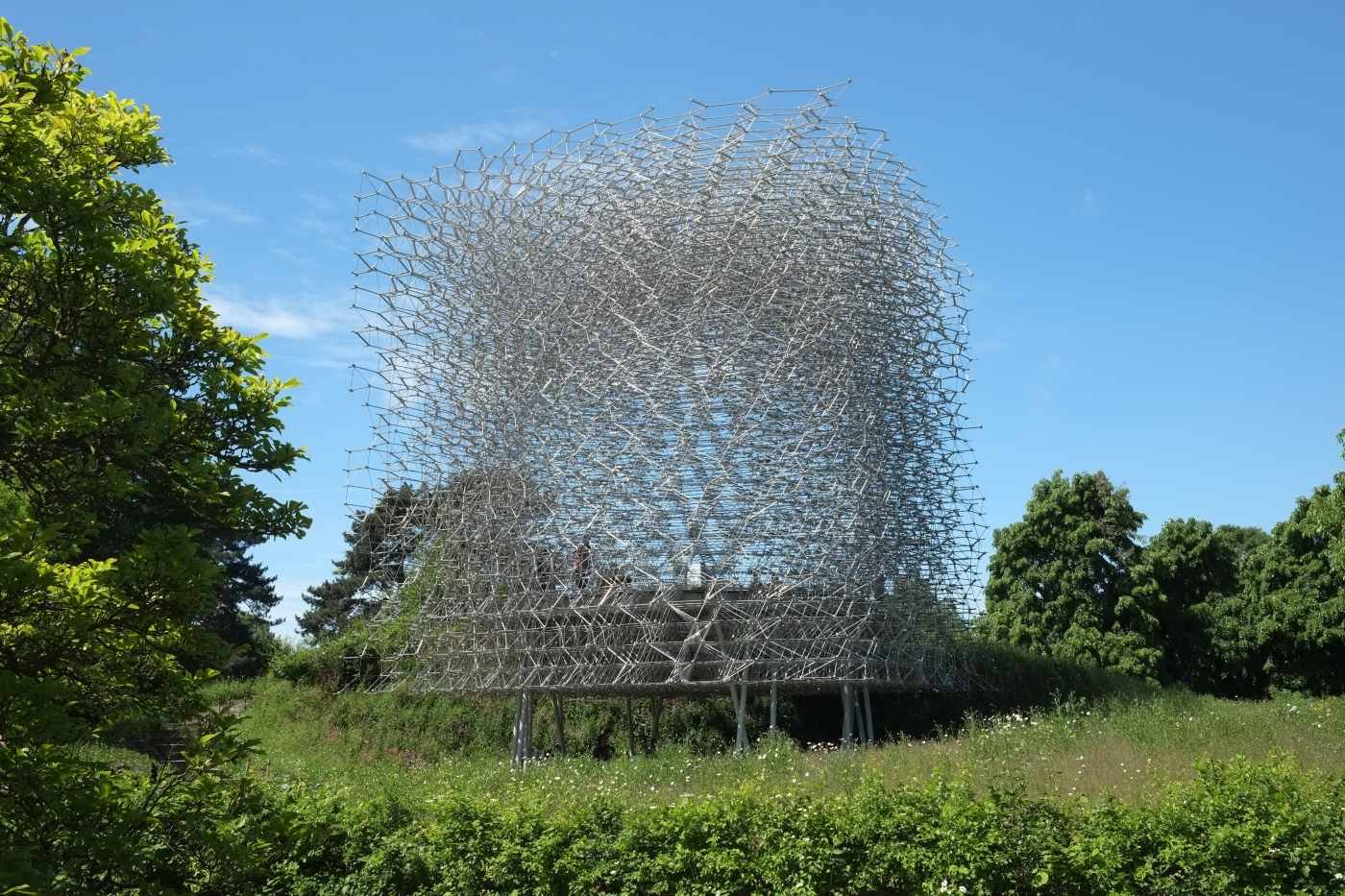
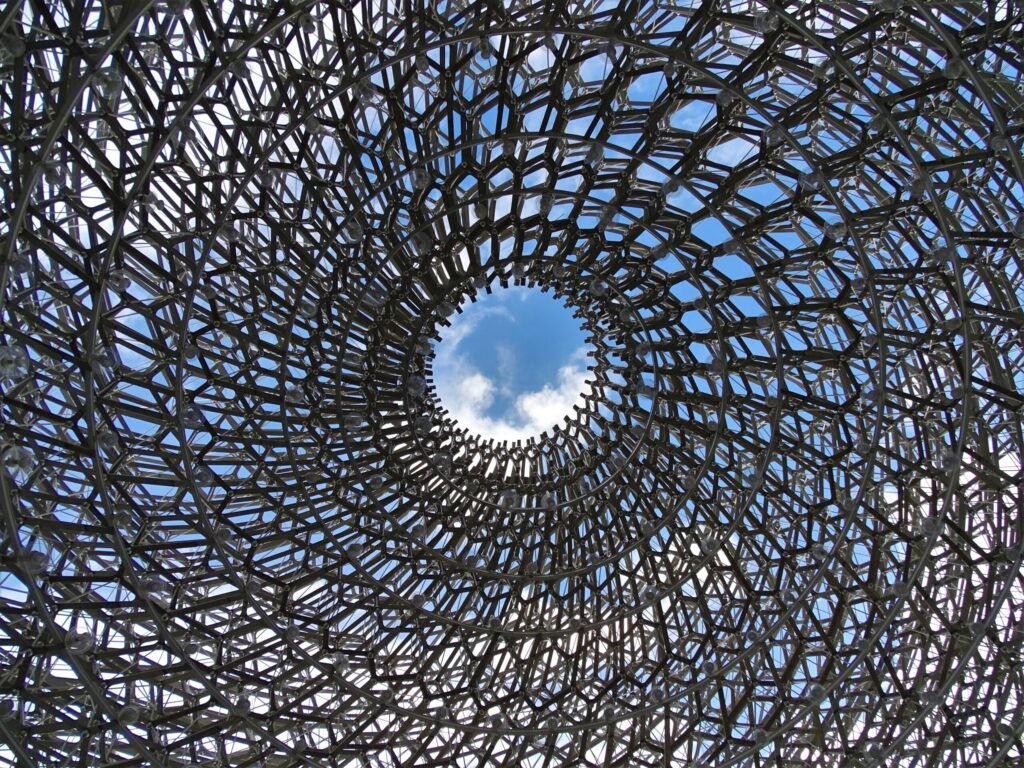
The Hive at Kew Gardens is a 17-meter aluminum sculpture whose lights and sound are controlled in real time by the vibrations of an actual honeybee colony living nearby — the closer the real hive gets to swarming activity, the busier the light show inside the sculpture becomes. Originally built as the UK’s gold medal-winning pavilion at the 2015 Milan Expo, it was dismantled, shipped home, and rebuilt permanently in London’s Royal Botanic Gardens, Kew in 2016 — making it one of the only places in the world where you can walk inside a structure that is, in effect, a giant translation device for what’s happening inside a beehive.
Key Takeaways
- The Hive was designed by UK sculptor Wolfgang Buttress as the centerpiece of the British pavilion at Expo Milano 2015, where it won the event’s Gold Medal.
- The structure is built from roughly 170,000 individual aluminum components, stands about 17 meters (55 feet) tall, and weighs around 40 tonnes.
- Its thousands of LED lights and embedded speakers are wired to microphones and accelerometers on a real, functioning beehive at Kew — the intensity of light and the layered soundscape of cello, vocals, and bee noise rise and fall with the real colony’s activity.
- After the Expo closed in October 2015, the entire pavilion was disassembled, shipped to the UK, and reopened permanently at Kew Gardens on 18 June 2016 — the first UK Expo pavilion ever rebuilt on home soil.
- It’s a genuinely different kind of apitourism stop than a farm tour, festival, or museum — this site’s existing Apitourism content — because it’s an art-and-science installation you experience acoustically and visually, not a working apiary you observe from outside.
Table of Contents
- What The Hive Actually Is
- How a Real Beehive Controls the Sculpture
- From a Milan Expo Pavilion to a Permanent Kew Landmark
- Visiting The Hive
- Frequently Asked Questions
What The Hive Actually Is
The Hive is a walk-through lattice sculpture designed to give visitors a physical sense of what it might feel like to be inside a beehive — not literally, but through scale, structure, and a constantly shifting soundscape. Nottingham-based artist Wolfgang Buttress built it from close to 170,000 individual pieces of aluminum assembled into a lattice roughly 17 meters high, weighing about 40 tonnes. Visitors walk up a path through long grass and wildflower meadow before entering the base of the structure and climbing a central staircase inside it, surrounded on all sides by the open metal lattice and thousands of small LED lights.
How a Real Beehive Controls the Sculpture
What separates The Hive from a conventional light installation is that none of its light or sound patterns are pre-programmed on a loop. Sensors on an actual working beehive at Kew Gardens pick up the vibration and acoustic activity of the real colony inside it, and that live data feed drives both the intensity of the LED lights throughout the lattice and a generative soundscape — a mix of amplified bee sound, cello, and vocal recordings — that visitors hear from speakers built into the structure. When the real colony is more active, the lights pulse more and the sound swells; when the hive is quieter, so is the installation. It’s a genuine (if artistic, not scientific-instrument-grade) real-time translation of honeybee colony activity into something a non-beekeeper can perceive directly, rather than a fixed representation of “what a beehive is like.”
“The Hive creates a powerful, immersive space for us to explore the urgent issues we face in relation to pollinators.”
— Richard Deverell, Director, Royal Botanic Gardens, Kew
The soundscape itself was composed by the band Spiritualized together with Amiina, the Icelandic string quartet known for their work with Sigur Rós. Every one of the roughly 200 recorded musical sections is written in the key of C — the pitch bees are commonly said to hum in — so that whichever sections the live hive data triggers, the result stays musically coherent (Kew Gardens). The installation went on to win a Landscape Institute Award in 2016 for its impact as a public landscape feature.
From a Milan Expo Pavilion to a Permanent Kew Landmark
The Hive wasn’t built for Kew originally. It was commissioned as the United Kingdom’s national pavilion for Expo Milano 2015, the international exposition held in Milan that year under the theme “Feeding the Planet, Energy for Life” — a theme the pollinator-decline angle of a giant beehive sculpture fit directly. The pavilion won the Expo’s Gold Medal for pavilion design. Rather than being demolished after the Expo closed in October 2015, as most pavilions are, the structure was carefully disassembled, transported back to the UK, and reconstructed on a new site within Kew Gardens — reopening to the public on 18 June 2016. It was the first time a UK Expo pavilion had ever been rebuilt for permanent public use in Britain, and it remains a fixture of Kew’s grounds today, now surrounded by its own wildflower meadow planted specifically to support real pollinators on site.
Visiting The Hive
The Hive sits within Kew Gardens’ wider grounds and is included in standard Kew Gardens admission — there’s no separate ticket for it. It rewards visiting at different times: the wildflower meadow approach looks and smells different across the growing season, and the light and sound intensity genuinely varies with the real colony’s activity levels, which shift with time of day, season, and weather in ways that mirror ordinary honeybee behavior. For anyone planning a UK apitourism stop alongside a working farm visit or a bee-and-honey museum — the kind of trip this site’s existing bee and honey museum guide and bee farm tour guide already cover — The Hive is a genuinely different category of stop: it’s about how bee activity can be represented and felt, not about observing beekeeping practice directly. Kew’s own visitor information for the installation, including seasonal opening details, is published on Kew Gardens’ official site.
Frequently Asked Questions
What is The Hive at Kew Gardens?
It’s a large walk-through aluminum sculpture by artist Wolfgang Buttress whose lights and sound are driven in real time by sensors on an actual beehive at Kew, translating live colony activity into a visual and audio experience.
Was The Hive originally built for Kew Gardens?
No. It was originally the UK’s pavilion at Expo Milano 2015, where it won the Expo’s Gold Medal, before being dismantled and permanently rebuilt at Kew Gardens, reopening in June 2016.
How does the real beehive control the sculpture’s lights and sound?
Sensors and microphones on a working beehive near the installation feed live vibration and acoustic data that drives the intensity of the LED lights and a layered soundscape throughout the structure — busier colony activity produces a more intense light and sound show.
Do you need a separate ticket to see The Hive?
No, it’s included in standard admission to the Royal Botanic Gardens, Kew, and sits within the wider gardens surrounded by a wildflower meadow.
How big is The Hive?
It stands about 17 meters (55 feet) tall, weighs roughly 40 tonnes, and is built from close to 170,000 individual aluminum components.
Related Reading
Image credits: Photo: Anthony O'Neil, CC BY-SA 2.0, via Wikimedia Commons.