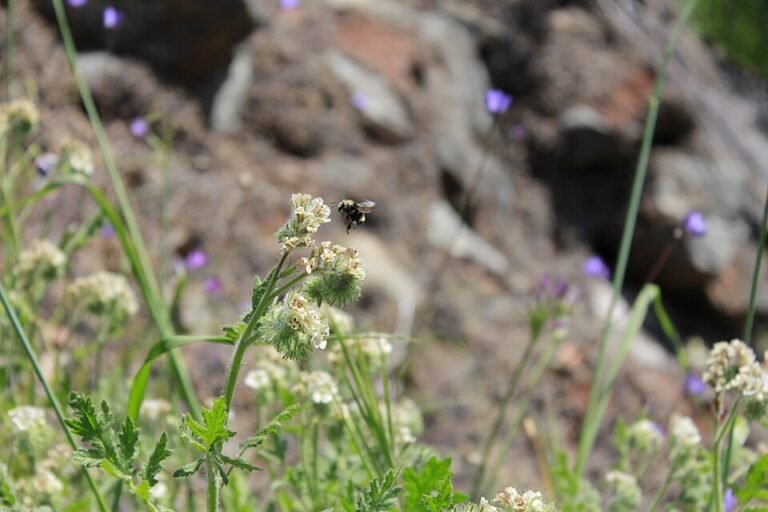
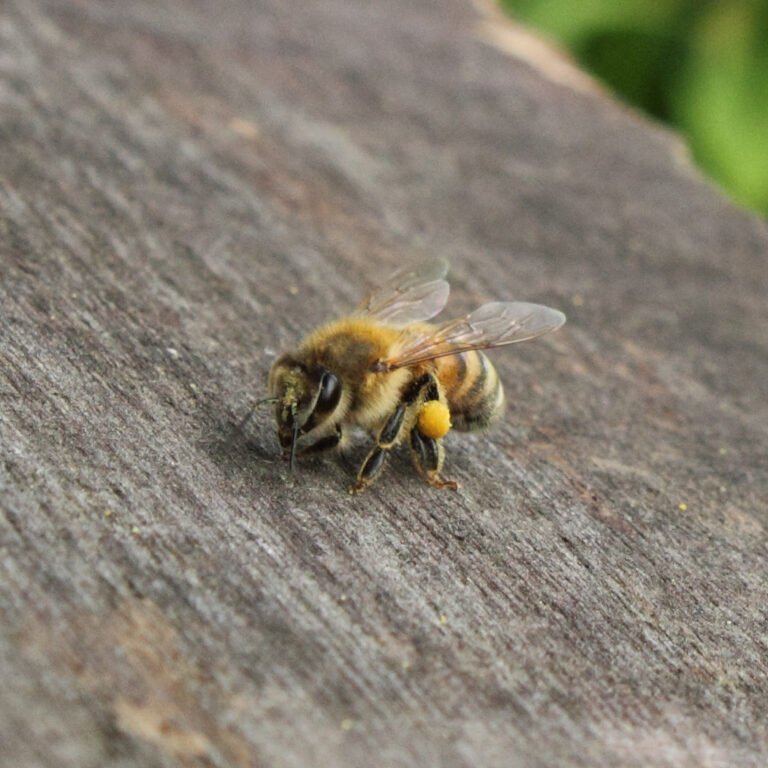
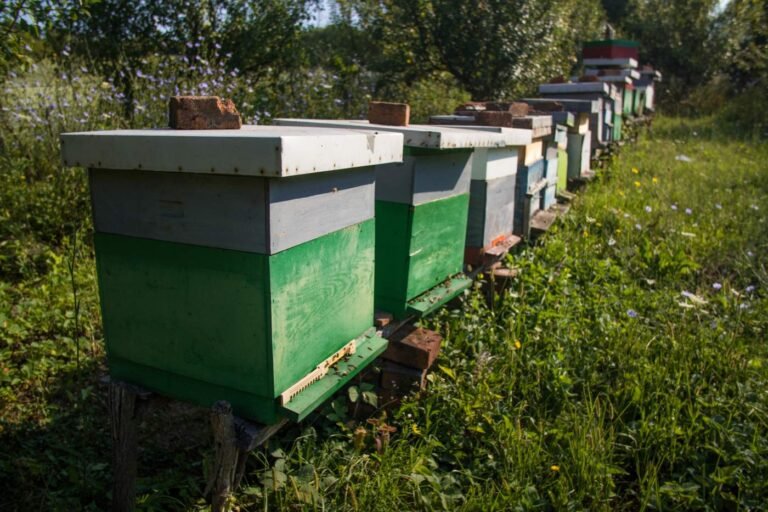
In 2015, the Norwegian environmental group ByBi turned an ordinary Scandinavian capital into a live experiment: a chain of gardens, green roofs, and feeding stations spaced roughly every 250 meters across Oslo, built specifically so a bee could fly from one end of the city to the other without running out of forage. Journalists nicknamed it the “bee highway,” and it’s often described as the world’s first project of its kind — a claim that undersells what actually made it work, which wasn’t clever branding but hundreds of ordinary Oslo residents, schools, and businesses each agreeing to plant one more stretch of the route.
Key Takeaways
- Oslo’s bee highway, formally ByBi’s Pollinator Passage, launched in January 2015 and traces a route from the Holmenkollen hills in the northwest to Nøkkelvann lake in the southeast.
- The idea is simple but had never been organized at city scale before: no single garden has to be large, but no gap in the chain can be wider than a bee can comfortably fly without refueling — roughly every 250 meters.
- ByBi, a nonprofit urban beekeeping and pollinator advocacy group, coordinated the project rather than building it directly — participation came from rooftop gardens, schoolyards, balconies, and business plantings.
- The project addresses a specific, well-documented problem: urban and agricultural landscapes are often fragmented into disconnected patches of forage separated by “food deserts” bees can’t safely cross.
- Oslo’s model has since been cited internationally as a template, though replicating it requires the same ingredient that made it work: distributed, voluntary participation rather than a single large habitat project.
Table of Contents
- The Problem: Why Isolated Gardens Aren’t Enough
- How the Pollinator Passage Actually Works
- Who’s Behind It: ByBi
- The Route: From Holmenkollen to Nøkkelvann
- Does a Corridor Like This Actually Work?
- Could Your City Build Something Similar?
- Frequently Asked Questions
The Problem: Why Isolated Gardens Aren’t Enough
A single well-planted pollinator garden helps the bees that happen to find it. What it doesn’t do is help a bee get anywhere else. Cities and even farmland are often a patchwork of good forage separated by long stretches of pavement, mown turf, or bare fields — corridors of nothing, in effect, that a honeybee can cross but that leave many smaller native bees stranded, unable or unwilling to fly far enough between food sources to make the trip worthwhile. Solitary bees in particular tend to forage within a few hundred meters of their nest; put a gap wider than that between two gardens, and for practical purposes they might as well be on opposite sides of a wall.
This is exactly the design problem ByBi set out to solve, and it’s why “just plant more flowers” advice, while true, misses half of what actually determines whether a city functions as pollinator habitat. Distribution matters as much as total area.
How the Pollinator Passage Actually Works
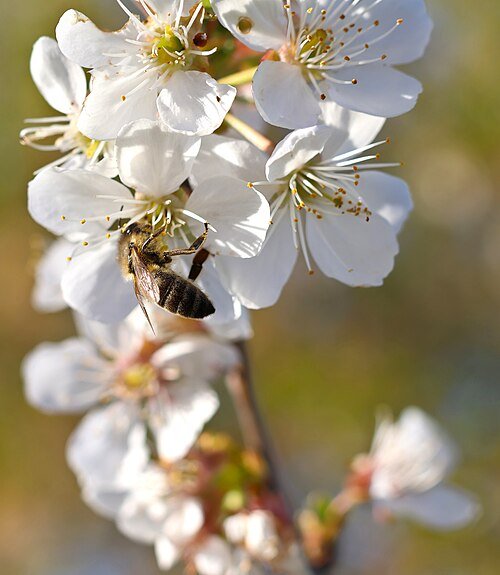
ByBi’s answer, launched in January 2015, was to map a continuous route across Oslo and ask the city itself to plant it — not as one municipal project, but as a patchwork of small, independent contributions that happened to line up along the same corridor. A rooftop garden on an office building, a scattering of pollinator-friendly planters on a school playground, flowerboxes on apartment balconies, a “bee hotel” tucked into a pocket park: none of these is impressive alone. Strung together at intervals of roughly 250 meters — close to the maximum comfortable foraging hop for many bees — they add up to something a single park or garden never could: an unbroken route.
ByBi published an online map showing every registered stop along the corridor, which served two purposes at once. It let residents see exactly where a gap remained and plant to fill it, and it gave the whole scattered effort a shared, visible identity — turning individually small gestures into something people could point to as one connected project.
Who’s Behind It: ByBi
ByBi is an Oslo-based nonprofit focused on urban beekeeping and pollinator advocacy, and the Pollinator Passage (Norwegian: Pollinatorpassasjen, sometimes translated as “bee highway” or by its Norwegian nickname Humlebylinjen) was one of its flagship projects rather than a city-government program. That distinction matters for anyone hoping to copy the model: it didn’t require a municipal budget line or a zoning change to get started, only an organization willing to coordinate volunteers, map a route, and keep pushing participants to close remaining gaps year over year.
The Route: From Holmenkollen to Nøkkelvann
The corridor runs roughly from the wooded hills around Holmenkollen in Oslo’s northwest — best known internationally for its ski jump — down through the built-up city center to Nøkkelvann, a lake in the southeast. That’s a genuinely long traverse through dense urban terrain, which is precisely the point: it deliberately crosses the kind of built environment where forage is normally most fragmented, rather than connecting two patches of forest that barely needed help in the first place.
Along the way, the route weaves through green roofs, private gardens, business plantings, and public green space, relying on residents and institutions to register their own plot as a link in the chain rather than waiting for the city to plant it for them.
Does a Corridor Like This Actually Work?
The ecological logic behind habitat corridors is well established in conservation biology more broadly — fragmented habitat is one of the best-documented drivers of pollinator decline, and reconnecting fragments is a standard prescription, not a novel idea invented in Oslo. What made the Pollinator Passage notable wasn’t the underlying science; it was proving that a corridor could be assembled voluntarily, plot by plot, inside a functioning European capital, rather than requiring a single land purchase or a top-down planting program.
That said, a fair account has to note the honest limits of a project built this way. Coverage depends entirely on continued voluntary participation — a corridor stitched together from balconies and schoolyards can develop gaps just as easily as it closes them, and there’s no enforcement mechanism keeping any one link permanently planted. This site has covered a related U.S. effort to formalize the same logic with more measurement rigor in its piece on urban biodiversity corridors for pollinators, which looks at how cities like Chicago approach connected habitat design more systematically.
Could Your City Build Something Similar?
The Oslo model translates surprisingly well to smaller scales, which is arguably its most useful lesson for an individual reader rather than a city planner. You don’t need a nonprofit or a published map to apply the same logic on your own block: the goal isn’t one perfect garden, it’s making sure no single gap between plantings is wider than a bee is willing to cross. Coordinating with two or three neighbors to stagger bloom times and planting locations does more for local pollinators than the same number of plants concentrated in one yard.
For plant choices that actually hold up across a full season rather than blooming once and leaving a gap, this site’s guides to drought-resistant flowers for bees and best nectar-producing trees for bees are a reasonable starting point, and pairing that with the timing focus of National Pollinator Week gives a natural annual prompt to check for new gaps. Organizations that specialize in exactly this kind of connected-habitat thinking, like the Xerces Society, publish their own corridor and pollinator-pathway guidance for gardeners who want to go further than a single yard.
“The pollinators in Oslo are enjoying a network of gardens that allow them free passage throughout the city, with insect hotels where they can rest along the way.” — reporting on ByBi’s Pollinator Passage project, cited by outlets including CBC and the Christian Science Monitor following the corridor’s 2015 launch.
Frequently Asked Questions
Is Oslo’s bee highway a real, continuous strip of land?
No — it’s a mapped route made up of many separate, independently planted or maintained spots (gardens, green roofs, balconies, feeding stations) spaced closely enough that a bee can travel between them, not one continuous planted corridor.
Who actually built and maintains it?
ByBi, an Oslo-based nonprofit focused on urban beekeeping and pollinator advocacy, coordinates the project; the individual stops are planted and maintained by the residents, schools, and businesses who register them.
When did the project start?
ByBi launched the Pollinator Passage in January 2015, building on planning work that began around 2014.
Is this really the world’s first urban bee corridor?
It’s widely reported that way in international press coverage from outlets like the CBC and Smithsonian Magazine, largely because of how it was organized — voluntarily, across an entire capital city — rather than because habitat corridors themselves were a new idea in conservation science.
Can an individual gardener apply this idea without a city-wide program?
Yes — the core principle (no gap in forage wider than a bee will comfortably cross) works at a neighborhood scale, by coordinating plant timing and placement with a few nearby yards rather than relying on one large garden.