Last Updated September 15, 2026
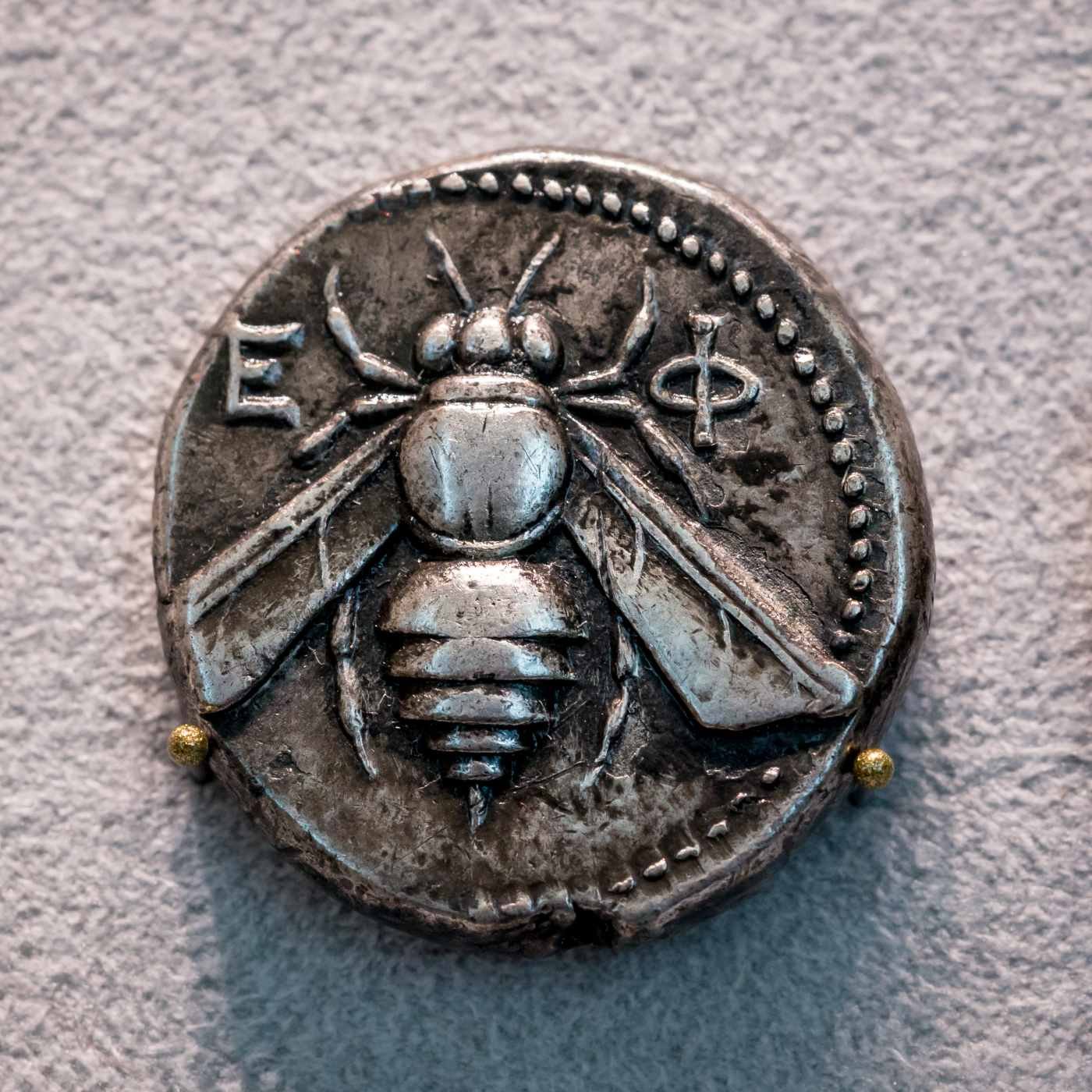
The ancient Greek city of Ephesus put a bee on its coins for more than 500 years — from around 625 BC until Ephesus became part of the Roman province of Asia in 133 BC — because the bee was sacred to Artemis, the goddess whose temple made Ephesus one of the wealthiest cities in the ancient world. Almost a thousand distinct varieties of these “bee and stag” coins survive today, making Ephesus’s bee arguably the most persistent civic symbol in ancient numismatics — and a very different kind of “bee on a coat of arms” story than the Barberini or Manchester bees this site has covered before.
Key Takeaways
- Ephesus, a Greek city in Ionia on the Aegean coast of modern Turkey, minted coins showing a bee on the obverse for roughly five centuries, from archaic electrum issues around 625 BC through silver tetradrachms until Ephesus became part of the Roman province of Asia in 133 BC.
- The bee referenced Artemis of Ephesus, whose temple — one of the Seven Wonders of the ancient world — dominated the city’s identity and economy; her priestesses were traditionally called Melissae (“bees”) and, per some ancient sources, senior temple officials were called Essenes.
- The reverse of most Ephesian bee coins pairs the bee with a stag, palm tree, or magistrate’s name — the stag also tied to Artemis as goddess of wild nature and the hunt.
- Specialist numismatic catalogs document close to 1,000 distinct bee-and-stag coin varieties from Ephesus, spanning electrum, silver, and bronze denominations.
- Unlike the Barberini bee (a family crest) or the Manchester bee (an industrial-era civic invention), the Ephesian bee is a genuinely ancient religious emblem tied directly to a documented cult practice, not a later reinterpretation of bee symbolism.
Table of Contents
- Why Ephesus Chose a Bee
- What the Coins Actually Look Like
- The Melissae: Ephesus’s Bee Priestesses
- Five Centuries on the Same Design
- Frequently Asked Questions
Why Ephesus Chose a Bee
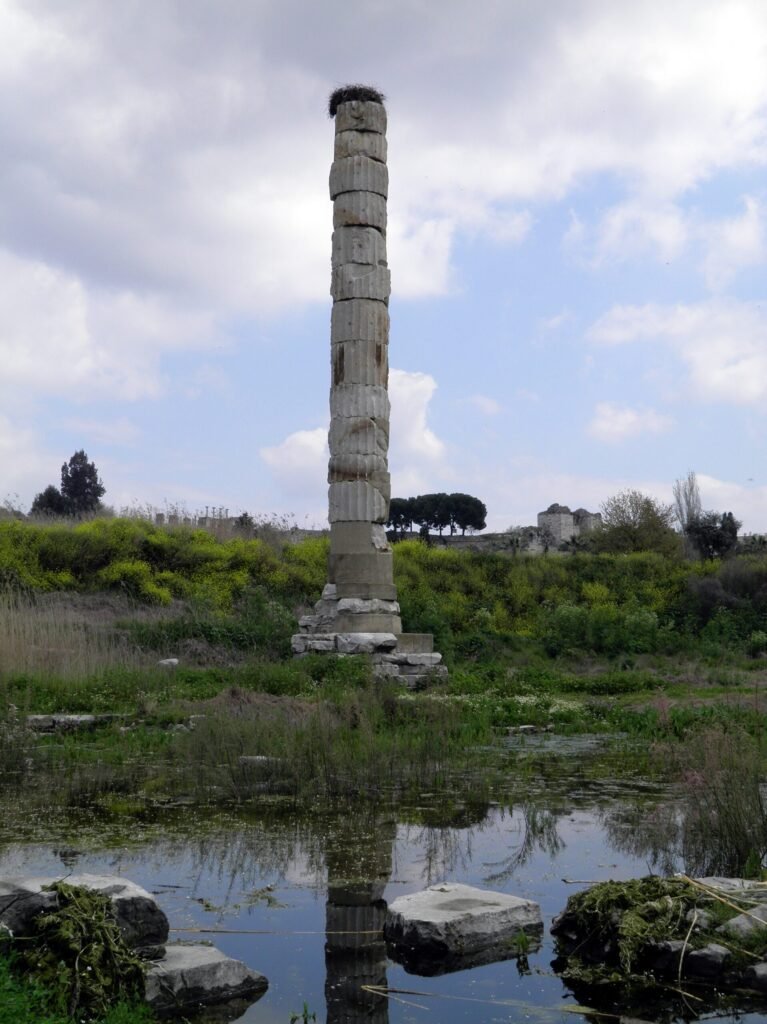
Ephesus sat on the Aegean coast of Ionia, in what is now western Turkey, and its wealth and identity were built almost entirely around one building: the Temple of Artemis, later counted among the Seven Wonders of the ancient world. Artemis of Ephesus was not quite the same figure as the huntress Artemis worshipped in mainland Greece — her Ephesian cult blended local Anatolian mother-goddess traditions with the Greek pantheon, and bees appear to have been part of that cult from an early period. When the city needed an emblem for its coinage, starting with early electrum issues in the 7th and 6th centuries BC, it chose the bee — an image tied directly to the goddess whose temple was the reason foreign traders, pilgrims, and their money came to Ephesus at all.
What the Coins Actually Look Like
The standard Ephesian design places a bee, usually shown from above with outstretched wings, on the obverse (front) of the coin. The reverse typically carries a stag — or the forepart of a stag — sometimes with a palm tree, and later issues add the name or monogram of the city magistrate who oversaw that year’s minting. The design was struck across an unusually wide range of denominations and metals: archaic electrum staters and fractions, classical-era silver drachms and tetradrachms with the distinctive quadripartite incuse square on the reverse, Hellenistic-period silver issues naming individual magistrates, and even Roman-era cistophoric tetradrachms combining a basket-and-serpent design with continued bee imagery on related issues. Specialist references covering Ephesian coinage catalog coins spanning roughly 625 BC to 133 BC under this same basic bee-and-stag template — a run of close to five centuries on one city’s coinage, ending when Ephesus was absorbed into the Roman province of Asia, which is long even by ancient Greek standards (CoinWeek).
The Melissae: Ephesus’s Bee Priestesses
The bee on Ephesian coins wasn’t just decorative shorthand for the city — it echoed the language used inside the Temple of Artemis itself. Ancient and modern scholarly sources on the Ephesian Artemis cult describe her priestesses by the title Melissae, the Greek word for “bees,” with a senior priestess sometimes referred to by a title translating to “queen bee” or “Bee-Keeper.” Some ancient writers also connect the title Essenes (or Essenoi) to male temple officials at Ephesus, a term that shows up again, unrelated, centuries later as the name of the Jewish sect known from the Dead Sea Scrolls — a coincidence in naming that has generated its own scholarly literature. Whatever the exact ritual role, the naming convention shows that bee imagery at Ephesus wasn’t limited to coin dies; it structured how people talked about the temple’s own staff.
Five Centuries on the Same Design
What makes the Ephesian bee unusual isn’t the symbol itself — bees show up in coinage from several ancient Greek cities — but its longevity and volume. A city changing its civic coin type every few decades was normal in the ancient Mediterranean; Ephesus instead kept minting bee-obverse coins, with evolving reverse details and denominations, across the transition from Archaic to Classical to Hellenistic Greece and into the Roman period. According to the long-running numismatic reference Wildwinds’ catalog of Ephesian coinage, collectors and researchers have documented close to a thousand distinct bee-and-stag varieties once every magistrate name, denomination, and minor die variation is counted — a genuinely large body of evidence for a single civic symbol’s staying power. For comparison, this site’s broader look at bee symbolism across cultures covers dozens of separate bee traditions; Ephesus is the rare case where one city’s version is documented in enough surviving physical objects to actually measure its own continuity in centuries.
For an earlier bee emblem, see the Minoan Malia Pendant.
Frequently Asked Questions
Why does Ephesus have a bee on its ancient coins?
The bee represented Artemis of Ephesus, the goddess whose temple — one of the Seven Wonders of the ancient world — was central to the city’s identity and economy. Her priestesses were traditionally known as Melissae, meaning “bees.”
How long did Ephesus mint bee coins?
Numismatic catalogs document Ephesian bee-and-stag coinage from roughly 625 BC until 133 BC, when the city became part of the Roman province of Asia — close to five centuries, spanning electrum, silver, and bronze issues.
What’s on the other side of an Ephesian bee coin?
Most reverses show a stag, or the forepart of a stag, another animal associated with Artemis as goddess of wild nature. Later issues add a palm tree and the name or monogram of the city’s minting magistrate.
Are Ephesian bee coins rare today?
No — because Ephesus minted them for so long and in such volume, they’re one of the more commonly available ancient Greek coin types for collectors, though prices vary enormously by date, metal, and condition.
Is the Ephesian bee related to Napoleon’s bee emblem or the Barberini bees?
No direct connection. Those are separate, much later traditions — a heraldic family crest (Barberini) and a Napoleonic revival of imperial bee imagery — while the Ephesian bee is a genuinely ancient religious symbol tied to a documented temple cult centuries before either.
Related Reading
Image credits: Photo: ArchaiOptix, CC BY-SA 4.0, via Wikimedia Commons.