Last Updated September 15, 2026
Elephants, it turns out, are genuinely afraid of bees. That real, documented behavioral fact – elephants reliably avoid areas with active beehives and flee from the sound of disturbed bees, even from audio recordings alone – has become the foundation of one of the more remarkable modern conservation-technology stories in beekeeping: the beehive fence, a low-cost barrier that uses real, living beehives to protect farmers’ crops from elephant raids while producing genuine bonus honey income at the same time. Pioneered in Kenya starting in 2008 by researcher Dr. Lucy King, working with Save the Elephants, the Kenya Wildlife Service, and University of Oxford, beehive fences represent a genuinely creative application of beekeeping knowledge to a serious, real-world human-wildlife conflict problem – a genuinely different kind of African beekeeping story than Ethiopia’s ancient honey-production tradition covered elsewhere on this site, since this one centers on bees as a conservation and conflict-mitigation tool rather than a food-production tradition first.
Key Takeaways
- A nine-year Save the Elephants/Oxford study (2014-2020s peak seasons) tracked 3,999 elephant approaches to Kenyan farms; beehive fences deterred an annual average of 86.3% of elephants during peak crop season and 76% across all seasons including drought years.
- Dr. Lucy King piloted the first beehive fence at Ex-Erok in Laikipia, Kenya, in 2008, and won the 2013 St. Andrews Prize for the Environment for the innovation.
- A typical fence spaces occupied hives roughly every 10 meters at chest height, wired so that disturbing any point on the line shakes the nearest hive.
- The approach has since been documented in other African countries – including Botswana, Mozambique, Tanzania, and Uganda – and in Asia, including Sri Lanka and Thailand.
- The findings were published in the peer-reviewed journal Conservation Science and Practice in October 2024, in partnership with Kenya’s Wildlife Research and Training Institute and Kenya Wildlife Service.
Table of Contents
- A Real, Serious Human-Elephant Conflict Problem
- Why Elephants Genuinely Fear Bees
- How a Beehive Fence Actually Works
- Dr. Lucy King’s Pioneering Research
- A Genuine Dual Benefit: Protection Plus Honey
- Beyond Kenya: Wider Adoption
- Real Limitations Worth Acknowledging
- Basic Construction Approach
- A Different Kind of Global Beekeeping Tradition
- Beehive Fences vs. Traditional Elephant Deterrents
- Common Misconceptions
- FAQ
A Real, Serious Human-Elephant Conflict Problem
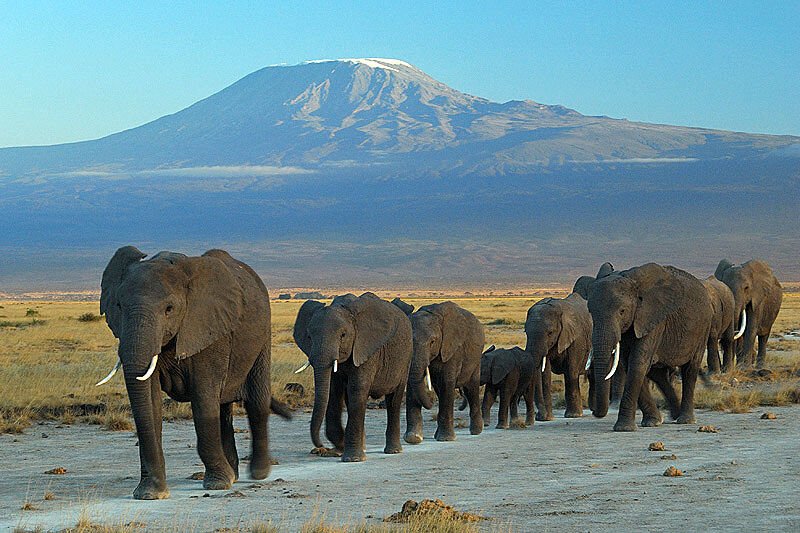
Human-elephant conflict is a genuine, serious problem in many African regions where elephant habitat borders agricultural land, with crop-raiding elephants causing real economic losses for subsistence and smallholder farmers, and conflicts between farmers and elephants sometimes escalating to genuinely dangerous or fatal outcomes for both people and elephants. This is the real-world problem beehive fences were developed to address – not an abstract conservation curiosity, but a practical response to a documented, ongoing conflict between human agricultural livelihoods and elephant conservation, where both sides of that conflict have real, legitimate stakes.
Why Elephants Genuinely Fear Bees
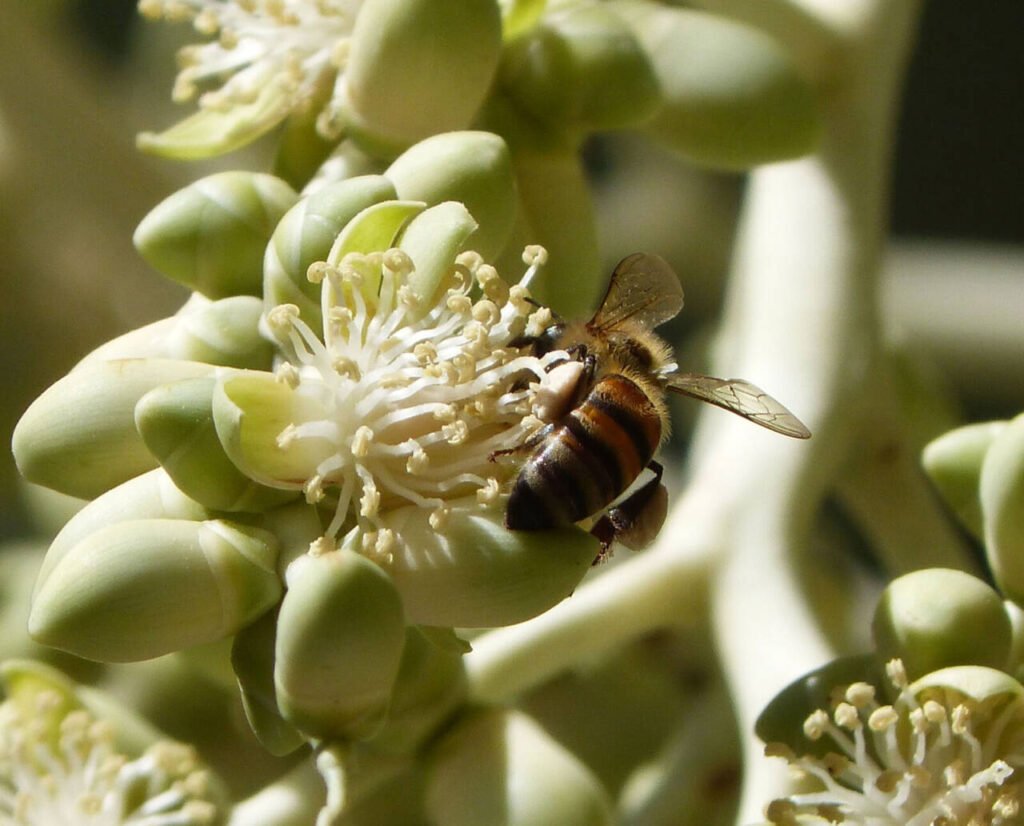
Research has documented that elephants reliably avoid areas with active beehives and show genuine fear and avoidance responses to the sound of disturbed, swarming bees – including measurable behavioral responses to audio recordings of bee sounds alone, without any physical bee presence at all. This is a real, tested biological finding rather than assumed folklore: African honey bees (Apis mellifera scutellata) can deliver genuinely painful stings to sensitive areas on an elephant, including around the eyes, trunk, and other less thickly-skinned areas, giving elephants real evolutionary reason to have developed and maintained an aversion response to the sound and threat of an angry swarm.
How a Beehive Fence Actually Works
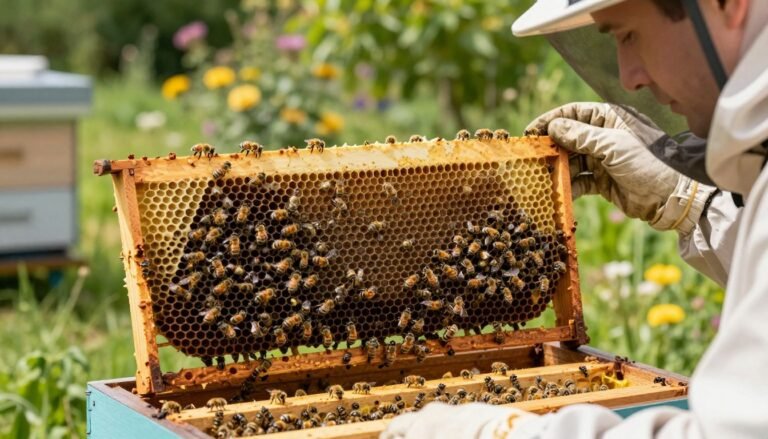
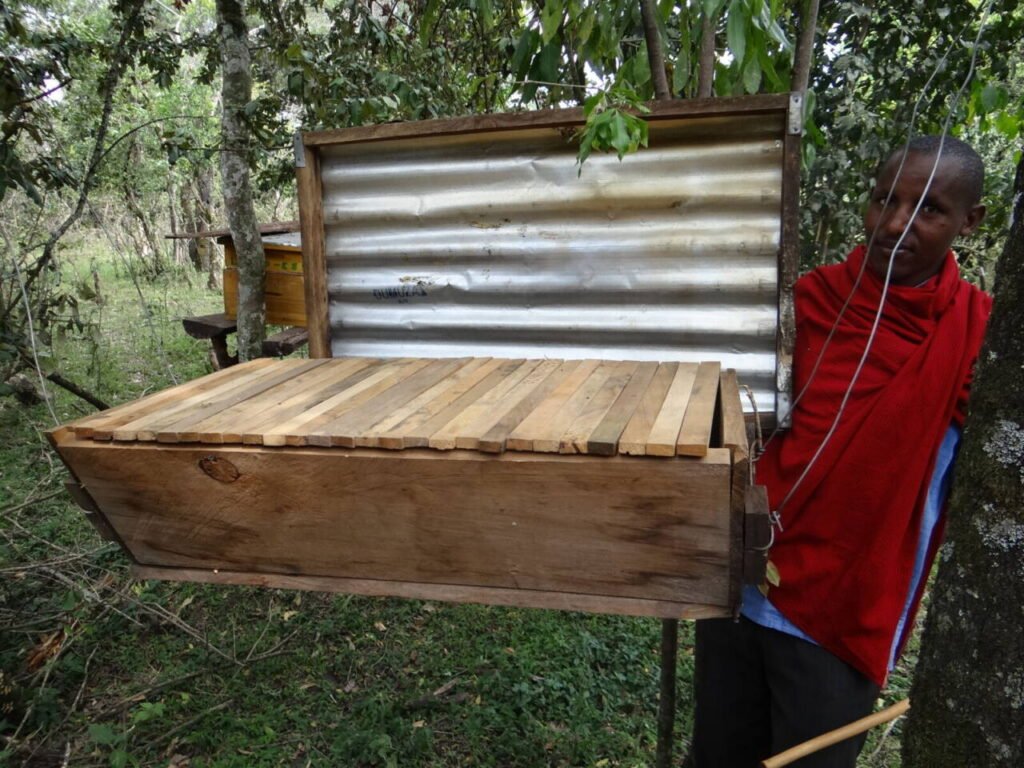
A beehive fence consists of a physical boundary structure incorporating occupied beehives hung roughly every 10 meters at chest height and connected by wire, positioned so that an elephant attempting to push through or physically disturb the fence line shakes or dislodges a hive, provoking the resident colony to swarm out defensively. Over time, elephants encountering this deterrent learn to associate the fence line itself with the threat of bee stings and begin avoiding the boundary altogether, meaning the fence’s effectiveness compounds as elephants in a given area develop a learned avoidance response, rather than requiring every single encounter to actively trigger a defensive bee response to remain effective.
Dr. Lucy King’s Pioneering Research
Dr. Lucy King, working with the conservation organization Save the Elephants and affiliated with Oxford University, piloted the first tested beehive fence at the Ex-Erok site in Laikipia, Kenya, in 2008, building on earlier observational research into elephant aversion to bee sounds and stings. She was awarded the 2013 St. Andrews Prize for the Environment for the innovation. A nine-year follow-up study, published in October 2024 in the peer-reviewed journal Conservation Science and Practice by Save the Elephants, Kenya’s Wildlife Research and Training Institute, Kenya Wildlife Service, and the University of Oxford, tracked 3,999 elephant approaches to fenced farms and found the fences deterred an annual average of 86.3% of elephants during peak crop-raiding season and 76% across all seasons, including drought years when forage is scarcer and elephants are more food-stressed.
“Beehive fences are very effective at reducing up to 86.3% of elephant raids when the crops in the farms are at their most attractive.”
A Genuine Dual Benefit: Protection Plus Honey
Beehive fences offer farmers a genuinely valuable dual benefit beyond crop protection alone: the beehives themselves produce real, sellable honey, giving farmers an additional income stream directly tied to maintaining the very structure protecting their crops. This dual-benefit design is a genuinely elegant piece of applied conservation thinking – rather than asking farmers to bear a pure cost for elephant deterrence, beehive fences align farmers’ direct economic incentive with both crop protection and functioning apiculture, making the system more likely to be actively maintained over time than a purely protective barrier with no additional productive value, and connecting directly to the broader case for beekeeping’s symbiotic relationship with biodiversity already documented elsewhere on this site.
Beyond Kenya: Wider Adoption
Following its initial 2008 pilot in Kenya, beehive fence technology has been documented and adapted in other African countries, including Botswana, Mozambique, Tanzania, and Uganda, and in parts of Asia facing similar human-elephant conflict challenges, including Sri Lanka and Thailand, reflecting genuine, real-world validation of the underlying approach beyond its original test location. This wider adoption pattern – a conservation technology developed and proven in one specific location, then genuinely adapted and implemented elsewhere facing a similar underlying problem – is a meaningful marker of real practical effectiveness, distinct from a technology that remains confined to a single pilot location without broader uptake.
Real Limitations Worth Acknowledging
It is honest to note that beehive fences are not a universal, guaranteed solution to human-elephant conflict everywhere – the 2024 nine-year study itself found effectiveness varies with conditions like drought, and the researchers explicitly warned that increased habitat disturbance or more frequent droughts could reduce the method’s effectiveness going forward. Effectiveness can also depend on elephant population density, available alternative food sources, and fence maintenance quality, and this article does not claim beehive fences eliminate human-elephant conflict entirely wherever deployed. What the available evidence does support is that beehive fences represent a genuinely effective, well-documented deterrent tool in tested contexts, offering real conflict-reduction value alongside their honey-production co-benefit, rather than a perfect or universally sufficient standalone solution – a real, applied example of the broader honeybee conservation principles covered elsewhere on this site put to a genuinely creative practical use.
Basic Construction Approach
A typical beehive fence uses interconnected posts and wire supporting hives at roughly 10-meter intervals along a farm boundary at chest height, designed so that physical contact anywhere along the fence line transmits disturbance to the nearest hives rather than requiring an elephant to directly strike a hive itself. This interconnected design is part of what makes the deterrent effective across an entire boundary length using a limited number of actual hives, rather than needing a hive positioned at literally every possible entry point – a genuinely practical engineering solution to covering meaningful boundary distance with realistic hive-density limitations.
A Different Kind of Global Beekeeping Tradition
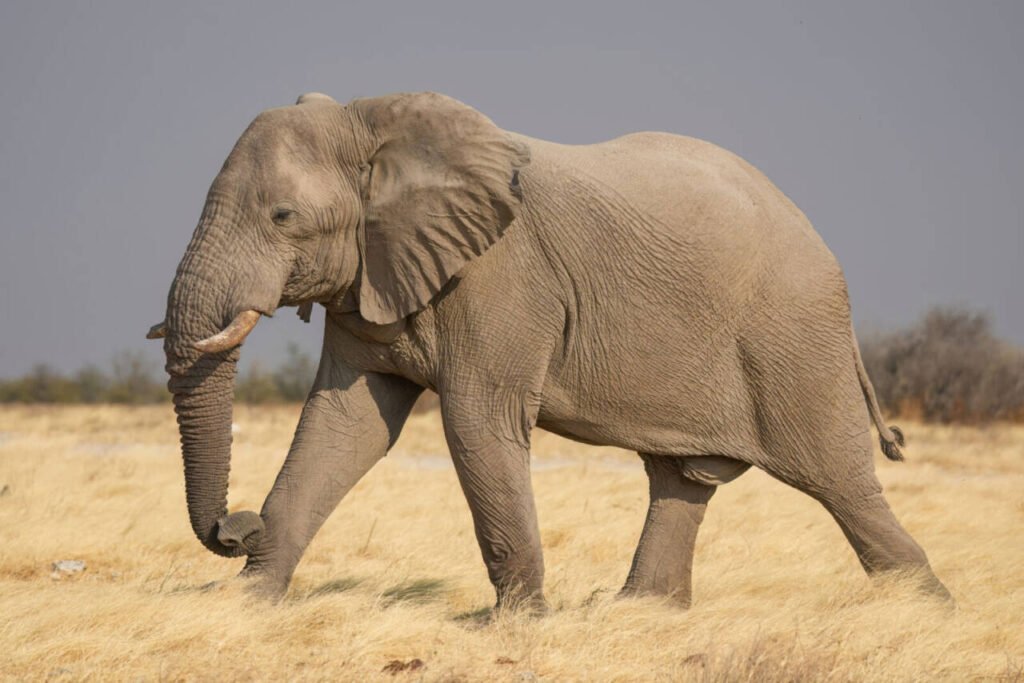
Beehive fences represent a genuinely distinct category within this site’s broader coverage of global beekeeping traditions – unlike the cultural, historical, and food-production-centered traditions documented elsewhere in this series, this is fundamentally a modern applied-conservation innovation, developed through systematic scientific research rather than gradual cultural evolution over centuries. It stands as a useful reminder that “beekeeping tradition” in the broadest sense continues actively expanding into genuinely new applications, not just being preserved and documented as historical practice – a living demonstration that new, creative uses for humanity’s relationship with bees are still actively being discovered and developed today.
Beehive Fences vs. Traditional Elephant Deterrents
| Aspect | Beehive Fences | Traditional Physical Barriers |
|---|---|---|
| Mechanism | Learned behavioral avoidance via bee-sting deterrent | Physical obstruction (fencing, trenches) |
| Documented effectiveness | 86.3% deterred (peak season), 76% (all seasons) | Varies widely, less systematically studied |
| Additional economic benefit | Honey production income | None inherent to the barrier itself |
| Maintenance incentive | Tied directly to honey productivity | Purely protective, no productive incentive |
Common Misconceptions
- “Beehive fences are just a folk remedy with no real research behind them.” They are grounded in genuine, published behavioral research, including a nine-year peer-reviewed study tracking nearly 4,000 elephant approaches, developed and tested systematically by researchers including Dr. Lucy King.
- “Beehive fences guarantee complete elephant exclusion everywhere they’re used.” The controlling study found 86.3% deterrence at peak season and 76% overall – genuinely effective, but not 100%, and the researchers themselves flagged drought as a real risk to future effectiveness.
- “The honey production is just a minor side note.” It represents a genuine, deliberate dual-benefit design feature that gives farmers real economic incentive to maintain the protective structure, not an incidental afterthought.
Frequently Asked Questions
Do elephants actually fear bees?
Yes, documented research shows elephants reliably avoid areas with active beehives and show genuine fear and avoidance responses to the sound of disturbed bees, including measurable responses to audio recordings alone.
Who developed beehive fences as an elephant deterrent?
Dr. Lucy King, working with Save the Elephants and the University of Oxford, piloted the first tested beehive fence at Ex-Erok in Laikipia, Kenya, in 2008, and won the 2013 St. Andrews Prize for the Environment for the innovation.
How effective are beehive fences, really?
A nine-year peer-reviewed study published in Conservation Science and Practice in October 2024 found beehive fences deterred an annual average of 86.3% of elephants during peak crop season and 76% across all seasons, including drought years, out of nearly 4,000 tracked elephant approaches.
How does a beehive fence actually stop elephants?
Elephants disturbing the fence line trigger hives to swarm defensively, and over time elephants learn to associate the fence itself with the threat of bee stings, developing a learned avoidance response to the boundary.
Do farmers get any benefit from beehive fences besides crop protection?
Yes, the beehives produce genuine, sellable honey, giving farmers an additional income stream directly tied to maintaining the protective structure.
Are beehive fences used outside Kenya today?
Yes – following the 2008 pilot in Kenya, the technology has been documented and adapted in other African countries including Botswana, Mozambique, Tanzania, and Uganda, and in parts of Asia including Sri Lanka and Thailand.
Do beehive fences completely eliminate human-elephant conflict?
No – the controlling nine-year study found 76-86.3% deterrence depending on season, and the researchers themselves warned that increased habitat disturbance or more frequent droughts could reduce effectiveness going forward. Beehive fences are a genuinely effective, well-documented deterrent tool, not a universally guaranteed solution in every context.
Further Reading
- Painted Beehive Panels: Slovenia’s Unique Folk Art Tradition
- Western Ghats Honey Hunting: India’s Kadar and Irula Tribes
- Anatolian Beekeeping: Turkey’s Ancient and Modern Tradition
Primary sources: Save the Elephants' Elephants and Bees Project; Save the Elephants, October 2024 study announcement; Conservation Science and Practice, peer-reviewed study.