Last Updated September 14, 2026
A “bee gum” is a beehive made from a section of hollow black gum tree trunk, and until well into the twentieth century it was the standard hive of Appalachian mountain beekeeping — free for the taking from a forest full of naturally hollow trees, and harvested for honey the hard way, by killing the colony and cutting the comb out by hand. The word survives today mostly as folklore and museum-piece curiosity, but for generations of families in the Southern Appalachians, “keeping bee gums” wasn’t a rustic hobby — it was how a household got its sweetener.
Key Takeaways
- A bee gum is a length of hollow black gum tree (Nyssa sylvatica) trunk, stood on end and fitted with crossed dowels and a lid, used as a beehive throughout the Appalachian Mountains before modern hive designs spread into the region.
- Black gum was chosen specifically because it reliably develops a hollow core from heart rot as the tree ages, making it far easier to turn into a hive shell than most other tree species.
- Beekeepers populated gums by “bee-lining” — tracking foraging bees back to a wild colony in the woods, then cutting down that tree and transferring the bees and brood comb into a gum.
- Harvesting honey from a gum was destructive: the beekeeper pried off the top, cut the comb out with a knife, and packed chunks of it directly into jars, rather than extracting honey and returning the comb.
- The practice is documented in detail in Foxfire 2 (1973) — the only one of the first ten Foxfire books to cover beekeeping — a Georgia classroom oral-history project that interviewed mountain residents who had actually kept and harvested bee gums.
Table of Contents
- What a Bee Gum Actually Is
- Why Black Gum Specifically
- Finding Bees the Hard Way: Bee-Lining
- Harvesting: Honey by Destruction, Not Extraction
- From Gums to Boxes: How the Tradition Faded
- Frequently Asked Questions
What a Bee Gum Actually Is
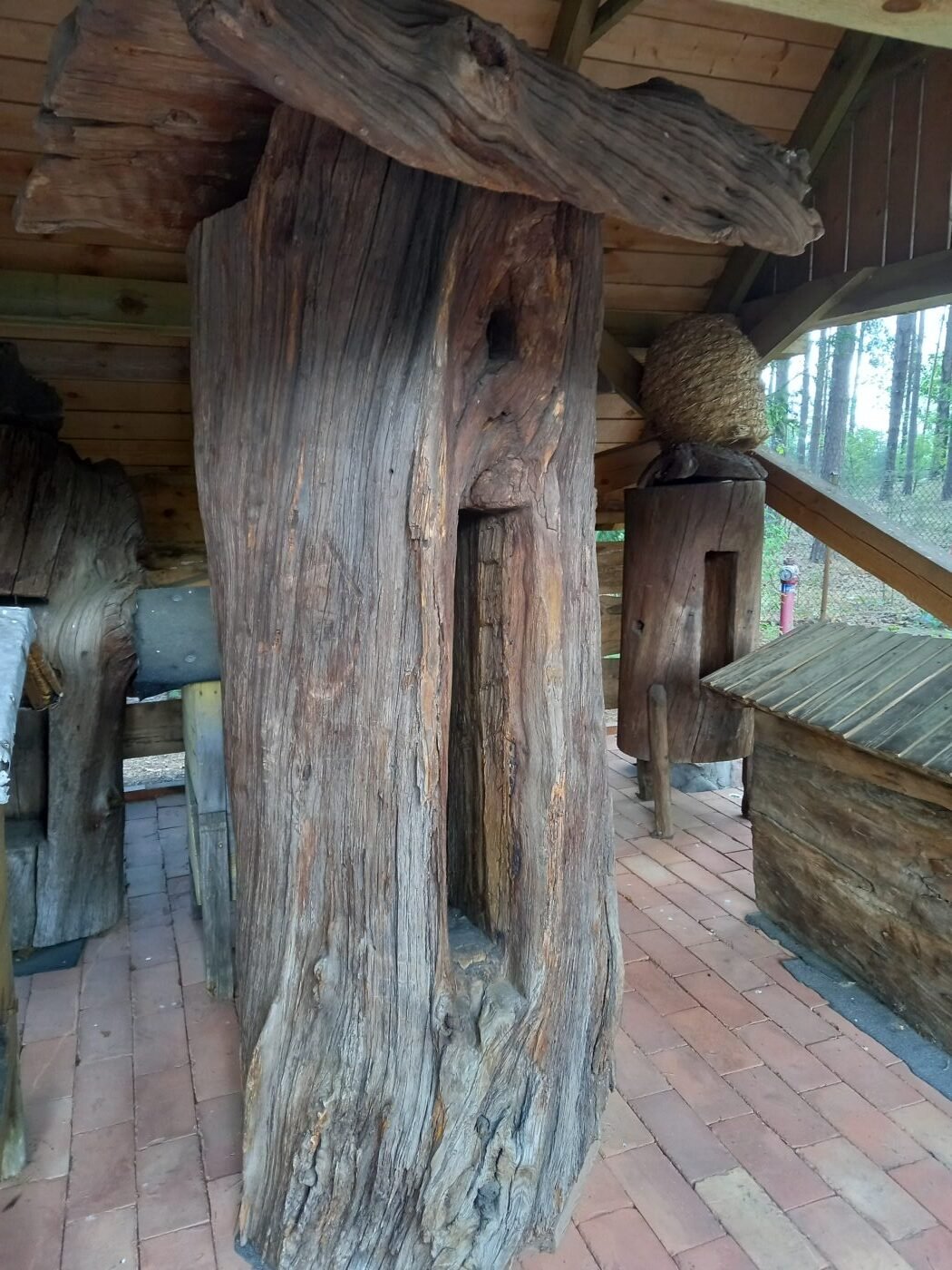
Strip away the folk terminology and a bee gum is a simple, functional object: a cylinder of hollow tree trunk, typically two to three feet long, stood upright with a lid on top and an entrance cut near the bottom, left otherwise open inside for bees to build natural comb against the walls exactly as they would in a wild tree cavity. Builders drilled holes partway up the inside walls and threaded wooden dowels through in a crossed pattern, giving the bees a starting scaffold to anchor brood comb to rather than leaving them to attach comb only to the smooth interior wall. A flat board across the top, sometimes weighted or pegged down, served as both a honey-storage surface and a roof, with a separate slanted cap added above it to shed rain. It’s a design with real ancestry — similar hollow-log hives, sometimes called log gums, jaras, or barcie depending on the region, independently developed across parts of Europe as well, including a specific Polish tradition documented at open-air folk museums.
Why Black Gum Specifically
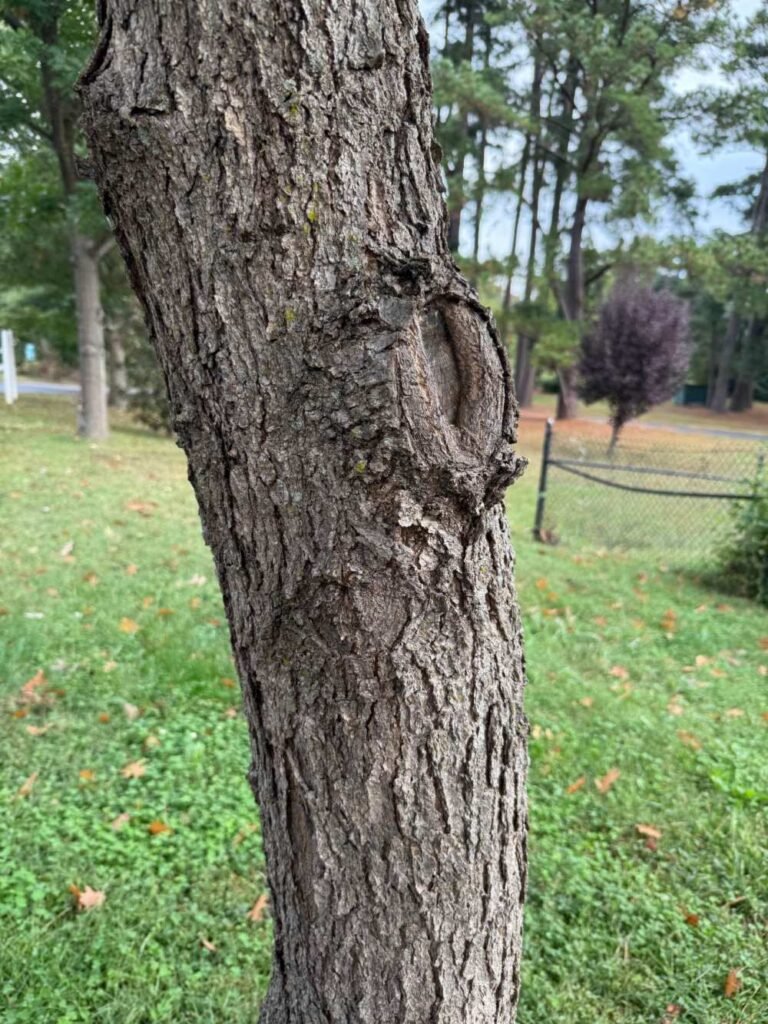
The choice of tree wasn’t arbitrary. Black gum (Nyssa sylvatica) has a well-known tendency toward a specific kind of heartwood decay that begins at the top of a living tree and spreads downward over years, hollowing out the trunk’s core while the outer wood stays structurally sound. That combination — a naturally forming cavity inside a still-living, still-standing tree — meant an Appalachian settler didn’t need specialized tools or woodworking skill to produce a hive shell; he needed only to find a tree that had already done the hard part, fell it, and cut it into workable lengths. Given how common this specific decay pattern is in older black gum stands throughout the Southern Appalachians, suitable hollow sections were genuinely abundant, which is a large part of why gums, rather than any built hive design, became the default across the region for so long.
Finding Bees the Hard Way: Bee-Lining
Before a beekeeper could put bees into an empty gum, he first had to find a wild colony, and the traditional method for that was bee-lining: baiting foraging bees with a scent lure — accounts describe everything from honey-soaked corn cobs to anise extract — then watching the direction a fed bee flies off in, moving position, and repeating the process to triangulate the location of the bee tree the colony was actually living in. Honey Bee Suite’s own account of the Foxfire method quotes one interviewee’s description of the process almost as vividly as the bees moved: a fed bee would fly “just as straight t’his tree as you can shoot a rifle.” Once a wild bee tree was located and, often, marked as claimed with a carved symbol so another family wouldn’t cut it first, the beekeeper would return, usually at the end of a nectar flow, fell the tree, split it open, and transfer the queen and as much intact brood comb as possible into a prepared gum. It was, in effect, converting a wild colony into a domesticated one on the spot, using nothing but an axe, a knife, and a keen eye for a bee’s flight line.
Harvesting: Honey by Destruction, Not Extraction
The most striking difference between gum-keeping and beekeeping with a modern movable-frame hive is what happened at harvest. A Langstroth-style hive is designed around removable frames specifically so a beekeeper can pull comb, spin honey out in an extractor, and hand the empty comb straight back to the bees to refill — a genuinely non-destructive, repeatable cycle. A bee gum offered no such option, since its comb was built directly against the fixed interior walls of a solid log with no way to lift individual combs out intact. Harvesting meant removing the top board, cutting sections of comb free with a knife, and packing the resulting chunks — honey, wax, and inevitably some crushed brood and dead bees — straight into jars or crocks for storage, skipping extraction altogether. Rebuilding the colony’s comb from scratch after a harvest like this took real time and resources on the bees’ part, which is one reason gum-keeping households typically harvested only once or twice a year rather than repeatedly through a season.
From Gums to Boxes: How the Tradition Faded
Gum-keeping didn’t disappear overnight so much as gradually get displaced as movable-frame hive designs, and the honey-extraction efficiency they made possible, spread into the mountains through the first half of the twentieth century. Interviews collected by the Foxfire project — a Georgia high school oral-history and folk-skills program that has documented Appalachian traditions in a long-running book series since the 1960s — describe an intermediate stage some families passed through first, building rectangular wooden “plank gums” sized to mimic a log gum’s proportions before eventually adopting true frame hives with removable supers. One elderly interviewee’s closing reflection on the bees themselves, preserved in that same account, captures the tone of the whole tradition better than any technical description could:
They’re a awful sharp thing, a bee is… the ‘most interestin’ thing you ever seen t’fool with.
— Appalachian bee-gum keeper, interviewed for Foxfire 2 (1973), quoted via Honey Bee Suite
By the mid-twentieth century, genuine bee gums had become rare working equipment and were headed toward what they mostly are today: a folklore reference and an occasional museum piece — like the hollow-tree bee gum preserved at the Museum of Scott County, or the regional folklife still documented today by Appalachian culture writers like Blind Pig and The Acorn — rather than a beekeeper’s actual working hive.
Frequently Asked Questions
What is a bee gum in beekeeping?
A bee gum is a traditional beehive made from a hollow section of black gum tree trunk, historically used throughout the Appalachian Mountains before modern movable-frame hives became common.
Why was black gum wood used instead of other trees?
Black gum (Nyssa sylvatica) is prone to a specific pattern of heartwood decay that hollows out its core as the tree ages, so beekeepers could find naturally hollow sections ready to use as a hive shell without needing to hollow out a log themselves.
How did beekeepers get bees into a bee gum?
Through bee-lining: tracking wild foraging bees back to a bee tree using scent lures and repeated sightings, then felling that tree, splitting it open, and transferring the colony and brood comb into the prepared gum.
Could you harvest honey from a bee gum without killing the colony?
Not cleanly. Because the comb was built directly against the fixed log interior rather than on removable frames, harvesting typically meant cutting the comb out by hand, which was far more disruptive to the colony than pulling frames from a modern hive.
Are bee gums still used today?
Genuine working bee gums are essentially a historical practice now, preserved mainly through oral history projects like Foxfire and museum displays — such as the example at the Museum of Scott County — rather than active use, having been displaced by movable-frame hives over the first half of the twentieth century.
Which Foxfire book actually covers bee gums?
Foxfire 2, published in 1973, is the volume with detailed beekeeping content among the series’ first ten books, including sourwood honey background and firsthand accounts of bee-lining and gum harvesting from mountain residents interviewed by Foxfire students.
Related Reading
Image credits: Photo: Parciaki, CC BY-SA 4.0, via Wikimedia Commons (a Polish barc, a hollow-tree hive of similar design to an American bee gum, photographed at the Kurpie Farm Museum).