Deep in the pine and linden forests of the southern Ural mountains, in Russia’s Bashkortostan region, beekeepers still climb living trees using a leather climbing belt and spiked hand tools to harvest honey from wild bee colonies nesting in hand-carved cavities dozens of feet above the forest floor. This practice, known as bortnichestvo (from “bort,” the traditional term for the tree cavity itself), is one of the oldest documented beekeeping traditions in Eastern Europe, once widespread across the forests of medieval Rus’ and now preserved in only a handful of places – most famously the Burzyansky District of Bashkortostan, home to the Shulgan-Tash Nature Reserve and its protected population of wild Burzyan forest bees.
This article covers what bortnichestvo actually involves: the tree-cavity technology at its center, the historical scale of medieval wax and honey trade it once supported, the distinct wild bee population it depends on, and its rare status today as a living, still-practiced tradition rather than a purely historical one.
Table of Contents
- What Is Bortnichestvo?
- The Bort: Tree-Cavity Hive Technology
- Medieval Honey and Wax Trade
- The Burzyan Bee: A Distinct Wild Population
- Decline and Survival
- UNESCO Recognition
- The Seasonal Bortnichestvo Cycle
- Tree Beekeeping in the Wider World
- Bortnichestvo vs. Other Tree/Log Beekeeping
- Common Misconceptions
- FAQ
What Is Bortnichestvo?
Bortnichestvo is a form of tree beekeeping in which colonies are managed not in a portable hive, but inside a cavity carved directly into a living tree, typically a large pine, oak, or linden. Unlike the hollow-log jobon hives used in Maya meliponiculture, which are cut sections of log that can be moved, a bort stays fixed in its original living tree for the tree’s lifetime, sometimes passed down and maintained across multiple human generations. Historically, individual bort trees were marked with carved ownership symbols to establish and protect harvesting rights within a shared forest, a form of early property-rights convention specific to this practice.
The Bort: Tree-Cavity Hive Technology
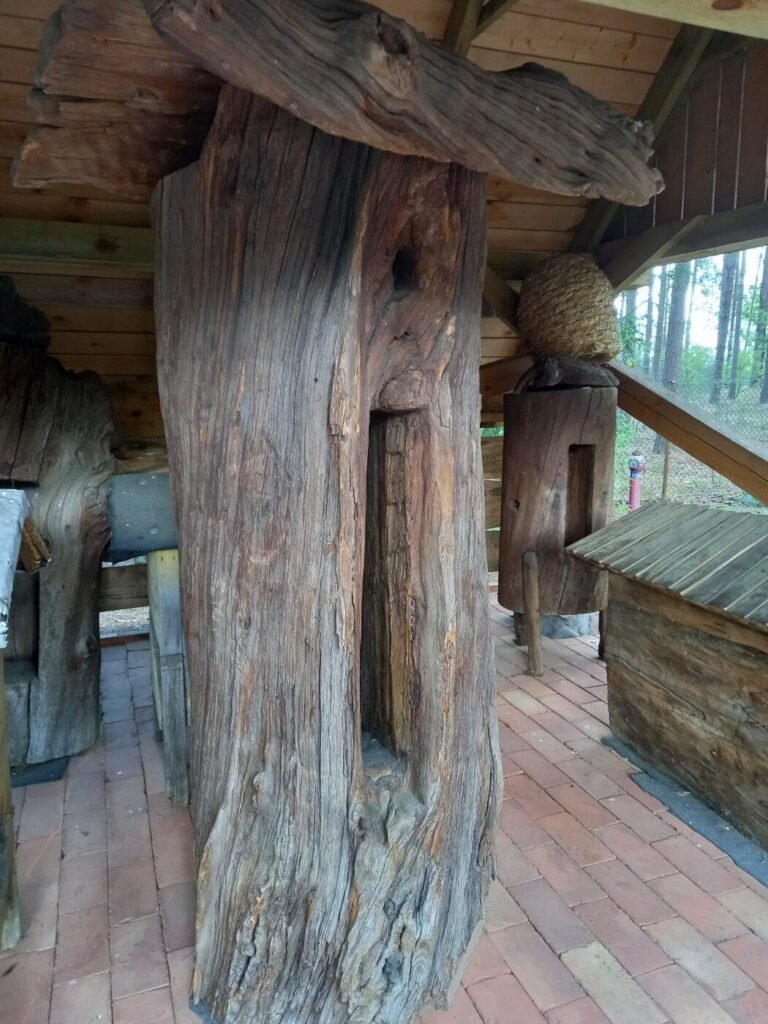
A bort is created by carving a vertical cavity into the trunk of a mature tree, often high enough above ground to be reasonably protected from ground predators, then shaped and finished to attract a wild swarm or to house a colony deliberately introduced by the beekeeper. Traditional access for inspection and harvest uses a lezivo, a leather climbing belt looped around the tree trunk, combined with spiked climbing spurs, allowing the beekeeper to ascend the living trunk directly rather than using a separate ladder structure. This climbing technique, refined over centuries of practice, remains in active use among traditional Bashkir beekeepers today, making bortnichestvo one of relatively few beekeeping traditions where the original medieval access method is still the standard working technique rather than a historical curiosity replaced by modern equipment.
Medieval Honey and Wax Trade
Tree beekeeping was economically significant across the forested territories of medieval Rus’, where honey and beeswax were major trade commodities, valuable enough to function as a genuine economic pillar for many forest communities and to feature in regional trade with Byzantine and other European markets. Beeswax in particular held outsized commercial importance in the medieval period generally, given its use in candle-making, including for religious and church purposes, at a time before cheaper wax or fuel alternatives existed at scale – a broader medieval European pattern that made forest and tree beekeeping a genuinely valuable land-based industry rather than a marginal subsistence activity.
The Burzyan Bee: A Distinct Wild Population
The wild bees inhabiting the Shulgan-Tash reserve and surrounding Burzyansky District forests are a distinct, locally adapted population of the dark forest bee subspecies, Apis mellifera mellifera – the same broad lineage covered in our profile of the German dark bee, Europe’s original honey bee subspecies before later imports of Italian, Carniolan, and other stock reshaped Western European beekeeping. The Burzyan population is specifically valued for its cold hardiness and adaptation to the harsh Ural forest winter, and its relative genetic isolation in protected reserve forest has made it a subject of real conservation interest, distinct from the more general-purpose “Russian honey bee” breeding stock covered in our separate guide to Russian honey bees, which refers to a different, mite-resistant commercial breeding line developed from Russian Far East stock rather than the wild Bashkir forest population this article covers – a distinction worth being precise about, since the two are easily and often confused by name alone.
Decline and Survival
Bortnichestvo declined sharply from its medieval peak as deforestation, agricultural expansion, and the gradual spread of movable frame-hive beekeeping – the same broader technological shift documented in our profile of Petro Prokopovych, whose frame-hive innovations predate Langstroth and reshaped beekeeping across the wider Slavic world – made conventional apiculture more productive and practical across most of the region. The practice survived in a genuinely continuous, unbroken form primarily in the Burzyansky District, where protected old-growth forest and sustained local tradition kept tree beekeeping economically and culturally viable when it disappeared almost everywhere else it had once been practiced.
UNESCO Recognition
The Bashkir tradition of wild-hive beekeeping was inscribed on UNESCO’s Representative List of the Intangible Cultural Heritage of Humanity in 2020, formal international recognition of both the practice’s cultural significance and the real risk of its disappearance without active preservation effort. This kind of recognition matters for a tradition like bortnichestvo specifically because so much of its knowledge – tree selection, cavity carving technique, climbing method, seasonal timing – is transmitted through direct apprenticeship and practice rather than written documentation, making it genuinely vulnerable to loss within a generation or two if active practitioners decline.
The Seasonal Bortnichestvo Cycle
Traditional bortnichestvo follows a seasonal working rhythm tied closely to the Ural forest calendar. Spring inspection checks whether a bort successfully overwintered a colony or needs preparation to attract a new wild swarm, summer is largely left undisturbed to allow foraging and comb-building on the region’s linden and wildflower bloom, and harvest is typically concentrated in late summer or early autumn, timed to take a sustainable portion of stored honey while leaving the colony enough reserves to survive the harsh Ural winter. This seasonal restraint – deliberately not maximizing every possible harvest – is a genuinely different working philosophy from high-yield commercial apiculture, closer in spirit to sustainable wild-harvest management than to production-oriented beekeeping, and it is part of why individual bort trees and their resident colonies can remain productive across many decades rather than being treated as a disposable, replaceable resource.
Tree Beekeeping in the Wider World
Bortnichestvo is part of a broader, worldwide pattern of tree- and log-based beekeeping traditions this site has begun documenting across several distinct regions, each developed independently rather than sharing common origin. Ethiopia’s traditional cylindrical log hives and Maya meliponiculture’s jobon hives both rely on fixed comb inside wood, much as bortnichestvo does, even though all three traditions involve entirely different bee species, climates, and harvesting philosophies. What sets bortnichestvo apart within this broader pattern is that the hive itself is never separated from the living tree at all – there is no portable log or box involved anywhere in the process, making it arguably the most direct, least-modified form of “beekeeping in place” documented in this series.
Bortnichestvo vs. Other Tree/Log Beekeeping
| Aspect | Bortnichestvo | Maya Meliponiculture (Jobon) |
|---|---|---|
| Hive structure | Cavity carved into a living, standing tree | Cut section of hollow log, portable |
| Bee species | Apis mellifera mellifera (Burzyan population) | Melipona beecheii (stingless) |
| Access method | Climbing belt (lezivo) and spurs, direct trunk ascent | Ground-level, hive stored near household |
| Ownership marking | Carved symbols on the tree itself | Household/family inherited property |
| Current status | UNESCO-recognized, actively preserved in Bashkortostan | Practiced by Yucatan communities, revival efforts ongoing |
Common Misconceptions
- “Bortnichestvo is purely historical and no longer practiced.” It survives as an active, UNESCO-recognized living tradition in Bashkortostan’s Burzyansky District, not merely as a documented historical practice.
- “Russian honey bees and Burzyan forest bees are the same thing.” “Russian honey bees” typically refers to a separate, commercially developed mite-resistant breeding stock from Russian Far East origins, distinct from the wild Bashkir Apis mellifera mellifera population specific to bortnichestvo.
- “A bort is basically a beehive box nailed to a tree.” A bort is a cavity carved directly into the living trunk of a standing tree, fundamentally different from any external hive structure attached to or hung from a tree.
Frequently Asked Questions
Is a bort tree harmed by having a cavity carved into it?
A carefully carved bort does not typically kill the host tree, and traditional practice has always depended on keeping the tree alive and productive for decades, since a dead tree offers no ongoing value to the bort-keeper. This long-term dependence on tree survival is itself part of why sustainable forest stewardship has historically been embedded in the practice rather than treated as a separate environmental concern.
What does “bortnichestvo” mean?
It comes from “bort,” the term for the carved tree cavity used to house a wild bee colony. Bortnichestvo refers to the broader traditional practice of creating, maintaining, and harvesting from these tree-cavity hives.
Can visitors observe bortnichestvo in person?
The Shulgan-Tash Nature Reserve and surrounding Burzyansky District have become a modest destination for cultural and ecological tourism, with some documented visitor access to observe traditional bort-keeping practice and the reserve’s wild bee conservation work, though this remains a small-scale draw compared to Nepal’s honey-hunting tourism trend described elsewhere in this series.
Is bortnichestvo still practiced today?
Yes, most notably in the Burzyansky District of Bashkortostan, Russia, where it has survived as a continuous living tradition and was inscribed on UNESCO’s Representative List of Intangible Cultural Heritage in 2020.
Who practices bortnichestvo today, and how is the knowledge passed on?
Bortnichestvo today is practiced by a relatively small number of experienced bort-keepers, often affiliated with or working near the Shulgan-Tash Nature Reserve, who typically learned the craft through direct apprenticeship with an older practitioner rather than formal training programs. This generational, hands-on transmission model is part of what made the practice’s UNESCO recognition meaningful – formal recognition alone does not guarantee continuity if the small pool of active knowledge-holders does not have younger practitioners actively learning the specific tree-selection, carving, and climbing skills involved.
What bee species is involved in bortnichestvo?
A locally adapted wild population of the dark forest bee subspecies, Apis mellifera mellifera, specifically the Burzyan population found in and around the Shulgan-Tash Nature Reserve, valued for its cold hardiness.
How do beekeepers access a bort high in a tree?
Traditionally using a lezivo, a leather climbing belt looped around the trunk, along with spiked climbing spurs, allowing direct ascent of the living tree – the same basic technique used for centuries and still standard practice today.
How do beekeepers protect bort colonies from bears?
Predation by bears has historically been a real threat to bort colonies, since a bear capable of climbing or reaching a low cavity can destroy both the honey stores and the colony itself. Traditional practice addresses this partly through cavity placement well above easy reach and partly through simple physical deterrents, and it remains a genuine, practical concern for beekeepers working forest borts in bear habitat today, not merely a historical hazard.
Are Russian honey bees the same as the bees used in bortnichestvo?
No. “Russian honey bees” commonly refers to a separate, commercially developed mite-resistant breeding stock, while bortnichestvo depends on a distinct wild forest bee population native to the Bashkortostan region – the names are easily confused but refer to different bee populations.
Is bortnichestvo honey different from honey produced in managed hives?
Honey from wild bort colonies is often prized specifically for its wild-forage profile – largely linden and mixed Ural wildflower forage rather than the more controlled or monoculture forage sources common in commercial apiculture – and for the fact that it comes from an entirely wild, undomesticated colony rather than a managed one. This makes it a genuinely distinct product in both flavor character and provenance story compared to typical commercial honey, similar in spirit to how provenance and terroir matter in specialty food markets more broadly.
Why was bortnichestvo historically significant beyond honey production?
Beeswax was a major medieval trade commodity, valuable for candle-making including religious use, which made forest and tree beekeeping a genuinely important economic activity across medieval Rus’ territories, not merely a subsistence practice.
For more on this topic, see the Shulgan-Tash Nature Reserve, which preserves Russia's traditional tree beekeeping.