Last Updated September 15, 2026
Long before a Spanish ship ever reached the Yucatan coast, the Maya were already sophisticated beekeepers – just not of the honeybee most of us picture. Their bee was Melipona beecheii, called Xunan Kaab (“Royal Lady Bee”) in Yucatec Maya, a small, entirely stingless species native to Mesoamerica, kept in hollow horizontal log hives called jobones and managed with a body of ritual, seasonal, and practical knowledge that predates European contact by more than 3,000 years. That tradition, known today as meliponiculture, is still practiced by Maya beekeepers in the Yucatan Peninsula, and it represents one of the oldest continuously practiced forms of organized beekeeping anywhere in the world – a genuinely different lineage from the Old World Apis mellifera tradition covered throughout most of this site.
This article looks at what made – and still makes – Maya stingless beekeeping distinct: the biology of the bee itself, the log-hive technology developed to house it, the cultural and religious significance it held (and still holds) in Maya communities, and the very real modern threat this ancient practice now faces from habitat loss and competition with imported European honeybees.
Key Takeaways
- The Maya have practiced meliponiculture – keeping the stingless bee Melipona beecheii, known as Xunan Kaab (“Royal Lady Bee”) – for more than 3,000 years, among the oldest documented beekeeping traditions anywhere.
- Colonies are kept in jobones: hollowed horizontal logs sealed at each end, housed in a dedicated apiary structure called an otoch kaab or najil kaab, completely different from vertical frame hives.
- Because the bee is genuinely stingless, jobones can be opened and handled without the veils and suits Western beekeeping requires – though the bees can still bite defensively.
- Over 80% of Yucatan Melipona populations have disappeared in recent decades due to deforestation, agrochemical use, and competition from introduced honeybees – this is a living tradition under real, active threat, not a historical curiosity.
- As ECOSUR biologist Rogel Villanueva Gutiérrez has put it: protecting the bee and protecting the forest are the same task (see below).
Table of Contents
- What Is Meliponiculture?
- Melipona beecheii: The Bee Itself
- The Jobon: Ancient Log-Hive Technology
- Ah-Muzen-Cab and Religious Significance
- Honey as Medicine, Not Just Food
- What Changed After Spanish Contact
- The Modern Decline of Meliponiculture
- Contemporary Revival Efforts
- Meliponiculture in a Wider World of Bees
- Meliponiculture vs. Western Beekeeping
- Common Misconceptions
- FAQ
What Is Meliponiculture?
Meliponiculture is the deliberate management of stingless bees in the tribe Meliponini for honey, wax, and cultural purposes, distinct from apiculture, which specifically refers to managing honeybees of the genus Apis. The practice has independent origins across the tropics wherever stingless bees are native – parts of Australia, sub-Saharan Africa, and South and Southeast Asia all have their own meliponiculture traditions – but the Maya tradition centered on Melipona beecheii in the Yucatan Peninsula is among the best-documented and longest-running, with archaeological evidence placing organized stingless beekeeping among the pre-Columbian Maya more than 3,000 years ago, well before any European contact with the Americas.
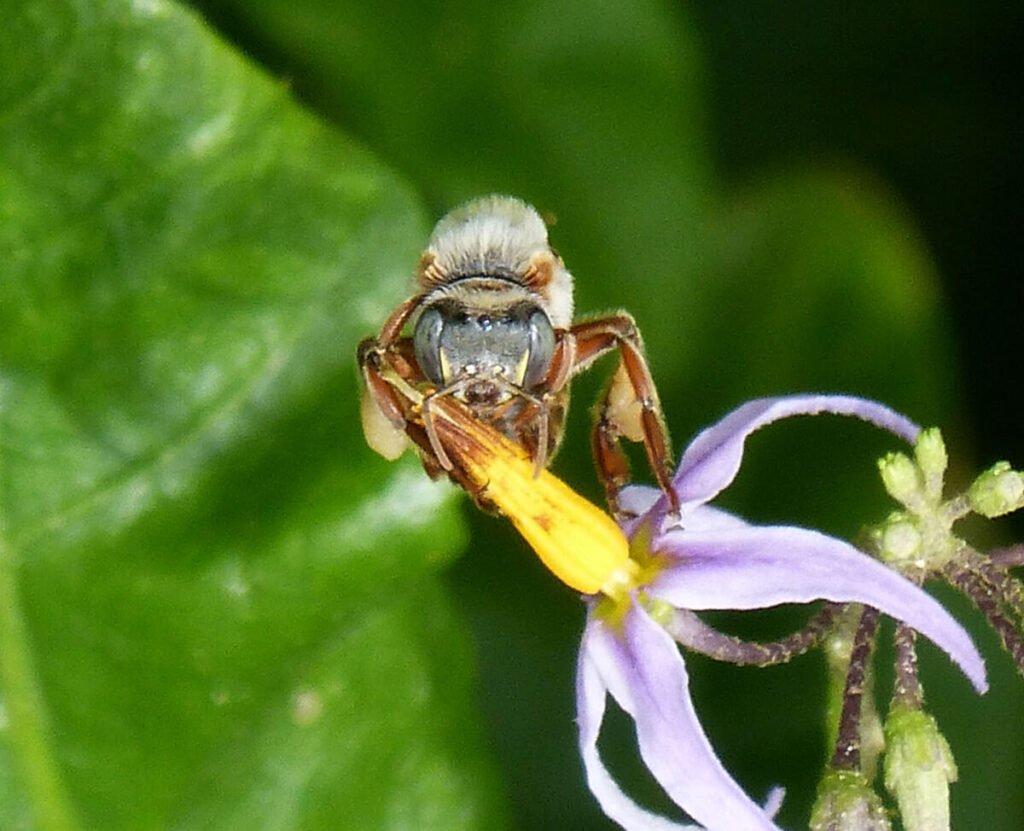
Melipona beecheii: The Bee Itself
The Maya’s bee, Melipona beecheii – called Xunan Kaab, or “Royal Lady Bee,” in Yucatec Maya – is genuinely stingless: its sting is vestigial and non-functional, meaning colonies can be handled and hives opened without the protective equipment Western beekeeping requires, though the bees can still bite defensively. It’s one of around 17 native stingless bee species found in the Yucatan Peninsula. Colonies are smaller than a typical Apis mellifera hive, honey yields per colony are correspondingly modest, and the honey itself has a distinctive flavor profile – often described as more acidic, floral, and complex than honeybee honey – along with a naturally thinner, more watery consistency because stingless bee honey has a higher moisture content than the honey most Western beekeepers manage toward. This means it ferments more readily and has traditionally been consumed and stored differently than honeybee honey, a real biological distinction rather than a stylistic one.
The Jobon: Ancient Log-Hive Technology
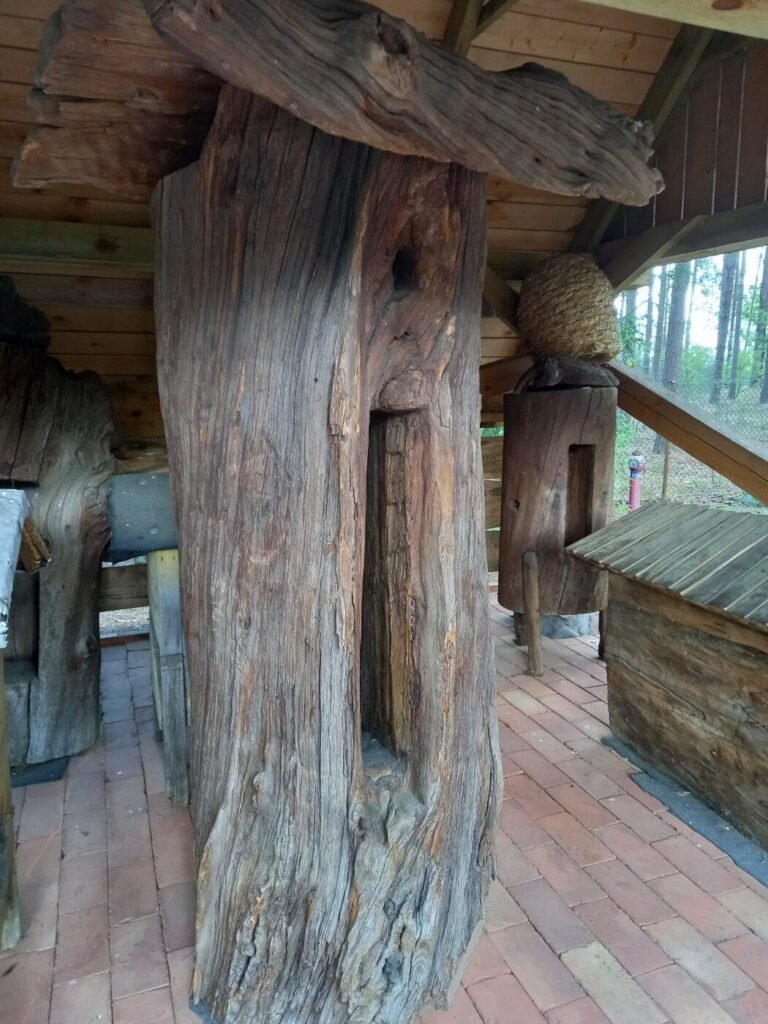
Traditional Maya stingless beekeeping uses a hive called a jobon (also spelled hobon), a section of hollowed-out log, typically stood or hung horizontally, with the colony’s nest built inside and the ends sealed with disc-shaped caps often made of clay, stone, or wood. Jobones are traditionally housed on shelves inside a dedicated palm-roofed structure known in Maya as an otoch kaab or najil kaab (“house of the bee”). This is a fundamentally different hive architecture from the vertical, frame-based systems most familiar to readers of our Langstroth hive history – there are no removable frames, and honey harvesting traditionally involves opening an end cap and extracting comb directly rather than pulling frames for inspection. Jobones were, and in many communities still are, kept near the household, sometimes arranged in rows and treated as valuable, inherited property passed down within a family across generations – a form of intergenerational knowledge transfer with real economic and cultural weight attached to it.
Ah-Muzen-Cab and Religious Significance
Stingless bees held genuine religious significance in Maya cosmology, most visibly through Ah-Muzen-Cab, a bee deity depicted in surviving Maya codices, including the Madrid Codex, which contains pages explicitly illustrating beekeeping scenes and bee-related ritual. This is worth stating carefully rather than overstating: the precise theological role of Ah-Muzen-Cab and the exact ritual calendar tied to beekeeping are reconstructed from a limited surviving textual and iconographic record, since the vast majority of Maya written material was destroyed during and after Spanish contact, so modern scholarly understanding of the full religious framework remains genuinely incomplete rather than fully documented. What is well supported by the surviving evidence is that beekeeping was not treated as a purely economic activity – it carried ceremonial weight, with specific rituals and offerings associated with hive management and honey harvest in various Maya communities.
Honey as Medicine, Not Just Food
Melipona honey was used medicinally in traditional Maya practice, applied to wounds and eye conditions and used in various remedies, a use pattern that has drawn real modern scientific interest. Some contemporary research has examined the antimicrobial properties of stingless bee honey specifically, though it is important to be precise about what current evidence actually supports: findings on Melipona honey’s antimicrobial activity are promising in laboratory contexts but do not amount to a clinically established medical treatment, and this article is not making a medical claim – it is describing traditional use and noting that it has attracted legitimate scientific curiosity, which is a meaningfully different statement than claiming proven efficacy. This same cautious distinction applies broadly across traditional-medicine honey claims and is worth keeping in mind whenever “ancient medicinal use” is cited as though it were modern clinical validation.
What Changed After Spanish Contact
Spanish colonization introduced the European honeybee, Apis mellifera, to the Americas, and its arrival in the Yucatan region set in motion a long, gradual displacement of Maya stingless beekeeping that continued for centuries rather than happening immediately. European honeybees produce substantially higher honey yields per colony and can be managed at larger commercial scale using imported hive technology, which made them increasingly attractive for honey production even within regions where meliponiculture had deep cultural roots. Colonial-era economic pressure, changing land use, and later the introduction of Africanized honeybees in the 20th century – which compete with native stingless bees for floral resources and nesting sites – all compounded over time, and meliponiculture shifted from a dominant regional practice toward a smaller-scale, culturally preserved tradition maintained by specific communities and families rather than the areawide practice it once was.
The Modern Decline of Meliponiculture
Meliponiculture faces genuine, well-documented modern threats. Deforestation and land-use change in the Yucatan Peninsula reduce the native floral resources and nesting habitat Melipona beecheii depends on – by some estimates, over 80% of the region’s Melipona populations have disappeared in recent decades. Pesticide exposure, including from agricultural operations near traditional apiary sites, affects stingless bee colonies much as it affects honeybee colonies. Competition with introduced honeybees, particularly Africanized bees, for limited floral resources adds further pressure. And there is a generational knowledge-transfer problem as younger community members move toward other livelihoods, meaning the detailed traditional knowledge of jobon construction, colony management, and seasonal timing – much of it never formally written down – risks being lost as fewer people actively practice and teach it.
“In order to keep the bees, you have to keep the forest. In order to keep the forest, you have to keep the bees.”
Contemporary Revival Efforts
There are active, documented efforts to preserve and revive Maya meliponiculture, including community cooperatives in the Yucatan region that market Melipona honey with cultural and provenance branding, researchers and NGOs working directly with Maya beekeepers to document traditional jobon techniques before that knowledge is lost, and growing interest tied to specialty and ecotourism markets that value the honey’s distinct flavor and cultural story. These efforts genuinely help, but it is honest to note they operate at a small fraction of the scale the tradition once held – meliponiculture today is a preserved and increasingly appreciated niche practice rather than the dominant regional beekeeping system it was for the Maya before European contact.
Meliponiculture in a Wider World of Bees
Meliponiculture is a useful reminder that “beekeeping” is not synonymous with the Western honeybee tradition most readers of this site are familiar with. Our own native bee identification chart catalogs dozens of species that never produce a manageable honey surplus at all, and even within the honeybee genus itself there is real diversity worth knowing about – species like Apis nigrocincta, covered in our profile of the little-studied honey bee of Sulawesi and the Philippines, show that even true Apis beekeeping outside the familiar Apis mellifera tradition looks meaningfully different region to region. Our broader overview of ancient beekeeping practices and introduction to honeybee biology both give useful background for readers who want to place Maya meliponiculture inside this larger, more varied global picture of how humans have kept bees – because the Langstroth-style, Apis mellifera-centered practice most beekeeping content (including most of this site) focuses on is genuinely just one branch of a much older, wider tree.
Meliponiculture vs. Western Beekeeping
| Aspect | Maya Meliponiculture | Western Apiculture |
|---|---|---|
| Bee species | Melipona beecheii (stingless) | Apis mellifera (stinging) |
| Hive type | Horizontal hollow-log jobon, sealed end caps | Vertical frame hives (Langstroth and others) |
| Protective gear | Minimal to none typically needed | Veil, suit, and gloves standard |
| Honey yield per colony | Low, several hundred grams to a few liters per year | Substantially higher, often 20-50+ kg per year |
| Honey texture | Higher moisture, thinner, more acidic flavor | Lower moisture, thicker, longer shelf-stable |
| Cultural role | Deep religious/ceremonial significance historically | Largely economic/agricultural in most Western contexts |
Common Misconceptions
- “Stingless bees can’t hurt you at all.” They cannot sting, but many stingless bee species, including Melipona beecheii, can bite defensively, and colonies should still be approached with reasonable care during handling.
- “Meliponiculture is basically the same practice as honeybee keeping, just with a different bee.” The hive architecture, harvesting method, colony scale, honey properties, and cultural framework are all substantially different – it is a genuinely distinct beekeeping tradition, not a minor variant.
- “This is a purely historical practice that no longer exists.” Maya meliponiculture is still actively practiced today in Yucatan communities, and there are real, ongoing revival and preservation efforts – it is a living tradition under pressure, not an extinct one.
Frequently Asked Questions
What is the difference between meliponiculture and apiculture?
Apiculture refers specifically to managing honeybees of the genus Apis, while meliponiculture is the management of stingless bees in the tribe Meliponini. They involve different bee biology, different hive technology, and often very different cultural traditions.
Did the Maya really keep bees before European contact?
Yes, for more than 3,000 years. Archaeological and ethnohistorical evidence, including depictions in surviving Maya codices like the Madrid Codex, documents organized stingless beekeeping of Melipona beecheii among the Maya well before Spanish contact with the Americas.
Why don’t stingless bees sting?
In stingless bee species, including Melipona beecheii, the sting is vestigial and non-functional. Colonies still defend themselves through other means, including biting, but they cannot deliver a sting the way honeybees or wasps can.
Is Maya stingless beekeeping still practiced today?
Yes, though at a much smaller scale than historically – over 80% of Yucatan Melipona populations have been lost in recent decades. Communities in the region continue practicing traditional jobon-based meliponiculture, and there are active cooperative and research-driven efforts to preserve and revive the tradition.
What does “jobon” mean, and is it the only traditional hive design used?
Jobon (sometimes spelled hobon) refers specifically to the hollow horizontal log hive used in classic Maya stingless beekeeping, traditionally housed in a palm-roofed structure called an otoch kaab. It is the best-documented traditional design, though other Mesoamerican and broader Latin American stingless beekeeping traditions have used other hive forms, including hollowed gourds and various clay or woven-fiber structures, depending on the region and the specific stingless bee species being kept.
Why did meliponiculture decline after European contact?
The introduction of the higher-yielding European honeybee, combined with colonial-era economic and land-use changes and, later, competition from introduced Africanized honeybees, gradually shifted regional beekeeping away from native stingless bees over several centuries.
Can stingless bees be kept outside their native range?
Not easily. Melipona beecheii is adapted to the tropical Mesoamerican climate it evolved in, and stingless bee species generally do poorly outside climates similar to their native range, which is one reason meliponiculture has stayed geographically concentrated rather than spreading globally the way Apis mellifera beekeeping has. This is a genuine ecological constraint, not just a matter of tradition or technique.
Is stingless bee honey medicinal?
It was, and in some communities still is, used traditionally for wound care and other remedies, and it has drawn genuine scientific interest for antimicrobial properties. That said, current evidence is promising rather than clinically conclusive, so traditional medicinal use should not be read as an established modern medical treatment.
Sources and further reading: a United Nations Development Programme feature on Maya stingless-bee keepers; Mongabay, “House of the Royal Lady Bee,” on Maya beekeepers reviving Xunan Kaab traditions.