Last Updated September 15, 2026
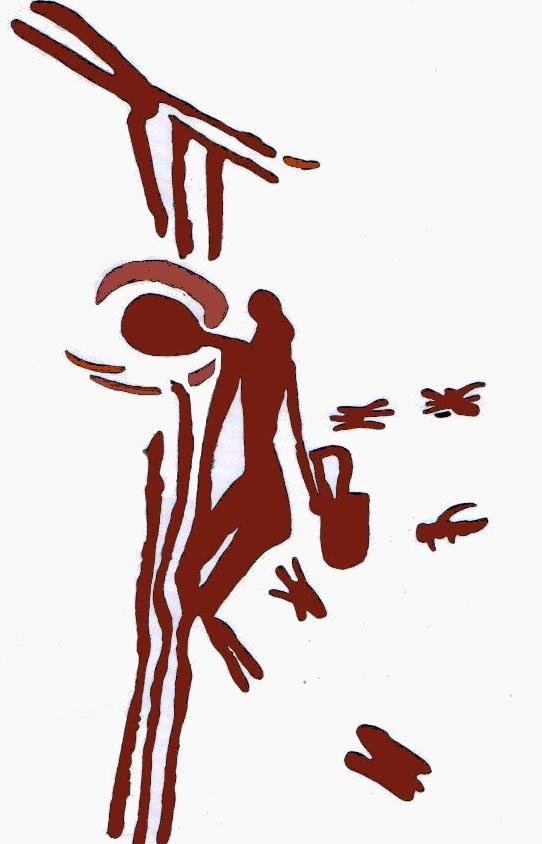
High on a rock wall near Bicorp, in the Valencia region of eastern Spain, a prehistoric artist painted a scene that still resonates with anyone who has ever climbed toward a wild bee nest chasing honey: a human figure, suspended on what appears to be a rope or vine ladder, reaching into a cliffside crevice while bees swirl around the opening. Known as the “Man of Bicorp” and found within the Cuevas de la Araña (Araña Caves) rock art site, this image is widely cited as one of the oldest surviving depictions of honey hunting anywhere in the world – a genuinely remarkable prehistoric parallel to the still-living Gurung cliff honey hunting tradition covered elsewhere on this site, separated by thousands of years and an ocean.
Key Takeaways
- The site was discovered in the early 20th century by local schoolteacher Jaume Garí i Poch and consists of three rock shelters, designated Abrigo I, II, and III.
- The honey-hunting scene is generally dated to roughly 8,000 years old (commonly cited as 8000-6000 BC), attributed to the Epipaleolithic/Mesolithic period – though, honestly, rock art dating of this kind carries real scientific uncertainty.
- Cuevas de la Araña is formally protected as part of UNESCO’s “Rock Art of the Iberian Mediterranean Basin” World Heritage listing (Reference #874), alongside many other Levantine rock art sites across eastern Spain.
- The site also contains other scenes, including a bow-and-arrow goat hunt, within its three shelters – the honey-hunting image is its single most internationally reproduced figure.
Table of Contents
- Key Takeaways
- What the Painting Actually Depicts
- How Old Is It, Really?
- The Levantine Rock Art Style
- UNESCO World Heritage Recognition
- What This Painting Can (and Can’t) Tell Us
- Other Ancient Honey-Hunting Depictions
- Visiting and Viewing the Site Today
- Cuevas de la Araña in the Wider History of Honey Hunting
- Cuevas de la Araña vs. Modern Honey Hunting Traditions
- Common Misconceptions
- FAQ
What the Painting Actually Depicts
The scene shows a human figure climbing what is generally interpreted as a rope, vine, or similar flexible ladder toward a cliffside opening, reaching toward what appears to be a wild bee nest, with small figures around the scene generally read as bees in flight. This basic composition – climber, ladder, cliff-nest, bees – maps remarkably closely onto the same fundamental physical challenge still faced by cliff honey hunters today, a genuinely striking continuity in the basic technical problem of reaching a wild colony nesting somewhere humans can’t simply walk up to.
How Old Is It, Really?
The painting is generally attributed to the Epipaleolithic/Mesolithic period, with age estimates commonly cited around 8,000 years old, roughly 8000-6000 BC. It is honest, and consistent with how this site treats prehistoric rock art dating generally, to note that precisely dating rock art is genuinely difficult – pigment-based cave paintings often cannot be dated with the same direct scientific precision as datable organic material found in excavated context, and specific age estimates for Mediterranean Basin rock art sites like this one can vary somewhat between different researchers and dating methods. Recent scholarship has continued to revisit both the site’s precise dating and details of its interpretation, a reminder that even a widely reproduced, century-old discovery remains an active subject of archaeological study rather than a settled, closed question. This article treats “roughly 8,000 years old, among the oldest known honey-hunting depictions” as the well-supported core claim, while avoiding an artificially precise single-year age that the underlying dating methods cannot fully guarantee.
The Levantine Rock Art Style
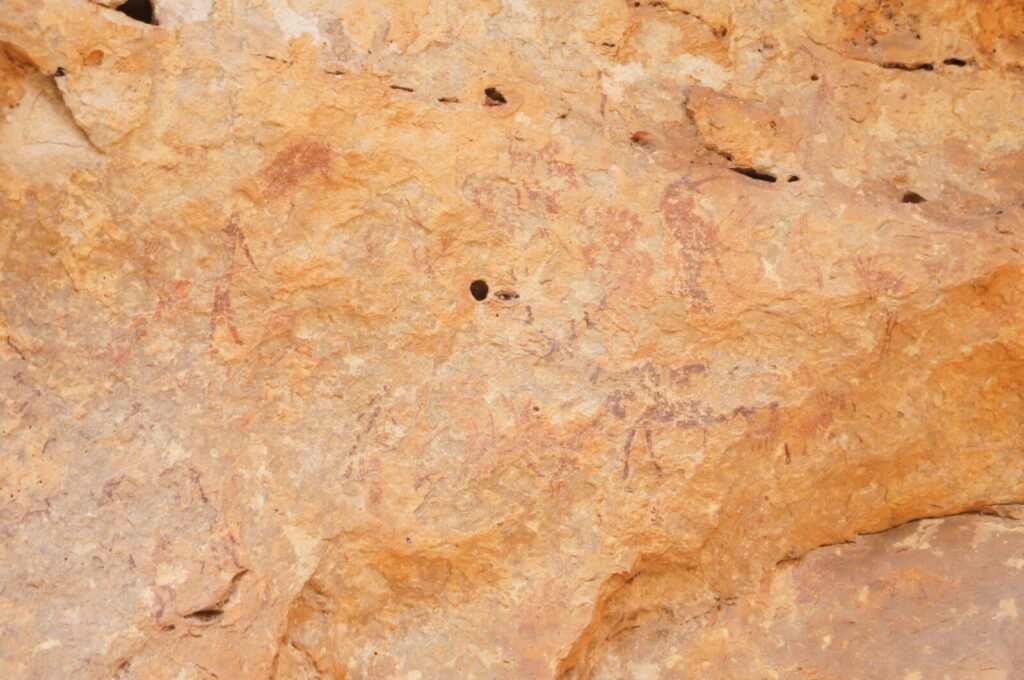
The Man of Bicorp belongs to the Levantine rock art tradition, a distinctive Iberian prehistoric painting style characterized by dynamic, naturalistic, narrative silhouette figures depicting real human activity – hunting, gathering, combat, and daily life scenes – a meaningfully different artistic approach from the more abstract, often animal-focused Franco-Cantabrian cave art tradition further north and west on the Iberian Peninsula and in southern France. Cuevas de la Araña itself consists of three separate rock shelters, formally designated Abrigo I, II, and III, and also contains other Levantine scenes at the same site, including a bow-and-arrow goat hunt – the honey-hunting figure in Abrigo II is simply the single most internationally reproduced image from the complex. This narrative, activity-focused style is part of why Levantine rock art sites like this one give researchers unusually legible scenes of actual prehistoric human behavior, rather than the more symbolically ambiguous imagery found in some other prehistoric art traditions.
UNESCO World Heritage Recognition
Cuevas de la Araña forms part of the broader “Rock Art of the Iberian Mediterranean Basin” UNESCO World Heritage listing (Reference #874), which collectively recognizes numerous Levantine rock art sites across eastern Spain as a group rather than certifying any single site in isolation. This collective UNESCO recognition reflects the genuine, broadly agreed scientific and cultural significance of this entire regional rock art tradition, of which the honey-hunting scene at Cuevas de la Araña is one of the most frequently reproduced and internationally recognized individual images specifically because its subject matter – a recognizable, still-relatable human activity – resonates with audiences in a way more purely symbolic prehistoric imagery often does not.
What This Painting Can (and Can’t) Tell Us
The painting provides genuine, valuable visual evidence that prehistoric humans in this specific region practiced wild honey hunting using climbing techniques recognizable in basic outline even today. It is important to be honest about the painting’s real evidentiary limits: it is a single artistic scene, not a technical manual, and this article does not claim it proves specific details about exact climbing equipment, colony management practices, or the broader social or ritual context surrounding prehistoric honey hunting in this region beyond what the image itself directly shows – a real, valuable data point, not a complete ethnographic record.
Other Ancient Honey-Hunting Depictions
Cuevas de la Araña is not the only prehistoric or ancient depiction of honey hunting known globally – rock art depicting honey-gathering activity also appears in other regions, including the Aboriginal Australian rock art referenced in our sugarbag bees article. What makes the Man of Bicorp specifically stand out within this broader global pattern of ancient honey-hunting imagery is the combination of its clear, legible composition, its formal UNESCO World Heritage status, and its status as one of the most frequently cited and reproduced individual images in popular discussions of prehistoric honey hunting worldwide.
Visiting and Viewing the Site Today
As with many protected prehistoric rock art sites, direct physical access to the original painting is typically limited and carefully managed to protect the fragile pigment from damage and degradation, with reproductions, museum displays, and documentation serving as the primary way most people actually encounter the image rather than viewing the original rock face in person. This kind of protective access limitation is standard practice for significant prehistoric art sites generally, balancing genuine public and scholarly interest against the real, irreversible risk that uncontrolled exposure and physical contact pose to pigment that has already survived for roughly eight millennia under specific, delicate environmental conditions since local schoolteacher Jaume Garí i Poch first documented the site in the early 1900s.
Cuevas de la Araña in the Wider History of Honey Hunting
The Man of Bicorp sits at the very beginning of this site’s broader documented timeline of honey-hunting and beekeeping history, predating every other tradition covered in this series by a wide margin – the Global Beekeeping Traditions cluster’s modern-era entries, and even the beekeeping history cluster‘s oldest figures, including those covered in our ancient beekeeping practices overview, are separated from this prehistoric painting by many thousands of years. This makes Cuevas de la Araña less a single historical episode and more a kind of deep-time anchor point: visual proof that the basic human relationship with wild bee colonies – recognizing them as a valuable, worth-the-risk resource, and developing real technique to reach them – is genuinely ancient, predating agriculture, writing, and virtually every other beekeeping tradition documented anywhere on this site.
Cuevas de la Araña vs. Modern Honey Hunting Traditions
| Aspect | Cuevas de la Araña (Prehistoric Spain) | Gurung Honey Hunting (Modern Nepal) |
|---|---|---|
| Evidence type | Single prehistoric rock painting, ~8,000 years old | Actively documented living practice |
| Climbing method depicted/used | Rope or vine ladder (as depicted) | Hand-woven bamboo and rope ladder |
| Bee species involved | Unknown wild bee species (prehistoric Iberia) | Apis laboriosa |
| Cultural status today | UNESCO World Heritage archaeological site (Ref #874) | Living cultural and economic tradition |
Common Misconceptions
- “This is definitively the single oldest depiction of honey hunting in the world.” It is among the oldest and most widely cited, but precise comparative dating across different global rock art sites carries real uncertainty, so this article avoids an absolute “the oldest” claim beyond what dating evidence can fully support.
- “The painting proves exactly what climbing equipment and techniques were used.” It shows a general climbing scene consistent with rope or vine use, but this article does not claim it provides precise technical detail beyond what the image itself directly depicts.
- “Cuevas de la Araña is a single isolated painting, not a larger site.” It is one figure within three rock shelters (Abrigo I, II, and III) that also contain other Levantine scenes, and part of a collective UNESCO World Heritage listing covering numerous related sites across the Mediterranean Basin of the Iberian Peninsula.
Frequently Asked Questions
What is the “Man of Bicorp,” and who discovered it?
A prehistoric rock painting found at the Cuevas de la Araña site near Bicorp, Valencia, Spain, depicting a human figure climbing toward a cliffside bee nest surrounded by bees. The site was discovered in the early 20th century by local schoolteacher Jaume Garí i Poch.
How old is the Cuevas de la Araña honey-hunting painting?
It is generally attributed to the Epipaleolithic/Mesolithic period, commonly cited as roughly 8,000 years old (around 8000-6000 BC), though precise rock art dating carries genuine scientific uncertainty, so this article avoids citing an artificially exact single age.
Is Cuevas de la Araña a UNESCO World Heritage Site?
It forms part of the broader “Rock Art of the Iberian Mediterranean Basin” UNESCO World Heritage listing (Reference #874), which collectively recognizes numerous Levantine rock art sites across eastern Spain.
Is the honey-hunting scene the only image at the site?
No. Cuevas de la Araña consists of three rock shelters (Abrigo I, II, and III) containing multiple Levantine rock art scenes, including a bow-and-arrow goat hunt – the honey-hunting figure, in Abrigo II, is simply the most internationally reproduced individual image from the complex.
What is Levantine rock art?
A distinctive Iberian prehistoric painting tradition characterized by dynamic, naturalistic, narrative scenes of real human activity, including hunting and gathering, differing from the more abstract Franco-Cantabrian cave art tradition found elsewhere on the peninsula.
Are there other ancient depictions of honey hunting elsewhere in the world?
Yes, rock art depicting honey-gathering activity also appears in other regions, including documented Aboriginal Australian rock art, making prehistoric honey-hunting imagery a genuine global pattern rather than a phenomenon unique to Spain.
Does the painting prove exactly how prehistoric people practiced honey hunting?
It provides valuable visual evidence of the general practice and climbing method, but as a single artistic scene rather than a technical record, it cannot confirm precise details about equipment, colony management, or broader cultural context beyond what the image directly shows.
For more on this topic, see the UNESCO World Heritage listing that includes the Cuevas de la Araña rock art.