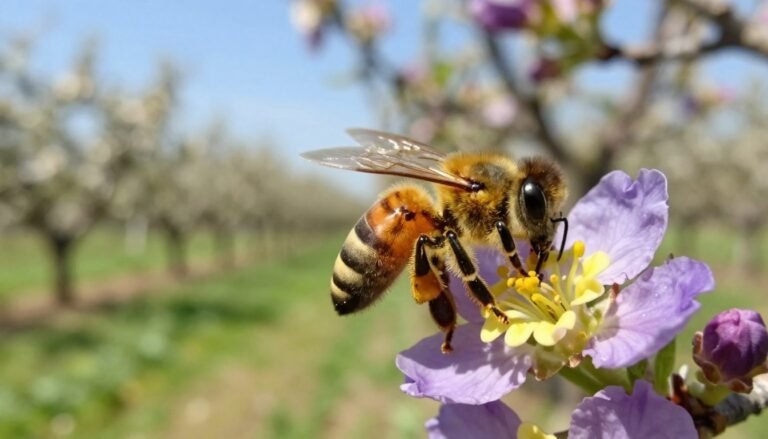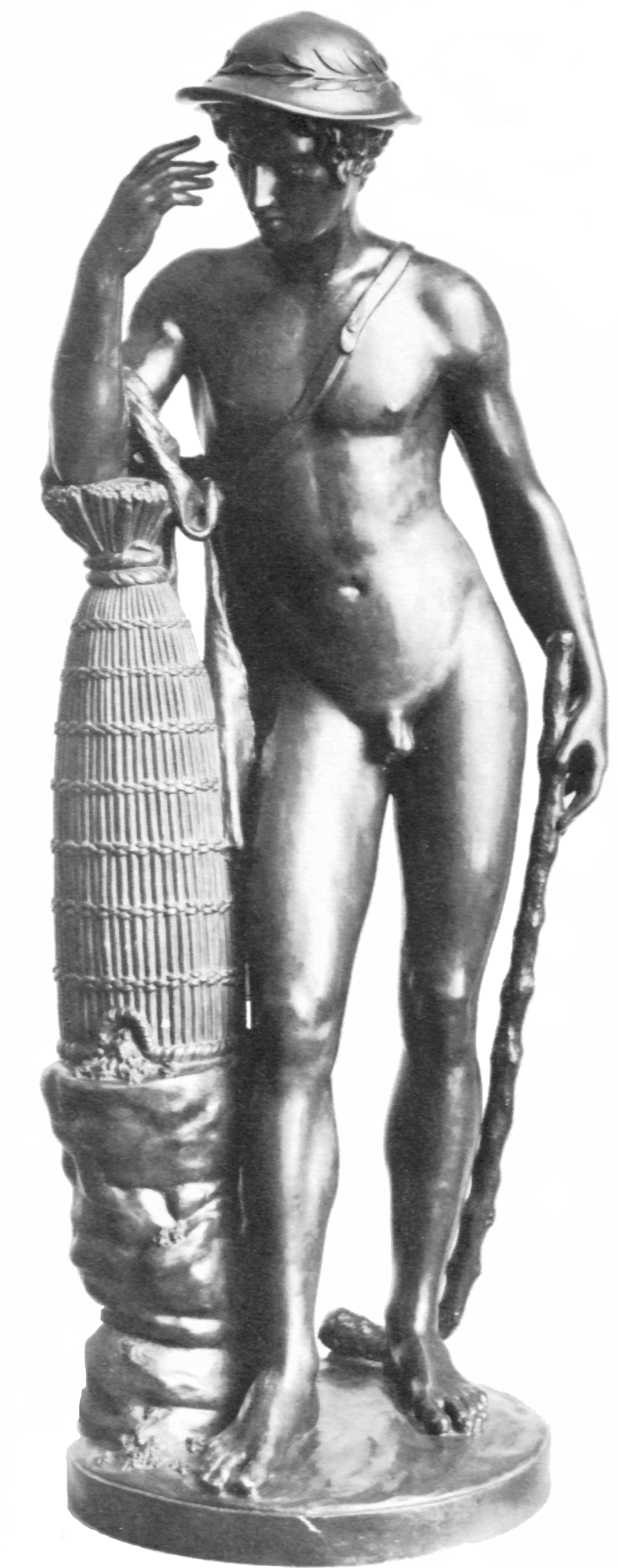
Aristaeus was the god the ancient Greeks credited with teaching humanity beekeeping in the first place — and his best-known myth isn’t really about bees at all, but about him losing every one of his colonies overnight as divine punishment for chasing a woman who died fleeing him. The story, preserved in full in Virgil’s Georgics, also happens to be the source of one of antiquity’s most persistent — and completely wrong — pieces of beekeeping advice: that a dead ox could be turned into a swarm of bees.
Key Takeaways
- Aristaeus was worshipped as the rustic god of beekeeping, cheesemaking, olive-growing, herding, and hunting, said to be the son of Apollo and the nymph Cyrene.
- His central myth, told most fully in Book IV of Virgil’s Georgics, links him directly to the story of Orpheus and Eurydice: Aristaeus pursued Eurydice, she died of a snakebite while fleeing him, and his entire apiary collapsed as consequence.
- To learn why his bees had died, Aristaeus had to physically wrestle the shape-shifting sea god Proteus into revealing the truth.
- The myth’s resolution involves bugonia — the sacrifice of cattle whose decaying carcasses supposedly gave rise to a brand-new swarm of bees, a belief ancient agricultural writers repeated as literal practical advice for centuries.
- Modern entomology has a mundane explanation for why this “worked” in practice: drone flies (Eristalis species), which breed in decaying organic matter and closely resemble honeybees, would emerge from carcasses in large numbers, convincing observers they were witnessing bees being born from death.
Table of Contents
- Who Aristaeus Was Supposed to Be
- The Myth: Eurydice, Proteus, and a Dead Apiary
- Bugonia: The Bee-From-a-Carcass Belief
- What Was Actually Happening
- Frequently Asked Questions
Who Aristaeus Was Supposed to Be
In Greek religion, Aristaeus occupied a specific, practical corner of the pantheon: he wasn’t an Olympian with grand cosmic authority, but a rustic, working god of skills that kept ancient households and farms running — beekeeping and honey-making chief among them, alongside cheesemaking, olive pressing, herding, hunting, and the seasonal Etesian winds that Mediterranean sailors and farmers both depended on. Ancient sources place his birth in Libya, the son of Apollo and the nymph Cyrene, before he later traveled to Thebes, where cult worship of him as a protector of flocks, crops, and hives persisted in various forms across the Greek world.
That mix of responsibilities — half agricultural technician, half nature deity — made Aristaeus a natural patron for anyone in antiquity whose livelihood depended on getting bees, cheese, and olive oil right, which is a meaningfully different role than the more dramatic gods of war, love, or the underworld that dominate most popular retellings of Greek mythology.
The Myth: Eurydice, Proteus, and a Dead Apiary
The fullest surviving version of Aristaeus’s most famous myth comes from the Roman poet Virgil, who devoted a substantial section of Book IV of his agricultural poem the Georgics to it. In Virgil’s telling, Aristaeus pursued Eurydice — already married to the musician Orpheus — through the countryside; fleeing him, she stepped on a snake and died of the bite. As punishment for the crime, every bee in Aristaeus’s hives died at once, wiping out his livelihood without warning or an obvious cause.
Desperate to understand what had happened, Aristaeus sought out Proteus, an old, shape-shifting sea god known for his ability to see the truth but his equal unwillingness to share it. Following his mother Cyrene’s instructions, Aristaeus physically seized and held onto Proteus through a series of transformations until the god, unable to escape, finally revealed the cause of the bees’ death and the price still owed for Eurydice’s fate.
Bugonia: The Bee-From-a-Carcass Belief
Aristaeus was advised to establish altars, sacrifice cattle, and leave their carcasses — from which new swarms of bees rose, a process later writers called bugonia.
The myth’s resolution is the part that had real, practical consequences long after anyone still believed the story literally. Following ritual instructions tied to the nymph Cyrene and the spring of Arethusa, Aristaeus sacrificed cattle and left the carcasses to decompose — and from the rotting bodies, a new swarm of bees supposedly emerged, restoring his apiary from nothing.
This wasn’t treated as pure allegory in antiquity. Bugonia — literally “ox-birth” — was repeated as genuine agricultural advice by multiple ancient writers on farming, Virgil’s own Georgics included, describing a real, replicable technique for generating bees rather than a myth confined to religious storytelling. The belief that bees could spontaneously generate from decaying flesh persisted in various forms in European natural history for well over a thousand years after Virgil, only gradually giving way as more careful observation of actual bee reproduction took hold.
What Was Actually Happening
Modern entomology has a straightforward, unglamorous explanation for why generations of farmers thought they’d watched bees hatch from a dead ox. Several species of drone fly, particularly in the genus Eristalis, are close visual mimics of honeybees — similarly sized, similarly colored, and prone to a droning hum in flight — and their larvae develop in exactly the kind of decaying organic material, including animal carcasses, that bugonia rituals produced in quantity. Someone who buried or left out a dead ox and returned weeks later to find it swarming with bee-like insects wasn’t wrong about what they were seeing; they were simply misidentifying which insect they were seeing.
It’s a useful reminder that ancient beekeeping knowledge, even when built around a myth this elaborate, was still grounded in real, repeated field observation — the ancients just lacked the tools to distinguish a true honeybee from a very convincing mimic, an identification problem beekeepers and gardeners still occasionally run into today with hoverflies and other bee mimics.
Frequently Asked Questions
Was Aristaeus a major god in ancient Greece?
He was a minor but genuinely worshipped deity, associated specifically with practical rural skills like beekeeping, cheesemaking, and olive-growing rather than the broader cosmic powers of the major Olympian gods.
Is the Aristaeus myth connected to the Orpheus and Eurydice story?
Yes, directly. In Virgil’s version, Aristaeus’s pursuit of Eurydice causes her death, which in turn triggers the destruction of his bees as consequence — linking two of Greek mythology’s best-known stories into a single narrative.
Did ancient beekeepers actually believe bees came from dead animals?
Multiple ancient agricultural writers, including Virgil, described bugonia as a genuine technique rather than pure myth, and the belief persisted in various forms in European writing for centuries, most likely reinforced by drone flies emerging from carcasses and being mistaken for bees.
Where does the word “bugonia” come from?
It derives from Greek roots meaning “ox” and “birth” or “origin,” directly describing the supposed process of bees being generated from a dead ox carcass.