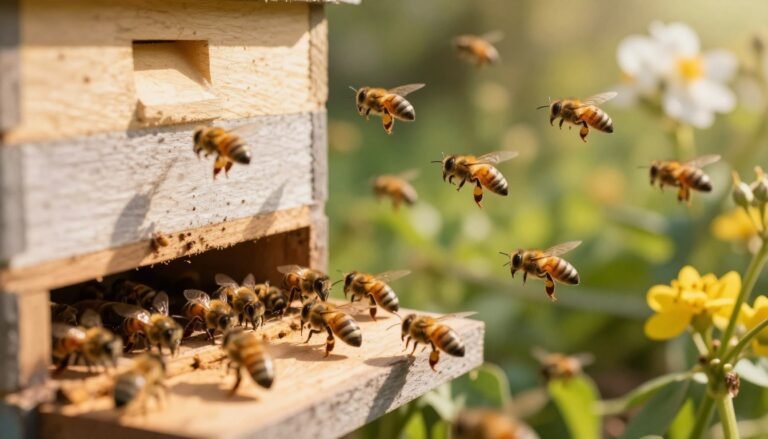
Most bee-related idioms have a real, traceable history — but the popular origin stories people repeat for them are often wrong, including one debunked myth that a chain email invented in the year 2000. “Busy as a bee” really does go back to Chaucer, “beeline” really does describe how a bee flies, but “mind your own beeswax” and “spelling bee” have nothing to do with the insect’s actual behavior at all.
Key Takeaways
- “Busy as a bee” is the oldest phrase here by far — Geoffrey Chaucer used it in “The Squire’s Tale” from The Canterbury Tales, written between 1386 and 1400.
- “Make a beeline” dates to American English around 1830, from the verb “to line bees” (tracking wild bees back to their nest by their flight path), first recorded in 1827.
- “The bee’s knees” (1922) has no confirmed connection to actual bee anatomy — it most likely arose alongside a wave of 1920s nonsense animal phrases like “the cat’s pajamas” and “the cat’s whiskers.”
- “Mind your own beeswax” is first recorded in 1929, and the popular story that it comes from women using beeswax to smooth pockmarked skin is a fabricated myth that started circulating in a chain email in the year 2000 — the phrase is almost certainly just a playful, similar-sounding stand-in for “business.”
- The “bee” in “spelling bee” most likely has nothing to do with the insect — it traces to the Old English word bēn (“a prayer, a favor”), later associated with neighbors gathering to help each other with a shared task, like a quilting bee or husking bee.
Table of Contents
- “Busy as a Bee”: The Oldest One, by Centuries
- “Make a Beeline”: A Real Description of Bee Behavior
- “The Bee’s Knees”: No Real Connection to Bees at All
- “Mind Your Own Beeswax”: Busting a Real Myth
- “Spelling Bee”: The Insect Isn’t Actually Involved
- A Few More Worth Knowing
- All Five, at a Glance
- Frequently Asked Questions
“Busy as a Bee”: The Oldest One, by Centuries
This is by far the oldest bee idiom in common English use, and its origin is genuinely well documented rather than disputed. Geoffrey Chaucer used the comparison in “The Squire’s Tale,” part of The Canterbury Tales, written sometime between 1386 and 1400 — describing people (in Chaucer’s case, women he characterized as busy “as bees” in pursuit of deception) as constantly, visibly active. The comparison held up for more than 600 years for an obvious reason: a working honeybee colony genuinely does look like nonstop, purposeful activity to an outside observer, foragers coming and going continuously through daylight hours.
“Make a Beeline”: A Real Description of Bee Behavior
Unlike “busy as a bee,” which is a loose comparison, “beeline” describes an actual, specific behavior. The term traces to American English around 1830, built from “bee” plus “line,” referencing how a bee flies in a genuinely direct, efficient path back to its hive once it has what it came for. The underlying practice predates the idiom itself: “lining bees” or “bee lining” — the verb form is recorded as early as 1827 — was a real technique wild-honey hunters used to track a foraging bee’s flight path back to an unknown tree colony, since a loaded bee heading home flies about as directly as it can manage. One of the earliest print citations, from an 1829 New York Spectator column, has the writer describing drawing “a bee line to the next tavern” — the metaphorical use following almost immediately after the literal one entered common use.
“The Bee’s Knees”: No Real Connection to Bees at All
This one surprises people the most: “the bee’s knees,” meaning something excellent, is first attested in 1922, and its actual origin is genuinely unclear even to etymologists — but the most credible explanation has nothing to do with bee anatomy. The 1920s produced a whole wave of nonsense animal-based superlatives at almost the same time — “the cat’s pajamas,” “the cat’s whiskers,” “the cat’s meow,” “the gnat’s elbow,” “the monkey’s eyebrows” — and “the bee’s knees” most likely arose as one more entry in that same playful trend rather than as a specific reference to anything a bee’s leg joint actually does. A few alternate theories get repeated online — that it honors 1920s dancer Bee Jackson, or that it’s a corruption of “business” — but none of them are well supported. Interestingly, in the late 1700s, “a bee’s knee” (usually as “as big as a bee’s knee”) actually meant something small or insignificant — the opposite sentiment from the phrase’s modern meaning, which makes the 1920s version look more like a fresh coinage than a natural evolution of the older phrase.
“Mind Your Own Beeswax”: Busting a Real Myth
This is the clearest case of a false origin story actively circulating as fact. The popular version claims that colonial-era or Victorian women used melted beeswax to smooth over smallpox scars or pockmarks on their skin, and that “mind your own beeswax” originated as a warning not to stare at (or comment on) another woman’s beeswax-covered complexion. It’s a vivid story — and it’s fabricated. The phrase “mind your own beeswax” doesn’t appear in print until 1929, in a children’s book, with further early citations from 1934 and 1939 — decades after the era the cosmetic story claims. The specific myth itself has a traceable, much more recent origin: it began circulating in a chain email titled “Little History Lesson” that spread starting in the year 2000. Historically, women with pockmarks were more likely to use colored cloth patches or powder, not beeswax, to cover blemishes — there’s no documented cosmetic practice underneath the myth at all.
The much simpler, better-supported explanation: “beeswax” is likely just a playful, similar-sounding substitute for “business,” in the same spirit as saying “shut your pie hole” instead of a plainer phrase. One etymologist has separately noted that “beeswax” carried a 19th-century slang meaning of “tedious bore,” which offers a second plausible (if less certain) path to the same phrase.
“Spelling Bee”: The Insect Isn’t Actually Involved
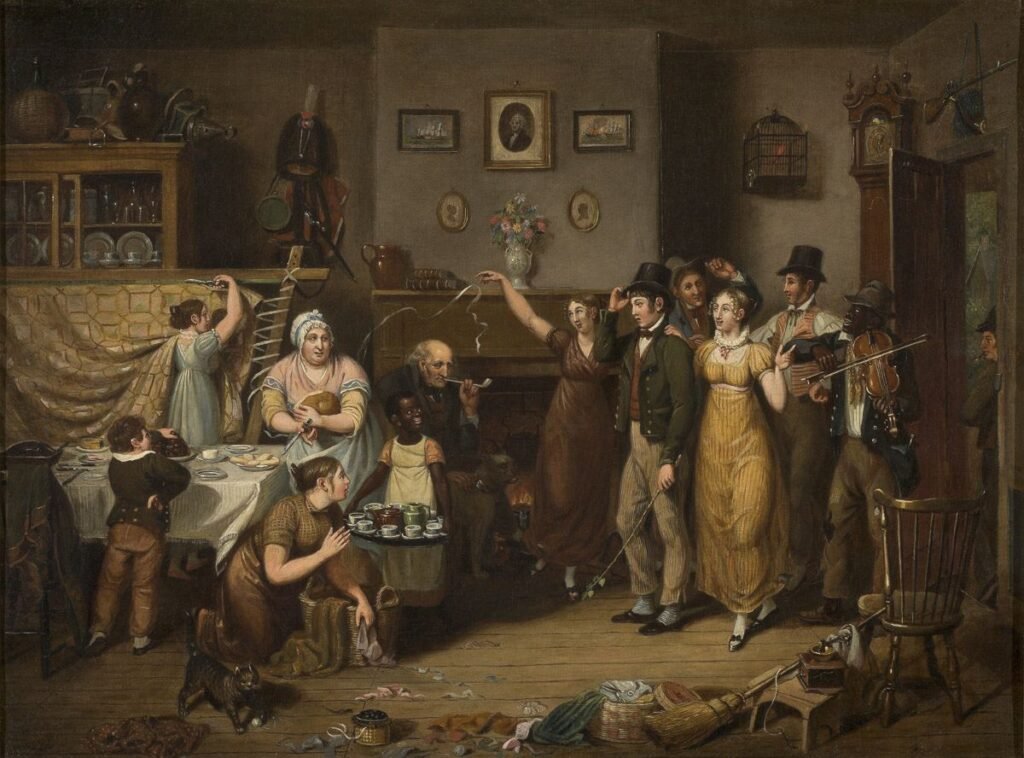
This is the second genuinely surprising entry: the “bee” in “spelling bee” most likely isn’t a reference to the insect at all. Etymologists trace it to the Old English word bēn, meaning “a prayer” or “a favor,” which by the late 18th century had become associated with a dialect form — “been” or “bean” — describing neighbors joining together to help each other complete a single shared task. A quilting bee, husking bee, or barn-raising bee all describe that same communal-labor tradition; a spelling bee (earliest printed reference from 1825) applied the same “communal gathering for one activity” framing to a spelling competition rather than physical labor. The Scripps National Spelling Bee, the modern event most people picture, didn’t start until 1925 — exactly a century after that first printed use of the term. The popular assumption that “bee” refers to the insect’s social hive behavior is a natural guess, but it’s very likely a folk etymology rather than the real, documented origin.
A Few More Worth Knowing
These five have the richest, best-documented histories, but a handful of other bee-related expressions are worth a quick honest look too:
- “A bee in your bonnet” (meaning a persistent, distracting preoccupation) traces back further than the bonnet itself: Scottish poet Gavin Douglas used “hed full of beys” (“head full of bees”) in his 1513 translation of Virgil’s Aeneid. The specific “bee in his bonnet” phrasing didn’t reach print until Philip Doddridge’s letters in 1790 — nearly 300 years later, evolving from “bees in the head” into the more specific headwear image.
- “Queen bee” as a way to describe a dominant, central female figure in a social group is a direct, straightforward metaphor from actual hive structure, and needs no myth-busting — a colony genuinely does organize around a single reproductive queen, so the comparison holds up biologically as well as linguistically.
- “To bee” as a suffix for gatherings — spelling bee, quilting bee, husking bee, apple bee — all share the same Old English bēn root discussed above, not five separate coincidental namings. Once you know the root, the whole family of “[activity] bee” phrases suddenly makes more sense as one pattern rather than a strange coincidence.
All Five, at a Glance
| Phrase | First recorded | Actually about bees? |
|---|---|---|
| Busy as a bee | c. 1386-1400 (Chaucer) | Yes — a direct behavioral comparison |
| Make a beeline | 1830 (verb form 1827) | Yes — describes real bee flight/navigation behavior |
| The bee’s knees | 1922 | No — likely part of a 1920s nonsense-phrase trend |
| Mind your own beeswax | 1929 | No — a sound-alike substitute for “business”; the cosmetics story is a debunked 2000s-era myth |
| Spelling bee | 1825 (concept); 1925 (Scripps Bee) | No — traces to Old English bēn, unrelated to the insect |
Frequently Asked Questions
Is “mind your own beeswax” really unrelated to bees?
The phrase itself uses the word “beeswax,” but its origin is almost certainly just a playful substitute for “business” rather than a reference to actual beeswax use. The popular story about women covering pockmarks with beeswax is a fabricated myth that started spreading in a chain email in 2000 — the real phrase dates to 1929, decades before that story claims.
Does “spelling bee” have anything to do with honeybees?
Probably not. Etymologists trace “bee” in this sense to the Old English word bēn (“a prayer, a favor”), later used for communal work gatherings like quilting bees and husking bees. The insect connection is a widely assumed but likely incorrect folk etymology.
What’s the oldest bee-related idiom in English?
“Busy as a bee,” used by Geoffrey Chaucer in “The Squire’s Tale” from The Canterbury Tales (written 1386-1400), making it centuries older than any of the other common bee idioms.
Does “make a beeline” actually describe how bees fly?
Yes — this is the one idiom on this list with a direct, literal basis. It comes from “lining bees,” a real technique wild-honey hunters used to track a bee’s efficient, direct flight path back to its hive, with the verb form recorded as early as 1827.
Where does “the bee’s knees” actually come from?
Its exact origin is genuinely unclear, first attested in 1922, most likely arising alongside a wave of 1920s nonsense animal-based phrases like “the cat’s pajamas” and “the cat’s whiskers” rather than referring to anything specific about a bee’s leg joint.
How can I tell a real word origin from a myth like the beeswax story?
Check when the phrase is actually first attested in print (dictionaries like Merriam-Webster and etymology resources like Etymonline track this) and compare that date against the story’s claimed historical setting. The beeswax myth fails this test immediately: the phrase appears in 1929, but the myth places its origin in an era before that, with no supporting written record from the claimed period at all.
More detail on this is available from Online Etymology Dictionary.