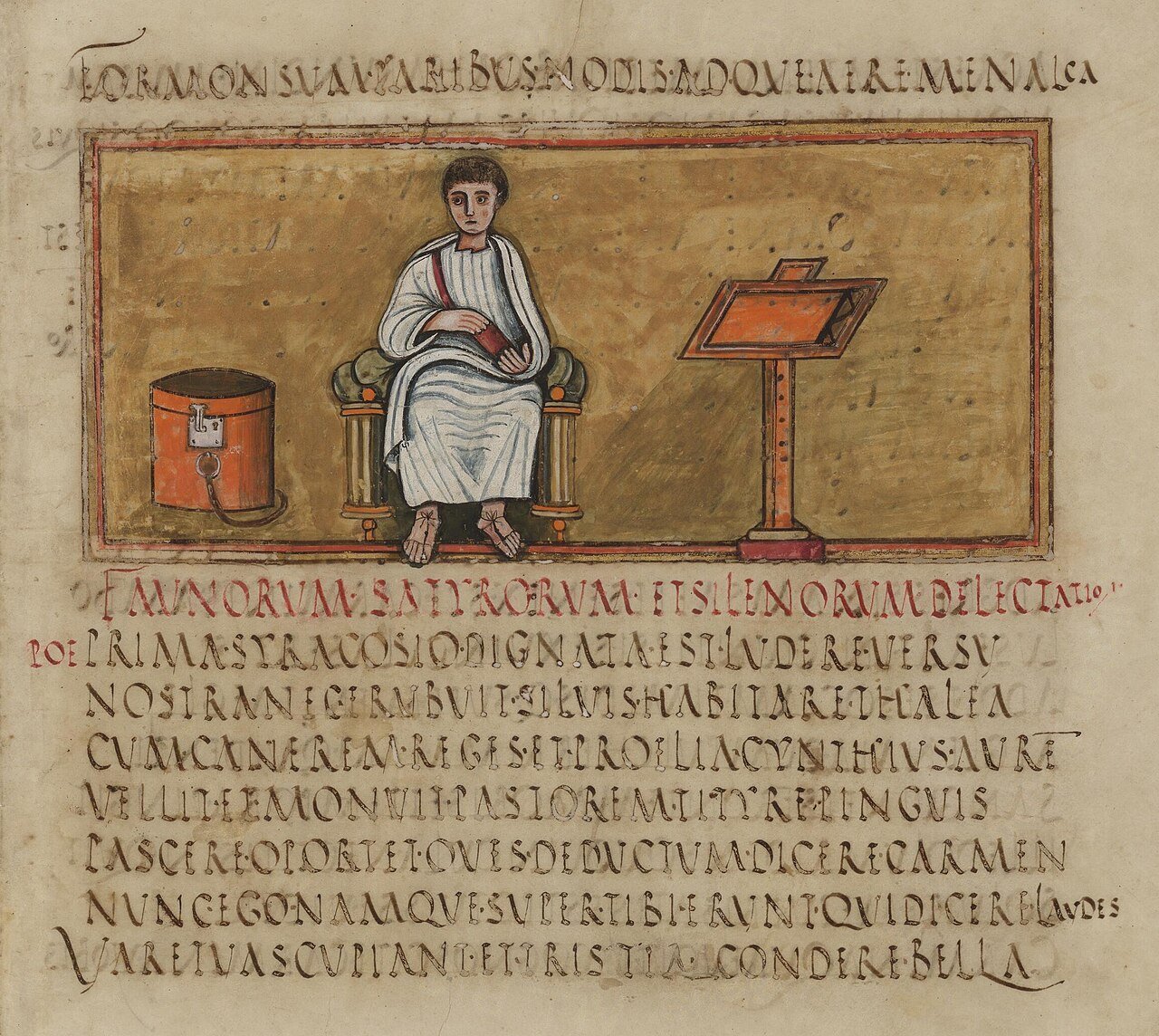
Virgil’s Georgics, published around 29 BC, devotes its entire fourth book to beekeeping — and while the poem gets the bees’ “king” backwards and leans on some inherited myths, its practical advice on hive siting, forage planting, and swarm management is close enough to correct that Roman beekeepers were, in some respects, working from a real technical manual written in verse. Rome’s three major agricultural writers — Virgil, Columella, and Varro — all treated apiculture as a serious, profitable branch of farming, and their surviving texts are still the primary window into how the Roman world actually kept bees.
Key Takeaways
- Virgil’s Georgics Book IV (c. 29 BC) is the best-known Roman text on beekeeping, but Columella’s De Re Rustica Book IX (c. AD 60) and Varro’s earlier Res Rusticae are the more technical, less poetic sources historians rely on for actual practice.
- Roman writers followed Aristotle in believing hives were ruled by a “king” bee rather than a queen — a mistake that went uncorrected in Western beekeeping until the 1600s, roughly 1,700 years later.
- Much of Rome’s early apicultural knowledge is said to trace back to a Carthaginian agronomist named Mago, whose agricultural treatise the Roman Senate reportedly ordered translated from Punic into Latin after the destruction of Carthage in 146 BC.
- Columella describes a large, well-run apiary as capable of producing revenue in the thousands of sesterces a year — enough that Roman writers treated beekeeping as a genuine investment, not a rustic sideline.
- Honey and beeswax had uses far beyond the kitchen in Roman life, from funerary wax death masks of ancestors to honeyed offerings for household spirits.
Table of Contents
- Virgil’s Georgics: A Poem With a Technical Manual Inside It
- Columella and Varro: The Working Farmers’ Sources
- Where Rome’s Bee Science Actually Came From
- The “King Bee” Mistake That Lasted 1,700 Years
- Honey as an Investment, Not Just a Sweetener
- What Roman Beekeeping Actually Looked Like
- Frequently Asked Questions
Virgil’s Georgics: A Poem With a Technical Manual Inside It
Publius Vergilius Maro wrote the Georgics as a four-book didactic poem on farming, and he gave the entire fourth book to bees — roughly 550 lines on hive placement, forage, swarming, and disease, wrapped in some of the most admired nature poetry in Latin literature. Modern classicists are split on how much of it Virgil intended as literal instruction versus political allegory (the hive was a ready-made metaphor for Roman social order), but the agricultural content is specific enough that later Roman writers treated it as a real source, not just verse.
Virgil recommends siting an apiary in a sheltered spot near fresh water and flowering plants, describes bees fighting “wars” between rival swarms, and gives instructions for re-establishing a colony from ox carcasses — the bugonia myth, a piece of spontaneous-generation folklore that even Roman readers seem to have treated more as poetic tradition than literal beekeeping advice. The mix of accurate observation and inherited myth is exactly what makes the Georgics useful to historians: it shows what an educated Roman actually believed about bees, correct or not.
Columella and Varro: The Working Farmers’ Sources
Lucius Junius Moderatus Columella, writing De Re Rustica around AD 60, gives beekeeping its own book (Book IX) with far less poetry and far more operating detail than Virgil: hive construction materials, seasonal management, robbing prevention, and yield expectations drawn from what reads as real estate-management experience rather than literary tradition. Columella wrote for owners of large agricultural estates, and his bee chapter reflects that audience — it’s aimed at a bailiff who needs to actually turn a profit on an apiary, not a reader admiring nature.
Marcus Terentius Varro’s Res Rusticae, written a generation before Virgil, covers bees more briefly but is the earliest of the three surviving Roman agricultural texts to treat apiculture as a distinct farm enterprise worth its own section, alongside cattle, sheep, and poultry.
Where Rome’s Bee Science Actually Came From
Rome’s agricultural writers didn’t invent their beekeeping knowledge from scratch. Ancient sources credit much of early Roman farming science, including material on bees, to Mago, a Carthaginian agronomist whose comprehensive treatise was, according to Roman tradition, ordered translated from Punic into Latin by the Roman Senate after the Third Punic War ended with Carthage’s destruction in 146 BC — a striking detail, given that Rome had just leveled the city whose scholarship it was moving to preserve. Mago’s original work doesn’t survive independently; it’s known only through references and quotations in later Roman writers, Columella among them, which makes untangling exactly how much of “Roman” beekeeping knowledge was really Carthaginian in origin genuinely difficult to pin down with precision.
The “King Bee” Mistake That Lasted 1,700 Years
Roman writers, following Aristotle before them — a misconception this site has covered in more depth in its look at Aristotle’s surprisingly accurate (and inaccurate) bee observations — believed the hive’s central bee was a king, not a queen. It’s an understandable error: the ruling bee is larger and clearly central to the colony’s order, and nothing about outward appearance reveals sex. Virgil’s Georgics repeats the “king” framing and builds political allegory on top of it, comparing the hive to a monarchy. The mistake wasn’t corrected until Dutch scientist Jan Swammerdam dissected a queen bee in the 1670s and identified functioning ovaries — meaning the error Virgil wrote into Latin verse stood as accepted fact for roughly seventeen centuries.
Honey as an Investment, Not Just a Sweetener
Before sugar reached Europe in any quantity, honey was Rome’s primary sweetener and a genuinely valuable commodity. Columella describes large, well-managed apiaries as capable of generating several thousand sesterces a year in revenue — for comparison, a Roman legionary’s annual pay in the early Empire was on the order of 900 sesterces, which puts a productive apiary’s output in serious money by the standards of the time. Honey and beeswax also carried uses well outside the kitchen: wax was used for ancestor death masks (imagines) displayed in noble households and paraded at funerals, and honey was mixed into cakes and libations offered to household gods, the Lares. A commodity that shows up in agricultural ledgers, religious ritual, and funerary custom in the same period says something about how embedded beekeeping was in ordinary Roman life, not just its farm economy.
What Roman Beekeeping Actually Looked Like
Practical Roman hives were far removed from the wooden box hives familiar today. Columella and Pliny the Elder both describe hives built from hollowed bark, wicker coated in dung or clay, and fired terracotta or clay cylinders — materials chosen for being cheap, locally available, and reasonably good at insulating the colony. Both writers also describe moving hives to follow forage, including, according to Pliny, boatmen on the Po River in northern Italy who transported hives upriver at night specifically to reach better flowering plantings — an early, low-tech version of the migratory beekeeping still practiced today, which this site has covered in more detail in its history of migratory beekeeping in America. Smoke was already standard practice for calming bees before an inspection, a detail Virgil and Columella both mention and one that any modern beekeeper would recognize immediately.
Frequently Asked Questions
Did Virgil actually keep bees himself?
There’s no direct evidence that Virgil personally kept bees. The Georgics draws on earlier Greek and Roman agricultural writing, including Aristotle and, by tradition, Mago of Carthage, more than on Virgil’s own hands-on experience — though the level of specific detail suggests he consulted people who did.
What is the “bugonia” myth in the Georgics?
Bugonia is the ancient belief that a new swarm of bees could spontaneously arise from the carcass of a dead ox. Virgil describes the ritual in detail in Book IV. It has no basis in actual bee biology and reflects the era’s broader, incorrect ideas about spontaneous generation.
Why did Romans think bees had a king instead of a queen?
They inherited the belief from Aristotle, and nothing about the ruling bee’s outward appearance revealed its sex to the naked eye. The error wasn’t corrected until Jan Swammerdam’s dissections in the 1670s identified ovaries in the “king” bee.
What materials were Roman beehives made from?
Columella and Pliny the Elder describe hives made from hollowed bark, wicker woven baskets coated in dung or clay, and fired terracotta or clay cylinders — cheap, locally sourced materials rather than milled lumber.
Where did Roman beekeeping knowledge come from?
A significant portion is credited by Roman tradition to Mago, a Carthaginian agronomist whose treatise the Roman Senate reportedly had translated into Latin after the Third Punic War. Columella, Varro, and Virgil built on that base along with earlier Greek sources, including Aristotle.
This is covered in more depth by a Cambridge University Press study on Virgil’s apicultural writing.