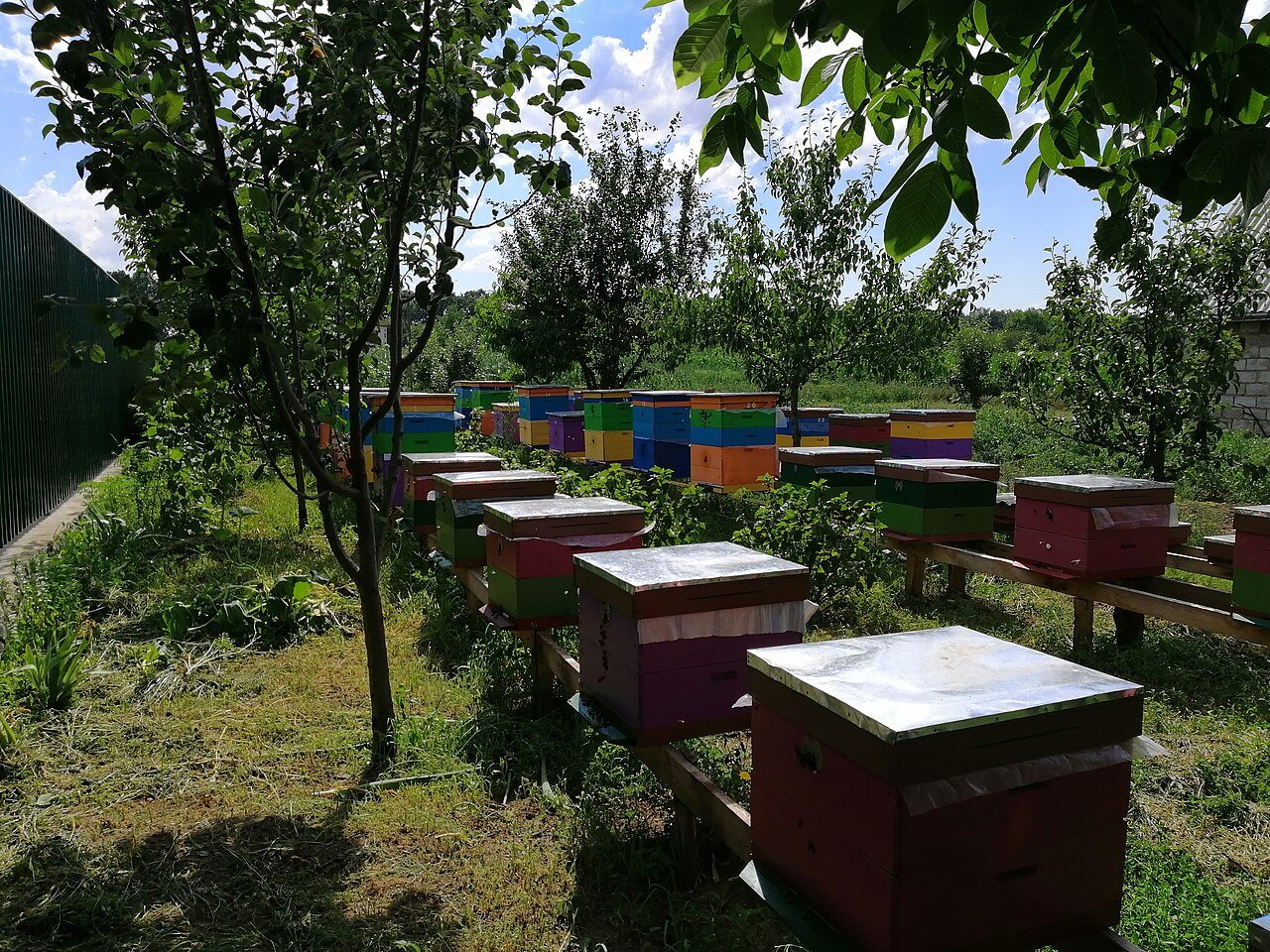
Russia’s full-scale invasion of Ukraine has measurably shrunk one of the world’s largest honey industries: Ukraine’s honey production fell from more than 68,000 metric tons a year before 2022 to under 58,000 tons in 2023, and the country’s own beekeeping organizations estimate roughly 30% of national beekeeping capacity has been lost since the war began. This isn’t a side note to the war — Ukraine is one of Europe’s largest honey producers and one of the world’s biggest exporters, supplying more than 30% of the EU’s honey imports before the invasion.
Key Takeaways
- Ukraine’s honey production dropped from over 68,000 metric tons annually before the full-scale invasion to just under 58,000 tons in 2023, with the number of registered bee colonies falling 10.5% year-over-year to about 2.4 million as of January 2023.
- Ukrainian beekeeping industry estimates put the loss in national beekeeping productive capacity at roughly 30% since 2022 — a combination of destroyed apiaries, abandoned colonies, and beekeepers who were displaced or conscripted.
- The regions historically responsible for the largest share of Ukraine’s honey — Mykolaiv, Kherson, Kharkiv, Dnipro, Zaporizhzhia, Luhansk, and Donetsk oblasts — are also among the areas most directly affected by fighting, home to roughly a third of the country’s beekeepers.
- Abandoned or under-visited colonies face real, compounding secondary risks: without regular beekeeper attention, untreated Varroa mite infestations and disease can wipe out hives that physically survived the fighting itself.
- Landmines and unexploded ordnance left in former front-line and liberated territory are a documented, ongoing obstacle even after fighting moves elsewhere, since beekeepers and farmers can’t safely return to fields and apiaries until they’re cleared.
Table of Contents
- Ukraine’s Beekeeping Industry Before the War
- What the War Has Actually Done to Production
- What’s Happening on the Ground for Beekeepers
- The Global Ripple Effect
- Aid and Rebuilding Efforts
- Frequently Asked Questions
Ukraine’s Beekeeping Industry Before the War
Before the full-scale invasion in February 2022, Ukraine was already a genuine agricultural heavyweight in honey — one of Europe’s largest producers and fifth to seventh in the world in FAOSTAT’s 2018 to 2021 data. More than 30% of the European Union’s honey imports came from Ukraine, a scale most casual observers of the war probably don’t associate with the country’s agricultural profile, which tends to get discussed in terms of grain and sunflower oil rather than honey. This site’s own overview of the world’s top honey-producing countries places Ukraine 11th in the world for 2024 in FAOSTAT’s data (53,490 tonnes), just outside the top ten, yet it exported more honey than it produced that year (85,812 tonnes), a position built on a large base of both commercial operations and a huge number of small-scale hobbyist beekeepers, a structure that made the industry both resilient in some ways and especially exposed in others once the war began.
What the War Has Actually Done to Production
The production numbers tell a consistent story. Ukraine’s honey output fell from more than 68,000 metric tons annually before the invasion to just under 58,000 tons in 2023 — a drop of roughly 15% in national output. The colony count tells a similar story: as of January 1, 2023, Ukraine had about 2.4 million registered bee colonies, a 10.5% decline from the same date a year earlier. Ukrainian beekeeping industry sources have separately estimated that roughly 30% of the country’s overall beekeeping productive potential has been lost since 2022, a figure that reflects not just destroyed hives but colonies abandoned when their keepers were displaced, killed, or conscripted, and hives that survived physically but collapsed afterward from neglect.
What’s Happening on the Ground for Beekeepers
The regions that historically produced the largest share of Ukraine’s honey — Mykolaiv, Kherson, Kharkiv, Dnipro, and Zaporizhzhia oblasts, along with Luhansk and Donetsk — are also among the regions that have seen the heaviest fighting, and are home to roughly a third of the country’s beekeepers. That overlap is not a coincidence beekeepers can route around; it’s a direct hit to the geographic core of the industry. Beyond the immediate danger of fighting itself, two slower, less-visible risks have compounded the damage. First, a colony left unattended for weeks or months during displacement can’t get the routine Varroa mite treatment and disease monitoring healthy beekeeping requires — a colony that survives shelling can still collapse afterward simply from being neglected. Second, unexploded ordnance and landmines left behind in former front-line and liberated areas are a real, ongoing, physical obstacle: reporting on Ukraine’s agricultural sector has documented specific cases where mines in and around farmland and former apiary sites have kept beekeepers from safely returning to check on, treat, or harvest from colonies that may still be alive.
The Global Ripple Effect
Because Ukraine supplied such a large share of the EU’s honey imports, the war’s impact hasn’t stayed contained within the country. European buyers have had to look for alternative honey sources from South America and other markets to help replace lost Ukrainian volume, a substitution that reporting on the honey trade has described as both logistically difficult and more expensive than simply continuing to source from Ukraine at pre-war levels. That’s a genuinely unusual example of a European war creating a measurable supply and pricing effect in a product category most people never think to associate with a conflict zone.
Aid and Rebuilding Efforts
Several international and Ukrainian organizations have run direct aid programs aimed specifically at beekeepers, providing replacement equipment, hives, and support to help beekeepers who lost colonies or equipment get back into production rather than exit the trade entirely. Ukraine’s beekeeping sector has also continued pursuing integration with EU agricultural standards and markets during the war itself, a sign the industry is planning for its own postwar future rather than simply enduring the present. None of this erases the scale of what’s been lost, but it does mean the story isn’t purely one of decline — real, targeted rebuilding effort is underway alongside the damage.
Frequently Asked Questions
How much has Ukraine’s honey production actually dropped?
From more than 68,000 metric tons annually before the full-scale invasion to just under 58,000 tons in 2023 — roughly a 15% decline in national output, alongside a 10.5% year-over-year drop in registered bee colonies as of January 2023.
Why does this matter outside Ukraine?
Ukraine supplied more than 30% of the EU’s honey imports before the war, so the drop in Ukrainian output has forced European buyers to look for costlier and more logistically difficult alternative honey sources.
Why are landmines a beekeeping problem specifically?
Unexploded ordnance and landmines left in former front-line and liberated territory have been documented keeping beekeepers from safely returning to check on, treat, or harvest from apiaries in affected farmland, even in areas no longer actively being fought over.
Can an abandoned beehive survive months without a beekeeper?
Sometimes, but the odds are poor. Without routine Varroa mite treatment and disease monitoring, a colony that survives the immediate danger of fighting can still collapse later purely from the neglect caused by its keeper being displaced or unable to return.
Is anything being done to help Ukrainian beekeepers rebuild?
Yes. Several international and Ukrainian organizations have run aid programs providing replacement hives and equipment to beekeepers who lost colonies, and the industry has continued working toward EU market integration during the war itself.
For more background on this, see Interfax-Ukraine, citing the Institute of Beekeeping.
Related Reading
Image credits: Photo: Марина Лютинська (Maryna Liutynska), CC BY-SA 4.0, via Wikimedia Commons.