Honey bees can be trained, in a matter of hours, to associate the scent of TNT with a sugar-water reward — and researchers have used that same simple Pavlovian response to help locate real, live landmines in Croatia, with detection sensitivity down to parts per trillion, well below what a trained dog can reliably pick up. This isn’t speculative or theoretical: it’s a documented line of research going back over two decades, funded by defense agencies and tested in actual former minefields.
Key Takeaways
- The core method is ordinary Pavlovian conditioning: bees are repeatedly exposed to the scent of TNT alongside a sugar-water reward until they reflexively extend their proboscis — the same feeding reflex any bee shows for a real nectar source — whenever they smell it again, trained or untrained.
- DARPA’s Controlled Biological Systems Program funded early bee-based landmine detection research starting around 1999, and Sandia National Laboratories worked with University of Montana researcher Jerry Bromenshenk on related field testing.
- Trained bees can detect TNT vapor at concentrations as low as parts per trillion, a lower detection threshold than dogs typically achieve, though bees need retraining roughly every few days and can’t be directed the way a handler can direct a dog.
- Researchers at the University of St Andrews trained “sniffer bees” that were subsequently used to help locate real, previously unmapped landmines in Croatia, with drones tracking where trace-explosive readings came back positive on returning bees so a clearance team could be sent to the right spot.
- Bee-based detection isn’t a replacement for dogs or mechanical clearance — it’s a complementary, low-cost, wide-area screening method, most useful for narrowing down where a slower, more precise clearance method needs to focus.
Table of Contents
- How You Actually Train a Bee to Find Explosives
- Where This Research Actually Came From
- The Croatia Field Tests
- How Bees Compare to Dogs and Other Detection Methods
- Real Limitations, Not a Finished Product
- Frequently Asked Questions
How You Actually Train a Bee to Find Explosives
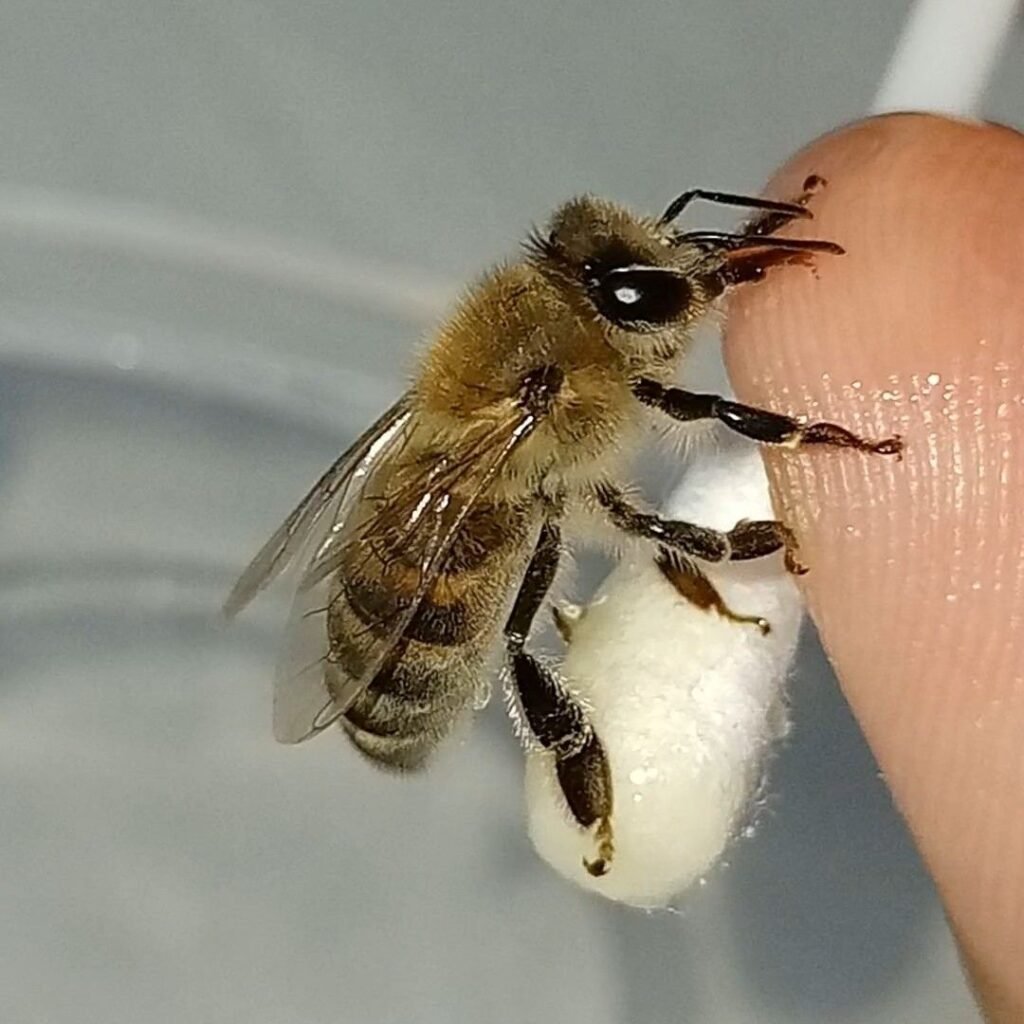
The training method behind explosive-detecting bees isn’t exotic — it’s the same proboscis extension reflex any beekeeper can watch happen when a forager first finds a good nectar source. A bee reflexively extends its proboscis to feed once its taste receptors detect a sufficiently concentrated sugar solution, a mechanism this site covers in more general terms in its guide to how bees taste through contact chemoreception. Researchers exploit that reflex directly: bees are repeatedly exposed to the scent of TNT paired with a sugar-water reward, using standard associative-learning conditioning, until they start extending their proboscis at the scent alone, before any reward is even present — the same basic learning principle used to study bee memory and cognition more broadly. Once trained, a group of bees released near a suspected minefield will cluster and linger over spots where they detect trace TNT vapor rising from buried explosives, since the volatile compounds leach upward through soil over time.
Where This Research Actually Came From
The idea of using bees for explosive detection has real institutional backing going back more than two decades. The Defense Advanced Research Projects Agency’s (DARPA) Controlled Biological Systems Program funded early bee-training research for landmine detection starting around 1999, treating trained insects as one candidate among several “biological sensor” approaches being explored at the time. Sandia National Laboratories separately worked with Jerry Bromenshenk, a University of Montana researcher, on testing whether bees could be trained to reliably find TNT residue in field conditions rather than only in a lab. That early defense-funded groundwork is what later research building on bee-based detection has continued to cite and build from.
The Croatia Field Tests
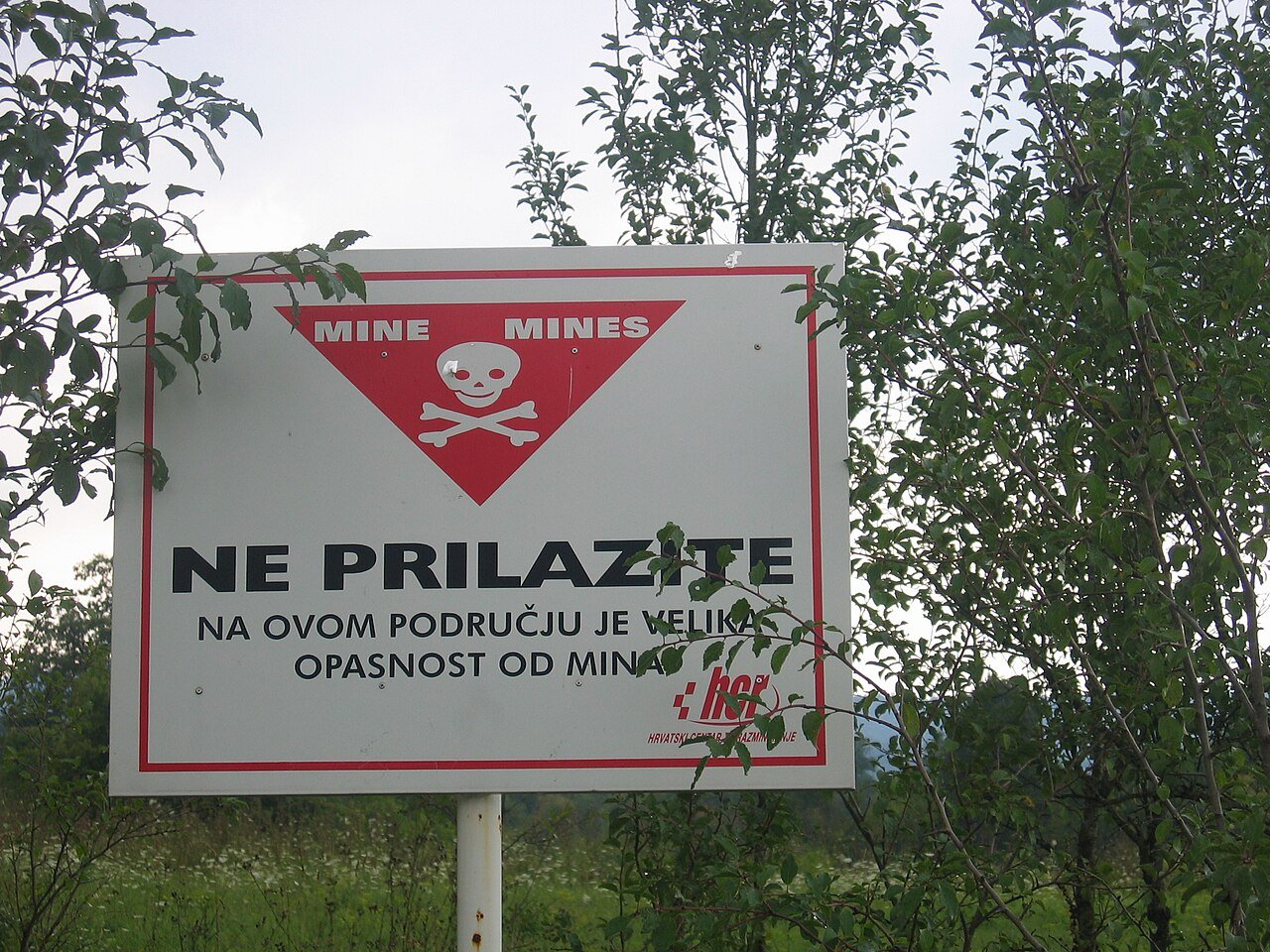
The most concrete, field-tested version of this research came out of the University of St Andrews, where researchers trained “sniffer bees” and then deployed them over real, previously unmapped minefield areas in Croatia — a country still dealing with landmine contamination left over from the 1990s wars. Equipment near the hive detected trace explosive residue picked up on the bodies of returning bees, and drones were used to track roughly where each bee had been foraging, narrowing down the search area enough that a human clearance team could be sent to check the specific spot rather than the entire field. That combination — trained bees for wide-area screening, drones for rough localization, and a human team for final confirmation and clearance — is a genuinely practical workflow, not just a lab demonstration.
How Bees Compare to Dogs and Other Detection Methods
Trained bees offer a few real, documented advantages over detection dogs: they can be trained faster, in hours rather than months, they work in far greater numbers at once since a single hive can field thousands of foragers, and their sensitivity to TNT vapor has been measured down to parts per trillion — lower than a dog can typically detect. They also don’t get tired the way a working dog does over a long shift. The tradeoffs are real too: bees need to be retrained roughly every few days as the association fades, they can’t be directed to search a specific quadrant the way a handler directs a dog, and interpreting where a bee actually picked up a scent requires extra equipment (like the tracking drones used in the Croatia work) that a dog handler doesn’t need. In practice, bee-based detection functions as a wide-area, low-cost first pass rather than a precise, on-demand search tool.
Real Limitations, Not a Finished Product
None of this means bee-based landmine detection is a mature, widely deployed technology replacing existing demining methods. It remains a specialized research approach used in specific field trials rather than a standard tool in every demining organization’s kit, and mechanical clearance, trained dogs, and metal-detector sweeps still do the bulk of real-world demining work worldwide. The genuine value of the bee research is as a cheap, fast, wide-area screening layer that can help prioritize where slower, more expensive clearance methods focus first — a real, useful niche, even if it isn’t a wholesale replacement for how demining is actually done today.
Frequently Asked Questions
How do you actually train a bee to detect explosives?
By pairing the scent of TNT with a sugar-water reward repeatedly, using standard Pavlovian conditioning, until the bee reflexively extends its proboscis at the scent alone — the same feeding reflex bees show for any strong nectar source.
Who funded this research?
DARPA’s Controlled Biological Systems Program funded early bee-training research for landmine detection starting around 1999, and Sandia National Laboratories separately worked with University of Montana researcher Jerry Bromenshenk on field testing.
Have trained bees actually found real landmines?
Yes. University of St Andrews researchers trained bees that were used, together with tracking drones, to help locate real, previously unmapped landmines in Croatia, narrowing the search area for a human clearance team.
Are bees better than dogs at detecting explosives?
In some specific ways — bees train faster, work in much larger numbers, and have been measured detecting TNT vapor at lower concentrations than dogs typically achieve. But bees can’t be directed to search a specific area the way a dog can, and they need retraining every few days, so the two methods serve different, complementary roles rather than one simply replacing the other.
Is this a widely used demining method today?
No. It remains a specialized research approach tested in specific field trials rather than a standard tool most demining organizations use day to day. Trained dogs and mechanical clearance still handle the large majority of real-world demining work.
For additional context, see Sandia National Laboratories.
Related Reading
Image credits: Photo: Minestrone, CC BY-SA 4.0, via Wikimedia Commons.