Last Updated September 15, 2026
Long before Terramycin, lateral-flow test kits, or a phone call to a state bee inspector, American foulbrood (AFB) spread through beekeeping operations almost entirely unchecked. There was no law requiring anyone to report it, no state authority empowered to inspect a suspect hive, and no coordinated system for stopping an infected colony from being sold, moved, or robbed out by healthy neighbors. The apiary inspection system beekeepers rely on today – the one covered in our guide to modern state bee inspector programs – did not always exist. It was built, state by state, starting in the final years of the 19th century, in direct response to a disease that was quietly wiping out commercial apiaries.
This is the story of how that system came to be: the laws commonly credited as first of their kind, the laboratory work that finally identified what was actually causing American foulbrood, and the decades of state-by-state legislation that turned a patchwork of voluntary goodwill into the mandatory inspection framework beekeepers still operate under today.
Key Takeaways
- Correction: New York’s 1898 law was not actually the first apiary inspection law in the US. San Bernardino County, California, passed the first apiary inspection law in the country in 1877, and California passed the first statewide beekeeping law in 1883 – both roughly two decades before New York’s more commonly cited 1898 act. By 1906, twelve states had foulbrood-related laws on the books.
- New York’s own foulbrood-specific provisions actually date to 1884, with its formal state Apiary Inspection Program established in 1899 (not 1898) after a resolution by the New York State Beekeepers’ Association.
- USDA researcher G.F. White first identified and named the causative bacterium in 1906 (“Bacillus larvae”); it was reclassified into the genus Paenibacillus in 1993, giving today’s Paenibacillus larvae.
- With no effective treatment available before antibiotics, burning the colony and equipment was the only reliable historical response to confirmed American foulbrood.
- Apiary inspection has remained a state-level responsibility from these earliest laws through today – there has never been a single federal inspection program.
Table of Contents
- Before the Law: Foulbrood’s Unchecked Spread
- Why New York Moved First (Among Eastern States)
- New York’s Influential 1898 Foulbrood Act – and California’s Earlier 1877 Law
- The Bacteriological Breakthrough That Made Inspection Possible
- The State-by-State Spread of Inspection Laws
- What Early Inspectors Actually Did
- The USDA’s Role in Standardizing Practice
- How Inspection Law Shaped the Package Bee Industry
- From State Patchwork to Modern Apiary Inspection
- Early Inspection Law vs. Today’s Programs
- Common Misconceptions
- FAQ
Before the Law: Foulbrood’s Unchecked Spread
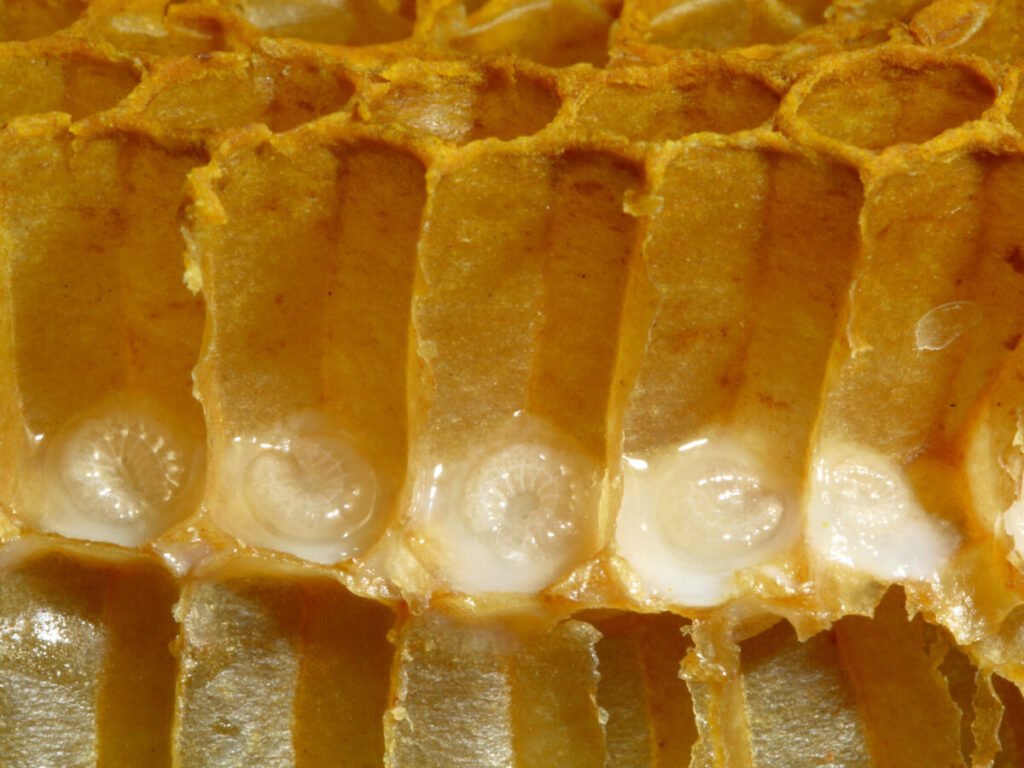
By the 1880s and 1890s, American foulbrood was already a recognized menace among commercial beekeepers, even though nobody yet knew precisely what organism caused it. Beekeeping journals of the era carried increasingly frequent letters describing entire apiaries collapsing to a disease that left brood combs sunken, discolored, and foul-smelling – the same visual signs described in our guide to recognizing foulbrood by scent. Without a legal framework, there was nothing to stop an infected colony from being sold at auction, its combs rendered into wax and redistributed, or its equipment reused on a healthy hive. Beekeepers who wanted to act responsibly had no authority to compel a negligent neighbor to do the same, and infected apiaries frequently sat untreated for years, quietly reinfecting every operation within flight range.
Why New York Moved First (Among Eastern States)
New York was not an arbitrary choice for one of the era’s most influential foulbrood statutes. The state had a large, economically significant commercial beekeeping sector by the 1890s, concentrated enough that losses from an uncontrolled brood disease were visible at a statewide scale rather than as isolated individual complaints. That concentration of commercial operations, combined with organized beekeeping associations already lobbying state agriculture officials about disease losses, created the political pressure that a more dispersed, hobbyist-dominated beekeeping population in other states did not yet have. It is a pattern worth noting because it repeats later in this same history: legislation tends to follow wherever commercial density makes the economic cost of inaction impossible to ignore.
New York’s Influential 1898 Foulbrood Act – and California’s Earlier 1877 Law
A correction worth stating plainly: this article previously described New York’s 1898 act as “commonly credited” with being the first foulbrood law in the country. That framing undersold a clearer, earlier record: San Bernardino County, California, passed the first apiary inspection law in the United States in 1877, and California followed with the first statewide beekeeping law in 1883 – both roughly two decades before New York acted. New York’s own foulbrood-specific legal provisions actually trace to 1884, and its formal state Apiary Inspection Program – with a state apiarist empowered to inspect and order destruction of infected colonies – was established in 1899, following a resolution from the New York State Beekeepers’ Association (now the Empire State Honey Producers Association), not 1898 as sometimes cited. By 1906, roughly a dozen states had some form of foulbrood law in place.
None of this diminishes New York’s real significance: its program became one of the most influential templates other states adapted, with a state-appointed inspector, the power to enter and examine an apiary on reasonable suspicion of disease, and the authority to order infected colonies burned rather than merely quarantined. But “first in the nation” and “most influential template” are two different claims, and the historical record supports California’s earlier statutes more clearly than it supports New York’s priority.
The Bacteriological Breakthrough That Made Inspection Possible
Passing a law against a disease is one thing; enforcing it consistently required knowing, with some scientific confidence, what that disease actually was. Early inspection relied almost entirely on visual and olfactory diagnosis – the sunken cappings, the ropy larval remains described in our rope test guide, the characteristic smell – because no one had yet isolated the causative organism. That changed in 1906, when USDA researcher G. F. White published his identification and description of the bacterium responsible for American foulbrood, naming it Bacillus larvae, work that also helped separate it clearly from European foulbrood as a genuinely distinct disease rather than a variant of the same problem. That organism was reclassified into the genus Paenibacillus in 1993, giving it its modern name, Paenibacillus larvae. White’s identification gave inspectors something visual diagnosis alone could not: a scientific basis for distinguishing American foulbrood from European foulbrood and from other brood diseases, which mattered enormously once state law started prescribing different, disease-specific responses – a distinction our comparison of American and European foulbrood still relies on today.
The State-by-State Spread of Inspection Laws
Once California’s and New York’s models existed, other major beekeeping states began adapting versions of them over the following two decades. Wisconsin, Michigan, and several other states with significant commercial beekeeping industries passed their own foulbrood or bee disease statutes in the early 1900s and 1910s, each typically creating a state apiarist or inspector position, defining inspection authority, and setting penalties for beekeepers who refused to comply with quarantine or destruction orders. The laws were not uniform – some states required registration of all apiaries as a precondition for inspection, others limited inspector authority to responding to specific complaints – and this state-by-state patchwork, built independently rather than from a single federal statute, is part of why apiary inspection in the United States remains organized at the state level today rather than through a single national program.
What Early Inspectors Actually Did
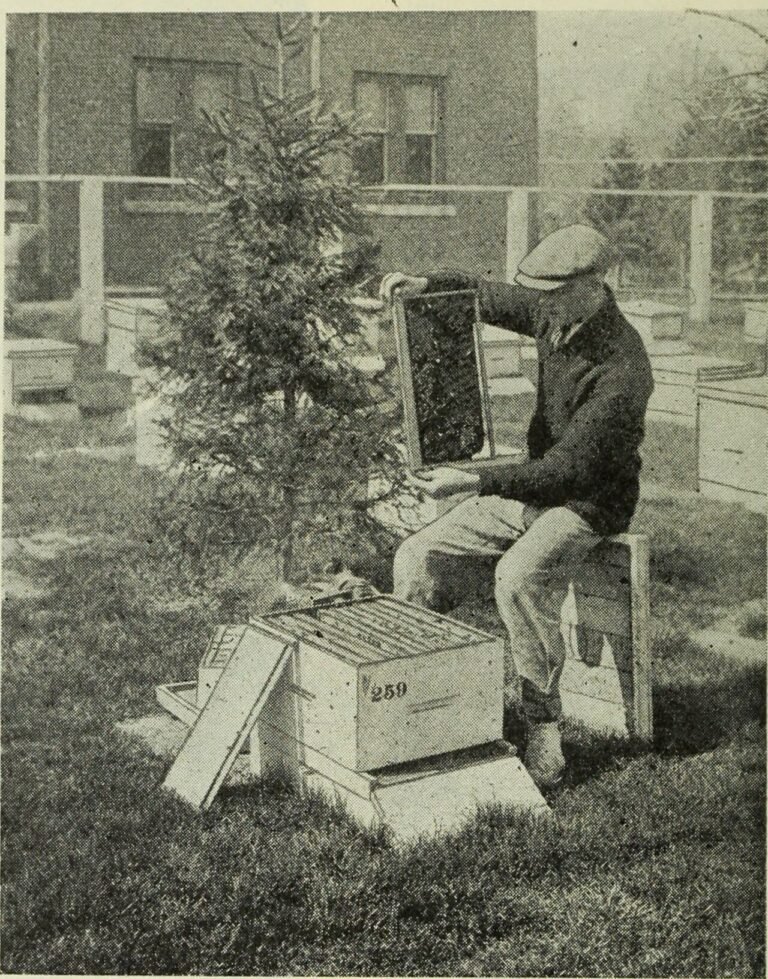
Early apiary inspectors operated with tools that look sparse by modern standards but were, for the time, a genuine advance over having no authority at all. Inspection itself was entirely visual and olfactory – there were no antibiotic treatments and no laboratory-confirmed field test kits, so once American foulbrood was confirmed in a colony, the standard response was destruction: burning the combs, the bees, and often the hive body itself, the same drastic but still-recommended endpoint described in our guide to burning comb after American foulbrood. Inspectors also began keeping registries of apiary locations, in part so a follow-up inspection could actually find a beekeeper’s colonies again, and in part to build the state-level location data that let inspectors track how a disease was spreading geographically – an early, low-tech version of the surveillance mapping modern programs still perform.
The USDA’s Role in Standardizing Practice
As more states passed their own laws, the U.S. Department of Agriculture’s Bureau of Entomology became an important coordinating force, even though it had no direct legal authority over state inspection programs. USDA apiculture researchers of the era, including E. F. Phillips, corresponded extensively with state apiarists, published bulletins summarizing best inspection practice, and helped push toward more consistent diagnostic standards across state lines. This mattered because a beekeeper operating in one state with lax inspection could easily undermine the disease-control efforts of a neighboring state with strict enforcement, particularly once bees themselves started moving across state lines in commercial quantities – the exact problem that made interstate shipping regulation, not just in-state inspection, the next major front in foulbrood control.
How Inspection Law Shaped the Package Bee Industry
The rise of interstate package bee shipping, covered in detail in our history of package bees, made state foulbrood law relevant to beekeepers who had never dealt with a state inspector in their lives. Once a beekeeper in the South could mail a package of bees to a customer hundreds of miles away – a practice enabled by Parcel Post’s 1913 launch and refined by commercial shippers over the following decade – disease-free certification stopped being a purely local concern and became a condition of doing interstate business at all. States receiving shipments increasingly required proof of inspection from the state of origin before permitting package bees or queens to cross their border, which gave commercial producers a direct financial incentive to cooperate with inspectors rather than avoid them – a genuinely different dynamic from the earlier era, when inspection was something that happened to a beekeeper rather than something a beekeeper needed in order to sell a product.
From State Patchwork to Modern Apiary Inspection
Modern state bee inspector programs, detailed in our guide to state inspector programs and apiary registration, are direct institutional descendants of these early laws rather than a modern invention layered on top of nothing. The core legal structure – a state-appointed inspection authority, mandatory or incentivized apiary registration, and legal power to quarantine or order destruction of diseased colonies – traces back essentially unchanged to California’s 1877/1883 statutes and New York’s influential 1899 program, and the state laws that followed them. What has changed is the diagnostic toolkit available to that same legal authority: lateral-flow field test kits like the one in our Vita AFB/EFB test kit guide, antibiotic treatment protocols covered in our Tylan and Terramycin treatment guides, and genetic testing capability none of which existed for the inspectors of 1898 or 1910.
Early Inspection Law vs. Today’s Programs
| Aspect | Early 1900s Inspection | Modern Apiary Inspection |
|---|---|---|
| Diagnosis method | Visual/olfactory only (rope test, smell, appearance) | Visual screening plus lab-confirmed and lateral-flow field testing |
| Standard response to AFB | Mandatory burning of colony and equipment | Burning still standard for AFB; antibiotics used for prevention/EFB management |
| Legal basis | State-by-state statutes, earliest in California (1877/1883), then New York (1899) | Same state-by-state model, updated and still in force |
| Interstate coordination | Informal, via USDA bulletins and correspondence | Formal interstate shipment certification requirements |
| Registration | Inconsistent, inspector-dependent record keeping | Formal state apiary registries, often mandatory |
Common Misconceptions
- “New York passed the first apiary inspection law in the US.” This is the single most commonly repeated claim about this history, and it’s not accurate – San Bernardino County, California, passed the first US apiary inspection law in 1877, with statewide California legislation following in 1883, both well before New York’s 1899 program.
- “Foulbrood inspection has always been federal.” It has not. Apiary inspection in the United States has remained a state-level responsibility since the earliest laws, which is why requirements still vary meaningfully from state to state today.
- “Early inspectors could treat infected hives.” There was no effective treatment available to early inspectors; destruction of infected colonies was the standard response because it was the only reliable way to stop the disease from spreading, decades before antibiotics like Terramycin entered use.
Frequently Asked Questions
When was the first American apiary inspection law passed in the United States?
San Bernardino County, California, passed the first apiary inspection law in the country in 1877, with California following with the first statewide beekeeping law in 1883. New York’s better-known program, often incorrectly cited as “the first,” was actually established in 1899, roughly two decades later.
What organism causes American foulbrood, and when was it identified?
American foulbrood is caused by the bacterium now classified as Paenibacillus larvae. USDA researcher G. F. White first identified and named it (as Bacillus larvae) in 1906; it was reclassified into the genus Paenibacillus in 1993.
Why was burning the standard response to American foulbrood historically?
Because no effective treatment existed. Antibiotic options like Terramycin and Tylan did not become available until decades later, so destroying infected combs, bees, and often the hive itself was the only reliable way early inspectors could stop a colony’s spores from reinfecting other hives.
Is apiary inspection handled at the state or federal level in the US?
State level. Every major foulbrood and apiary inspection law since California’s 1877 statute has been a state law, which is why inspection authority, registration requirements, and enforcement still vary from state to state rather than following a single federal standard.
How did package bee shipping affect inspection law?
Once beekeepers began mailing package bees across state lines – a practice Parcel Post’s 1913 launch made possible – disease-free certification became a condition of interstate commerce, not just a local concern, giving commercial producers a direct incentive to cooperate with state inspectors rather than avoid them.
Does the same legal framework from the 1870s-1890s still apply today?
The core structure does. Modern state bee inspector programs still rely on the same basic legal model – a state-appointed inspection authority with quarantine and destruction powers, plus apiary registration – that California’s and New York’s earliest laws first established.
Sources and further reading: American foulbrood overview, Wikipedia; Empire State Honey Producers Association, on New York apiary law history; Southern Adirondack Beekeepers, on the New York State Apiary Inspection Program’s 1899 founding.