
Reviewed by Thomas B. · Last Updated September 23, 2026 · How we review
American foulbrood (AFB) smells sulfurous and putrid, a rotten-meat odor that comes from the decomposing larvae in the brood cells. European foulbrood (EFB) more often smells sour, like vinegar or spoiled milk. The catch is that both smells usually appear only when an infection is well advanced. Early AFB can be present in a handful of cells with no odor at all. A foul smell is a reason to examine the brood closely, and the absence of one does not clear a hive. Diagnosis comes from the brood itself, a rope test and a lab or inspector confirmation, not from your nose.
Key Takeaways
- AFB: a sulfur-like, rotting-animal smell. A 2022 lab study found sulfur compounds such as dimethyl disulfide and dimethyl trisulfide in every infected brood sample and in none of the healthy ones.
- EFB: a sour smell, thought to come from secondary bacteria growing on larvae killed by Melissococcus plutonius.
- Smell is a late sign. Penn State lists foul odor as a symptom “in later stages,” and early infections may affect only one or two cells.
- The most common false alarm in the fall is goldenrod nectar ripening, which smells like dirty socks, not rotting meat.
- If you suspect foulbrood, don’t move any frames and get it confirmed. North Dakota’s Department of Agriculture inspects and tests for free, and the USDA Bee Research Laboratory runs a free diagnosis service.
Table of Contents
What American Foulbrood Smells Like
AFB is caused by the spore-forming bacterium Paenibacillus larvae. Infected larvae die after their cells are capped and break down into a brown, glue-like mass. That decomposing mass is where the smell comes from. The Texas Apiary Inspection Service describes it plainly:
“AFB also gives off a characteristic sulfur-like foul smell for which the disease gets its name ‘foulbrood’.”
Texas Apiary Inspection Service, Texas A&M AgriLife — American Foulbrood
Beekeepers who have smelled a badly infected colony usually describe dead animal, rotten meat, or a sulfurous, rotten-egg edge. Chemical analysis explains why. In a 2022 study in Agriculture, Liolios, Kanelis, Tananaki and Rodopoulou used gas chromatography–mass spectrometry to compare healthy and AFB-infected brood. Several compounds turned up in every diseased sample, including 2-nonanone, dimethyl disulfide and dimethyl trisulfide, and the last three were absent from healthy brood. Dimethyl disulfide and trisulfide are volatile sulfur compounds, the same family that gives decaying organic matter its smell. A separate 2020 study in the Journal of Insect Physiology (Lee, Lim, Choi, Lee and Kwon) identified propionic acid, valeric acid and 2-nonanone as disease markers in infected larvae, and found that middle-aged “hygienic-age” worker bees respond to them more strongly than foragers do.
So the “foul” in foulbrood is real chemistry, and bees detect it better than we do. Hygienic colonies find and remove infected larvae long before a beekeeper could smell anything. That is also why trained dogs can be used to screen apiaries; see our piece on American foulbrood detection dogs.
What European Foulbrood Smells Like
EFB is caused by Melissococcus plutonius. It usually kills larvae before they are capped, so the dead larvae are out in the open, twisted, and yellow to brown. When there is an odor, it is usually described as sour.
“Some describe colonies infected with European foulbrood as having a sour smell while those infected with American foulbrood smell sulfurous.”
Mueller, Jack, Mortensen and Ellis, University of Florida IFAS Extension — Identification and Treatment of European Foulbrood in Honey Bee Colonies
The UF authors note that the sour smell may come from secondary bacteria that grow alongside M. plutonius, not from the primary pathogen itself. That is why the strength of the smell varies so much from colony to colony. Our article on sour brood smell in a hive covers the causes in more depth.
Why Your Nose Is a Late, Unreliable Test
Penn State Extension’s symptom list for AFB includes “foul odor (in later stages).” Australia’s Bee Aware program describes the sulfurous smell alongside advanced signs: dried-out scale, many affected cells and a shrinking adult population. By then the colony has been producing spores for weeks.
- False negatives: an early AFB infection may be a few scattered cells in a strong colony, with nothing you could smell. Penn State notes that the hard black scales left in late-stage cells may each contain around 100 million spores, and the colony gets well past the “a few cells” stage before it smells.
- False positives: hives are smelly places. Ripening nectar, fermenting syrup, dead bees and pests all produce odors a nervous beekeeper can mistake for disease.
- Your own nose varies. Wind, smoker smoke, a veil and how sensitive you are to smell all change what you notice. Two beekeepers at the same hive can disagree.
Treat smell as a trigger to look harder, never as a diagnosis. If you want to get better at noticing hive smells, see training your sense of smell to detect hive issues. Then back up what you smell with what you see.
Other Hive Smells That Get Mistaken for Foulbrood
| Smell | Usual cause | How to tell it apart |
|---|---|---|
| Sulfurous, rotting meat | American foulbrood (advanced) | Comes from the brood nest; sunken, greasy or perforated cappings; ropy brown remains |
| Sour, vinegary | European foulbrood with secondary bacteria | Twisted, discolored open larvae; remains usually don’t rope |
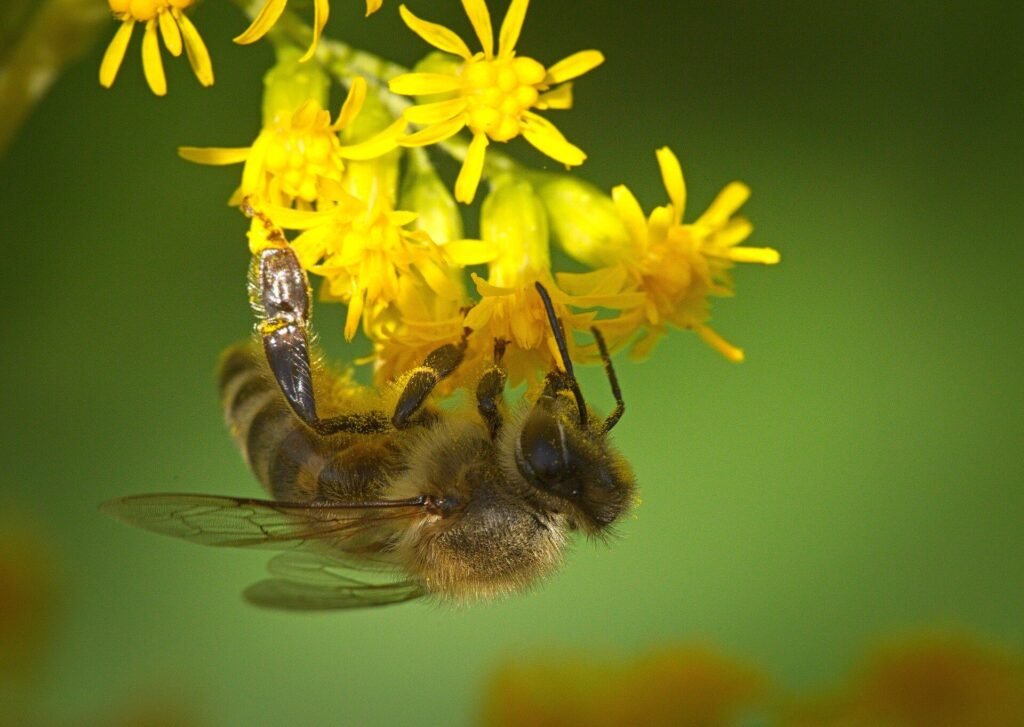
| Dirty socks, cheesy, musty (late summer and fall) | Goldenrod and aster nectar ripening | Strongest at the hive during a fall flow; capped brood looks normal; fades once the honey is capped |
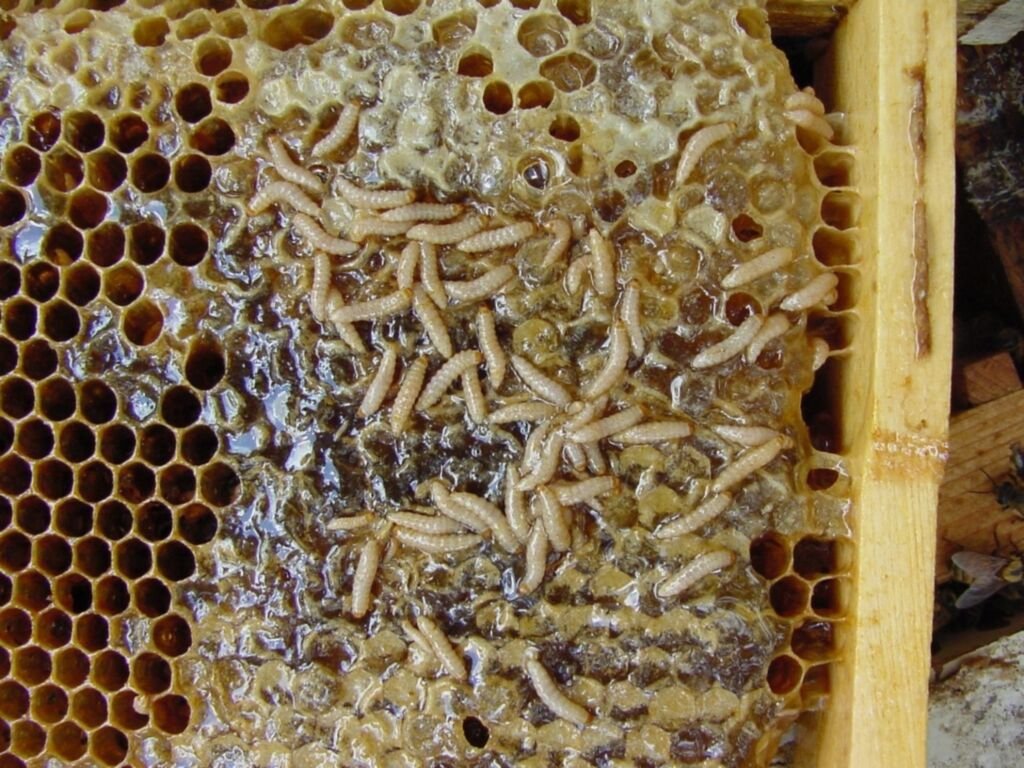
| Rotten oranges, fermenting | Small hive beetle larvae sliming the comb | Slimy, weeping comb and larvae with legs near the head; Bee Aware describes the smell as “similar to decomposing oranges” |
| Yeasty, alcoholic | Fermenting syrup or uncured stores | Comes from the feeder or uncapped cells, not the brood |
| Dead-animal smell in winter or early spring | A dead-out or chilled brood decaying | Piles of dead bees, dead brood across whole frames at the edge of a former cluster |
On the northern plains, goldenrod causes more foulbrood scares than anything else. Canada goldenrod and asters bloom across eastern North Dakota and western Minnesota in late August and September. During that flow, a yard can smell like a locker room from several feet away. Backyard beekeeper Nancy Buffington, writing in Keeping Backyard Bees, describes panicking at exactly this smell in her first fall before finding the hives healthy. The quick check is the same as for any smell: open the brood nest. Goldenrod leaves the brood looking normal, and AFB does not.
You Smell Something: What to Check, in Order
- Find where the smell is coming from. Is it the brood nest, the honey supers, the feeder or the bottom board? Foulbrood odor comes from brood.
- Look at the capped brood. Hold the frame to the light. Look for a scattered, “shotgun” pattern, and cappings that are sunken, darker, greasy-looking or perforated with small ragged holes. Our AFB vs EFB comparison shows how the signs differ.
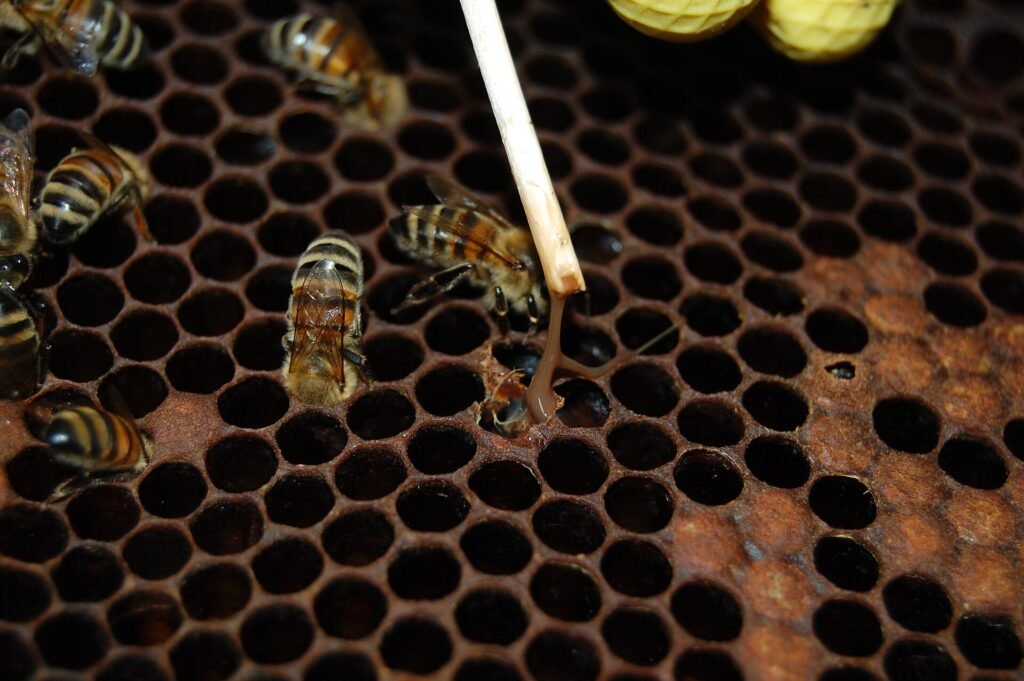
- Do a rope test on a suspect cell. Push a matchstick or twig into the dead larva, stir, and pull it out slowly. Penn State counts a positive as remains that “rope out of the cell ½ inch or more.” Texas uses “at least 2 cm.” See our rope test guide, and throw the stick away afterward.
- Check for scale. Older AFB cells hold a dark, hard scale stuck flat to the lower cell wall that bees can’t remove.
- Consider a field test kit. Lateral-flow kits can support a field diagnosis while you wait for the lab; see our AFB/EFB field test kit guide.
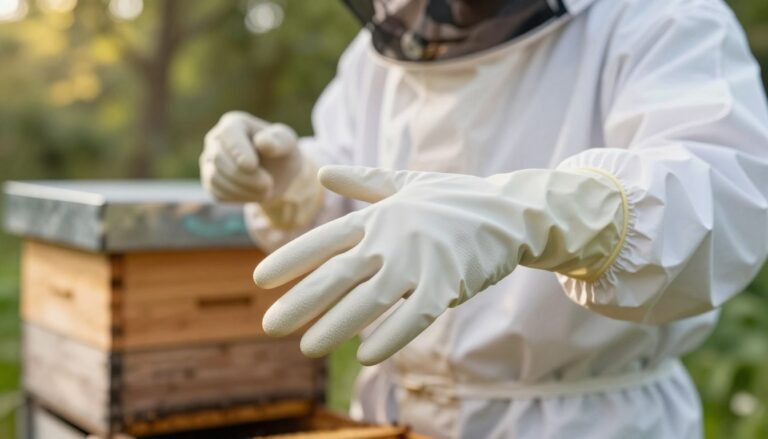
- Contain it while you wait. Don’t move frames, honey or equipment out of the hive. Reduce the entrance to limit robbing, and clean your hive tool and gloves before touching another colony. Quarantining a suspect hive walks through the details.
Getting a Confirmed Diagnosis
Field signs point to a likely cause, and a lab confirms it. Confirmation matters because AFB and EFB are managed very differently. AFB spores survive for decades; Penn State says “70 or more years.” Penn State also advises that “burning the bees and all of the equipment is the only sure way to be absolutely free of this disease,” and many states regulate what you must do. EFB colonies can often be saved with requeening and good management; see whether you can save a hive with European foulbrood.
- North Dakota: the North Dakota Department of Agriculture apiary program states that “all inspections and certificates are free,” and its lab testing covers American and European foulbrood. Every beekeeper in the state, even with one colony, must be licensed, so you are already in their system.
- Anywhere in the U.S.: the USDA Agricultural Research Service’s Bee Disease Diagnosis Service in Beltsville, Maryland, examines samples at no charge. Send a comb sample at least 2 × 2 inches containing as much of the dead or discolored brood as possible, in a paper bag or loosely wrapped in paper. Our guide to collecting a bee disease sample covers packing.
- Minnesota and other states: rules and services vary. Check your state department of agriculture before moving or destroying anything.
If AFB is confirmed, see burning comb after American foulbrood and follow your state’s requirements.
How to Catch Foulbrood Before It Smells
By the time you can smell AFB, you have usually lost the chance to catch it early. These habits find it sooner:
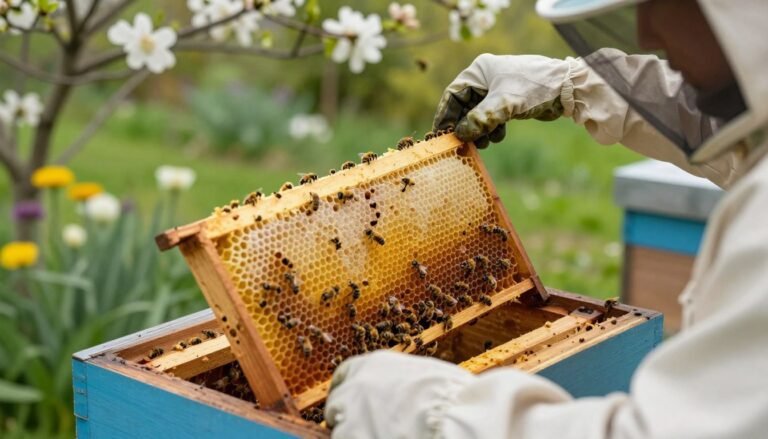
- Look at the brood on every full inspection. Pull at least one or two central brood frames, shake the bees off so you can see the cappings, and scan for scattered sunken or perforated cells. An odd cell or two is normal. A pattern of them is not.
- Look again after the spring buildup and before fall. Those are the times colonies are most often combined, split or robbed, and each of those moves infection around.
- Don’t feed honey from other colonies, and be careful with used equipment of unknown history. Spores survive in honey and old comb. See when to discard comb after disease.
- Rotate out old brood comb on a regular schedule, so any spores it has picked up leave the hive with it; see how often to replace old brood comb.
- Favor hygienic stock. Bees that uncap and remove sick larvae early work in your favor, because they detect the same disease odors described above at much lower levels than we can. Our explainer on hygienic behavior in bee lines covers what to look for when buying queens.
The Bottom Line
AFB smells sulfurous and rotten, and EFB smells sour. But the smell arrives late and has plenty of harmless look-alikes, especially goldenrod in the fall. When something smells wrong, trace it to the brood, run a rope test on any suspect cell, and get a free lab or inspector confirmation before you act.
In late summer, a sour, sweaty smell from the hive is often ripening goldenrod nectar rather than disease; see what goldenrod honey smells like.
Frequently Asked Questions
What does American foulbrood smell like?
A sulfur-like, putrid smell, often compared to rotting meat or a dead animal. It comes from decomposing larvae in capped cells and is usually noticeable only in advanced infections.
Can you smell foulbrood from outside the hive?
Only in severe cases. Most AFB infections are found by examining the brood, not by smell. A strong smell at the entrance in late summer is far more likely to be ripening goldenrod nectar.
Does European foulbrood smell different from American foulbrood?
Yes. EFB is usually described as sour and AFB as sulfurous. Neither smell is consistent enough to tell the diseases apart without looking at the larvae and doing a rope test.
If my hive doesn’t smell bad, can it still have foulbrood?
Yes. Early AFB may affect only a few cells and produce no noticeable odor. Regular brood inspections catch it far earlier than smell does.
Why does my hive smell like dirty socks in the fall?
That is almost always goldenrod or aster nectar being ripened into honey. The smell fades once the honey is capped. Check that the capped brood looks normal to rule out disease.
Who can confirm foulbrood for free?
In North Dakota, the Department of Agriculture’s apiary program inspects and tests at no charge. Anywhere in the U.S., the USDA Bee Research Laboratory in Beltsville, Maryland, diagnoses comb samples free of charge.


.jpg)
