Reviewed by Michael R. · Last Updated September 24, 2026 · How we review
Replace brood comb on a rolling schedule. Swap out about 20% of brood frames each year so that no brood comb stays in the hive longer than five years. That is the U.S. Honey Bee Health Coalition’s guidance. The UK National Bee Unit is stricter and calls replacement at least every three years best practice. Choose the faster cycle if you’ve had brood disease or you use varroa treatments that build up in wax. In a two-deep Langstroth hive, the five-year cycle works out to four frames a year. Pull them in spring, after the frames you moved to the edges in fall are free of brood.
This guide is about the schedule: how often, how many frames, and when in the season. To judge how old a particular comb is, see our brood comb age guide. Honey-super frames follow different rules, covered in when to rotate honey frames out of service.
Key Takeaways
- The standard cycle is 20% of brood frames a year, which makes a five-year rotation. The Honey Bee Health Coalition says two to four frames per colony per year.
- Move to a three-year cycle after brood disease, or with regular thymol or tau-fluvalinate treatments.
- In a University of Georgia study, colonies on new comb reared more brood, and their young bees were heavier.
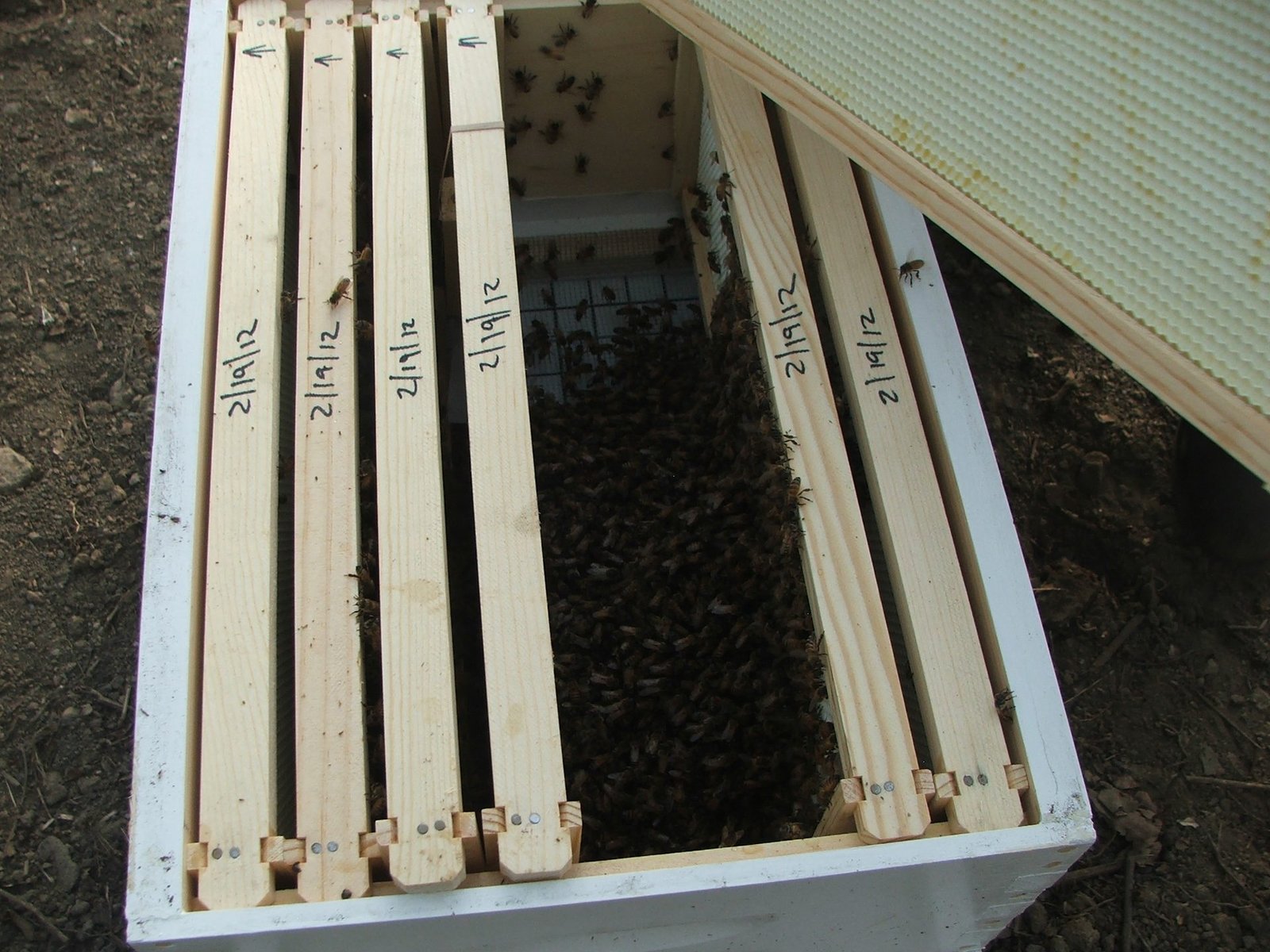
- Date every frame. Without a date, “every five years” is only a guess.
- In the northern Plains, move the frames you plan to retire to the box edges in fall. Pull them in spring, and draw new foundation during the summer flow.
Table of Contents
Three Years or Five? What the Guidance Says
It is best practice to replace brood comb at least every three years.
The Honey Bee Health Coalition’s Best Management Practices for Hive Health gives a U.S. version. It recommends two to four frames per colony per year, about 20%, and says that ideally no brood frame should be older than five years. In areas with poor or unpredictable nectar, it drops the rate to one or two combs a year.
| Source | Maximum brood comb age | Annual replacement | Replace sooner if |
|---|---|---|---|
| UK National Bee Unit (2024) | 3 years | About a third of brood frames | Disease in the colony; regular thymol or tau-fluvalinate use |
| Honey Bee Health Coalition (U.S.) | 5 years | 2–4 frames per colony (about 20%) | Thick dark comb, or more than 10% drone cells |
| Same guide, poor-forage areas | Longer in practice | 1–2 frames per colony | Comb is damaged, diseased or mostly drone |
If you use treatments whose residues build up in wax, or you’ve had brood disease, the three-year cycle is the safer choice. For healthy colonies treated mainly with organic acids, five years is a reasonable, widely used standard.
Why Old Brood Comb Needs Replacing
Every worker reared in a cell leaves a cocoon and droppings behind, so the cells narrow over the years and the wax absorbs chemicals. Berry and Delaplane’s three-year University of Georgia study (Journal of Apicultural Research, 2001) measured an inner cell diameter of 4.6 mm in old comb, against 4.9 mm in new comb. Colonies on new comb had more brood by day 14 (2,040 cm² vs 1,601 cm²), and their young bees weighed 106.3 mg vs 98.2 mg. Brood survival was slightly higher in old comb. Even so, the authors concluded that very old brood combs should be eliminated.

Residues are the other reason. A survey of North American apiaries by Mullin and colleagues (PLOS ONE, 2010) found the miticides fluvalinate and coumaphos in more than 47% of wax and pollen samples. Old comb also holds disease spores. The Coalition warns that American foulbrood scales in stored comb can start active disease even after years in storage.
How Many Frames to Replace Each Year
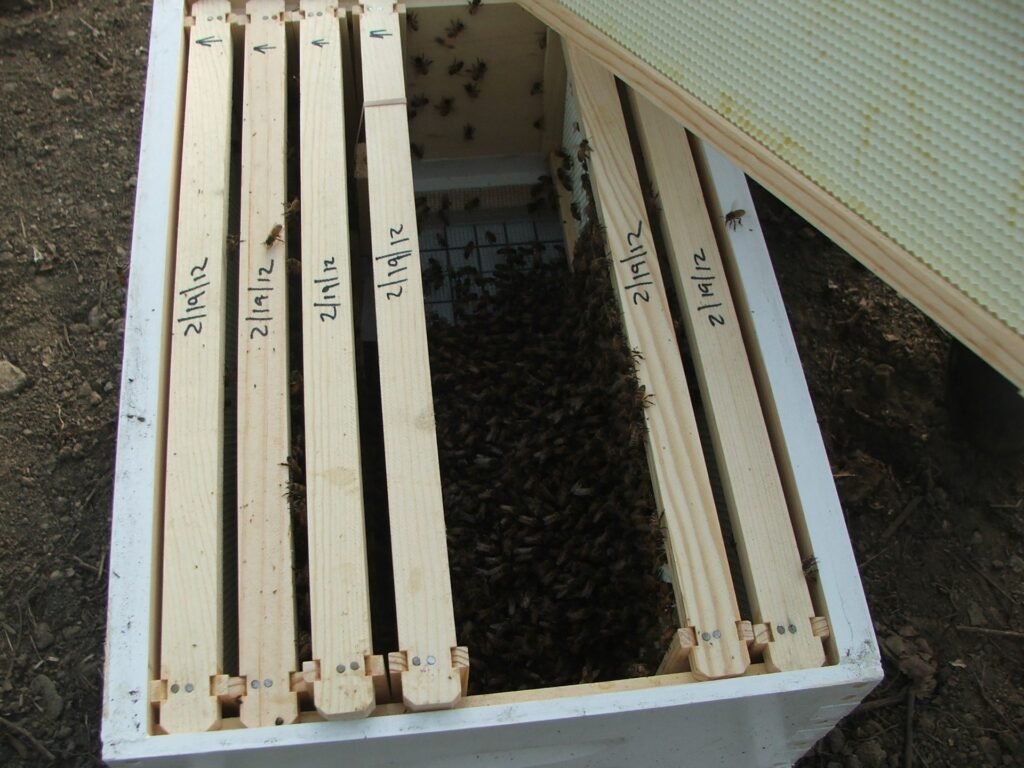
Turn the percentage into a frame count for your own setup, and write the year on each new top bar. See numbering frames for comb rotation for marking systems.
| Brood nest | Total brood frames | 5-year cycle (20%) | 3-year cycle (about 33%) |
|---|---|---|---|
| One 10-frame deep | 10 | 2 per year | 3–4 per year |
| Two 10-frame deeps | 20 | 4 per year | 6–7 per year |
| Two 8-frame deeps | 16 | 3–4 per year | 5–6 per year |
| Three 10-frame mediums | 30 | 6 per year | 10 per year |
Why not replace everything at once? Comb is expensive to build. The Georgia paper, drawing on Seeley’s work, puts a typical nest at about 100,000 cells and 1,200 g of wax, which takes sugar equal to about 7.5 kg of honey. At 20% a year, the colony replaces about 240 g of wax, roughly 1.5 kg of honey’s worth. A full swap costs the whole 7.5 kg at once, so it belongs only in a planned method such as a Bailey comb change on a strong colony.
When to Replace Sooner Than Scheduled
A schedule sets the minimum. Take a frame out early, whatever its age, if it:
- Is mostly drone cells. The Coalition flags comb with more than 10% drone cells.
- Came through brood disease. Retire combs early after European foulbrood or heavy chalkbrood. American foulbrood falls under state rules. See reusing frames from a dead colony.
- Was in the hive during repeated wax-persistent treatments. The National Bee Unit names thymol and tau-fluvalinate.
- Is damaged. That means chewed, holed, moth-damaged or pulled loose from its wires.
- Doesn’t let light through. Hold an empty frame up to the sky. If it’s opaque, it’s due. The comb age guide explains this test.
A Rotation Calendar for Short Northern Seasons
The National Bee Unit’s method is to move frames you’ll retire to the ends of the brood box at the end of the season, then take them out in early spring once they’re free of brood. Its sheet suggests March, which is the English calendar. In eastern North Dakota, the Red River Valley and western Minnesota, the same steps run later:
| When (northern Plains) | Rotation step |
|---|---|
| Late August–September | Mark the frames due to come out. Move them to the outer positions while you prepare for winter. |
| April–early May | On a warm day, remove the marked outer frames once they’re broodless and replace them with stored drawn comb. Leave the colony enough honey. |
| Summer flow | Add foundation at the edge of the brood nest, two or three frames at most, as the National Bee Unit advises. Without a flow or feeding, bees won’t draw it. |
| After extraction | Render the retired combs. Store new drawn comb as in storing drawn comb without a freezer. |
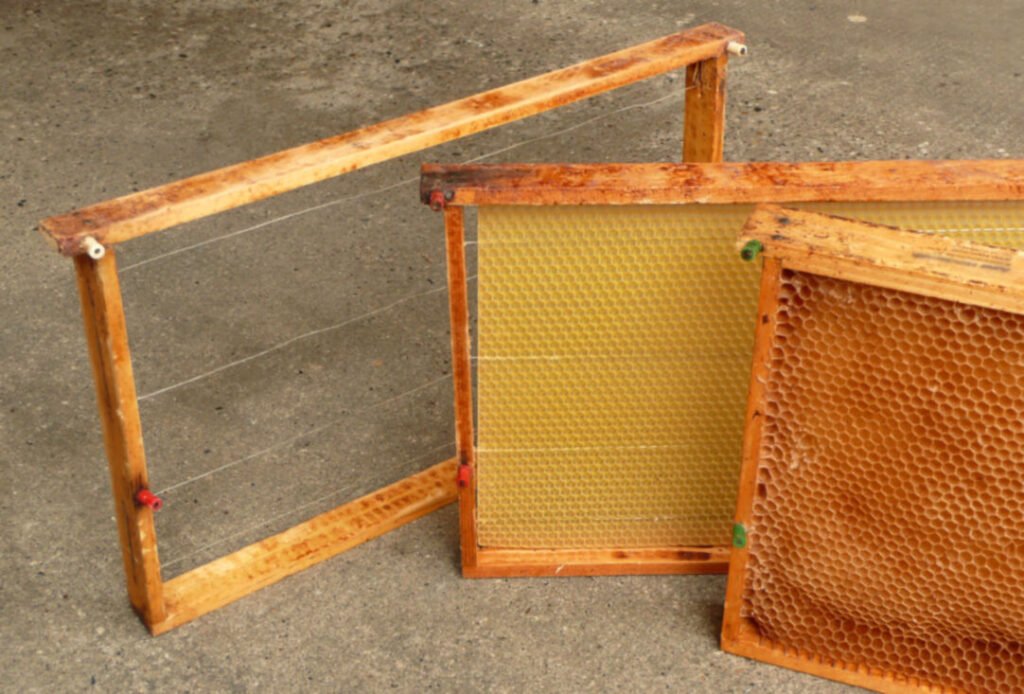
The National Bee Unit prefers replacing old comb with drawn comb over bare foundation, because small spring colonies struggle to draw wax. For what goes in the new frames, see foundation vs foundationless in brood boxes.
Frequently Asked Questions
How often should brood comb be replaced?
About 20% of brood frames a year, so none is older than five years (Honey Bee Health Coalition). The UK National Bee Unit recommends at least every three years, and sooner after disease or regular use of wax-persistent treatments.
How many brood frames should I replace each year?
On a five-year cycle, 2 frames a year in a single 10-frame deep or 4 in a double deep. On a three-year cycle, replace about a third. Where forage is poor, 1 to 2 frames a year is more realistic.
When is the best time to replace old brood comb?
Spring, once frames moved to the box edges in fall are broodless. Swap them for drawn comb, and add foundation only during a flow or while feeding. In the northern Plains that usually means April or May.
Should I replace brood comb in a new colony?
Not yet. The Coalition suggests new beekeepers wait until comb no longer lets light through, or until drone cells exceed 15%. Date the frames now so you know when they’re due.
What should I do with the old brood frames I remove?
Render the wax and clean or burn the frames. The National Bee Unit advises against putting unclean frames or wax in household waste. American foulbrood comb follows state disposal rules and must never be reused. One old comb from a healthy colony is worth keeping back as swarm-trap bait, since swarms prefer cavities that already hold old comb (Seeley and Morse, 1978).
The Bottom Line
Pick a cycle and stick to it. Five years at 20% a year suits most healthy colonies. Use three years after disease or wax-persistent treatments. Date every frame, retire the oldest each spring, and draw replacements during the flow. Frames that are dark, heavy or mostly drone should come out now, whatever the schedule says.