
Reviewed by Thomas B. · Last Updated September 23, 2026 · How we review
You can store drawn comb safely without a freezer by matching the method to the comb. Honey-super comb that has never held brood keeps well in open, crisscrossed stacks with light and air moving through them. Brood comb is what wax moths really want. Store it cold, keep it on a strong colony, or protect it with a Bacillus thuringiensis (Bt) spray. If you keep bees somewhere with a real winter, as we do in the Red River Valley, a few weeks of hard cold in an unheated shed does a freezer’s job for free. The real work is keeping moths out once it thaws.
This guide covers the no-freezer options and when each one works. If you do have freezer space, see our guide to freezing drawn comb to kill wax moth eggs. For summer storage between honey flows, see storing supers with drawn comb between flows.
Key Takeaways
- Sort comb before you store it. Honey-super comb and brood comb need different handling.
- Wax moth larvae feed mostly on what’s left in brood comb: pollen, cocoons and larval remains. Comb used only for honey is far less attractive.
- Cold kills every stage of wax moth. Plant Health Australia’s BeeAware program puts the threshold at −7°C (about 19°F) held for 4 to 5 hours once the whole box is that cold.
- In eastern North Dakota and western Minnesota, an unheated shed gets well past that most winters. Seal the stacks before spring so moths can’t get back in.
- Light and moving air protect super comb. Crisscross the boxes so light reaches every frame.
- A Bt spray (Bacillus thuringiensis aizawai) protects brood comb through a warm season without chemical fumigants. Skip moth crystals: PDB residues persist in wax, and naphthalene mothballs should never touch bee equipment.
- Mice do as much winter damage as moths in the North. Close every stack top and bottom.
Table of Contents
Why Some Comb Gets Eaten and Some Doesn’t
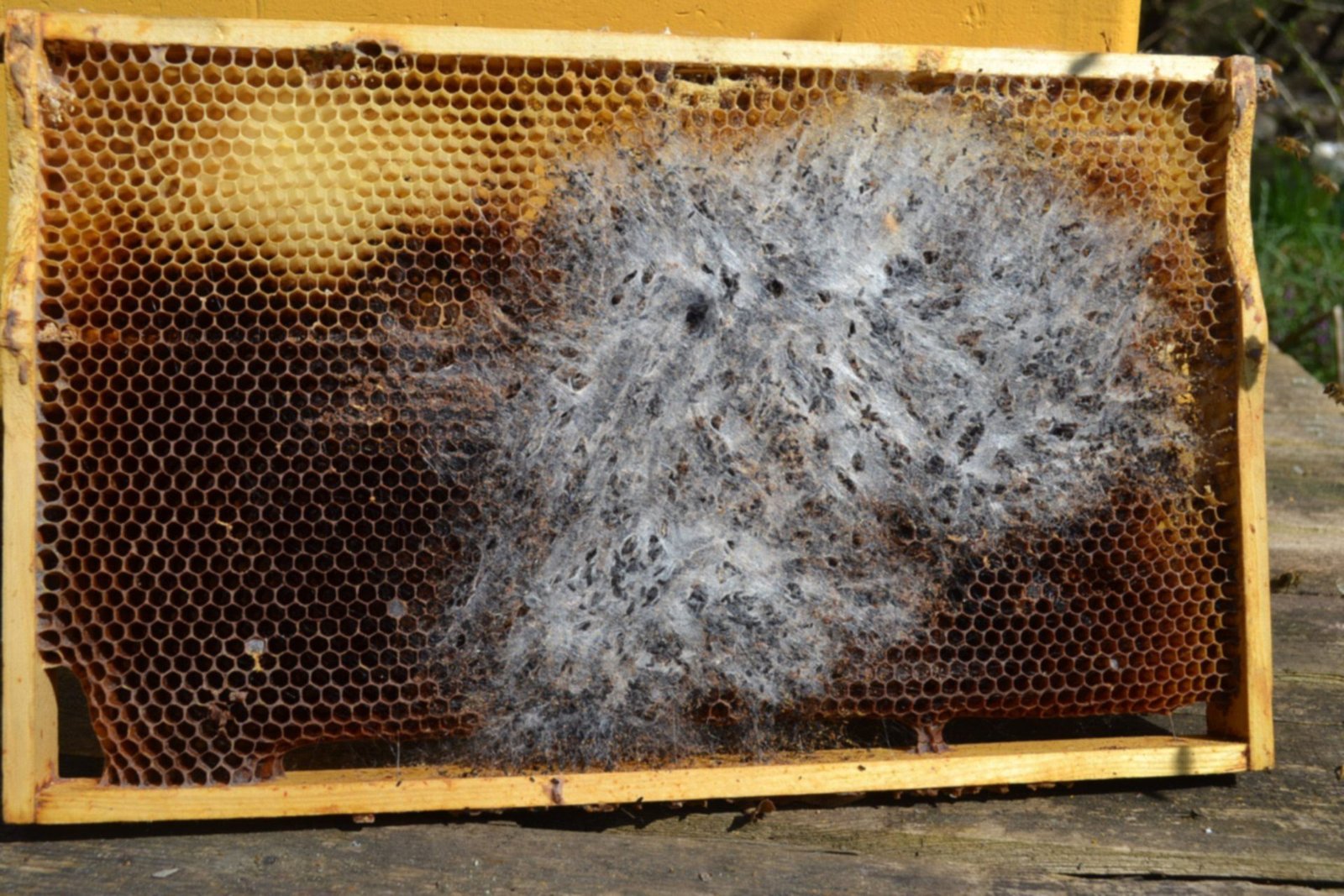
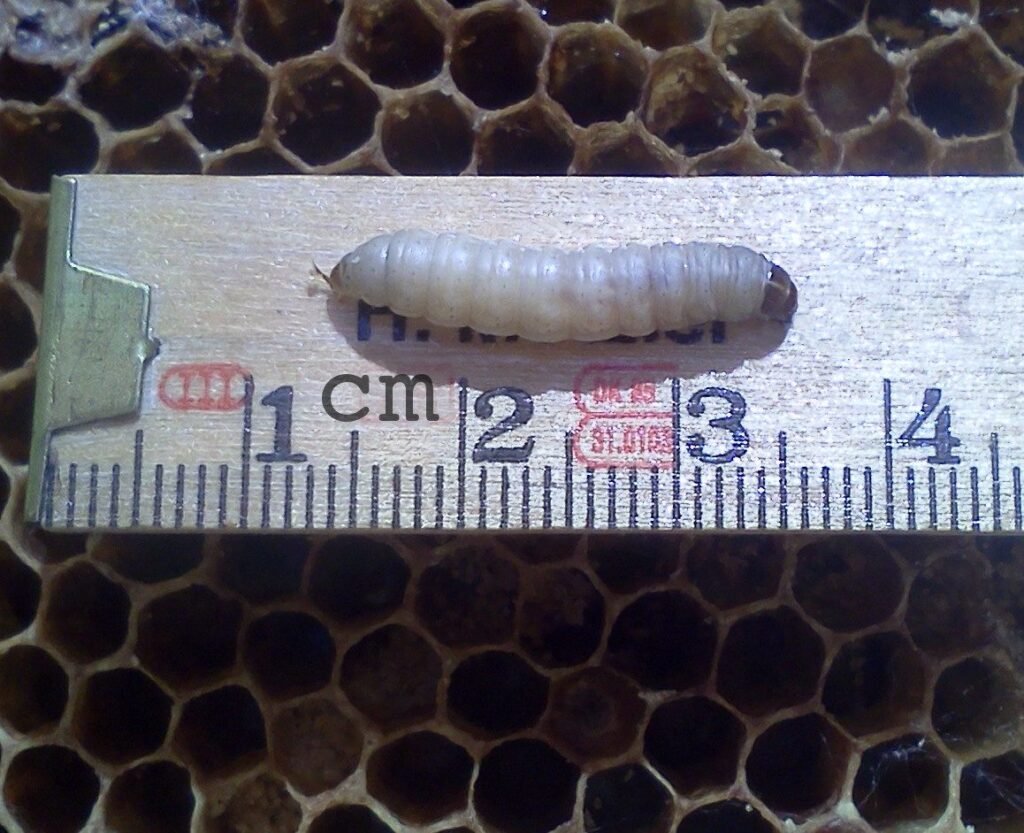
Wax moths don’t really live on wax. Their larvae feed mostly on what bees leave behind in brood cells: pollen, cocoon silk, larval skins and debris. That’s why a box of dark brood comb can be turned into webbing and frass in a few warm weeks. A box of pale honey-super comb stored beside it may barely be touched.
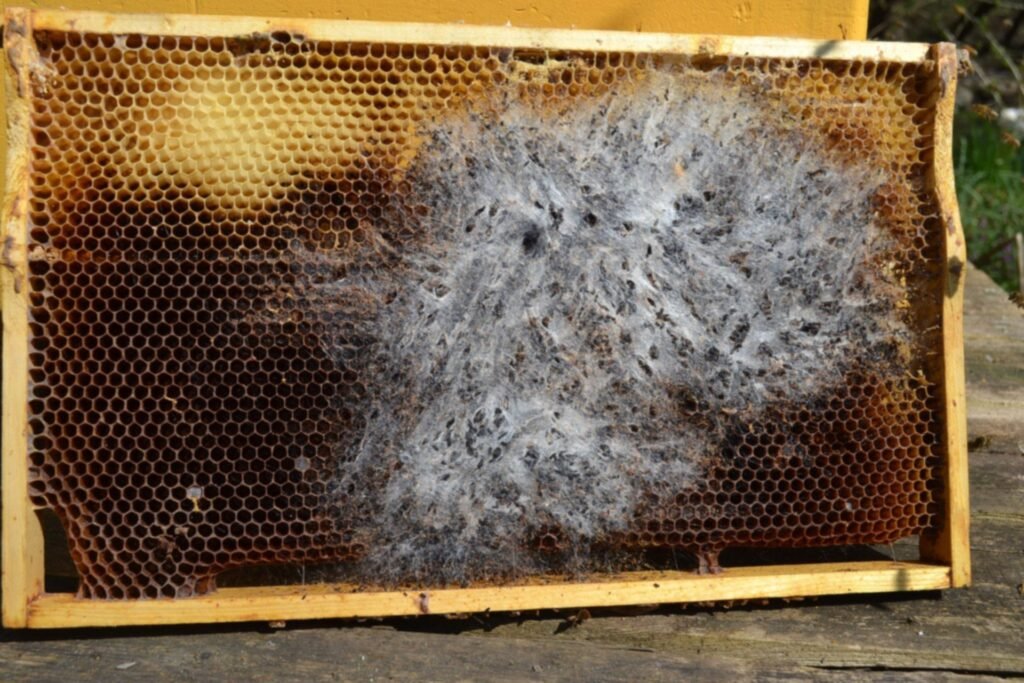
Cells with a history of honey storage offer a higher level of resistance to wax moths.
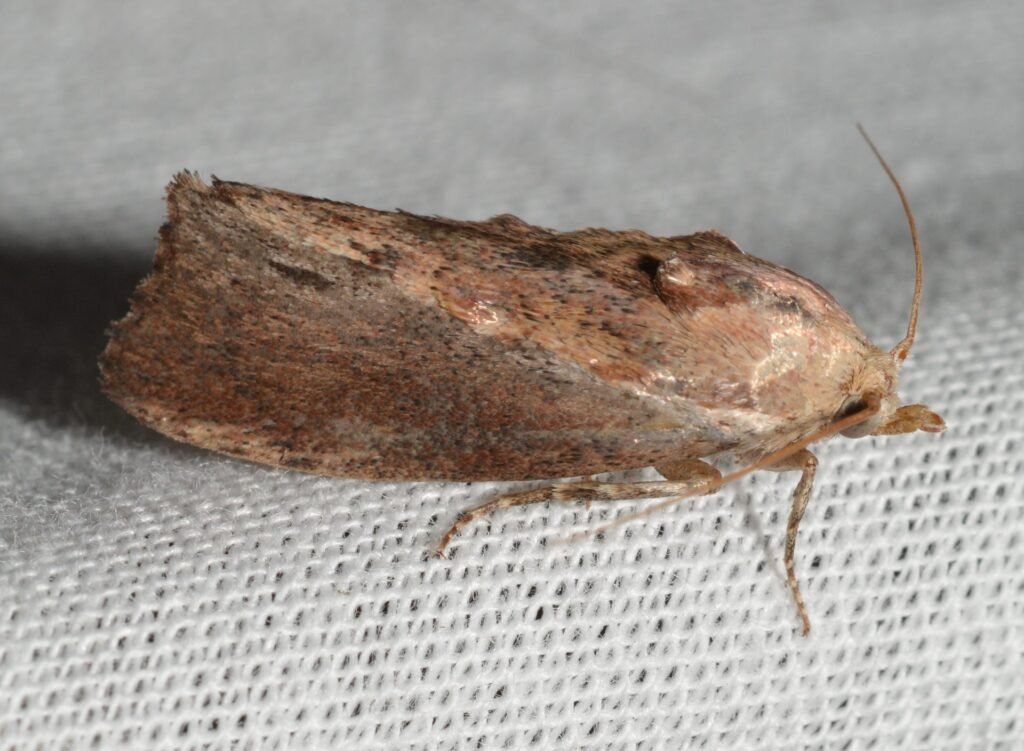
BeeAware also warns that at warm temperatures the wax moth life cycle can take just over three weeks, so an infestation builds fast once it starts. In the cold, larvae can take months to grow. That gap is what the methods below exploit.
| Comb type | Wax moth risk | Best no-freezer method |
|---|---|---|
| Honey-super comb, never had brood | Low | Open crisscross stacks in light and air |
| Super comb that once had brood (queen got above the excluder) | Medium to high | Treat as brood comb |
| Brood comb, light to medium brown | High | Winter cold, then sealed; or keep on a strong colony |
| Brood comb with pollen | Highest | Winter cold and seal, or give to a colony in spring |
| Very dark, damaged or unwanted comb | Highest | Don’t store it. Render it for wax. |
Sort Comb Before You Store It
Most storage failures start with one bad frame in a good stack. Before anything goes into storage, pull every frame and sort it into piles:
- Clean super comb. Pale, dry, no pollen, no brood history. It’s the easiest comb to keep.
- Good brood comb. Worth keeping, but it needs protection.
- Frames with pollen or honey. These attract moths and mice. If you have colonies that can use them, give them back in fall or save them for spring feeding.
- Comb to melt. Very dark, heavily drone, damaged or moldy comb isn’t worth space. See signs it’s time to melt down old comb, and render it with a solar wax melter next summer.
Don’t wash drawn comb with soap and water before storage. Wet comb molds, and bees have to clean it all again. Scrape burr comb and propolis off the frame wood, let the bees clean up wet super comb for a day or two after extraction, and store it dry. If the comb came from a colony that died, work through our deadout cleaning guide first. Comb from a colony that died of American foulbrood must never be stored or reused.
Method 1: Let Winter Do the Freezing
Freezing works because cold kills wax moths at every stage: eggs, larvae, pupae and adults. BeeAware’s wax moth guidance is that temperatures below −7°C (19.4°F) kill all stages within 4 to 5 hours. The clock starts once all the material in the box has reached that temperature, not when you set it out.
A kitchen freezer does this in a day or two. So does a North Dakota winter. Fargo averages more than 40 nights a year at or below 0°F, and in a normal year a box sitting in an unheated shed or garage in eastern North Dakota, the Red River Valley or western Minnesota will be cold-soaked for weeks at a time. A stretch of several days below 10°F is plenty.
The catch is spring. Cold kills the moths already in the comb. It doesn’t keep new ones out once temperatures climb and adult moths start flying. That happens from late spring onward, before most northern colonies are strong enough to take supers. Here is a timeline that works:
| When (northern Plains) | What to do |
|---|---|
| October–November | Sort comb. Stack boxes in an unheated shed or garage with a mouse-proof bottom and top. |
| December–February | Leave the stacks in the cold. After a hard cold spell, the kill step is done. |
| Late February–March, before the thaw | Seal brood comb: tape the joints between boxes or bag them, keeping top and bottom closed. Leave super comb open in light and air. |
| April–May | Check stacks every few weeks for webbing or frass. Use brood comb first for splits and packages. |
| June onward | Get the rest onto colonies. Anything still stored in summer needs light and air, a strong colony or a Bt spray. |
If your storage area is heated even part of the time, don’t count on it. A garage kept at 40°F never reaches the kill temperature. It just slows the moths down until spring.
Method 2: Light and Air for Super Comb
Wax moths prefer dark, still, warm spaces. Take those away and super comb stays clean without chemicals. NC State Extension’s apiculture team describes exposing comb to light by hanging frames on wire or standing boxes on end. The common versions:
- Crisscross stacks. Stack supers with each box turned 90 degrees to the one below. Light and air get in through the gaps at every level.
- Boxes on end. Stand a super on its side so the frames hang horizontally and light shines between them.
- Hanging frames. Stretch two wires across a shed and hang frames by their ears, a couple of inches apart.
- Fan and light. BeeAware notes that an oscillating fan plus a constant light source makes this approach most effective indoors.
This works best for comb that has never held brood and isn’t already infested. It works poorly for brood comb in a warm summer, and it does nothing about mice. Keep the stacks where rain can’t reach them.
Method 3: Store It on the Bees
A strong colony is the best comb protector there is. Workers patrol the comb and remove moth eggs and young larvae before they do damage. In the warm months, many beekeepers simply leave drawn supers on their strongest hives.
The limit is coverage. A colony can guard only as much comb as it can patrol. Put three empty supers on a colony that covers one box, and the top supers can be damaged even with bees underneath. As a rough rule, give each colony only as much extra comb as it has bees to cover. Don’t store comb over a weak colony at all. For more on the summer version of this, see our guide to storing supers between flows.
In the North this method matters mostly in summer and early fall. You can’t store comb over colonies in winter, because the bees need their space reduced to the cluster.
Method 4: Bt Spray for Brood Comb
For brood comb that has to sit through a warm season with no freezer and no spare colony, the safe fallback is Bacillus thuringiensis (Bt), a biological control. NC State Extension describes it as affecting only Lepidoptera, the insect order that includes wax moths: larvae that eat treated comb can’t grow to maturity. Beekeeping products use the aizawai strain (Certan or B402-type products, where registered).
- Mix the concentrate with water as the label directs and spray both sides of every drawn comb.
- Let the comb dry completely before you stack or seal it. Damp comb molds.
- Once dry, the comb can be stored without further treatment until you need it.
- Bt works on larvae that feed on the comb, not on eggs or adult moths, so it pairs best with comb that has been through a hard cold spell or is clean going in.
Moth crystals are not a substitute. Para-dichlorobenzene (PDB), sold as Para-Moth, is still labeled for stored comb in the US, but its residues persist in beeswax and can carry into honey: a Swiss monitoring study (Bogdanov et al., 2004) found PDB in about 30% of Swiss retail honeys and in most Swiss comb-foundation wax, traced to wax moth treatments. Naphthalene mothballs are worse and must never be used on bee equipment. For super comb, light and air work without any treatment.
What About Bags and Plastic Totes?
Sealed containers are good at one thing: keeping new moths out. They do nothing about eggs already in the comb, and they trap moisture. Comb sealed damp can grow mold, and a tote of brood comb sealed with moth eggs inside is a perfect nursery.
Use bags and totes only after a kill step (hard winter cold or a freezer), and only for comb that is completely dry. Heavy trash bags taped shut, or bins with tight lids, both work. In the North, the ideal is to bag brood comb in late winter while it’s still frozen. It stays sealed and moth-free until you need it in spring.
Don’t Forget the Mice
In a northern shed, mice often do more winter damage than moths. They chew through comb to nest in the boxes, and their droppings and urine foul the wax. Light and cold don’t bother them.
- Set every stack on a solid board or an old outer cover, not on the floor.
- Cover the top with an outer cover, or a sheet of 1/4-inch hardware cloth if you want airflow. Many beekeepers use a queen excluder top and bottom instead, which lets air through but not mice.
- Check stacks once or twice during winter for chewed wax or nesting material.
If you do find moth or mouse damage in spring, lightly damaged comb can go to a strong colony to clean up. Boxes riddled with cocoons in the wood are covered in our guide to reusing hive bodies after wax moth damage.
Frequently Asked Questions
How do you store drawn comb without a freezer?
Sort it first. Store honey-super comb in open, crisscrossed stacks with light and air. Protect brood comb with winter cold followed by sealed storage, a strong colony in summer, or a Bt spray. Keep every stack closed to mice.
Will cold weather kill wax moths in stored comb?
Yes, if it gets cold enough for long enough. BeeAware puts it at −7°C (about 19°F) or colder for 4 to 5 hours once the comb itself is that cold. Many northern winters do that easily in an unheated shed. The comb can be reinfested after it thaws, so seal it before spring.
Is honey-super comb safe to store in the open?
Usually, if it has never held brood and isn’t already infested. Stack it crisscrossed in a dry, well-lit space. Check it every few weeks in warm weather. Any super comb that had brood in it should be treated as brood comb.
Can I use mothballs to protect stored comb?
No. Naphthalene mothballs contaminate wax and are toxic to bees. Para-dichlorobenzene (PDB) crystals, sold as Para-Moth, are also best avoided, because PDB residues persist in wax and can carry into honey. Use winter cold, light and air, a strong colony, or a Bt spray instead.
Should I store drawn comb in plastic bags?
Only after a kill step, and only when the comb is dry. Bags keep new moths out but hold in moisture and any eggs already present. Bagging comb while it’s still frozen in late winter is a simple way to use them well.
How long can drawn comb be stored this way?
Well-protected comb can last several years in storage. The comb doesn’t expire, but every warm season is a new risk. For more detail, see how long drawn comb can be stored safely.
The Bottom Line
You don’t need a freezer to keep drawn comb. You need to sort it, and to match the method to the comb. Keep super comb in the light and the air. Use winter cold, a strong colony or a Bt spray for brood comb. Close every stack to mice. In the northern Plains, winter kills the moths for you. Your job is to seal the comb before spring and put it to use early in the season.


.jpg)
.jpg)