Reviewed by Thomas B. · Last Updated September 22, 2026 · How we review
Most hive cleaning is not about tidiness — it is disease control. Propolis, burr comb, and old wax buildup are not just cosmetic clutter; leaving them in place makes routine inspections harder and can let pathogens and pests persist between colonies on equipment you reuse. The actual process is fairly mechanical: scrape, then sanitize, and know when a frame is worth saving versus worth replacing or burning outright.
Key Takeaways
- Start with a hive tool to scrape propolis and burr comb before any water touches the frame, focusing on where frame bars meet and the top and bottom bar grooves.
- Propolis takes more patience to remove than wax, and it has real value, so it’s worth collecting into a separate container rather than scraping it into the trash.
- Hot water and steam sanitize frames without leaving chemical residue; a 1:4 or 1:5 bleach-to-water soak, or washing soda in the same ratio, are the standard chemical alternatives used across the industry.
- Routine seasonal cleaning is a different job from disease remediation — if American foulbrood is even suspected, the standard advice is to burn the frame, not clean it.
- Cleaning directly affects how easily you can spot early signs of brood disease and pests during a routine inspection, which is the real reason it matters.
Table of Contents
Start With Scraping, Not Water
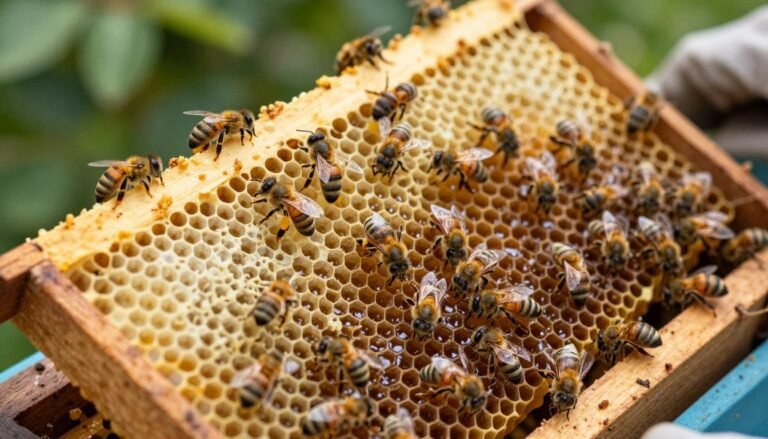
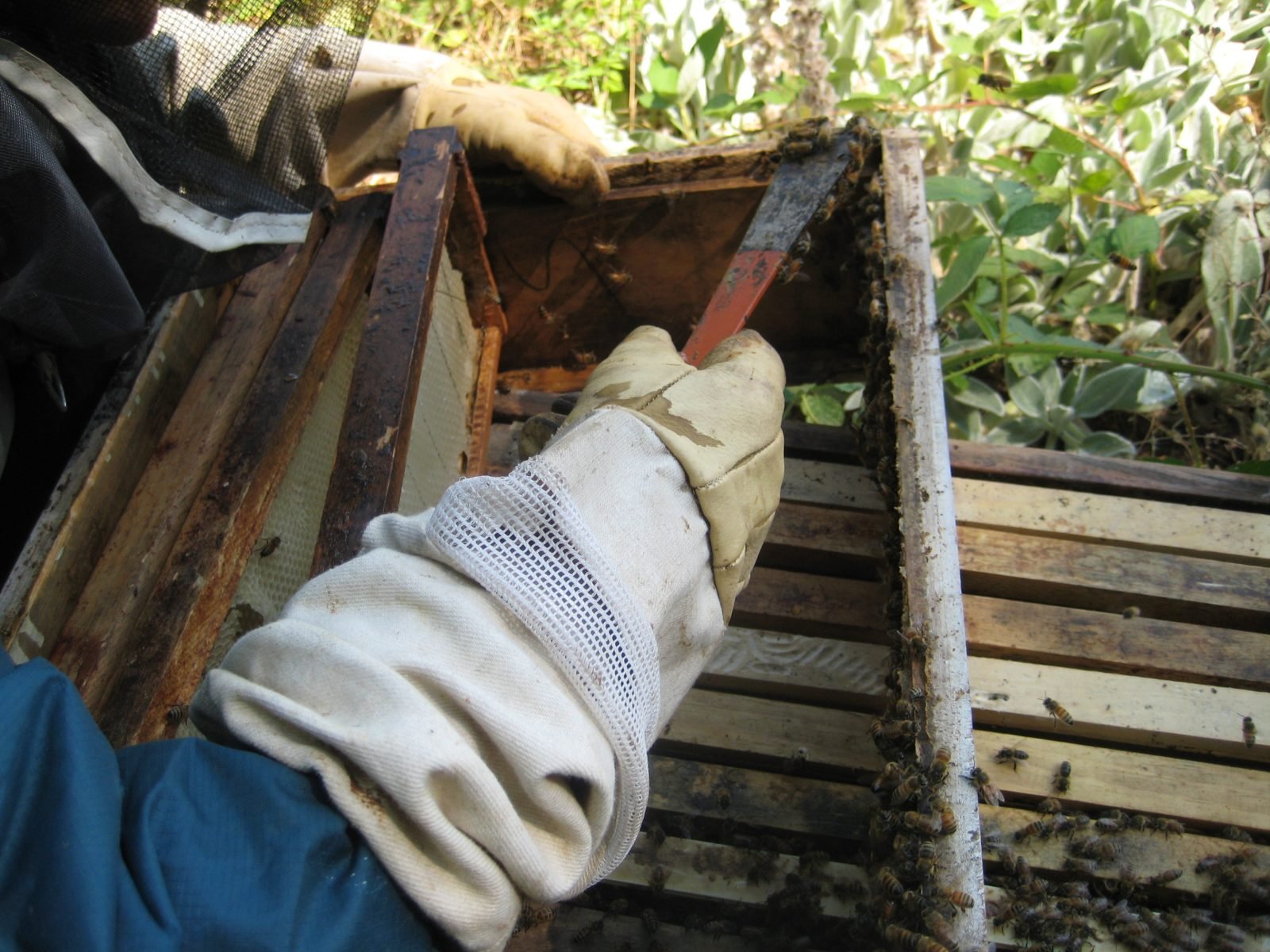
Water and heat come later. The first pass on any frame should be mechanical: use a hive tool to scrape off propolis and old burr comb before anything gets wet. Pay particular attention to where the frame bars meet the sidebars and to the top and bottom bar grooves — wax residue left in those grooves is one of the most common reasons new foundation fails to sit flush and straight later on, a point Dadant & Sons’ frame cleaning guide makes as well. If you’re regularly finding heavy propolis buildup specifically, rather than general debris, our dedicated guide on cleaning propolis off frames goes deeper into technique than fits here.
Propolis Needs More Patience Than Wax
Propolis is noticeably harder to shift than wax, and rushing it with excess force tends to gouge the wood rather than clean it. A standard hive tool handles the job fine as long as you work it patiently rather than trying to pry large sections off in one motion. It is also worth collecting deliberately rather than scraping it into the trash: clean propolis has real value and is straightforward to gather into a separate container as you go, rather than treating it purely as waste to be removed (Agriculture Institute, propolis collection methods).
Sanitizing After Scraping
Once loose debris is off, sanitizing is what actually addresses disease risk rather than just appearance. Hot water and steam are the most reliable heat-based options because they leave no chemical residue on equipment that will hold food later. Dipping wooden frames in boiling water for roughly two minutes removes residual beeswax and kills the majority of disease-causing organisms present on the surface, a process also described in BeeKeepClub’s frame cleaning guide. For frames with heavier contamination — old comb from a colony that had a disease issue, for example — a longer soak is more appropriate, since it both loosens stubborn debris mechanically and gives more sustained heat exposure to pathogens and pests than a brief dip. Utah State University Extension’s equipment-cleaning guidance lists the same heat-based approach alongside two chemical alternatives used across the industry: a bleach solution mixed at roughly 1 part household bleach to 5 parts water, submerging scraped equipment for about 10 minutes, or the equivalent ratio in washing soda, boiled and then rinsed and air-dried before reuse.
Whichever method you use, there is one hard limit worth knowing before you rely on cleaning at all:
“The only way to get rid of American foulbrood (AFB) is to euthanize the infected colony.”
Meredith, Parkinson, and Walker Bravo, Utah State University Extension, “Cleaning and Sterilizing Beekeeping Equipment”
Boiling and standard bleach or washing-soda soaks are not reliable against AFB spores, which is exactly why the distinction between routine cleaning and disease remediation matters so much. For a more formal treatment of hive sanitation standards, the UK National Bee Unit’s own guidance for beekeepers is a useful primary reference (National Bee Unit, Hive Cleaning and Sterilisation).
Sanitizing Methods Compared
| Method | How it’s done | Good for | Not effective against |
|---|---|---|---|
| Boiling water dip | Dip wooden frames roughly 2 minutes; longer soak for heavier buildup | Routine wax residue and most disease organisms | American foulbrood spores |
| Bleach solution | 1 part household bleach to 5 parts water, soak ~10 minutes, rinse and air-dry | General sanitation without heat equipment | American foulbrood spores |
| Washing soda | Same ~1:5 ratio, boiled, then rinsed and air-dried | Wax and propolis residue plus general sanitation | American foulbrood spores |
| Freezing (wax moths only) | 24+ hours at or below 20°F | Wax moth eggs and larvae in stored comb | Bacterial spores of any kind |
| Burning | Full destruction of frame and comb | Confirmed or suspected AFB | N/A — this is the fallback when nothing else is reliable |
When to Clean, Replace, or Burn
Not every frame is worth saving, and not every save is worth attempting. Routine seasonal cleaning — the propolis-and-burr-comb maintenance described above — is a different job entirely from disease remediation, and treating the two the same way under-serves both.
If comb has gone black from years of brood rearing or is heavily cross-combed, replacement is usually the safer and, in practice, cheaper option than an aggressive cleaning attempt. If there is any question the frame came from a colony with American foulbrood, don’t attempt to clean or save it at all — the standard guidance across every source above is to burn it. Our guides on the rope test for confirming American foulbrood and when to burn comb after an AFB diagnosis cover how to confirm the diagnosis and what to do once you have.
For equipment where disease isn’t the concern, our related guide on bleach versus flame sterilization for hive tools covers the smaller, faster version of this same routine for the tools themselves rather than full frames.
Protecting Cleaned Equipment in Storage
Cleaning solves the immediate problem, but stored equipment can pick up new problems if it isn’t protected afterward. Wax moths in particular will colonize stored drawn comb given the chance, and our guide on preventing wax moths in stored equipment covers freezer treatment and storage practices in more depth than fits here. If you’re ever unsure whether damage on stored comb is wax moth activity or something disease-related, recognizing wax moth damage versus disease walks through telling the two apart before you decide whether cleaning is even the right response.
If you are still deciding what type of hive and frame system to run long-term, our guide to choosing a beehive as a beginner and our guide to hive ventilation and humidity both cover related maintenance decisions that affect how much cleaning a hive needs over time.
For the wider upkeep checklist, see the beehive maintenance overview.
Frequently Asked Questions
What is the first step in cleaning a beehive frame?
Scrape off propolis and old burr comb with a hive tool before applying any water, paying particular attention to the top and bottom bar grooves where residue commonly prevents new foundation from seating properly.
How do you sanitize beehive frames without chemicals?
Hot water and steam sanitize frames without leaving residue. Dipping wooden frames in boiling water for about two minutes removes residual wax and kills most disease-causing organisms, though not American foulbrood spores.
Should I keep or throw away propolis I scrape off?
Keep it if it’s reasonably clean. Propolis has real value, so it’s worth collecting into a separate container while scraping rather than discarding it as waste.
What bleach-to-water ratio is used to sanitize beekeeping equipment?
A common ratio is 1 part household bleach to 5 parts water, with equipment soaked for about 10 minutes, then rinsed thoroughly and left to air-dry. Washing soda is used at a similar ratio as a non-bleach alternative.
Can I clean and reuse a frame that had American foulbrood?
No. Every major source on hive sanitation, including university extension guidance, agrees that boiling, bleach, and washing soda are not reliable against AFB spores. The standard response is to burn the frame and comb rather than attempt to clean and reuse it.
When should I replace a frame instead of cleaning it?
Replace frames with heavily blackened or cross-combed comb, since aggressive cleaning of comb in that condition is usually more time and effort than a fresh sheet of foundation. Cleaning is appropriate for routine maintenance, not as a substitute for disease remediation.
Does freezing stored frames kill American foulbrood?
No. Freezing at or below 20°F for 24 hours or more is effective against wax moth eggs and larvae, but it does not kill bacterial spores like those responsible for American foulbrood.
The Bottom Line
Hive cleaning is a two-step job — mechanical scraping first, then sanitizing — and the sanitizing step only matters if you also know its limits. Boiling water, bleach, and washing soda handle routine wax, propolis, and general disease organisms well, but none of them touch American foulbrood spores, which is why that one diagnosis gets a different answer: burn it, don’t clean it.
Image credits: Photo: fishermansdaughter, CC BY 2.0, via Wikimedia Commons.