Start simple. In the United States, the Langstroth-style hive gives new beekeepers easy access to parts, local help, and proven practices.
Focus on the gear that protects the colony and speeds inspections: a stand raised about 18 inches, a solid or screened bottom board, one or two brood boxes, frames, an inner cover, and an outer cover.
Lighten the lifts with shallow or medium honey supers and use an entrance reducer during dearth or when colonies are small to prevent robbing.
Make varroa monitoring and nutrition your top priorities—regular sugar shakes or alcohol washes and steady pollen and nectar sources matter more than gadgets.
Keep tool choices tight: veil, smoker, and one hive tool let you work efficiently with a nuc or full hive while saving time and reducing strain.
Table of Contents
- Understanding minimalist beekeeping: goals, scope, and time-saving principles
- Choose the right hive style for your context
- Site selection and stand: setting hives off the ground and out of the way
- Essential hive parts only: a streamlined equipment checklist
- Langstroth basics for minimalists: brood boxes, supers, and weight choices
- Screened vs solid bottom board: ventilation, climate, and pests
- Frames and foundation: simple decisions that prevent comb chaos
- Entrance management: reducers, robbing prevention, and seasonal tweaks
- Queen excluder: to use or not to use in a minimalist system
- Minimal tools, maximum payoff: veil, smoker, and one hive tool
- Hands-on assembly: putting the hive together cleanly and correctly
- Minimalist beekeeping setups
- Management that matters: varroa and nutrition as your top priorities
- Seasonal workflow: spring build-up, honey flow, fall prep, and wintering
- Conclusion
- FAQ
Key Takeaways
- Choose Langstroth for parts availability and mentorship in the U.S.
- Keep only essential equipment to protect brood, store food, and enable quick checks.
- Elevate hives ~18 inches and use entrance reducers to reduce risks and strain.
- Monitor varroa with sugar shake or alcohol wash and prioritize nutrition.
- Use shallow or medium supers to limit lifting weight when harvesting honey.
- Limit tools to a veil, smoker, and one hive tool for faster, safer inspections.
Understanding minimalist beekeeping: goals, scope, and time-saving principles
Streamlined gear and short, focused visits keep colonies healthy and save time. Use only the parts that support steady brood rearing and simple inspections. Standard boxes and same-size frames cut mistakes and speed every check.
What this approach means for hive, beekeeper, and colony
For the hive, it means uniform comb and frames so comb building stays orderly. That reduces burr comb and cross-building that waste your time.
For the beekeeper, it means objective-driven visits: confirm brood pattern, food (nectar and pollen), queen presence, and mite levels, then close up.
Balancing fewer parts with sound colony management
- Keep essentials only: bottom board, brood boxes, frames, and a lid.
- Monitor varroa: regular alcohol wash or sugar shake gives quick, reliable readings.
- Respect biology: short, calm inspections help the colony keep stable temperature and brood care.
| Focus | Why it matters | Action |
|---|---|---|
| Brood pattern | Shows queen health and future population | Check frames quickly, note irregularities |
| Food stores | Prevents starvation during dearth | Feed 1:1 syrup or pollen substitute early |
| Mite levels | Top risk to colony survival | Run sugar shake or alcohol wash monthly in season |
| Frame uniformity | Reduces combs cross-building and inspection time | Use same-size frames and consistent placement |
Choose the right hive style for your context
Pick a hive style that fits your terrain, body, and goals to make colony care consistent and manageable.
Langstroth for availability, parts compatibility, and honey yield
Langstroth is the most common choice in the United States. It gives beekeepers easy access to parts, mentors, and proven methods.
Frames and reusable comb speed inspections and improve honey yield. If you plan to harvest regularly or need quick repairs, start here.
Top bar and long hives for reduced lifting and simple inspections
Top bar and long hives lower the need to lift heavy boxes. They let you work at waist height and reduce strain on the back.
Note that free-hanging comb in top bar designs can struggle in intense sun. For some hobbyists, the hands-on comb work is worth the trade.
Climate, location, and goals: aligning hive choice with reality
Match your choice to local weather and site. In wet areas, consider screened bottoms; in dry zones, solid bottoms may be better.
Rooftops and steep sites often favor compact Langstroth stacks. Think about brood control, queen handling, and long-term sourcing.
| Criteria | Langstroth | Top bar / Long | Notes |
|---|---|---|---|
| Lifting | Higher (stacked boxes) | Lower (horizontal access) | Choose based on physical ability |
| Honey yield | High (reusable frames) | Moderate (single-use comb) | Langstroth favors larger harvests |
| Brood management | Uniform frames, easy inspection | Requires disciplined spacing | Frame consistency helps brood health |
| Site flexibility | Good for rooftops, slopes | Better for flat, sheltered yards | Consider sun and wind exposure |
If you want a deeper look at horizontal options, see this horizontal hive guide.
Remember: any chosen style needs steady mite checks, timely feeding, and routine brood checks to keep bees healthy and productive.
Site selection and stand: setting hives off the ground and out of the way
Pick a level spot that keeps hives out of traffic and makes inspections fast. A tidy site protects the colony and saves you time.
Level, accessible, and out of traffic paths
Choose even ground with clear access so you can work from the rear or side without standing in the flight path.
Keep hives away from footpaths, play areas, and busy yards. Direct bee flight toward a fence or shrubs to lift bees above head height.
Hive stands and height: pallets, cinder blocks, or commercial stands
Elevate each hive at least 18 inches on a pallet, cinder blocks, bricks, or a commercial stand. This deters skunks and mice and reduces bending strain when lifting a box or frame.
- In bear country, install an electric fence before bears find the honey—prevention saves hives and repair time.
- Avoid low spots where water pools; poor drainage raises humidity and mold risk inside the hive.
- Trim vegetation under the stand so entrances and the bottom board stay clear and visible.
Essential hive parts only: a streamlined equipment checklist
Limit gear to components that directly support brood, stores, and ventilation. A short, consistent kit cuts inspection time and avoids comb cross-building.
Bottom board, brood box, frames, and foundation options
Start with a solid or screened bottom board chosen for your climate. Solid boards suit dry areas; screened helps manage moisture when used correctly.
Use one to two deep brood boxes with standardized frames. Fit frames with quality foundation to prevent irregular comb and slow inspections.
Inner cover, outer cover, and simple entrance control
Inner cover improves insulation, eases lid removal, and helps moisture control. Cap the hive with a weatherproof cover and check the lid fit to stop leaks.
- Fit an entrance reducer for new or small colonies and during dearth to deter robbing.
- Standardize frames and foundation color to spot eggs and manage drone comb.
When to add a honey super
Add a shallow or medium honey super only once brood chambers are well-occupied and stores are building. Shallows reduce lift weight; mediums hold more per trip.
“Keep the checklist visible: bottom board, brood box, frames, foundation, inner cover, and a weatherproof cover.”
Langstroth basics for minimalists: brood boxes, supers, and weight choices
Select a brood chamber plan that balances brood rearing, winter stores, and what you can lift comfortably.
Two deeps remain a common choice. Two deep brood boxes give ample brood area and winter reserves with little extra complexity.
One deep plus mediums is an alternative if you want lighter individual lifts while keeping enough chamber volume for brood and stores.
8-frame vs 10-frame and practical tradeoffs
8-frame boxes weigh less and are easier on the back. They make inspections and frame swaps faster for small teams or older hands.
10-frame boxes increase capacity per hive. Use them when you prefer fewer box changes and higher per-box honey stores.
Choosing shallow or medium supers for honey
Shallow supers typically weigh about 35–40 lb full and are easiest to carry. Medium supers add roughly 10 lb but cut down on the number of trips to the extractor.
- Standardize one approach across your apiary to simplify frame moves and nuc integration.
- Keep frames consistent to avoid gaps, brace comb, and queen damage.
- Place pollen frames near the brood so nurse bees can feed larvae and stabilize the chamber.
“Pick a stacking plan you can maintain: lighter, more frequent lifts are usually faster and safer for the bees and for you.”
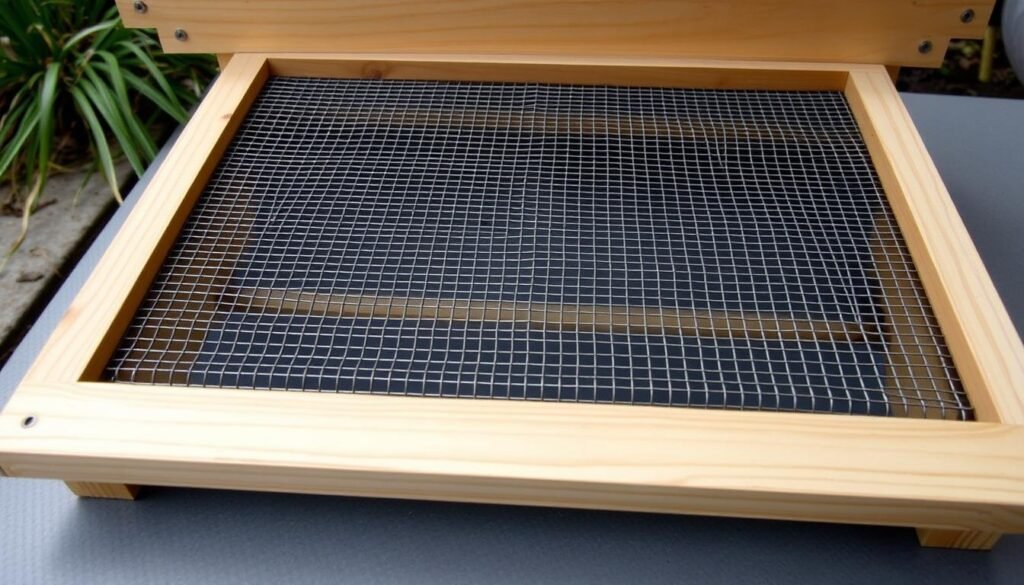
Screened vs solid bottom board: ventilation, climate, and pests
Your choice of board affects hive airflow, moisture, and how easily pests enter. Pick the base that fits local weather and common threats rather than defaulting to one style.
In dry climates a solid bottom board helps retain heat and reduce drafts. It cuts unnecessary ventilation and supports winter warmth.
In hot or very rainy regions a screened bottom improves airflow and drainage. That extra ventilation can lower inside humidity but may also let debris and beetles move under the hive.
Humidity, rainfall, and small hive beetle considerations
High humidity raises mold risk inside the hive. When small hive beetles are common, extra openings can invite them in and stress the bees.
Observe your bees for bearding and moisture signs. Excessive bearding on hot evenings or wet combs signals a need to change ventilation or add space.
When screened bottoms with oil trays make sense
For sites with heavy beetle pressure, pair a screened bottom with an oil tray beneath. The screen keeps brood area mostly closed while the tray traps beetles without over-ventilating.
- Match the bottom board to your climate and pest load.
- Ensure the stand and hive sit level so water drains away from the entrance.
- Use only needed ventilation; too much forces bees to waste energy on thermoregulation.
- Keep the area under the hive clear and clean oil trays promptly to avoid odors that attract pests.
- Combine board choice with smart entrance management for better overall management and less risk to brood and honey.
“Choose the bottom to match local climate and pest risk — and reassess seasonally.”
Frames and foundation: simple decisions that prevent comb chaos
Well-chosen frames and uniform foundation make inspections faster and less messy. Small choices up front save hours later.
Foundation types, colors, and why uniform comb saves inspection time
Use either plastic (wax-coated) or traditional beeswax foundation to enforce cell size. That discourages irregular comb and limits excessive drone comb.
Color matters. Black foundation in brood frames makes tiny white eggs easier to spot. Green-marked foundation can signal drone zones if you use it deliberately. Yellow excels in honey supers for quick role checks.
- Pick one foundation type and stick with it across frames to standardize comb architecture.
- Avoid foundationless frames unless you can correct cross-combing quickly; irregular comb risks queen injury.
- Keep frame spacing tight and replace wavy comb to reduce bridge comb and speed brood checks.
- Balance brood frames and food frames so nurse bees access pollen and nectar where needed.
“Uniform foundation and precise frames make brood assessment faster and the colony easier to manage.”
Entrance management: reducers, robbing prevention, and seasonal tweaks
Control the entrance to match your colony’s strength and cut risk during high-pressure times. A properly sized opening lets guard bees defend stores without burning energy. Use this simple control as part of regular hive care to save time and avoid collapses.
Fit a reducer on new or weak colonies and during nectar dearth. Late summer and fall are high-risk windows when flowers fade and robbing rises. A smaller entrance reduces fights and gives guards a real chance.
- Size the entrance so guards can defend without exhaustion.
- Widen openings in strong flows for ventilation and traffic; narrow them in late season.
- Keep the landing board clear; visibility helps guards and speeds quick checks.
- Feed inside the hive when robbing risk is high; open feeders attract unwanted attention.
- Smoke lightly at the entrance before inspections to calm guards and lower sting risk.
“Watch for fighting at the entrance, zig-zag flight, or wax crumbs—those are classic robbing signs and warrant immediate action.”
| Issue | Sign | Immediate Action | Follow-up |
|---|---|---|---|
| Robbing | Fighting at entrance; frantic flight | Install reducer; remove exposed feed | Consider a temporary robbing screen; log date |
| Weak colony | Low traffic; small guard numbers | Reduce entrance; avoid wide feeders | Monitor frames for stores and queen; feed internally |
| High traffic/ventilation need | Calm, steady flight; heavy nectar flow | Open entrance wider; check bottom board | Ensure stands are level; return to baseline after flow |
| Chronic pressure | Repeated robbing events | Use robbing screen; reinforce nearby hive security | Document changes by date to refine seasonal timing |
Queen excluder: to use or not to use in a minimalist system
Deciding whether to add an excluder affects brood movement and where bees store honey. A queen excluder is a flat sheet with rectangular holes that let workers pass but block the queen.
Place it above the second brood box and under the first honey super to keep eggs out of honey frames.
The upside: cleaner honey frames with little or no brood.
The downside: restricting the queen can crowd the brood nest and sometimes raise swarming risk if space is limited.
“Use an excluder only when your brood chamber has open comb and you want consistently brood-free supers.”
- Skip it if you control brood space and accept occasional brood in top combs.
- Use it when your priority is clean honey and the colony has room below.
- Time installation during strong buildup and bait the super with a drawn frame if bees hesitate to cross.
- Remove after harvest or use temporarily during the main flow. Keep the grid flat and clean; metal lasts longer than plastic.
Minimal tools, maximum payoff: veil, smoker, and one hive tool
One good veil, a reliable smoker, and a single hive tool cover nearly every routine task. This compact kit lets a beekeeper move quickly and keep inspections short while protecting the colony and yourself.

Why gloves are optional and technique matters more
Train technique over armor. Light gloves or bare hands teach gentle handling and reduce rough moves that alarm bees. Heavy gloves can hide poor habits and slow the beekeeper down.
Wear a veil every visit. Face stings cause the most pain and the most distraction when you need to focus on brood and stores.
Lighting and using cool, dense smoke efficiently
Use cool, white, dense smoke. Aim smoke at the entrance, under the inner cover, then across the top bars. This calms guards without flooding the hive.
Good fuels include pine needles, oak leaves, or wood pellets. Choose a dome-top smoker about 4″×7″ for steady, directed smoke and easy fuel control.
- Keep gear minimal: veil, dome-top smoker, and a 7.5–10″ curved-end hive tool.
- Move smoothly: deliberate, slow motions lower the bees’ threat response and save time.
- Maintain tools: a clean, sharp hive tool scrapes propolis faster and reduces fiddling during inspections.
“Stage your equipment before opening the hive—consistent placement saves minutes and keeps inspections calm.”
| Tool | Why it matters | Practical tip |
|---|---|---|
| Veil / hood | Protects face and reduces distraction | Use every visit; pair with light jacket if desired |
| Dome-top smoker | Delivers focused, cool smoke | Light with pine needles or pellets; hold ready near stand |
| Curved-end hive tool | Leverage for prying and scraping | Keep sharp and clean; one tool covers most jobs |
| Gloves (optional) | Armor vs. finesse tradeoff | Start light or bare to develop touch; add gloves if needed |
Hands-on assembly: putting the hive together cleanly and correctly
A correctly built hive saves hours later by preventing crooked comb and gaps. Start with a clear plan and the right parts staged before you lift a box.
Order from stand to lid
Build from the ground up: place the stand on firm ground, seat the bottom board, then add the first brood box with properly spaced frames.
Add a second box if needed, fit the inner cover to ease lid removal and control moisture, then cap the stack with a weather-tight lid or standard outer cover.
Avoiding common build mistakes that waste time later
- Confirm the stand is level and stable; a rocking base yields crooked comb and slow inspections.
- Square and seat boxes so bee space stays correct; misaligned boxes cause burr comb.
- Install frames snug and uniform; check foundation is fully seated to prevent cross-combing.
- Match brood box frame size exactly when adding a nuc; center nuc frames to anchor build-out.
- Stage tools and parts before opening—the small step saves significant time and keeps the bees calmer.
Final check: verify entrance clearance, stand stability, and that the outer lid cannot be uplifted by wind before you walk away—especially ahead of winter.
Minimalist beekeeping setups
Start with a compact, reliable layout that gets a new hive productive without needless extras.
Core setup for a first colony in the United States
Core parts get a nuc established fast: an elevated stand, a solid or screened bottom board, two deep brood boxes, and matched frames with consistent foundation.
Center nuc frames in the brood box and fill remaining slots with matching frames. Fit an entrance reducer until traffic grows steady.
Include an inner cover, outer cover, and stage one shallow or medium honey super for when stores build. Standardization across hives makes swaps and repairs simple.
Add-ons worth considering only when they solve a real problem
Use robbing screens during active robbing and oil trays under screened bottoms only where small hive beetles are common.
Install electric fencing proactively in bear country; it prevents catastrophic loss with little ongoing work.
Avoid extra equipment that doesn’t address a specific issue; each gadget adds inspection time and complexity.
“Keep spare frames and a spare box nearby so small adjustments don’t require a return trip.”
Management that matters: varroa and nutrition as your top priorities
Good colony health starts with two priorities: steady nutrition and strict varroa control. These drive brood quality, queen performance, and a hive’s chance to carry through the season.
Make monitoring routine. Use an alcohol wash for the most accurate mite counts. A well-executed sugar shake works if you prefer a dry method.
Quick-monitor routines: alcohol wash or sugar shake cadence
Check mite levels monthly from late June through fall. Record results and dates so your management improves year to year.
- Alcohol wash gives reliable percentages; act when thresholds are reached.
- Sugar shake is acceptable for quick screening if done correctly.
- Treat promptly with proven, labeled options when counts exceed safe levels; delays cost brood and shorten colony lifespan.
Feeding strategy: 1:1 syrup, timing, and when to stop
Feed 1:1 syrup aggressively during buildup to draw comb and support brood expansion. Stop feeding when the main honey flow begins.
- Ensure protein: provide pollen or substitute when natural pollen is scarce.
- Watch brood patterns and the queen’s contiguous laying chamber for early stress signs.
- Support nucs with early feeding and early mite checks; young colonies can crash fast.
“Proactive management keeps bees ahead of parasites; reactive work plays catch-up and risks losing the season.”
Seasonal workflow: spring build-up, honey flow, fall prep, and wintering
Plan seasonal work around the colony’s growth curve so you add boxes when frames fill, not on a calendar.
Adding space at the right time without overexpanding
In spring, grow the brood nest quickly with timely 1:1 syrup and pollen if natural forage is scarce.
Add space just before a frame is fully occupied to prevent congestion and swarming. Too much empty space cools the brood and slows build-up.
During the main honey flow, keep enough room in supers so foragers don’t backfill the brood area. Consolidate frames and remove unneeded boxes as the flow ends.
Ventilation, inner covers, and moisture control in winter
For winter, fit a snug inner cover to add insulation and manage moisture. Provide a small top vent or exit so warm moist air can escape.
Condensation that drips back on bees kills faster than cold. Use modest ventilation, absorbent material if needed, and secure stacks so water can’t blow in.
Fall steps: reduce entrances, remove empty boxes, and ensure hives are level and sheltered. Feed early enough to build reserves; avoid last-minute disturbances.
“Track spring onset, flow peak, and first frost in your area — local timing refines every successful year.”
For a full cost and component breakdown of standard hive equipment to compare against a minimalist setup, see MAAREC’s guide to beekeeping equipment.
Conclusion
A clear routine that prioritizes queen performance, brood checks, and food reserves makes a big difference each season.
Keep gear standardized around a common U.S. hive, run regular mite counts, and feed when stores lag. These steps protect colonies and help beekeepers spot trouble early.
Limit tools to a veil, smoker, and one hive tool and hone handling technique to reduce colony stress. Use entrance reducers during dearth, inner covers and simple vents for winter, and add space only when frames are filling.
Record results: track mite numbers, weight or stores, and queen changes so each year’s end informs a better start. Choose add-ons only to solve real problems; simplicity keeps your work focused and effective.
Next steps: standardize gear, set a monitoring cadence, and keep clear records. Do that and your bees, hive, and honey outcomes will improve over the years.
FAQ
What does “minimalist” mean for a hive, beekeeper, and colony?
Minimalist in practice means keeping only the essential hive parts and tools that protect colony health and allow safe inspections. For the hive, that usually means a sturdy bottom board, a single brood box (or two deeps), a few supers as needed, frames with or without foundation, an inner cover and outer cover, and a simple entrance reducer. For the beekeeper, it means focusing on routine checks, a quality veil, smoker, and one reliable hive tool rather than large tool collections. For the colony, it means stable space, good ventilation, and predictable management so the bees can build comb and store honey with minimal disturbance.
How do I choose between Langstroth, top-bar, or long hives for a low‑effort approach?
Match the hive style to your goals and physical needs. Langstroth offers parts availability and easy expansion with supers. Top-bar and long hives reduce heavy lifting and simplify inspections because comb is lighter and removed horizontally. Consider local climate, harvest preferences, and whether you want common replacement parts—Langstroth wins for parts and honey yield; top-bar wins for simplicity and lower labor.
How should I site and stand a hive to minimize maintenance?
Choose a level, accessible spot away from high-traffic areas with morning sun and afternoon shade if possible. Elevate the hive on pallets, cinder blocks, or a commercial stand to reduce dampness, deter pests, and improve inspection ergonomics. A stable, slightly angled stand helps water run off and keeps the entrance clear for foragers.
What are the essential hive parts I really need?
At minimum: a solid bottom board, one brood box (deep or medium depending on your approach), enough frames and foundation or foundationless frames for brood and stores, an inner cover, an outer cover or telescoping lid, and an entrance reducer. Add a screened bottom only if ventilation or small hive beetle control is a local concern.
When should I add a honey super without overcomplicating the setup?
Add a super when the brood box is nearly full of drawn comb and the queen’s laying space remains adequate. Watch winter stores and spring build-up—add supers during nectar flows and remove them after harvest. Using medium or shallow supers reduces lifting and keeps honey harvests manageable.
How do I decide between two deeps, one deep plus mediums, and 8‑frame vs 10‑frame choices?
Two deeps provide plenty of brood space but mean heavier boxes to lift. One deep plus mediums or using 8‑frame equipment reduces weight and makes inspections easier. 10‑frame offers more comb area and higher honey yield per box but increases individual frame weight. Choose based on your strength, harvest goals, and whether you value ease of handling over maximum capacity.
Should I use a screened bottom board or a solid one?
Use a screened bottom board for extra ventilation in humid climates or where small hive beetles are a problem. Solid bottoms conserve heat and reduce drafts in cold, wet regions. Some keepers install a screened bottom with a removable insert or oil tray so they can adapt seasonally.
What foundation type is best to prevent comb issues while keeping things simple?
Uniform frames with a consistent foundation type—wax, plastic, or foundationless—reduce confusion for the colony and speed inspections. Wax or plastic foundation speeds comb build-out; foundationless frames let bees draw natural comb but can be messier. Pick one and stay consistent across the brood chamber to save time.