
Reviewed by Thomas B. · Last Updated September 24, 2026 · How we review
To process wax scraps from apiary work, sort them in the bee yard, not at the melter. Put burr and brace comb in one container and propolis-heavy scrapings from box walls and bottom boards in another. Seal or freeze both so wax moths and robbing bees can’t get at them. Once you have a few pounds, melt the clean wax in a solar melter or in a mesh bag in water. Handle the propolis scrapings separately or use them for swarm traps and wood treatment. Scraps from any hive with brood disease signs stay out of the pile.
Key Takeaways
- Carry two lidded containers on inspections: one for clean burr and brace comb, one for propolis-heavy scrapings.
- Scrapings from box walls and bottom boards are mostly propolis. Mixed into good wax, they drag the whole batch down.
- Freeze or seal scraps the same day. Honey-wet scraps left in the yard invite robbing, and stored scraps feed wax moths.
- Keep scraps from a hive with brood disease signs out of the pile until the colony has been checked.
- Wait until you have a few pounds before melting. Small, frequent melts waste time and wax.
Table of Contents
Sort Scraps in the Bee Yard
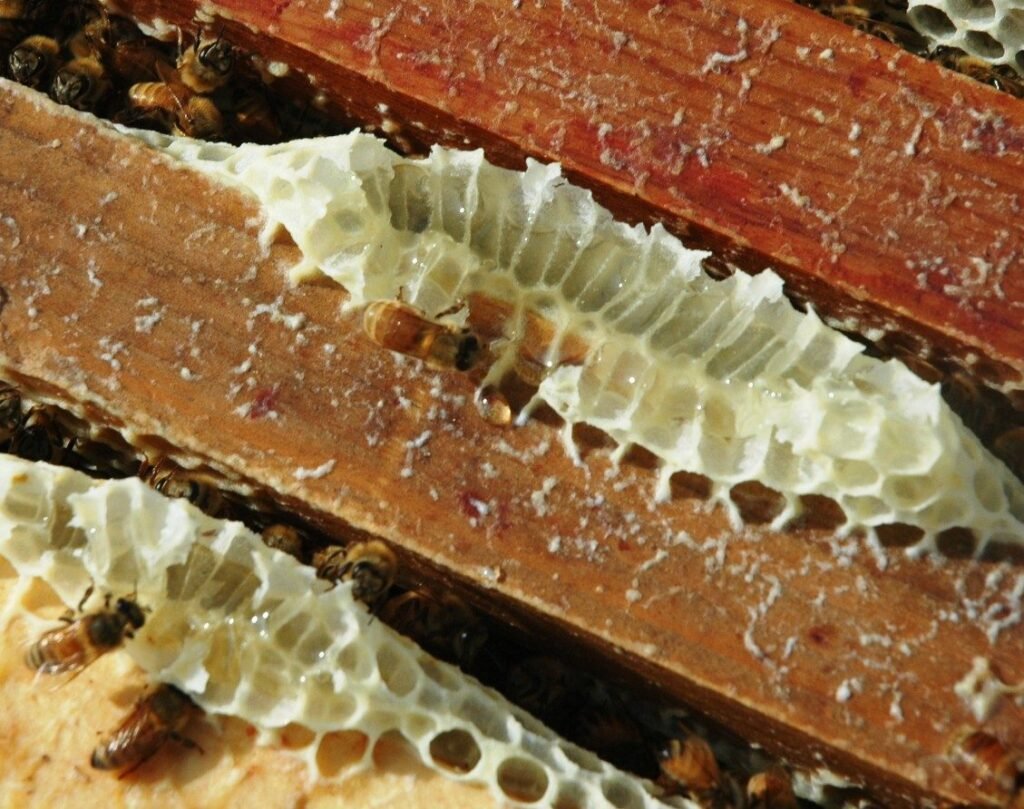
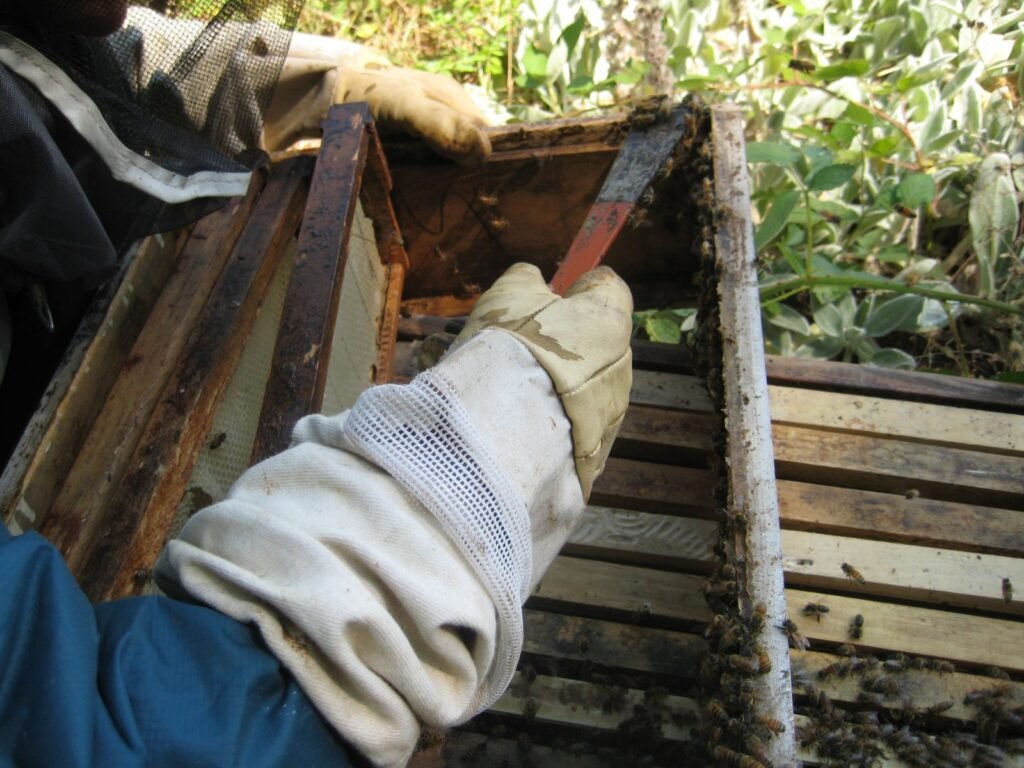
Every inspection produces a little wax: burr comb on top bars, brace comb between boxes, bridges under the inner cover. Not all of it is equal, and the time to separate it is when it comes off the hive. A frozen lump in a bucket can’t be sorted.
“Scrapings from side walls and the bottom board contain very high proportions of propolis and should not be mixed with better quality waxes.”
R. Krell, Value-Added Products from Beekeeping, FAO Agricultural Services Bulletin 124
| Scrap source | Typical content | Container |
|---|---|---|
| Burr comb from super top bars and under the inner cover | Fairly light wax, often with honey | Clean wax |
| Brace comb between boxes | Wax, sometimes honey or drone brood | Clean wax |
| Trimmings from brood-frame ends and bottom bars | Darker wax, some cocoons and pollen | Clean wax if light, otherwise treat like old comb |
| Box walls, frame rests, bottom boards | Mostly propolis, some wax, dirt, dead bees | Propolis scrapings |
| Anything from a colony with sunken or perforated brood cappings or other brood-disease signs | Unknown | Bag and label separately until the colony is diagnosed |
That last row matters. Burr comb from a hive with American foulbrood can spread spores to every hive its wax reaches, and rendering doesn’t kill them. Our guide to reusing frames from a dead colony explains why American foulbrood is the hard line. For dark brood comb and the full safety decision, see how to recycle old beeswax comb safely.
Carry two lidded buckets, or zip bags labeled by hive if you want to trace sources. Scrape burr comb straight into them, not onto the ground. Honey-wet scraps in the grass invite robbing, especially in a late-summer dearth.
Storing Scraps Until You Have a Batch
A handful of wax isn’t worth heating a pot for. Most beekeepers accumulate scraps through the season and render them in one or two sessions.
- Freeze or seal the same day. Wax moths go after stored wax, especially wax with pollen or cocoon traces. A chest freezer or a sealed tote stops them. Our guide to storing drawn comb without a freezer covers moth control if freezer space is short.
- Drain honey-heavy scraps first. Burr comb from a super can hold a surprising amount of honey. Let it drip through a strainer into a jar for a day before freezing.
- Keep scraps away from pesticides and fuel. Beeswax absorbs odors and fat-soluble chemicals. Don’t store the bucket next to mouse bait, solvents or gasoline.
In eastern North Dakota and western Minnesota, an unheated shed does the freezing for you through the winter. Summer scraps are the ones that need the freezer.
Melting a Batch of Scraps
Two methods suit scrap-sized batches.
Solar melter (summer)
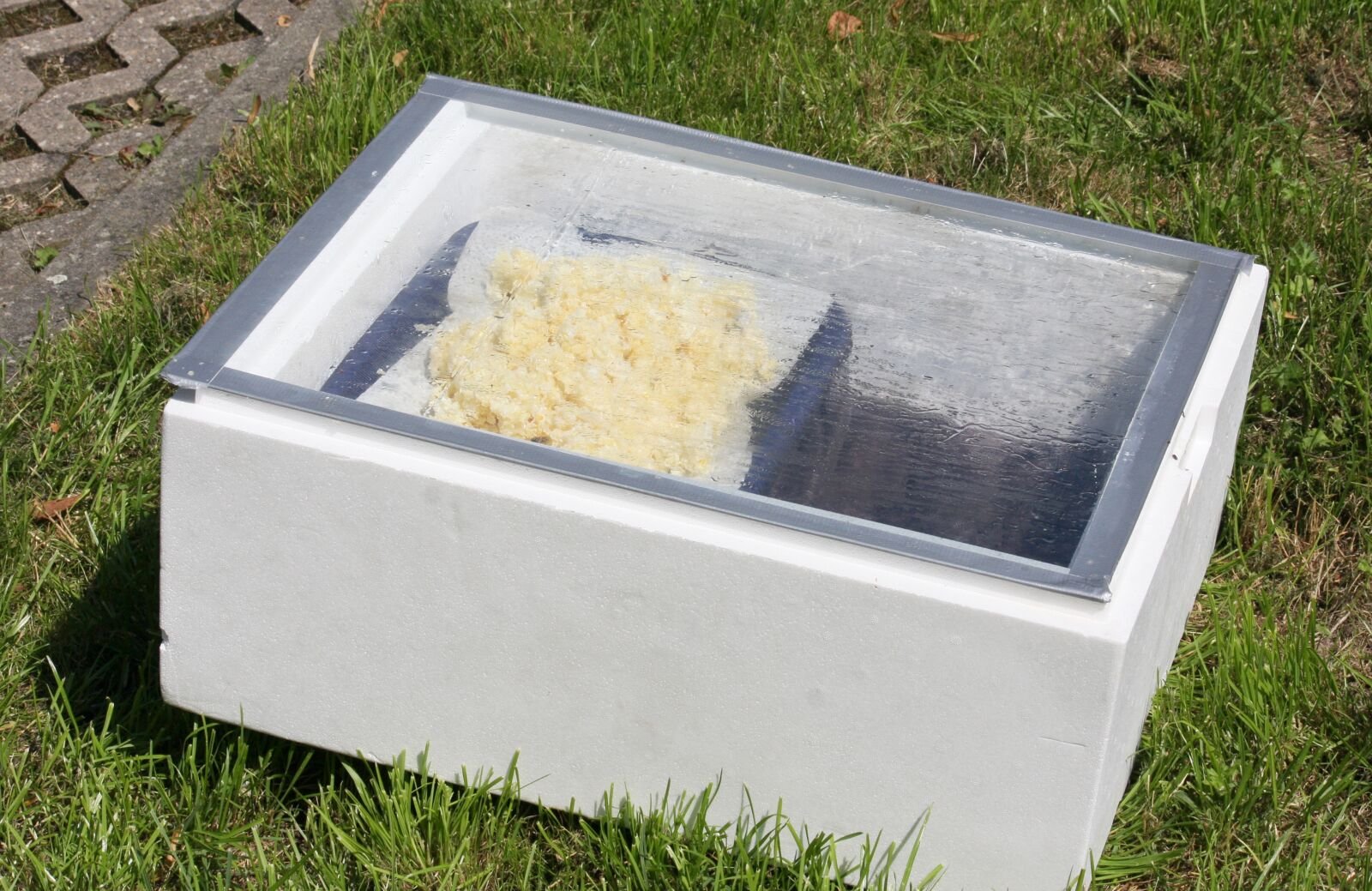
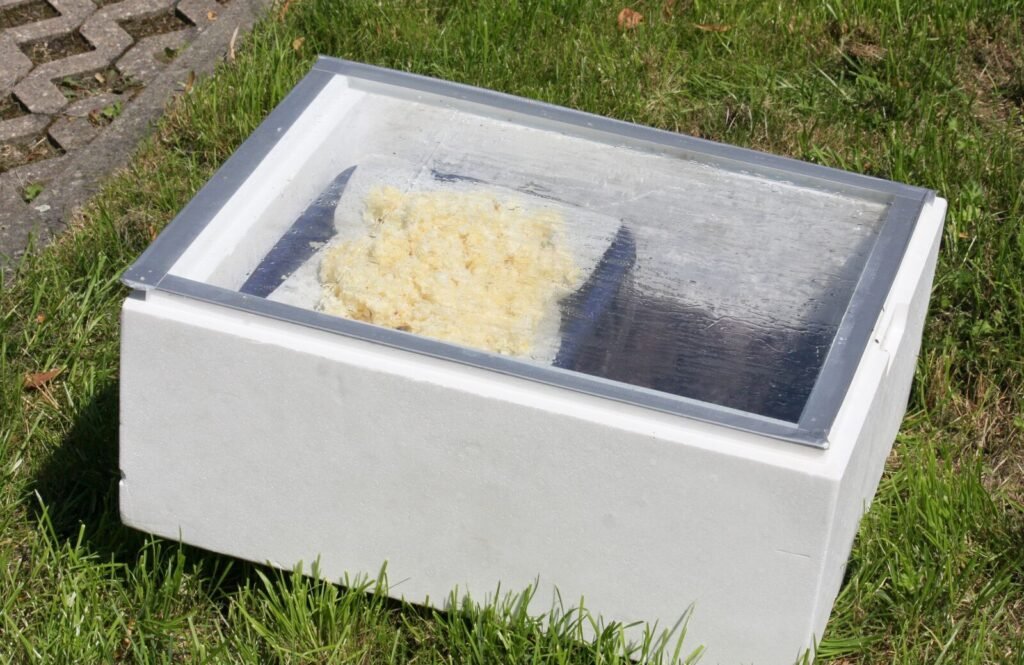
A solar melter is a glass-topped box with a sloping metal tray. The University of Florida’s guide describes loading it with “bits of wax, old comb and other scrapings from the hive,” and notes it must be bee tight because melting wax attracts bees (Sanford and Bustamante, UF/IFAS ENY111). On a hot, clear day the wax runs into a pan below, with no flame to watch. Our review of the best solar wax melters for backyard beekeepers covers ready-made and DIY options.
Mesh bag in water (any season)
- Rinse the scraps in cool water to remove honey, then drain.
- Tie them in a mesh or old nylon bag and weight it in a dedicated pot of soft water.
- Heat on an electric burner until the wax melts out. Hold it below a simmer and never leave it.
- Turn off the heat, cover, and let it cool overnight. The wax floats up and sets as a disc.
- Lift the disc, scrape the dirty underside, and re-melt in a water bath if you need it cleaner.
Never heat scraps dry. The FAO bulletin says wax “always needs to be processed in water or in a water bath” and should stay below 85°C (185°F), which protects color and aroma and keeps it well away from fire risk. For more on equipment and larger volumes, see how to extract beeswax: equipment, methods and safety.
If your scrap wax is light and came from healthy supers, it can be rendered alongside cappings. The finishing steps for candle- or cosmetic-grade wax are in our guide to rendering cappings wax cleanly.
What to Do With Propolis Scrapings
The propolis bucket is a different product, not a lower grade of wax. You have three reasonable options.
- Keep it as propolis. The FAO propolis chapter recommends keeping scrapings from frames and bottom boards separate from trap-collected propolis, and storing propolis airtight, dark and cool (FAO Bulletin 124, propolis). Scraped propolis is lower quality than trap propolis because it’s mixed with wax and debris. It still works for home tinctures. Our overview of what propolis research actually shows covers what those are, and aren’t, good for.
- Use it as a swarm lure or wood treatment. The FAO bulletin suggests propolis-heavy wax scrapings for swarm traps and wood preservatives. Rubbing the inside of a bait hive with them is a common use.
- Melt out the wax. In a water melt, the wax floats and much of the propolis stays in the bag or at the bottom. For small amounts it’s rarely worth the effort.
Cold makes propolis brittle. FAO notes that chilled propolis can be flexed and brushed off screens, and the same trick helps crumble frozen scrapings apart from wax lumps before you sort them further.
Producing Less Scrap in the First Place
If you’re scraping big bridges every visit, check your spacing. Frames set too far apart, or too much space above the top bars, get filled with comb. Our guide to frame spacing for straight comb gives the measurements. A little burr comb is normal and not worth fighting.
Frequently Asked Questions
Is burr comb worth saving?
Yes. Burr and brace comb from supers is new, fairly light wax, second only to cappings. A season of inspections adds up to a usable block.
Can I give scraps back to the bees to clean?
Setting honey-wet scraps out in the open invites robbing and can spread disease between colonies. If you want the honey back, drain it into a jar instead. Only feed that honey back to the colony it came from.
Should I mix propolis scrapings with burr comb before melting?
No. Propolis-heavy scrapings darken and contaminate cleaner wax. Keep them in a separate container and process or use them on their own.
How do I stop wax moths getting into saved scraps?
Freeze the scraps or seal them in a tight container on the day you collect them. Unsealed scraps in a warm shed are exactly what wax moths look for.
How much wax do I need before rendering is worthwhile?
There’s no fixed number. Most beekeepers wait for a few pounds, often at season’s end. A solar melter changes the math, since a small batch costs nothing to run on a sunny day.
The Bottom Line
Sort scraps as they come off the hive: clean burr comb in one container, propolis scrapings in another, anything from a sick colony set aside. Freeze or seal them the same day, and render in a solar melter or water bath once you have a real batch. Never heat wax dry.

.jpg)
