Reviewed by Elena P. · How we review
Sooner or later every beekeeper lifts a frame and feels one end drop. The ear of the top bar has snapped off, or an end bar has split away from the comb. A frame in that state won’t hang properly in the box. It can tilt into its neighbors, crush bees and make the next inspection harder. The fix is often quick, but not every broken frame is worth saving.
This guide explains how to repair a broken top-bar ear, how to replace a damaged end bar while keeping the comb, and when a frame should simply be retired.
Key Takeaways
- Frame “ears” (lugs) are the ends of the top bar that rest on the box’s frame rests. End bars are the vertical sides of the frame.
- Snapped top-bar ends and broken bottom bars are the most common frame damage. End bar repairs take more work, especially on wired frames.
- A broken ear on a frame with good comb can be glued, pinned or reinforced. A split end bar often means rebuilding the frame around the comb.
- Don’t repair frames from colonies with suspected foulbrood. Follow your inspector’s instructions, which often means burning.
- Old, dark brood comb that is due for rotation is usually better culled than repaired.
Table of Contents
- Frame Anatomy: Ears, End Bars and Bottom Bars
- Why Ears and End Bars Break
- Repair or Cull? Decide First
- How to Repair a Broken Ear
- Replacing a Broken End Bar and Saving the Comb
- Preventing Broken Frames
- Conclusion
- FAQ
Frame Anatomy: Ears, End Bars and Bottom Bars
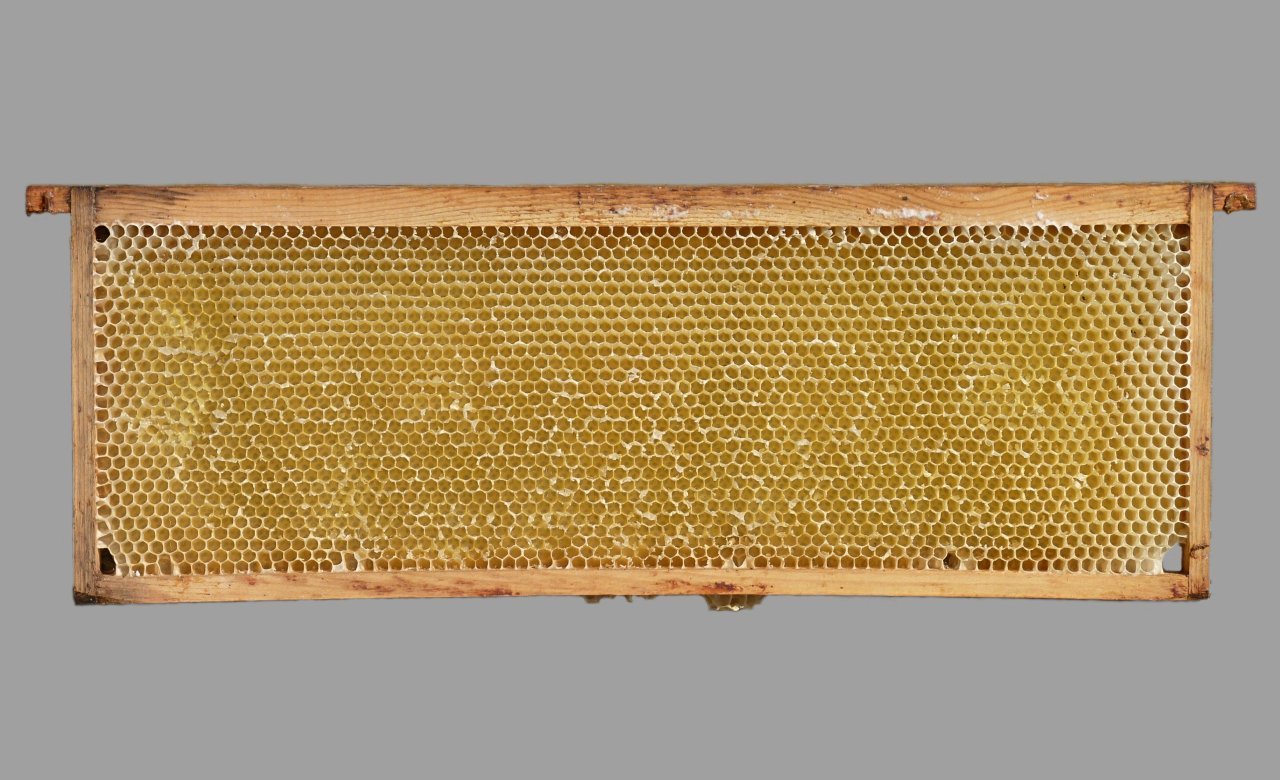
A standard wooden Langstroth frame has a top bar, two end bars and a bottom bar. The top bar runs past the end bars on both sides. Those projections, the ears or lugs, hang the frame on the rabbets (frame rests) at each end of the box. On self-spacing (Hoffman-style) frames, the upper part of each end bar is wider than the rest. When frames are pushed together, those wide sections set the gap between combs.
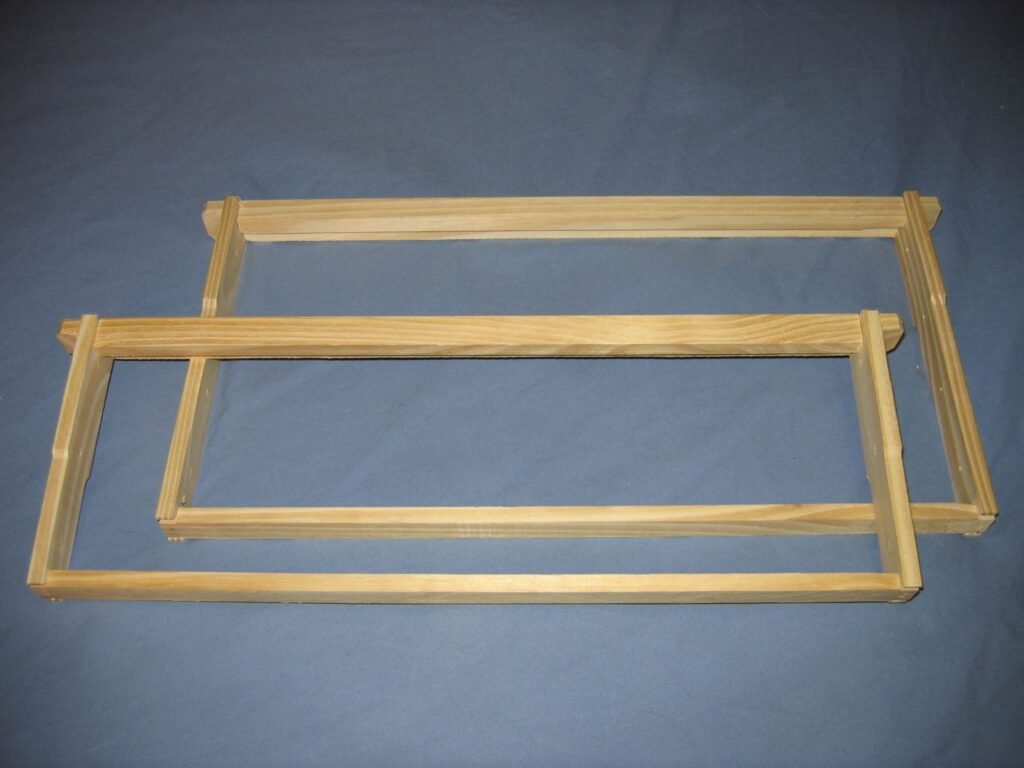
Because the ears carry the frame’s weight on a thin cross-section of wood, they are the weakest point. A full deep frame of honey puts a lot of load on two small tabs.
Why Ears and End Bars Break
- Prying at the ear. Levering a propolis-glued frame up by its lug is the most common cause of a snapped ear.
- Heavy propolis on the rabbets. Frames glued firmly to the frame rests need more force to free, and the ear takes it.
- Drops and rough handling, especially with heavy honey frames during extraction.
- Old, dry wood. Years of use, weather and wax moth damage weaken the wood.
- Splits from assembly. A nail driven too close to the end of an end bar can leave a crack that opens up later.
Repair or Cull? Decide First
Carson Combs, writing for Hobby Farms, suggests weighing your time and money and fixing what you can do easily. He notes that bottom bars are usually a simple fix, top bars can be harder depending on the frame style, and end bar repairs generally take more work because of the foundation wiring (Hobby Farms: Hive Frames, Repair or Replace?).
| Situation | Usual decision | Why |
|---|---|---|
| Broken ear, comb healthy and fairly new | Repair | Quick fix that keeps valuable drawn comb in use |
| Snapped bottom bar | Repair | Remove the broken piece and nail in a new one |
| Split or broken end bar on a wired frame | Rebuild around the comb, or cull | The wires run through the end bars, so repairs take longer |
| Old, dark brood comb | Cull and render the wax | The comb is due for rotation anyway |
| Any sign of American or European foulbrood | Do not repair; follow inspector guidance | Contaminated frames can spread disease |
On comb age, the UK National Bee Unit says it is best practice to replace brood comb at least every three years. It advises replacing comb more often after disease in the colony, or after regular use of varroa treatments containing thymol or tau-fluvalinate, which can leave residues in wax (NBU fact sheet: Replacing Old Brood Comb). If a frame with a broken ear holds comb that is close to that age, retire it. For more on timing, see How Often Should You Replace Old Brood Comb?
Disease changes the decision. The NBU says brood frames that have been in contact with AFB or EFB should not be reused and should be burned. Many US states also regulate how foulbrood equipment is destroyed. See Burning Comb After American Foulbrood: When and How.
How to Repair a Broken Ear
Quick fix in the bee yard
If an ear breaks mid-inspection, you can still return the frame to the hive:
- Drive a nail or screw into the end of the top bar where the ear used to be, leaving it sticking out about as far as the ear did. The head then rests on the frame rest. Pre-drill if you can, so the top bar doesn’t split further.
- Or move the frame to an outer position next to the box wall, where it is less likely to tilt, and mark the top bar so you remember to fix it.
Treat these as temporary. Make a proper repair or swap the frame out at the next inspection.
Bench repair
- Clean the break. Scrape off propolis and wax so glue can reach bare wood. How to Clean Propolis Off Frames covers the methods.
- If the broken piece is intact, glue it back with an exterior-grade wood glue and clamp it. Then pin it with a small nail or screw through a pilot hole once the glue has set.
- If the piece is lost or crumbled, glue and screw a thin wooden splint along the top bar to form a new ear. Commercial galvanized-steel repair brackets made for broken top-bar ends also work.
- Check the fit. The repaired ear must sit level on the frame rest and must not be thicker than the original. Otherwise the frame will rock, or the repair will sit into the bee space and crush bees.
- Let the glue cure fully before the frame goes back into a colony.
Replacing a Broken End Bar and Saving the Comb
End bars are harder because the comb, and often the support wires, are attached to them. Choose the method that suits the frame:
Frames with plastic foundation
This is usually the easiest case. Take the frame apart, lift out the plastic sheet with its comb, and reassemble it with a new end bar, or move the sheet into a new frame entirely.
Frames with wired wax foundation
- Lay the frame flat on a board so the comb is fully supported.
- Cut the wires at the damaged end bar and carefully pry that end bar off.
- Glue and nail on a new end bar, then re-attach the bottom bar.
- The cut wires will no longer carry the comb. Hold it in place while the bees reattach it, using string or rubber bands around the frame, the same way you would secure cut and rubber-banded wild comb.
- Return the frame to a strong colony during a nectar flow, when the bees will quickly attach and repair the comb. Remove the bands once the comb is fixed.
When the comb isn’t worth saving
If the comb is old and dark, full of drone cells, or damaged, don’t bother. Cut the comb out, render the wax, and rebuild the frame with new parts and fresh foundation.
Preventing Broken Frames
- Break the propolis seal at the box first. Loosen the frames next to the one you want before lifting. Lift by the top bar close to the end bar, not by the tip of the ear.
- Scrape the frame rests during inspections so frames don’t glue themselves firmly in place.
- Use metal frame rests in boxes where the wooden rabbet has worn or chipped. They give the ears a smooth, even seat.
- Build frames carefully. Pre-drill where end bars tend to split and use glue at the joints.
- Store frames dry and protected from wax moths, which damage both comb and wood.
- Mark and rotate frames so you know each frame’s age. Comb Rotation: Properly Numbering Frames sets out a simple system.
Conclusion
A broken ear on a frame with good comb is usually a ten-minute repair: clean, glue, pin and check that it sits level. A split end bar takes more work, especially on wired frames, but the comb can often be saved by rebuilding the frame around it. Before you pick up the glue, check the comb’s age and the colony’s health. Old brood comb and anything from a foulbrood colony should leave the apiary rather than go back into a hive.
FAQ
What are the “ears” on a beehive frame?
The ears (or lugs) are the ends of the top bar that extend beyond the end bars. They rest on the frame rests at each end of the hive box and carry the full weight of the frame and comb.
Can I put a frame with a broken ear back in the hive?
Yes, temporarily. A nail or screw driven into the end of the top bar can act as a stand-in ear, or you can place the frame against the box wall. Make a proper repair or replace the frame at the next inspection.
Is it worth repairing an old frame?
It depends on the comb. The UK National Bee Unit recommends replacing brood comb at least every three years, and more often after disease or regular use of certain varroa treatments. If the comb is due for replacement anyway, cull the frame and render the wax instead of repairing it.
Should I repair frames from a colony that had foulbrood?
No. The National Bee Unit advises that brood frames that have been in contact with American or European foulbrood should not be reused and should be burned. Check your local regulations and follow your apiary inspector’s instructions.
How do I replace an end bar without ruining the comb?
Support the comb flat on a board, cut the wires at the damaged end, and fit a new end bar with glue and nails. Hold the comb in place with string or rubber bands until the bees reattach it, ideally in a strong colony during a nectar flow.
How can I stop frame ears breaking?
Loosen neighboring frames before lifting, don’t lever on the tip of the ear, scrape propolis off the frame rests, and fit metal frame rests in boxes with worn rabbets. Good assembly with glue and pre-drilled nail holes also helps.