
Reviewed by Thomas B. · Last Updated September 24, 2026 · How we review
Between honey flows, the best place for drawn supers is usually back on a strong colony, with only as many boxes as the bees can cover. Off the hive, summer storage is a race against wax moths. In warm weather their whole life cycle takes just over three weeks. Get wet supers cleaned by the bees first, then store the comb dry. Pull out any frame with pollen or brood history. Stack the rest crisscrossed where light and air move through them, keep rain and mice out, and check the stacks every week. If comb is at risk, freeze it or treat it with the EPA-approved biological B402 (Certan). Don’t use paradichlorobenzene (PDB) moth crystals. Its residues soak into wax and migrate into honey.
This guide covers short-term storage in the warm season, between one flow and the next. For long-term, over-winter storage, see how to store drawn comb without a freezer.
Key Takeaways
- A strong colony protects comb better than any storage method, but only the comb it can cover. Don’t stack empty supers on weak colonies.
- Wet supers attract robbers, ferment and grow mold if stacked sealed. Let bees clean them before storage, and return them late in the day.
- Summer is when wax moths do their damage. BeeAware reports eggs hatching in 3–5 days at 29–35°C, with the full cycle just over three weeks.
- Comb that has only held honey resists wax moths. Frames with pollen, brood or old cocoons are what get eaten.
- Light plus moving air protects stored super comb. A sealed, damp, dark stack does the opposite.
- Use freezing or B402 (Certan) if you need a treatment. Avoid PDB crystals, and never use naphthalene mothballs.
- In the northern Plains, canola honey is often pulled early and extracted quickly because it can granulate in the comb. Those supers can go straight back on for the next flow.
Table of Contents
Why Storage Between Flows Is Different
Winter storage gets most of the attention. But in cold country, winter is the easy part, because cold stops wax moths. The risky window is summer, when supers come off for extraction, during a dearth, or because a colony can’t use them yet. Heat speeds everything up. The BeeAware wax moth guide (Plant Health Australia) gives these development times for warm conditions:
| Wax moth stage | Warm conditions | Cool conditions |
|---|---|---|
| Egg to hatch | 3–5 days at 29–35°C (84–95°F) | Up to 35 days at 18°C (64°F) |
| Larval growth | About 20 days | Upwards of 5 months |
| Pupa | 3–8 days | Up to two months |
| Whole life cycle | Just over 3 weeks | Many months |
A super stacked in a hot shed in July can be webbed through by the time the next flow starts. A box stored in September may barely change until spring. The time of year matters more than the method.
Option 1: Keep Supers on the Colonies
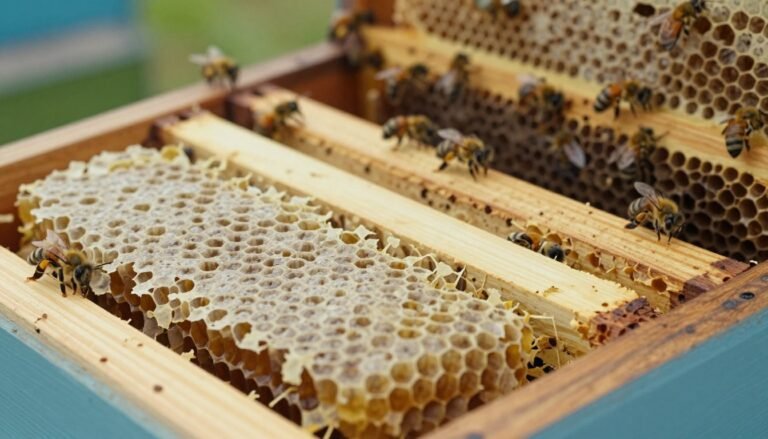
Bees patrol comb and remove moth eggs and young larvae, so a strong colony protects its supers better than any storage method. For short gaps between flows this is usually the best choice. It also keeps the comb warm and ready for the next flow.
- Match comb to bees. A colony can guard only what it covers. If a colony fills one deep and a super, a stack of three empty supers above it is an open invitation to moths at the top.
- Only strong, healthy colonies. Weak or queenless colonies can’t defend extra comb. Supers from a colony with brood disease shouldn’t go onto another colony at all. For comb from a colony that died, see reusing frames from a dead colony.
- Watch the dearth. The Honey Bee Health Coalition warns that robbing can begin when beekeepers work hives during periods of reduced resources. Add or swap supers quickly during a nectar gap, and reduce entrances on colonies carrying extra boxes.
Getting Wet Supers Cleaned and Dried
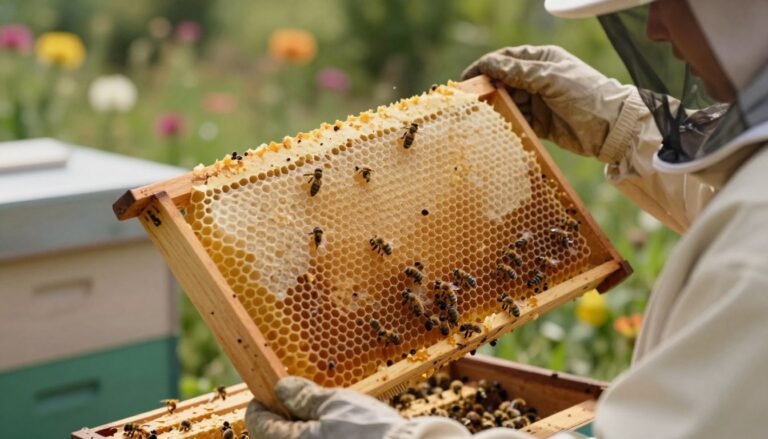
A “wet” super comes straight off the extractor with honey still on the comb. Stacked and closed that way, it drips and can grow mold. It also draws robbers the moment anyone opens the shed door. The standard fix is to let the bees clean it:
- Place wet supers back on strong colonies in the evening, when foraging slows. That reduces robbing.
- Put them on top of the colony under the normal covers. Give each colony no more than it can cover.
- Take them off once the comb is dry, often after a day or two. An escape board clears the bees without shaking.
Avoid putting wet supers out in the yard for any colony to rob. It starts robbing, and it moves honey, and anything in it, between colonies. The Honey Bee Health Coalition lists feeding colonies directly, not through open or barrel feeding, among its practices to prevent European foulbrood.
Option 2: Off-Hive Storage That Breathes
If the supers have to come off, sort the frames first. BeeAware notes that cells with a history of honey storage resist wax moths better. The frames that get eaten are the ones with pollen, brood or cocoons.
| Frame | Summer risk off the hive | What to do |
|---|---|---|
| Clean, dry super comb, honey only | Low | Crisscross stack in light and air |
| Super comb with a few pollen cells | Medium | Freeze first, or keep it on a colony |
| Super comb the queen laid in | High | Treat as brood comb. See when to retire honey frames |
| Brood comb or heavy pollen | Highest | Freeze and seal, or give to a colony. Render very old comb. See how often to replace old brood comb |
For the clean super comb, set up storage with airflow and light:
- Crisscross the boxes. Turn each super 90 degrees to the one below so light and air reach every level.
- Raise the stack off concrete or damp ground on a pallet or rack. Keep it under a roof, out of the rain.
- Add a fan and a light if you’re storing indoors. BeeAware recommends an oscillating fan and a constant light source for indoor comb storage.
- Screen the openings of an open stack with hardware cloth if mice or birds can reach it. Keep it away from where the colonies are, so the stack doesn’t draw robbers.
Don’t seal damp comb in plastic tubs or bags in summer. Trapped moisture grows mold, and any moth eggs already in the comb hatch in the dark, still air that moths like best.
Freezing, B402 and What to Avoid
Freezing kills every wax moth stage. BeeAware puts the threshold at below −7°C (about 19°F) for 4 to 5 hours, counted from when the comb itself reaches that temperature. The Mississippi State University Extension guide to small hive beetle advises bagging supers and freezing them for at least 48 hours to kill beetle eggs and young larvae. After thawing, keep the comb in a closed container or back on the bees, or new moths will lay on it.
B402 (Certan) is a Bacillus thuringiensis product sprayed onto empty comb before storage. Its maker, Vita Bee Health, announced in 2020 that the U.S. EPA had approved it for beekeeping use. According to the maker, one treatment usually protects comb until the following season. Use it only on empty stored comb, exactly as the label directs.
What to avoid:
- Paradichlorobenzene (PDB) crystals. PDB dissolves into wax and moves into honey later. Swiss food-control testing reported by Bogdanov and colleagues in the Journal of Apicultural Research (2004) found PDB in about 30% of Swiss honeys, and 13% of those were over the Swiss tolerance limit. BeeAware advises avoiding chemical treatments of stored comb because of the risk of contaminating honey. We don’t recommend PDB for supers at all.
- Naphthalene mothballs. They are never appropriate on bee equipment.
- Leaving extracted supers outside. This attracts robbing and spreads disease, as described above.
Chemical treatments should be avoided due to the high risks of contaminating honey products and the honey bee colonies.
Weekly Checks for Stored Supers
Summer storage isn’t something you set up once and forget. Lift the top box of each stack once a week, and pull a frame or two from the middle. Look for:
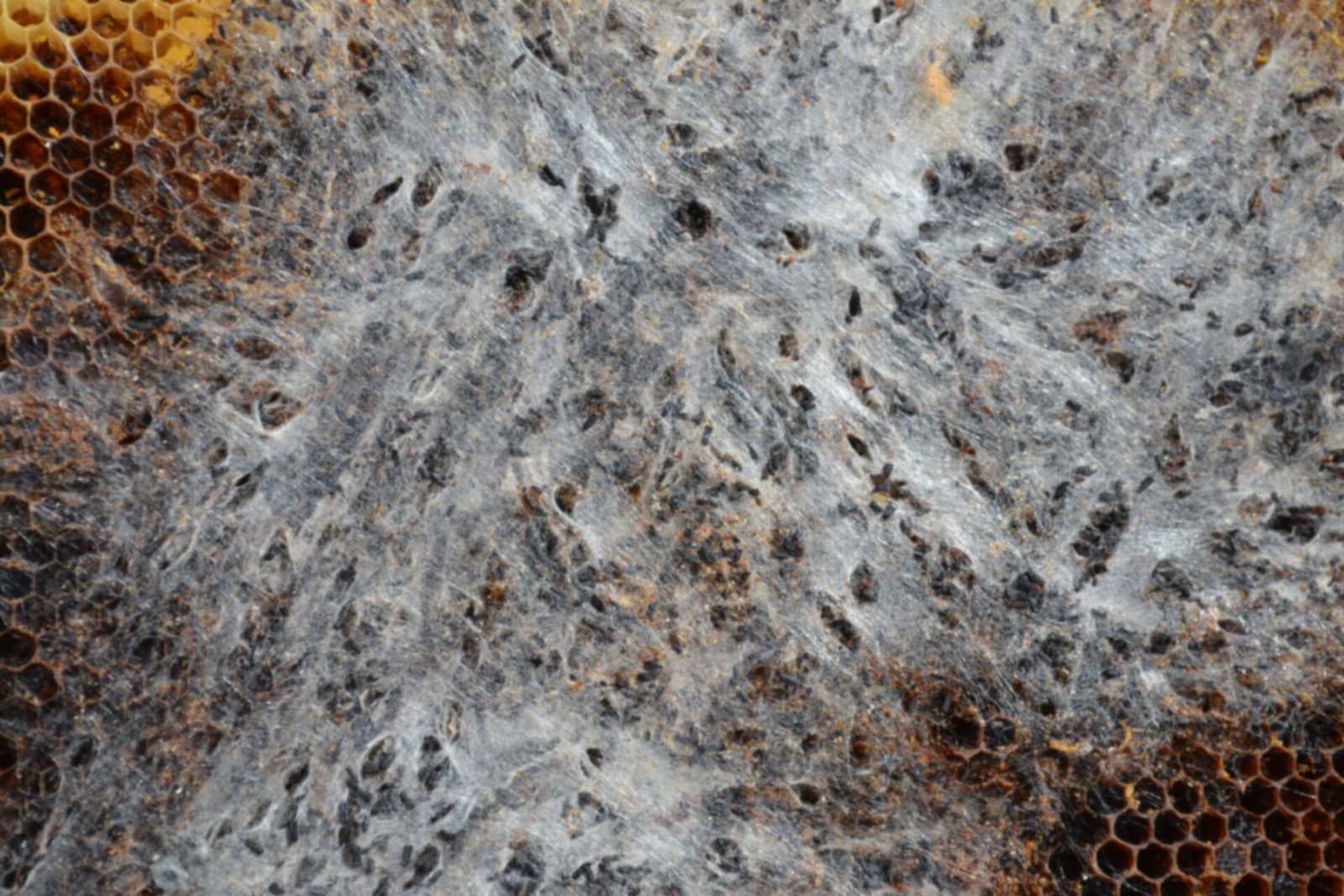
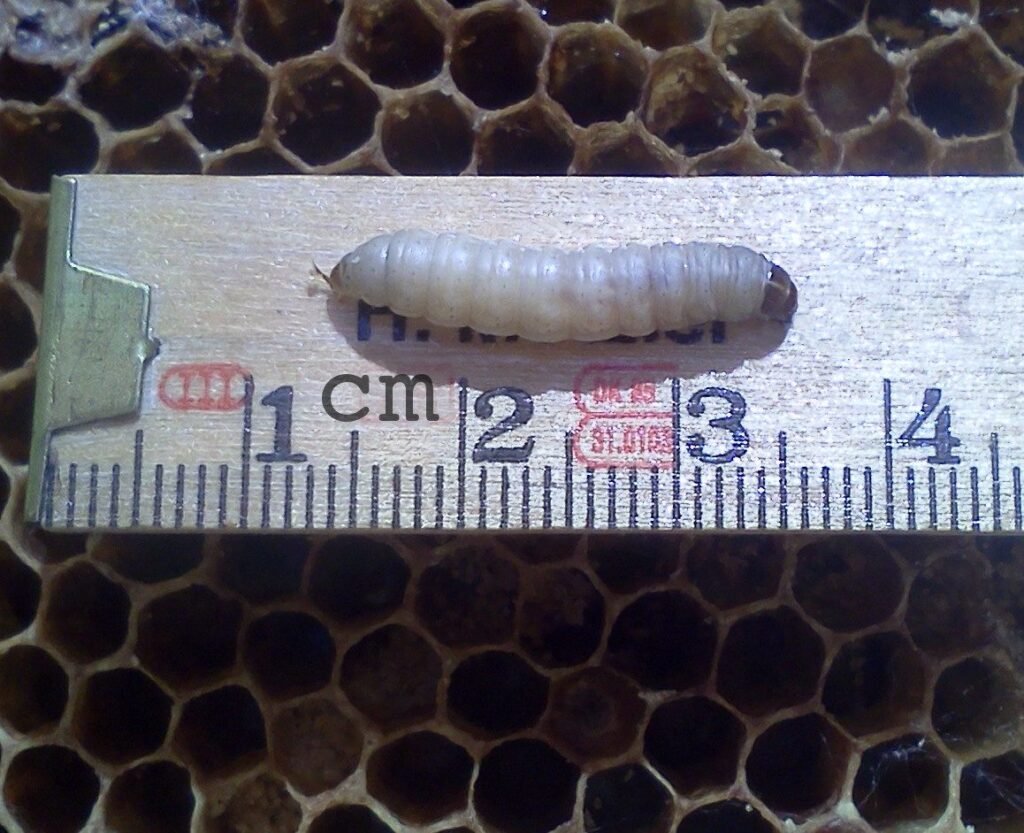
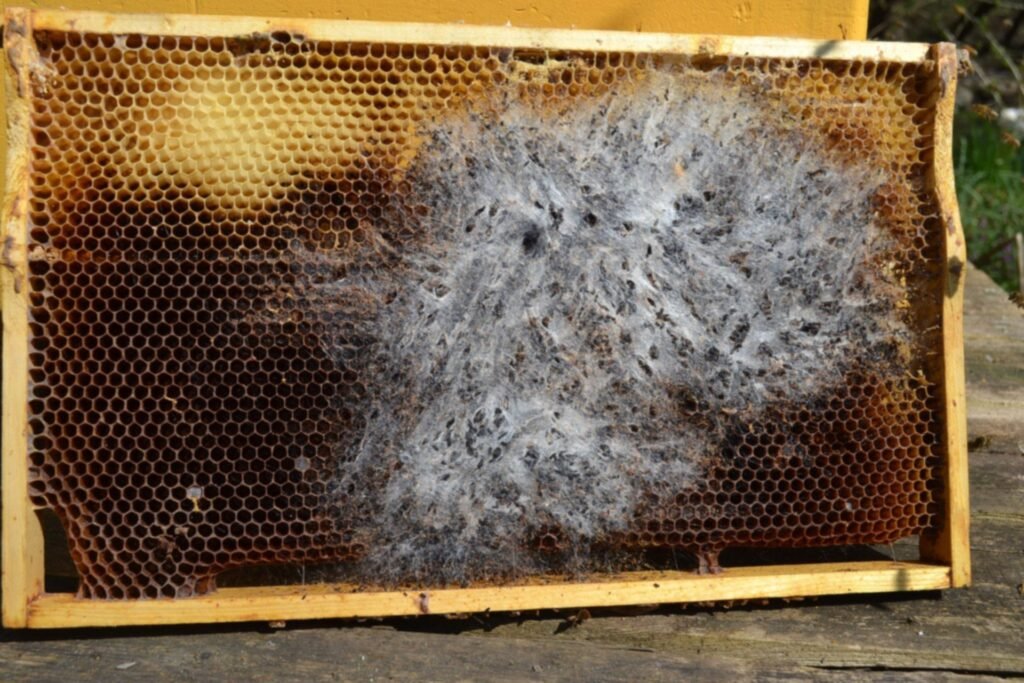
- Silk tunnels, webbing and dark pellet droppings. These are the first signs of wax moth larvae. The Honey Bee Health Coalition’s field signs are webbing tunnels with black droppings, and holes tunneled through the wax, usually in a straight line.
- Slimy, fermenting honey or a sour, rotting smell. That’s a sign of small hive beetle larvae. Mississippi State Extension explains that a yeast carried by the beetle ferments honey into a slime bees won’t clean up. It also advises taking no more honey than you can extract within 48 hours.
- Mold or damp comb. Improve airflow, and put the comb back on a colony to be cleaned.
- Mouse droppings or chewed comb in a stack that isn’t closed at the base.
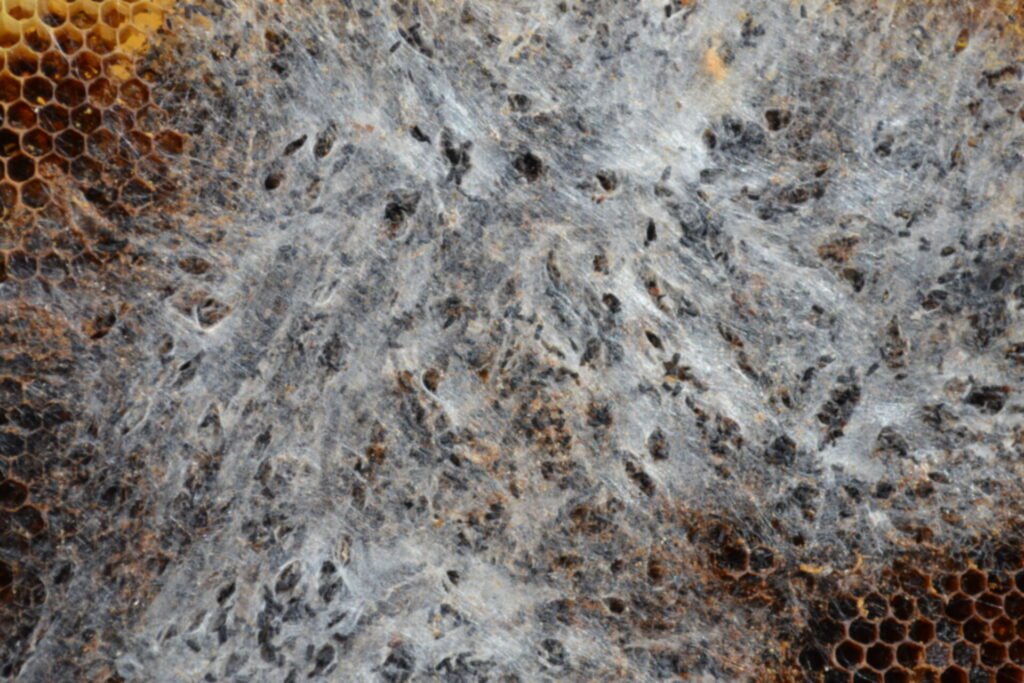
Any frame with active larvae should be frozen straight away. Then either return it to a strong colony to clean up, or render the damaged comb.
Between Flows in the Northern Plains
In eastern North Dakota, the Red River Valley and western Minnesota, crops like canola, sweet clover, alfalfa and sunflower bloom through summer, and the gaps between them are short. That changes the storage question:
- Canola comes off early. Canola honey is high in glucose and can granulate in the comb, as Honey Bee Suite explains. Many beekeepers pull and extract it soon after capping. The extracted supers then go straight back onto colonies for the next flow, which is the best storage there is.
- Hot sheds are the main risk. A steel shed in July is the wax moth’s ideal nursery. Store clean super comb in the most shaded, airiest spot you have, and keep anything with pollen on the bees.
- Small hive beetles are less established here, because northern winters interrupt their soil-pupation stage. They do arrive with migratory colonies and package bees, so check stored supers anyway.
- After the last flow, storage becomes a winter question. See storing drawn comb without a freezer for using the cold.
Before the supers go into storage, see cleaning the extractor so the equipment is ready for the next flow.
Frequently Asked Questions
Can I leave empty supers on the hive between honey flows?
Yes, on strong colonies. It’s usually the safest place for drawn comb in summer, because bees remove moth eggs and larvae. Give each colony only as much comb as it can cover, and don’t add empty supers to weak colonies.
Should I store honey supers wet or dry?
Dry, in summer. Wet supers stacked in storage attract robbers and can ferment or mold. Let bees clean them on strong colonies for a day or two, put them on in the evening to limit robbing, then store the dry comb.
How fast can wax moths ruin stored supers in summer?
Fast. BeeAware reports that eggs hatch in 3–5 days at 29–35°C and the full life cycle takes just over three weeks in warm conditions. Comb with pollen or brood history can be badly damaged within a few weeks.
Are moth crystals safe for honey supers?
We don’t recommend them. Paradichlorobenzene is absorbed by beeswax and migrates into honey. Swiss testing found residues in about 30% of Swiss honeys. Naphthalene mothballs should never be used on bee equipment.
What is B402 Certan and does it work on supers?
B402 (Certan) is a Bacillus thuringiensis spray that targets wax moth larvae. It is applied to empty comb before storage. Its maker reports EPA approval for beekeeping use and says one treatment usually lasts until the next season. Follow the label.
Do honey-only supers need protection between flows?
Less than brood comb. BeeAware notes that honey-storage cells resist wax moths better. The Honey Bee Health Coalition says comb used only for honey storage doesn’t need protection, although good air circulation helps. Pull out any frame with pollen or brood history, and check stacks weekly in hot weather.
The Bottom Line
Between flows, keep drawn supers on strong colonies whenever you can. Anything that comes off should be cleaned by the bees and dried, then sorted and stored where light and air move through it. Freeze comb with pollen or brood history. Skip PDB, and check stacks weekly until the next flow or until cold weather takes over.
.jpg)

