
Reviewed by Sofia T. · Last Updated September 24, 2026 · How we review
You can estimate brood comb age from four clues: color, how much light passes through it, weight, and how thick the cell walls look. Only a date written on the frame tells you the actual age. New comb is white or pale yellow. After bees are reared in it, it turns yellow-brown, then brown, and finally close to black and opaque. Old comb is also noticeably heavier. The inside of each cell narrows as cocoons build up, while the spacing between cells barely changes. So a ruler held across ten cells, the usual way cell size is measured, is a poor gauge of age. When you can’t read light through a comb, that is the most practical sign it’s due for replacement.
This guide is about identification: reading the age and condition of a comb in your hand. For the replacement schedule, see how often to replace old brood comb.
Key Takeaways
- Comb goes from white to yellow to brown to nearly black as bees rear brood in it. Cocoons, larval droppings, pollen and propolis cause the darkening.
- Color is a rough clock. Heavily used comb can turn dark within a single season, so darkness alone doesn’t give you a number of years.
- The light test is the most useful single check. When a comb held up to the sky no longer lets light through, the Honey Bee Health Coalition treats it as due for replacement.
- Old comb is heavy. In one University of Georgia study, old deep brood combs averaged 592 g with the frame, against 368 g for new ones.
- Cells shrink on the inside, from 4.9 mm to 4.6 mm across in that study, while cell spacing stays nearly the same. A ten-cell ruler measurement won’t reveal age.
- Writing the year on the top bar is the only reliable record. Start dating frames the day they go in.
Table of Contents
Why Brood Comb Changes as It Ages
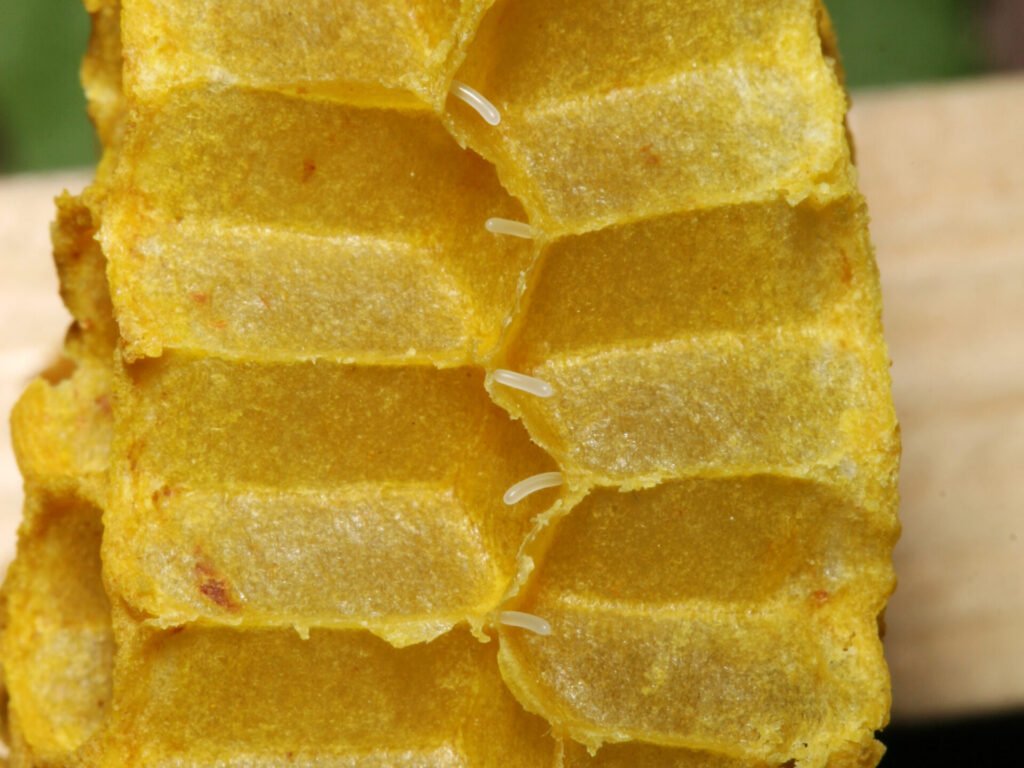
A worker larva spins a silk cocoon before it pupates. The cocoon stays stuck to the cell walls and base after the adult emerges, along with the larva’s droppings. Nurse bees clean and polish the cell, and the queen lays in it again about three weeks later. Each generation adds another layer.
As comb used for brood rearing ages it becomes darker, almost black, and more brittle because of accumulated faecal material, propolis and pollen.
The same paper cites materials research showing that, as silk builds up, comb changes from plain wax into a silk-reinforced composite. That’s why melting old brood comb leaves so much dark residue and gives back comparatively little clean wax.
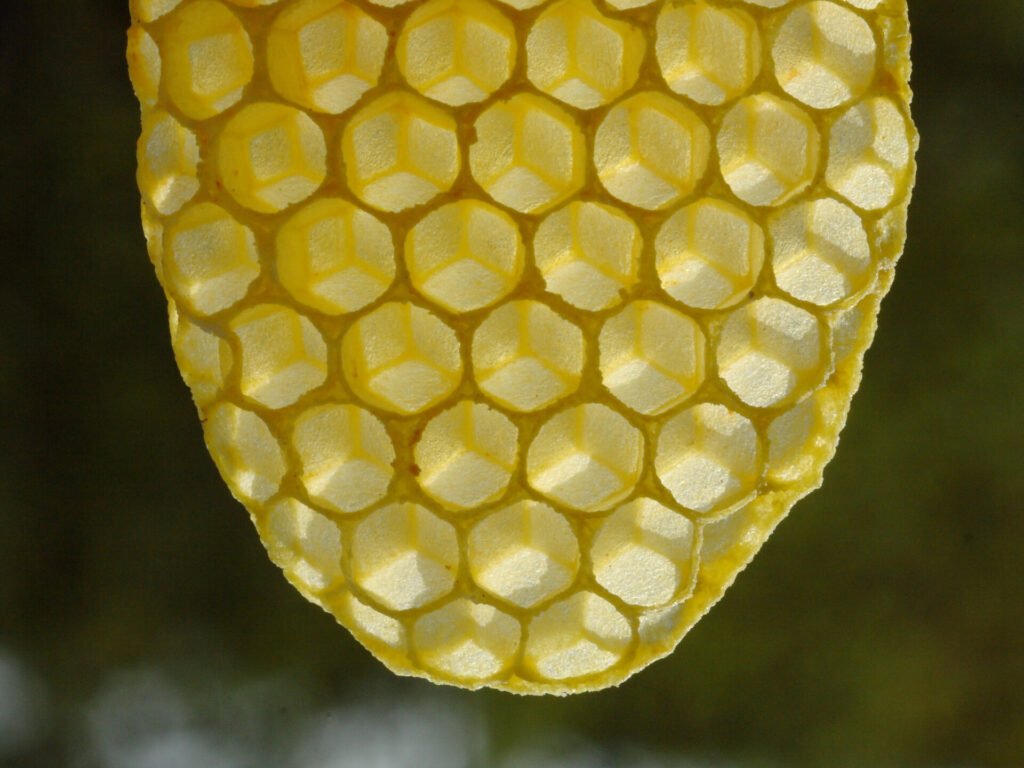
Comb Color Stages, From White to Black
The BeeMD, a bee health identification tool written by apiculturist Dewey Caron and colleagues, describes comb darkening from white or light yellow to brown and eventually black with use. Use the stages below to read comb history, not to put an exact age on it:
| Color | What it usually means | Action |
|---|---|---|
| White to very pale | New comb, no brood reared yet | Date the top bar now |
| Even yellow | Used for food storage. Pollen stains comb yellow without any cocoons | Good comb. It may still be young |
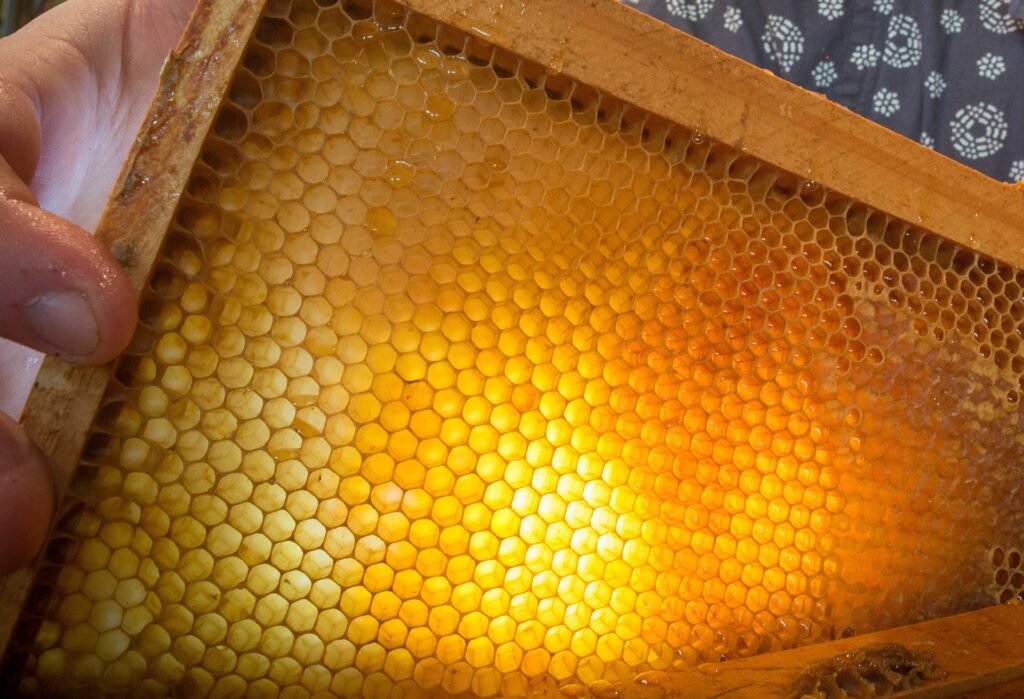
| Honey-brown, light still shows through | A few brood cycles in | Keep in rotation |
| Dark brown, light only in patches | Many brood cycles in | Move toward the front of the rotation queue |
| Near-black and opaque | Heavily used brood comb, thick cocoon layers | Due for replacement |
Two cautions. First, color tracks how many brood cycles the comb has had, not the calendar. A frame in the middle of a busy brood nest darkens much faster than an outer frame that mostly holds honey. Second, dark comb isn’t diseased comb. The Georgia paper notes that swarms are more attracted to older comb. Darkness tells you about age and residue build-up, not infection. For disease signs, look at the brood itself.
The Light Test
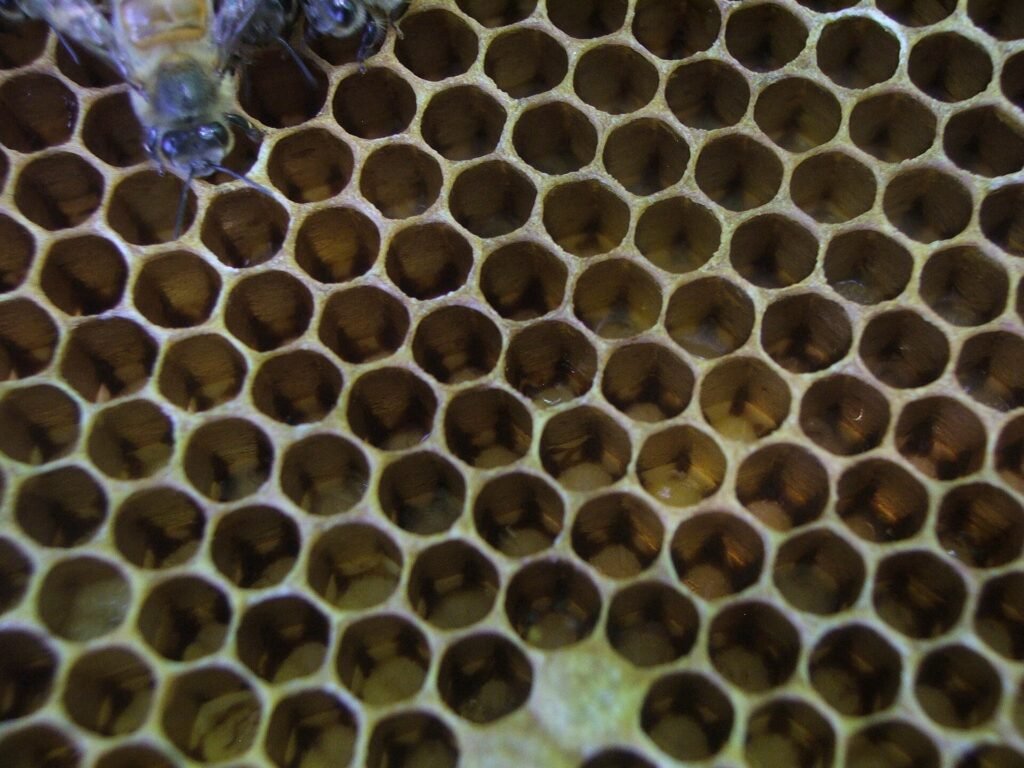
Take an empty frame with no honey or brood, and hold it up to the sky or a bright window. New and medium-aged comb glows amber, and you can see the hexagons. Old brood comb looks solid black. The Honey Bee Health Coalition’s hive health guide uses this as its trigger for new beekeepers: replace comb when a frame held up to sunlight shows no light coming through.
The test works because the cell bases and walls thicken with each cocoon layer. It takes seconds during a spring inspection, and it also works on honey-super comb. Our guide to rotating honey frames out of service uses the same check.
Weight: Old Comb Is Heavy
At the start of their study, Berry and Delaplane weighed empty deep Langstroth brood combs, including the wooden frame. Honey had been robbed out and pollen washed out first. New combs averaged 368.2 g and old combs 591.5 g, about 60% heavier. The extra weight is silk, droppings and debris, not stores.
You can’t compare your frames directly with those figures, because frame wood, wiring and foundation all vary. The comparison works within your own equipment. Weigh an empty, freshly drawn frame on a kitchen scale, then weigh an empty old one of the same type. A big difference means years of brood rearing.
Cell Size and Cocoons: What a Ruler Misses
This point is widely misunderstood. Beekeepers usually measure cell size by laying a ruler across ten cells, which measures the spacing from one cell to the next. Old comb doesn’t change that spacing, because the wax walls don’t move. It shrinks the inside of each cell as cocoon layers line the walls.
| Measurement (Berry & Delaplane, 2001) | New comb | Old comb |
|---|---|---|
| Inner cell diameter | 4.9 mm | 4.6 mm |
| Cells per 10 cm (spacing) | 18.3 | 18.5 |
| Deep comb weight with wooden frame | 368.2 g | 591.5 g |
| Weight of newly emerged bees | 106.3 mg | 98.2 mg |
To see the lining yourself, cut across a few cells of a comb you’re retiring anyway. In old comb, the walls look thick and papery. A 2025 review in the journal Insects describes old cells becoming rounder inside rather than sharply six-sided. When old brood comb is melted down, the cocoons stay behind as a dark mass. Older studies cited in the Georgia paper found worker weight dropped by about 8% to 19% after 68 to 70 generations had been reared in the same comb.
A caution about sources: a widely shared 2021 PLOS ONE paper reporting cell measurements by comb age was retracted in 2022. We don’t use its figures.
Other Clues: Drone Cells, Brittleness and Damage
- Drone cells. Larger, raised cappings in patches. The Honey Bee Health Coalition suggests replacing comb with more than 10% drone cells. For new beekeepers it gives 15% as the threshold. See foundation vs foundationless brood boxes for why drone comb builds up.
- Brittleness and damage. Berry and Delaplane describe old brood comb as more brittle. Comb that cracks when handled, has been gnawed, or has pulled loose from the wires rarely gets repaired properly.
- Hardened old foundation. Stored sheets of foundation that were never drawn go stiff and brittle. The UK National Bee Unit notes these can be warmed to make them usable again. That is a problem of foundation age, not comb age.
- History you can’t see. Residues from wax-persistent varroa treatments and disease spores don’t show in color. That’s why dating frames and keeping a treatment log matter.
A Five-Point Comb Age Scorecard
Score each empty brood frame at your spring inspection. Two or more “old” answers put the frame in this year’s replacement group. A yes to the last question overrides everything else.
| Check | Young/serviceable | Old |
|---|---|---|
| Color | White to honey-brown | Dark brown to black |
| Light test | Light passes through | Opaque |
| Weight vs a new drawn frame of the same type | Similar | Clearly heavier |
| Date on the top bar | Within your rotation cycle | Past it, or no date |
| Disease history or heavy drone comb | No | Yes (replace regardless) |
Once a frame is marked for replacement, the schedule guide covers when to pull it. Our frame numbering guide covers marking systems. Frames from a colony that died need the separate checks in reusing frames from a dead colony.
Frequently Asked Questions
How can you tell how old brood comb is?
Combine the clues: color (white, then yellow, brown and black), the light test, weight compared with a new frame of the same type, and the thickness of the cell walls. They show how much brood the comb has reared. They don’t give you exact years. For that, you need a date written on the top bar.
Why does brood comb turn black?
Each larva leaves a silk cocoon and droppings in its cell, and bees track in pollen and propolis. Berry and Delaplane’s paper lists fecal material, propolis and pollen as the main causes. Layers build up with every brood cycle, so the busiest brood frames darken fastest.
Is dark brood comb bad for bees?
Not immediately. Bees readily use it, and a Georgia study found slightly higher brood survival in old comb. The same study found less brood overall and lighter young bees on old comb. Old wax also holds chemical residues, so very dark comb should be phased out on a schedule.
Does old comb make cells smaller?
Yes, on the inside. Old combs in the University of Georgia study had an inner cell diameter of 4.6 mm, against 4.9 mm in new comb. The number of cells per 10 cm was almost identical, because cocoons line the walls rather than moving them.
Can I tell comb age from a photo?
Only roughly. Photo color depends on lighting, and dark comb can form within one busy season. The light test and weighing a frame you can hold are far more reliable, and a written date beats both.
Does old brood comb darken honey?
It can. The BeeMD notes that darker cells can darken lighter honey stored in them. That’s one reason old brood comb shouldn’t be moved up into honey supers.
The Bottom Line
Read brood comb age from several clues together: color, light, weight and cell walls. Don’t treat color alone as an age. An opaque, heavy, near-black frame has earned its retirement whatever its date. Write the year on every new frame from now on, and next time you won’t need to guess.


.jpg)
