Reviewed by Sofia T. · Last Updated September 24, 2026 · How we review
Plastic foundation is tougher, needs no wiring, survives the extractor and wax moths, and can be reused for years. Its big weakness is that bees are slower to build on it unless it’s well coated with beeswax and placed next to brood. Wax foundation is what bees accept most readily, and it’s the only choice for cut-comb honey. But it’s fragile, it needs wire support, it sags in heat and cracks in cold, and commercial wax can carry miticide residues. Choose plastic for extracting supers and low-maintenance brood boxes. Choose wax for packages, swarms and comb honey. Whichever you use, keep one material per box.
This is the general decision. If you’ve already chosen plastic and are deciding how much wax you need on it, see waxed vs unwaxed plastic foundation.
Key Takeaways
- In a SARE-funded field trial, packages started on wax foundation were about five times further along than packages on plastic. Swarms were about three times further along.
- The same trial found plastic placed between brood frames was drawn as readily as wax. Placement closes most of the gap.
- Plastic wins on durability, extraction, wax moth recovery and setup time. Wax wins on acceptance and comb honey.
- Commercial beeswax foundation is widely contaminated with miticide residues, so “natural” doesn’t automatically mean clean.
- In a northern climate, wax sheets turn brittle in the cold and new wax comb can sag in summer heat waves. Plastic doesn’t care.
- Don’t mix plastic and wax sheets in one box. Bees overbuild the wax and ignore the plastic.
Table of Contents
The Two Materials Side by Side
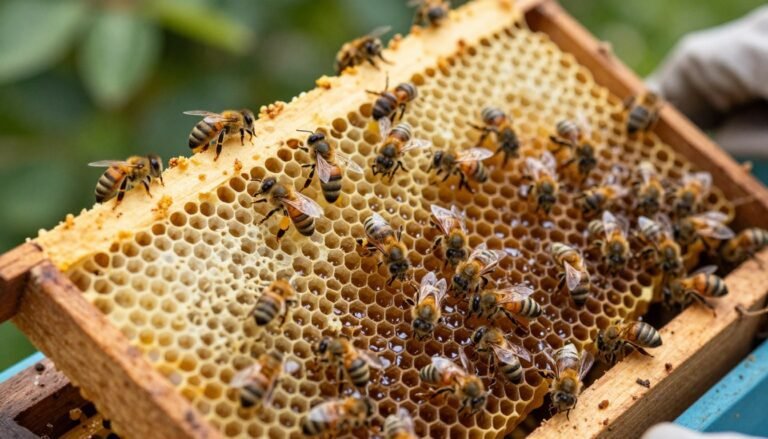
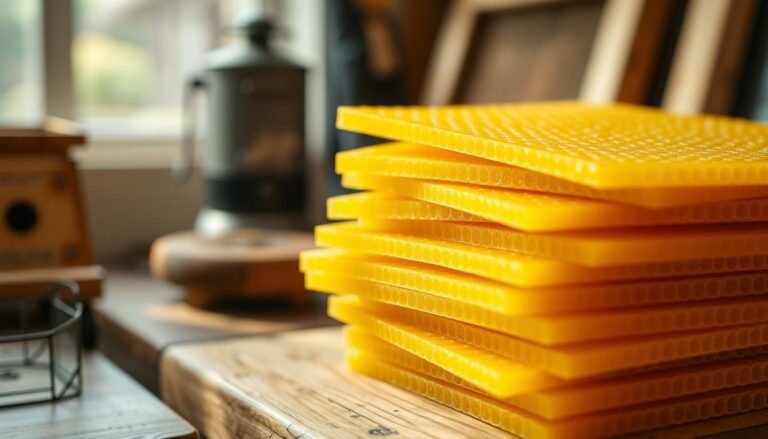
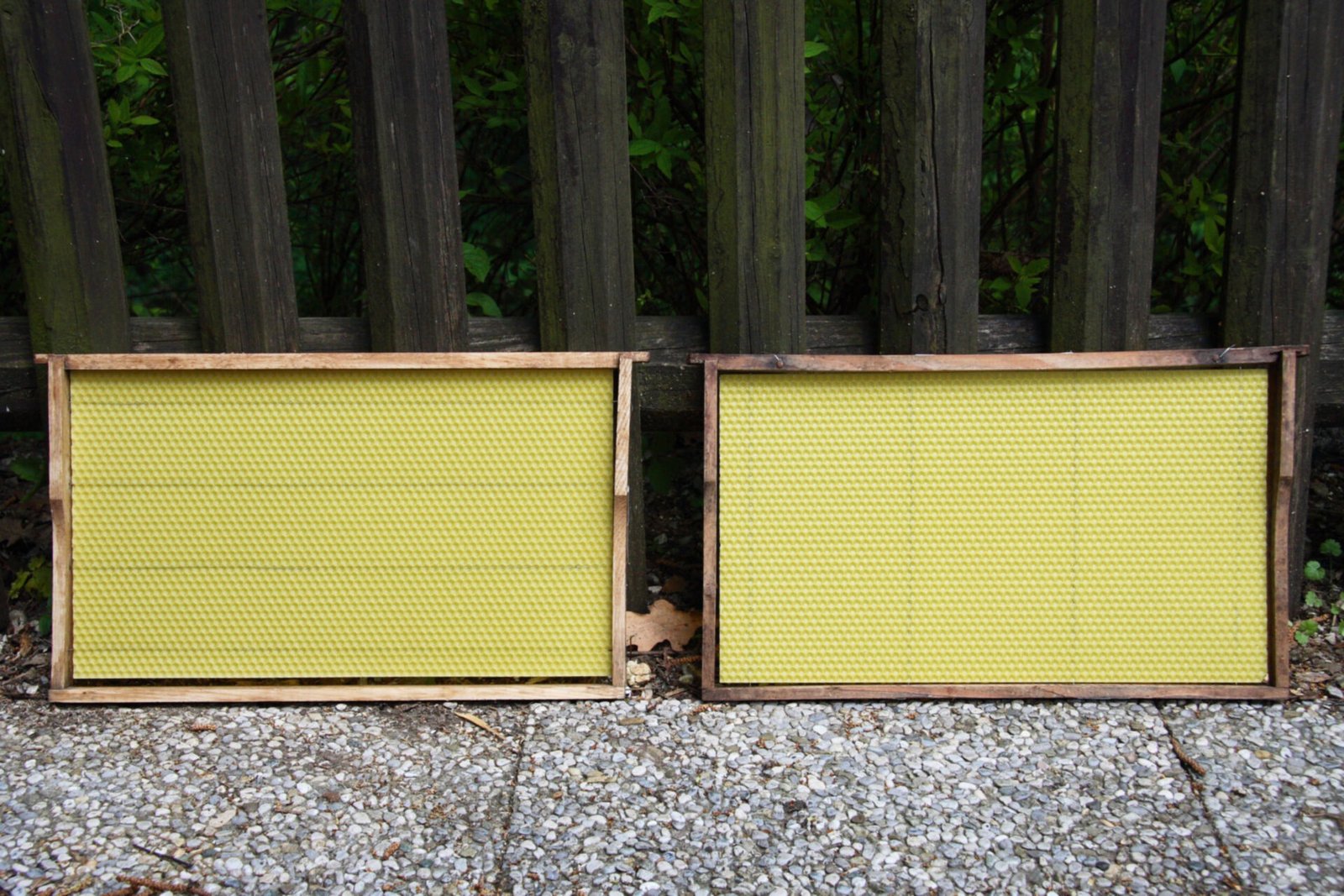
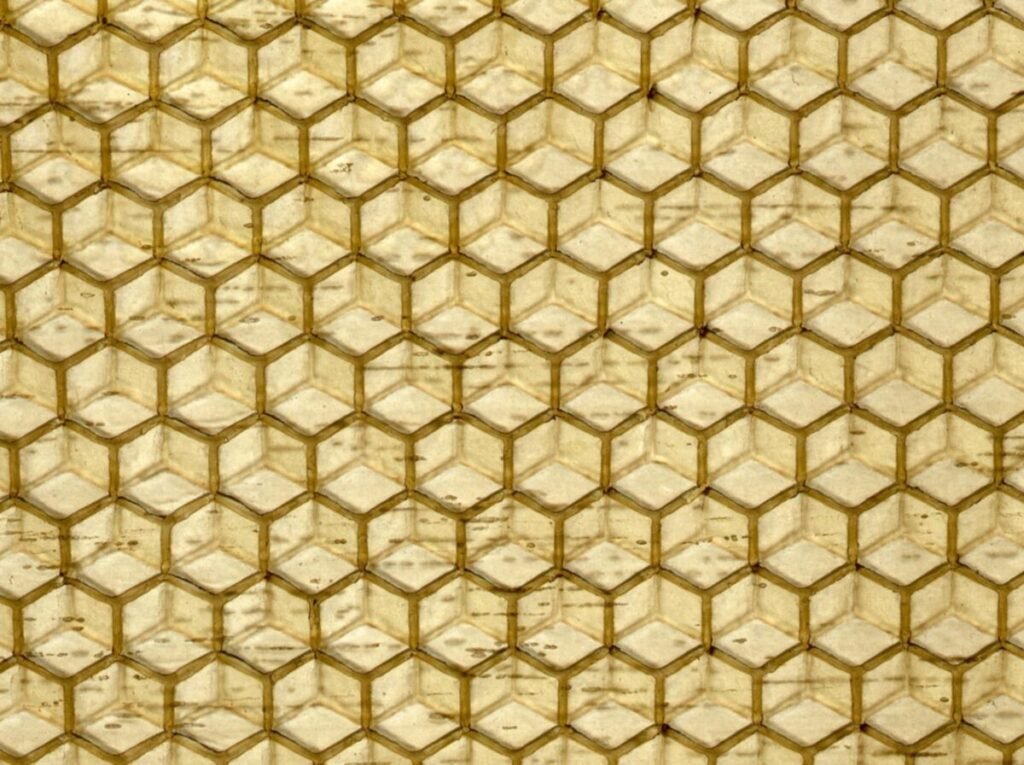
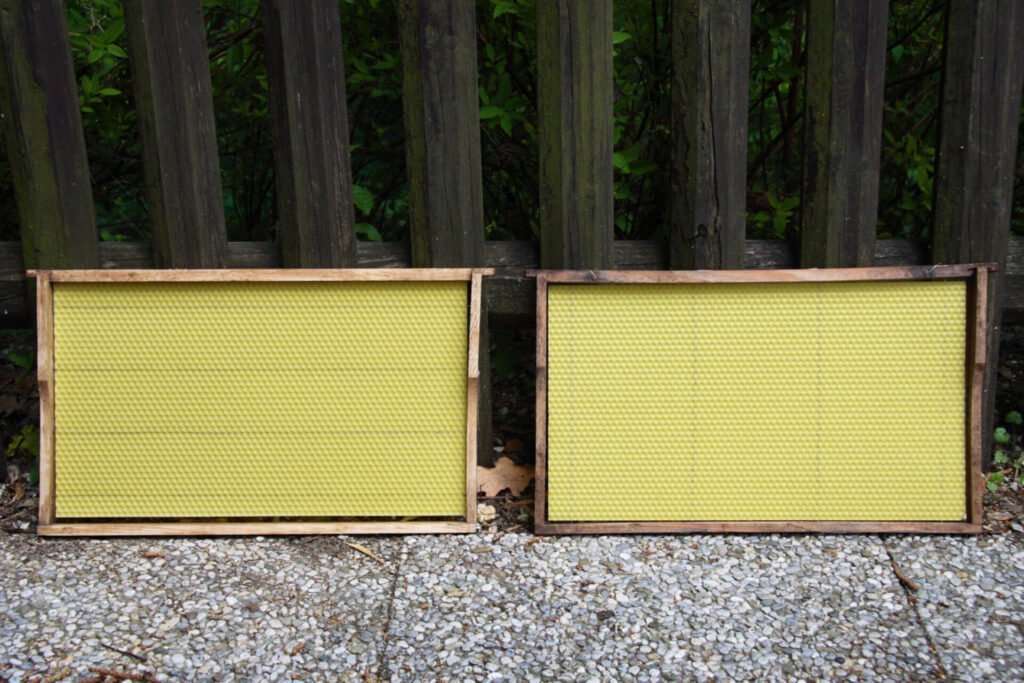
Foundation is the thin sheet in a frame, embossed with a hexagon pattern, that bees build their comb on. It keeps comb straight and mostly worker-sized. The two common materials behave very differently.
| Factor | Plastic foundation | Wax foundation |
|---|---|---|
| Bee acceptance | Slower, especially away from brood; depends heavily on wax coating | Readily accepted |
| Installation | Snaps into grooved frames; no wiring | Needs wired sheets or horizontal wire, and careful handling |
| Extractor strength | Very strong | Good once drawn and wired; new comb can blow out |
| Heat | Doesn’t sag | New comb can sag or collapse in hot weather |
| Cold | Unaffected | Brittle below freezing; cracks if handled cold |
| Wax moth damage | Base survives; scrape and recoat | Whole sheet can be destroyed |
| Comb renewal | Scrape back to the base and reuse | Cut out and replace the sheet |
| Cut-comb honey | Not usable | Thin unwired sheets required |
| Cell-size flexibility | Fixed | Bees can reshape somewhat |
Where Wax Foundation Wins
Acceptance, especially for new colonies
The best field comparison available to hobbyists is a USDA SARE-funded trial by Missouri beekeeper Grant Gillard in 2006–07. He scored comb drawn on plastic against wax, with wax set at 100. The gaps were largest where it hurts most:
| Setup | Plastic | Wax |
|---|---|---|
| Packages started on foundation | 20 | 100 |
| Swarms hived on foundation | 35 | 100 |
| Box of foundation stacked on an existing colony | 10 | 100 |
| Single sheets placed between brood frames | 100 | 100 |
| Honey super added on top | 30 | 100 |
Source: SARE project FNC06-595. This was one beekeeper’s colonies, not a replicated university study, so read the numbers as directional.
“It is a horrible, up-hill battle to establish packages and swarms on plastic foundation.”
Grant F. C. Gillard, final report for SARE project FNC06-595
A colony that is slow to draw comb also gets crowded. In the same trial, four colonies topped with boxes of plastic swarmed, and Gillard attributed it to congestion below.
Comb honey and natural comb
Cut-comb and chunk honey need thin, unwired wax, because the comb gets eaten. Plastic is out. See our cut comb honey production guide. Some beekeepers also simply prefer no plastic in the hive. The research on plastic particles in hives is young, and our summary of a study that found microplastics in US hives covers what it did and didn’t show.
Where Plastic Foundation Wins
- Durability. Gillard wrote that plastic all-in-one frames, “unless they warp abnormally, are good for years and years.” Comb built on plastic stands up to an extractor and rough handling.
- No wiring. Sheets snap into grooved frames in seconds. Wax needs wired sheets or cross-wires to hold its shape. Our guide to foundation installation mistakes shows where that goes wrong.
- Recovery from wax moths and comb renewal. When moths destroy the comb or you retire dark comb, you scrape plastic back to the base, recoat it and put it back in service. Our guide to scraping frames without damaging foundation covers the method. Wax sheets are simply lost.
- Inspection visibility. Black plastic makes eggs easier to see. Gillard found color made no difference to the bees.
Plastic inserts or all-in-one plastic frames?
Plastic comes two ways: sheets that snap into wooden frames, or one-piece molded frame-and-foundation units. In the SARE trial the bees showed a slight preference for the wooden frames with plastic inserts, and the costs were nearly identical, $1.80 against $1.83 per frame in 2007 prices. One-piece frames are faster to put into service. Wooden frames let you swap a damaged sheet without replacing the whole frame.
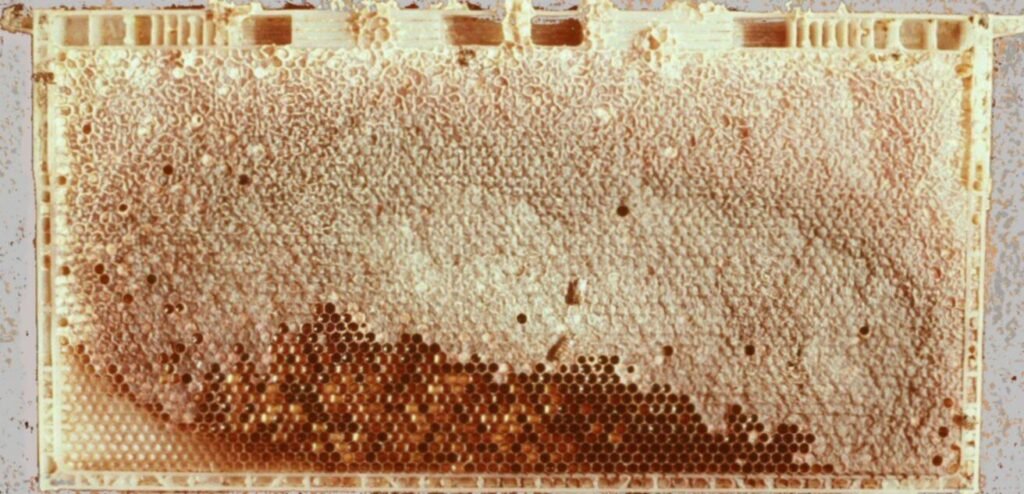
The catch is management. Plastic needs a generous beeswax coat, and new sheets should go beside brood rather than in a box stacked on top. Our guide to bees refusing to draw foundation covers that in detail.
What Each Costs
Prices below were checked on the makers’ pages on September 24, 2026, for deep sheets (8-1/2″ for 9-1/8″ frames), and will change.
| Product | Pack | Listed price | Per sheet |
|---|---|---|---|
| Mann Lake wired beeswax foundation with hooks, deep | 10 sheets | $34.99 | $3.50 |
| Mann Lake Waxed Rite-Cell plastic, deep | 10 sheets | $25.99 | $2.60 |
| Acorn Pierco plastic, deep, black, standard wax | 100 sheets | $110.25 | $1.10 |
Sources: Mann Lake wired foundation, Mann Lake Waxed Rite-Cell, Acorn Pierco. Bulk packs cut the per-sheet cost of both materials.
The bigger cost difference is over time. A plastic sheet can be scraped and reused through several rounds of comb renewal, while a wax sheet is replaced along with its comb. Gillard’s 2007 figures, before labor, had wood frames with wax foundation at $1.71 each and wood frames with plastic inserts at $1.80. Close enough that durability, not sticker price, should decide it.
The Contamination Question Applies to Both
Wax foundation is often chosen as the “natural” option, but the wax has to come from somewhere. In a Penn State and USDA survey of hives in 23 states, 98% of comb and foundation wax samples were contaminated, with the miticides fluvalinate and coumaphos reaching up to 204 and 94 ppm (Mullin et al., PLoS ONE, 2010). Beeswax absorbs these fat-soluble chemicals, and recycled commercial wax carries them along.
Plastic foundation carries a beeswax coating too, so the same question applies to its coat, just in smaller quantity. The practical answer is the same for both. Where you can, coat or make foundation with your own cappings wax from untreated supers. Our guide to rendering cappings wax cleanly explains why cappings are the cleanest wax you have. Also replace old brood comb on a schedule, so residues don’t keep accumulating.
Northern Climate Considerations
In eastern North Dakota and western Minnesota, both temperature extremes affect the choice.
- Cold. Mann Lake won’t ship wax foundation in freezing weather and notes that “wax becomes brittle during freezing weather.” Sheets stored in an unheated garage over winter should warm indoors before you handle them in April. Plastic can be assembled any time.
- Heat. Summer heat waves can soften new, unwired wax comb heavy with nectar. Plastic doesn’t sag. See our guide to fixing sagging comb in hot weather.
- A short season. With a main flow of a few weeks, a colony that hesitates on plastic loses drawing time it won’t get back. That’s an argument for wax, or for well-waxed plastic placed beside brood, when you need comb drawn fast.
Which Foundation for Which Job
| Job | Better choice | Why |
|---|---|---|
| Starting a package or swarm | Wax, or heavily waxed plastic | Acceptance gap is largest here |
| Brood boxes on an established colony | Either; plastic if you value durability | Insert sheets one at a time beside brood |
| Extracting supers | Plastic | Extractor strength, easy reuse |
| Cut-comb or chunk honey | Thin unwired wax | The comb is eaten |
| Minimal plastic in the hive | Wax, or foundationless frames | See our foundation vs foundationless guide |
Many beekeepers use both, with plastic in supers and wax in the brood nest or for new colonies, but not in the same box. The SARE trial confirmed the old advice: in a mixed box, the wax comb was “greatly exaggerated and lengthened” while the plastic sat largely untouched. For the history of how wax foundation became standard, see the history of wax foundation.
Frequently Asked Questions
Do bees prefer wax or plastic foundation?
Wax, especially when the sheets are away from the brood. In one SARE-funded trial, plastic stacked in a box above a colony scored 10 against wax’s 100. Plastic placed between brood frames was drawn as readily as wax.
Is plastic foundation bad for bees?
There’s no evidence that well-waxed plastic harms colonies. Beekeepers have used it for decades. The main cost is slower acceptance. Research on plastic particles in hives is early, so some beekeepers avoid plastic on principle.
Which lasts longer, plastic or wax foundation?
Plastic. It can be scraped back to the base and reused through several rounds of comb renewal. Wax foundation is replaced along with its comb.
Can I mix plastic and wax foundation in the same box?
It’s best not to. Bees build fat, uneven comb on the wax and neglect the plastic, which makes frames hard to remove and inspect.
Which foundation is better for beginners?
Many beginners find heavily waxed plastic easier because it needs no wiring and survives rough handling. If you’re starting from a package, give the bees wax foundation or extra-waxed plastic, and feed until the first box is drawn.
Does wax foundation need wiring?
For brood and extracting frames, yes. Use pre-wired sheets or horizontal wires so the comb doesn’t sag or blow out in the extractor. Cut-comb honey uses thin unwired sheets.
The Bottom Line
Neither material is simply better. Wax gets comb drawn fastest and is required for comb honey. Plastic lasts, extracts well, and survives wax moths and rough handling. Match the material to the job, give plastic a real beeswax coat and a place beside the brood, and don’t mix the two in one box. If you go with plastic, our guide to waxed vs unwaxed plastic foundation covers the coating choice.