Reviewed by Daniel M. · Last Updated September 24, 2026 · How we review
Choose factory-waxed plastic foundation if you want sheets that work out of the box. Then roll on a thin extra coat of your own clean beeswax for any box the bees need to draw quickly. Choose unwaxed only if you’ll coat every sheet yourself before it goes in a hive. Unwaxed is the cheapest per sheet and lets you control where the wax came from. Installed bare, it’s the worst option of all: bees are slow to build on bare plastic. The real choice isn’t waxed or unwaxed. It’s how much beeswax ends up on the sheet, and whose wax it is.
This article is narrowly about the coating. For the broader decision between plastic and beeswax foundation, see plastic vs wax foundation: pros and cons.
Key Takeaways
- Plastic foundation comes in wax tiers, from unwaxed to triple-waxed. Price rises with each coat.
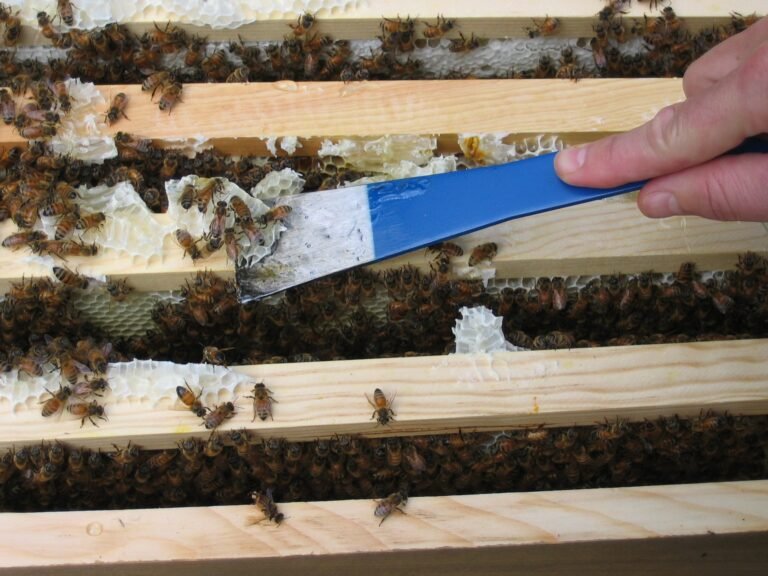
- In a SARE-funded field trial, plastic sheets given extra beeswax with a foam roller were drawn right away, at roughly 48 g of wax per medium sheet. Coating a few frames drew bees onto the rest of the box.
- Unwaxed sheets only make sense if you have clean wax, ideally your own cappings, and will coat them before use.
- One manufacturer argues extra wax is unnecessary and can add contaminants. That’s a real point if you coat with wax of unknown origin.
- Coat thin and even, and do it indoors in a cold northern spring. Wax on cold plastic sets before it bonds.
Table of Contents
What “Waxed” Actually Means
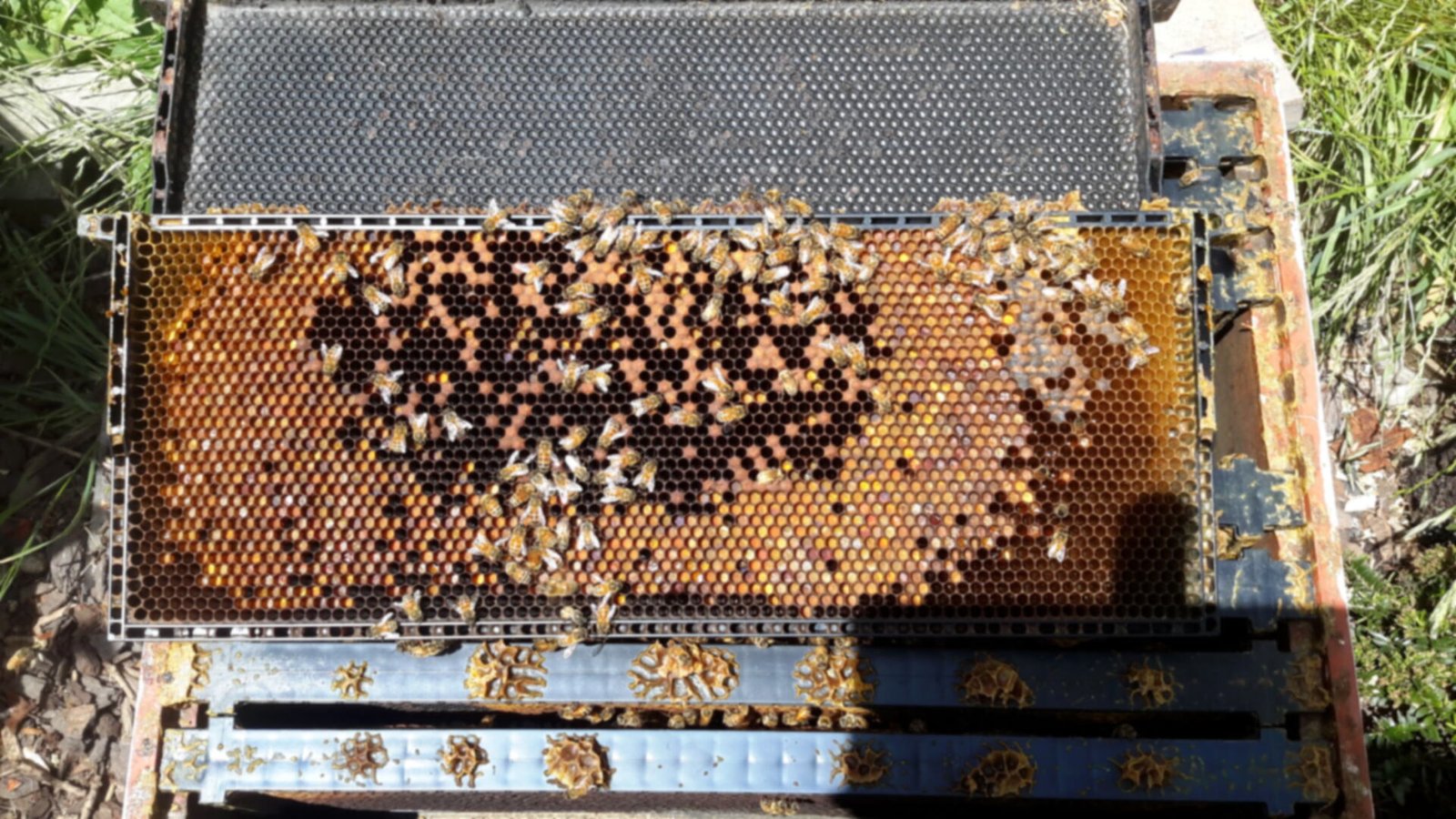
“Waxed” isn’t one product. Manufacturers sell plastic sheets with different amounts of factory-applied beeswax. Prices below were checked on the makers’ own pages on September 24, 2026, and will change.
| Product | Coating | Listed price | Per sheet |
|---|---|---|---|
| Acorn Pierco plastic foundation, medium 6-1/4″, black, 100-pack | Unwaxed | $72.00 | $0.72 |
| Same | Standard wax | $99.00 | $0.99 |
| Same | Double wax | $127.00 | $1.27 |
| Same | Triple wax | $147.00 | $1.47 |
| Mann Lake Waxed Rite-Cell, 8-1/2″ (deep), 10-pack | Waxed | $25.99 | $2.60 |
| Mann Lake Max Wax Rite-Cell, 8-1/2″ (deep), 10-pack | “Nearly triple” the wax of standard Rite-Cell, per Mann Lake | $29.99 | $3.00 |
Sources: Acorn Pierco plastic bee foundations, Mann Lake Waxed Rite-Cell and Mann Lake Max Wax Rite-Cell. Neither maker publishes grams of wax per tier, so compare tiers within one brand, not across brands.
At the medium size, going from unwaxed to triple-waxed roughly doubles the sheet price. What you’re paying for is beeswax and labor.
What the Evidence Says About Extra Wax
The most useful field data comes from a USDA SARE-funded trial by Missouri beekeeper Grant Gillard in 2006–07. He melted his own cappings wax, dipped a 4-inch foam roller in it and rolled it onto plastic sheets. That averaged about 48 g (1.7 oz) per medium sheet and 72 g (2.5 oz) per deep. When only three frames in a super of ten got the extra coat, the report says the bees “immediately jumped on those three frames” and then moved to the neighboring plastic. So you don’t have to recoat every frame in a box. Gillard called added wax a highly beneficial technique, and found black versus white plastic made no discernible difference (SARE project FNC06-595). At the $3.00 a pound he was getting for wax at the time, the extra coat cost 32 to 47 cents per frame.

Not everyone agrees. Premier Bee Products argues that its coated foundation needs no extra wax. Its case is that bees have to remove excess wax to reach their preferred cell dimensions, and that beeswax is “an environmental sponge” for toxins (Premier Bee Products). That’s a manufacturer’s position, not trial data. The contamination point is fair, though. Brushing on wax of unknown origin can add residues along with scent.
The two views fit together better than they look. Extra wax clearly speeds acceptance where bees are reluctant. What’s on your roller matters as much as how much. Wax from your own cappings is the cleanest option most beekeepers have. A SARE-funded study found cappings carried about half the contaminants of commercial foundation (SARE project FS12-261).
When Unwaxed Makes Sense
- You have your own cappings wax. Rendered cleanly, it’s cheap and lower in residues than most bought wax. Our guide to rendering cappings wax cleanly covers the process.
- You’re coating a lot of frames anyway. If you’d add a coat to factory-waxed sheets regardless, paying for the factory coat as well is double spending. Gillard also found a thin factory coating shed sprayed syrup, which only beaded up and rolled off.
- You’re recoating stripped sheets. Plastic that bees chewed bare during a dearth, or that you scraped back to the base, is effectively unwaxed again.
Unwaxed doesn’t make sense if the sheets will go straight into a hive. Bees given bare plastic tend to delay building on it. They may build comb that barely touches the sheet, or put brace comb around it instead.
How to Wax Plastic Foundation Yourself
Step 1: Melt clean wax safely
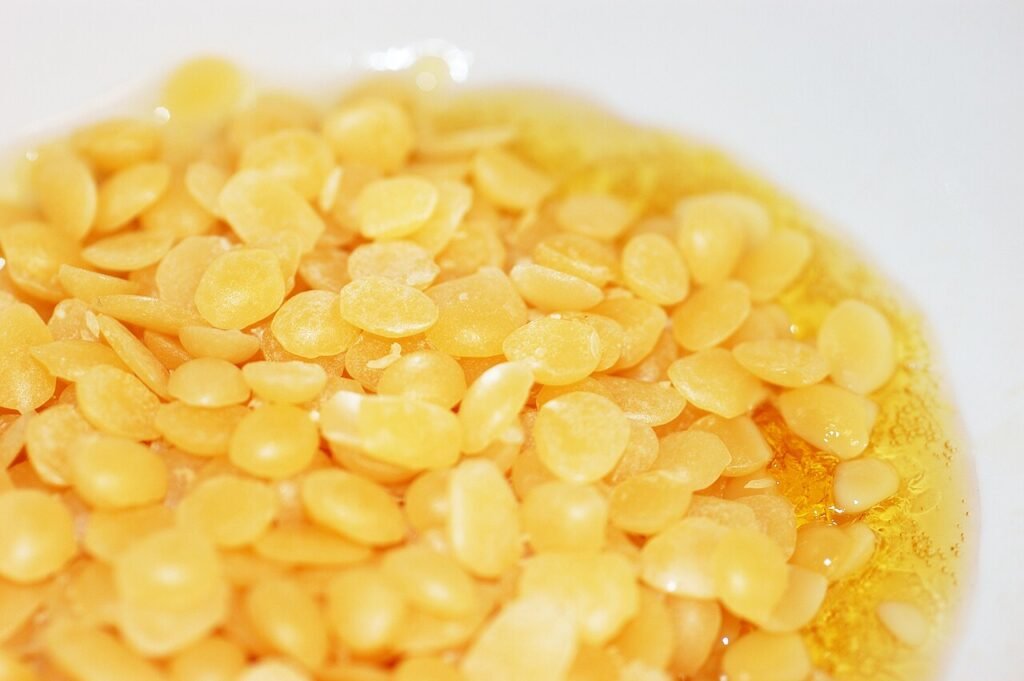
Melt cappings wax in a water bath or a slow cooker with water in it. Never melt it over a direct flame. Beeswax is flammable, and the FAO bulletin says it shouldn’t be heated above 85°C (185°F) (FAO Agricultural Services Bulletin 124).
Step 2: Roll on a thin, even coat
Dip a foam roller briefly, blot the excess on the container edge, and roll both faces of the sheet. Aim to coat the cell bases, not fill them. Blobs of wax can blur the cell pattern.
Step 3: Work warm
Wax sets quickly on cold plastic and then flakes off. In an eastern North Dakota April, do this indoors, not in an unheated garage. Let the sheets warm to room temperature first.
Step 4: Install soon and place well
Freshly coated sheets smell strongest. Chris Moore of Moore Honey Farm, quoted by Lynne Jones of The Bee Supply, prefers coating less than 24 hours before the sheets go on the bees because the wax is soft and aromatic (The Bee Supply). Put coated sheets next to brood where young bees and warmth are. Our guide to bees refusing to draw foundation covers placement in detail.
Which to Choose
| Your situation | Best pick |
|---|---|
| First year, no wax of your own, a few boxes | Factory-waxed (standard or heavier) |
| Package or swarm starting on plastic | Heaviest factory coat plus your own roller coat, or start them on wax foundation or foundationless frames instead |
| Supers going on a strong colony in a flow | Standard factory wax is usually enough |
| You render your own cappings and set up frames in bulk | Unwaxed, coated yourself |
| Recoating stripped or scraped sheets | Your own cappings wax |
Whatever you buy, keep one material per box and seat the sheets properly. Our list of foundation installation mistakes covers the common ones.
For an all-wax alternative, see homemade beeswax foundation sheets.
Frequently Asked Questions
Do I need to add wax to waxed plastic foundation?
Not always. Strong colonies in a flow often draw factory-waxed sheets without help. An extra thin coat helps most for packages, swarms and boxes placed away from the brood.
Will bees draw unwaxed plastic foundation?
Eventually, if they’re strong and need space, but they’re slow and the comb is often poorly attached. Coat unwaxed sheets before use.
How much wax should I add per sheet?
In the SARE trial, a foam roller put on about 48 g per medium sheet and 72 g per deep, with mediums ranging from 40 to 60 g. The researcher called it “not an exact science,” since roller pressure and wax and frame temperature all change the amount.
Does the color of plastic foundation matter?
Not to the bees in the SARE trial, which compared black and white plastic. The difference is for you: many beekeepers find eggs easier to spot on black.
Can I use any beeswax to coat plastic foundation?
Use the cleanest wax you have, ideally your own cappings. Wax rendered from old brood comb or of unknown origin can carry pesticide residues or disease spores.
The Bottom Line
Buy factory-waxed plastic foundation if you want convenience. Buy unwaxed only if you’ll coat it yourself with clean cappings wax. Either way, a thin extra coat of fresh wax is the cheapest fix when bees are slow to take to plastic. For the bigger question of whether plastic suits your hives at all, read plastic vs wax foundation.