
Reviewed by Elena P. · Last Updated September 23, 2026 · How we review
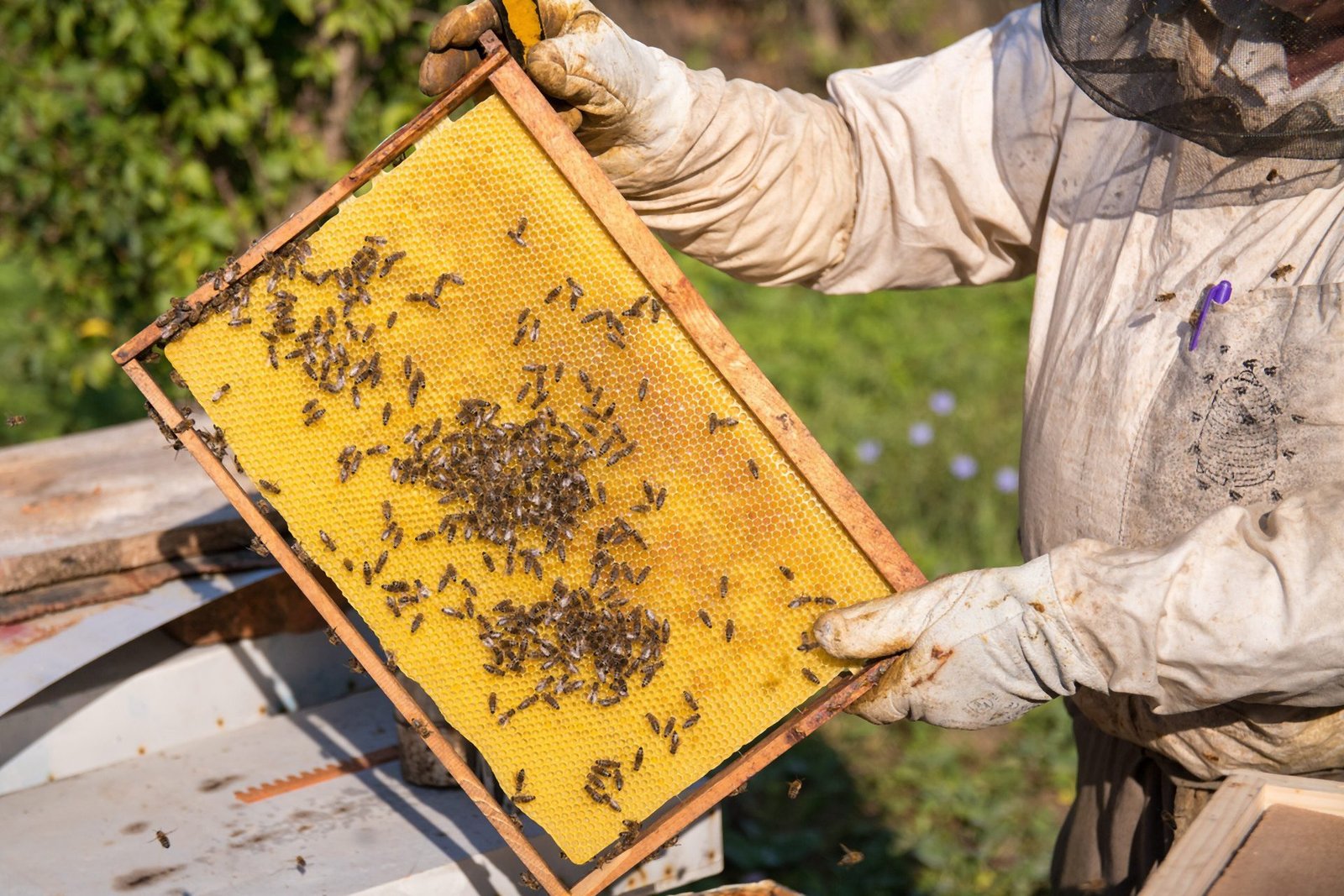
When bees refuse to draw foundation, the cause is almost always one of four things: no incoming nectar, too few young wax-making bees, foundation placed where the colony can’t keep it warm, or foundation the bees don’t find attractive, usually thinly waxed plastic. Fix the one that applies. Move a single sheet next to the brood, feed 1:1 syrup if there’s no flow, and give plastic a heavy coat of real beeswax. A strong colony in a flow usually starts on a well-placed sheet within days. If it ignores a sheet sitting right beside brood for two weeks while nectar is coming in, look at the colony, not the foundation.
This guide starts with what the bees are actually doing, because an untouched sheet, a chewed sheet and brace comb built around the foundation are three different problems. It also covers a field trial that measured how much placement matters.
Key Takeaways
- Bees build comb only when they need space, have nectar coming in, and have plenty of young workers. Wax glands are most active in workers roughly two to three weeks old.
- Placement matters more than most beekeepers think. In a Missouri field trial, plastic foundation stacked in a box above the brood scored 10 against wax’s 100. The same plastic placed between brood frames scored 100.
- Adding a heavy coat of beeswax to plastic sheets made the bees start on those frames right away in the same trial.
- Don’t mix wax and plastic sheets in one box. Bees overbuild the wax and neglect the plastic.
- Chewed foundation usually means a dearth. The bees are salvaging wax, not building. Feed, and stop adding space.
- In the Red River Valley, the reliable window for drawing new foundation is late May through early August. Don’t count on new comb after mid-August.
Table of Contents
Start With What the Bees Are Doing
“They won’t draw it” covers several different behaviors, and each has a different cause. Before you change anything, lift the frame and note which of these you’re seeing:
| What you see | Most likely cause | What to do |
|---|---|---|
| Sheet untouched, few bees on it | Frame is outside the cluster, or the box sits above an excluder or brood the bees don’t need to leave | Move one sheet next to brood; remove the excluder until drawing starts |
| Bees hanging in chains on the sheet, little new wax | They’re trying, but short on nectar or warmth | Feed 1:1 syrup; reduce empty space; leave them alone for a week |
| Wax chewed off plastic, or holes in wax sheets | Dearth: bees salvaging wax. Small holes at the bottom edge are often normal passageways. | Feed; stop adding boxes; recoat plastic when the flow returns |
| Wax sheets drawn, plastic in the same box ignored | Mixed materials: bees prefer the wax | Keep one material per box |
| Brace comb built around or beside the foundation | Gaps: missing frame, wrong spacing, warped or bowed sheet | Push frames together, replace warped sheets, cut out the brace comb |
| Center frames drawn, outer frames bare | Normal: edge frames lag | Swap a drawn center frame out and a bare one in |
| Nectar in the brood cells, no new comb anywhere | Colony has decided to store rather than build, often late season or before swarming | Give space in the brood nest now; check for queen cells |
If the frames themselves are the problem, such as sheets that are loose, crooked or warped, see our list of foundation installation mistakes first. No amount of feeding fixes a sheet the bees can’t build on straight.
The Four Conditions Bees Need Before They Build
Wax is expensive. The bees make it from sugar, and they would rather store honey than spend it on comb they don’t need. A University of Georgia comb study, drawing on Seeley’s work, puts a whole nest at about 1,200 g of wax, built from the sugar in roughly 7.5 kg of honey. That is about six pounds of honey for every pound of wax (see how often to replace old brood comb). So they build only when four things line up.
Young bees
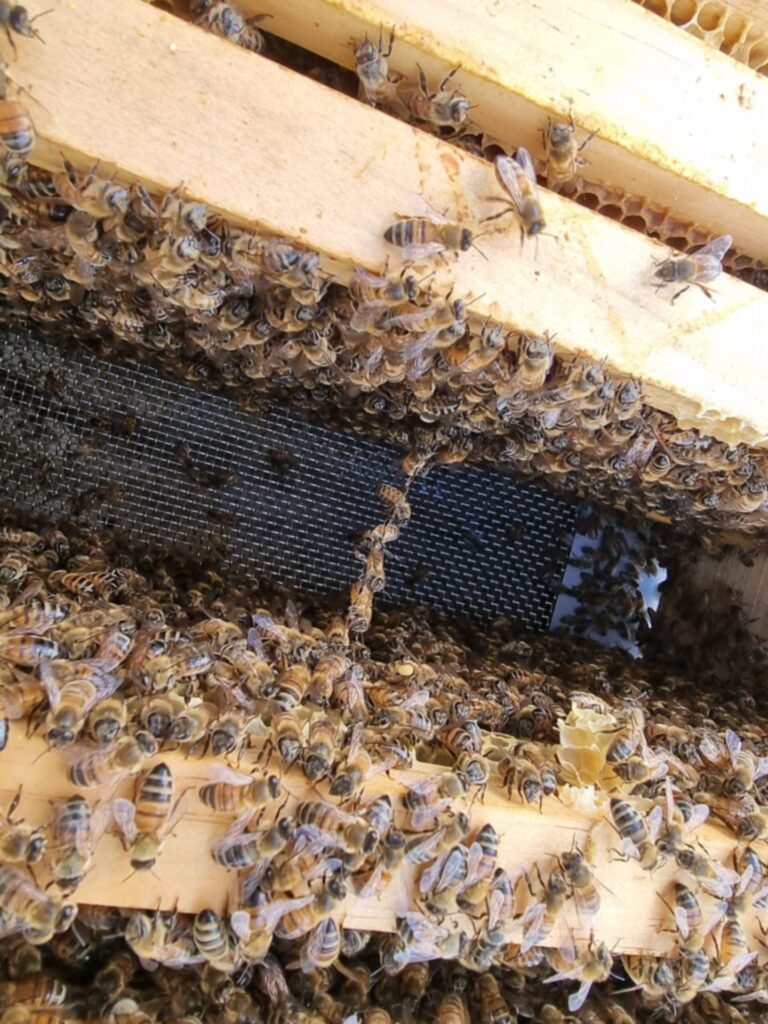
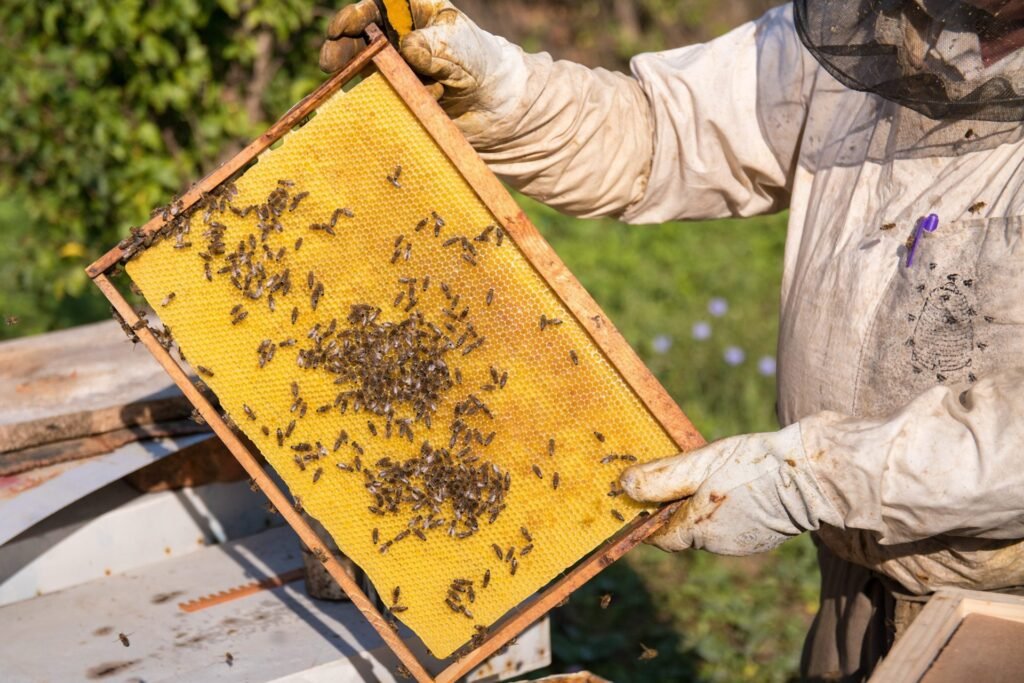
Wax comes from glands on the underside of young workers. In his American Bee Journal column, Grant Gillard notes that wax production is a job for workers in their second and third weeks of adult life. Those bees also need to eat pollen in their first five to six days to develop the fat body that powers wax production (“How Do I Get My Bees to Draw Out Comb?”). A colony that has had a brood break, such as a new swarm, a requeened hive or one short of pollen, will be short of builders two or three weeks later.
Incoming nectar
Wax-making runs on carbohydrate. During a real flow, bees build readily. During a dearth they stop, even with empty frames in the box. Syrup can stand in for a flow, which is why packages on new foundation are fed until they have drawn most of their first box.
Warmth
Wax is secreted and shaped at brood-nest temperatures, roughly 91–97°F. A sheet at the cold edge of a box, or in a super above a small cluster on a cool night, sits outside the zone where building happens.
A reason to build
Bees build when they run out of room for brood or nectar. If the brood box still has empty drawn cells, a new sheet can sit untouched for weeks. That’s not a problem, it just means the colony doesn’t need space yet.
The Placement Data Most Guides Skip
Most advice on this topic is anecdotal. One exception is a field trial run in 2006–07 by Missouri sideline beekeeper Grant Gillard with a USDA Sustainable Agriculture Research and Education (SARE) grant. He compared plastic and beeswax foundation across packages, swarms, existing colonies and honey supers. He measured drawn comb weekly with a gridded overlay and scored wax as 100 (SARE project FNC06-595).
| Setup | Plastic score | Wax score |
|---|---|---|
| Packages started on foundation | 20 | 100 |
| Swarms hived on foundation | 35 | 100 |
| Box of foundation stacked on an existing colony | 10 | 100 |
| Single sheets placed between frames of brood | 100 | 100 |
| Honey super added on top | 30 | 100 |
| Plastic super placed under a super of drawn comb | 60 | – |
Two findings matter most here. First, position beat material. Plastic that the bees ignored in a box on top was drawn as readily as wax once it sat between brood frames, where the young wax-making bees and the warmth are. Second, four of the ten colonies topped with a box of plastic swarmed. Gillard attributed that to congestion in the boxes below while the bees refused the plastic. A box of undrawn plastic on top is not usable room from the bees’ point of view.
“In my opinion, it makes no sense to attempt to establish hives on plastic foundation.”
Grant F. C. Gillard, final report for SARE project FNC06-595
This was one beekeeper’s apiary and a small number of colonies, not a replicated university study, so read the scores as directional. For the broader choice of material, see plastic vs wax foundation.
Fixes That Work, in Order
Work through these from the top and stop when the bees start building.
Step 1: Move one sheet into the brood nest
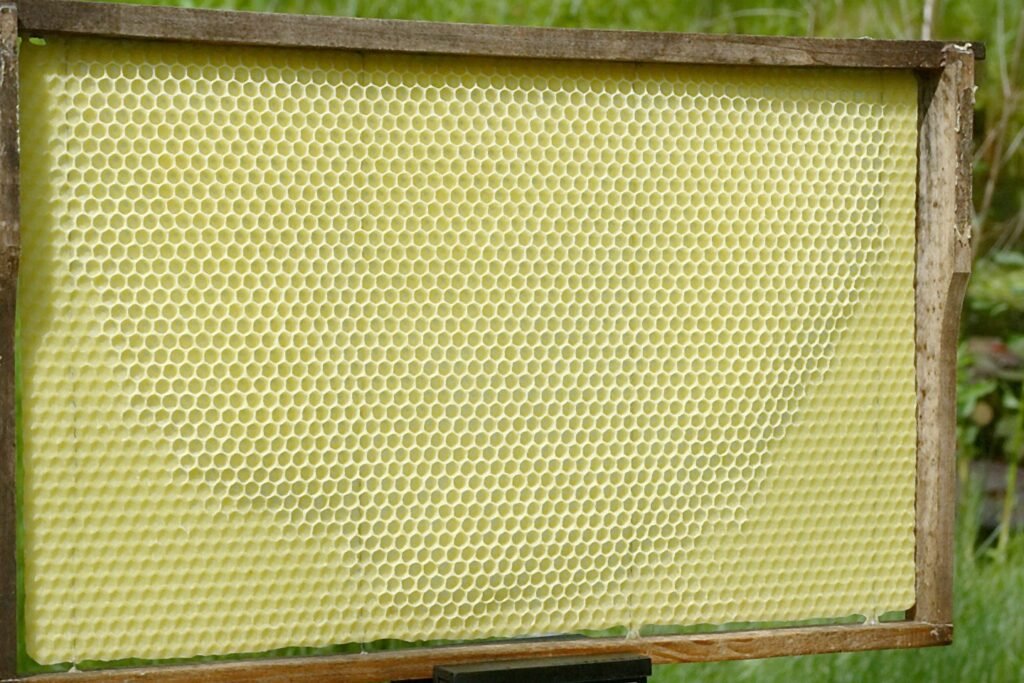
Take a single undrawn frame and place it between two frames of brood, or between the brood and the first frame of honey. Don’t put more than one blank sheet in the middle of the brood nest at a time. A big gap there splits the cluster and can chill brood on a cold night. Once that sheet is half drawn, move it out and put the next one in.
Step 2: Feed if there’s no flow
If foragers aren’t coming in heavy, feed 1:1 sugar syrup (equal parts sugar and water by weight or volume). Keep feeding until the bees are drawing steadily. Stop feeding before any honey super you plan to harvest goes on. Watch for the brood nest filling with syrup, which can make the colony honey-bound.
Step 3: Recoat plastic with real beeswax
Most plastic foundation ships with a thin factory wax coating. In Gillard’s trial, a super of ten plastic frames with three frames given extra wax saw the bees go straight to those three and then move onto the neighboring frames. He applied melted wax with a 4-inch foam roller, averaging about 48 g (1.7 oz) per medium frame and 72 g (2.5 oz) per deep. He found the exact amount mattered less than doing it. Use clean wax from your own cappings if you have it. Our comparison of waxed vs unwaxed plastic foundation covers the options.
Step 4: Keep one material per box
If a box holds both wax and plastic sheets, the bees overbuild the wax and neglect the plastic. You end up with fat, uneven combs that are hard to remove. Put all-wax or all-plastic in any box you’re asking them to draw.
Step 5: Bait a new super, or put it under
For supers, place one or two frames of drawn comb in the middle of the new box to lure bees up. If you have enough drawn comb, alternating drawn and undrawn frames across the box (checkerboarding) works the same way. Also consider leaving the queen excluder off until the bees are working the super. Bottom supering, meaning putting the new box directly above the brood and under existing supers, helped plastic acceptance in the SARE trial too.
Step 6: Shrink the space
A small colony with two empty boxes on top has too much volume to keep warm. Take off anything the bees aren’t using. Give them the next box only when about eight of ten frames are drawn and covered with bees.
When Bees Chew Foundation Instead of Drawing It
Finding the wax stripped off plastic sheets, or holes eaten through wax foundation, is alarming, but it usually has a simple explanation. When nectar stops and the frames aren’t needed, bees treat the thin wax as a resource and remove it. On plastic, that leaves bare sheets they’re even less willing to build on later. The fix is to stop the dearth problem, not to replace the foundation right away. Feed, remove unneeded boxes, and recoat the stripped sheets before you offer them again in the next flow.
Small, rounded holes near the bottom corners of a partly drawn wax sheet are different. Bees often leave passageways near the edges of combs so they can move from one side to the other. That’s normal and not a sign of rejection.
If bees chew foundation even during a flow, check the sheets themselves. Old foundation stored for years in a hot garage goes brittle and loses its scent.
Timing in a Short Northern Season
Eastern North Dakota and western Minnesota run on a short, intense season. That matters here because foundation that isn’t drawn by midsummer often isn’t drawn at all. North Dakota led the country with an estimated 460,000 honey-producing colonies in 2025, averaging 67 pounds of honey each (USDA NASS Honey report, March 2026). Most of that comes from a few weeks of sweet clover, alfalfa, canola and sunflower bloom. Practical timing for the Red River Valley:
- Late May–June: dandelion, fruit bloom and early canola build population. This is the best time to have a colony draw brood-box foundation, a sheet at a time in the brood nest.
- Late June–July: the main flow. Strong colonies draw supers quickly now, especially over bait comb.
- After mid-August: the flow tapers and colonies start backfilling the brood nest. New foundation added now is more likely to be chewed than drawn. Save it for next spring.
The University of Minnesota Bee Lab’s guidebook for northern beekeepers makes the same point: bees build comb only from spring through the main flow, so don’t expect new comb in late summer or fall (UMN Bee Lab, A Guide to Beekeeping in Northern Climates).
Packages on all-new foundation should be fed continuously until they have drawn most of the first box. The season is too short to lose weeks.
When the Problem Isn’t the Foundation
If you’ve placed a sheet between brood frames during a flow and it’s still untouched after two weeks, the colony has a population or health problem. Check these in order:
- Queen and brood: is there a solid pattern of eggs, larvae and capped brood? A spotty or shrinking brood nest means fewer young bees three weeks from now.
- Mites: a high varroa load cuts the number and lifespan of young workers. Do a count; our guide to alcohol wash, sugar roll and sticky board testing covers how.
- Population: a colony covering four or five frames in June can’t build much. Combining it with another colony may achieve more than feeding it all summer.
For the wider set of causes, from pollen shortage to cool weather, see reasons bees won’t draw comb. If you’re still deciding whether to use foundation at all, see foundation in brood boxes: use it or go foundationless.
Frequently Asked Questions
How long should I wait before worrying that bees aren’t drawing foundation?
A strong colony in a flow usually starts on a sheet placed next to brood within a few days. If a well-placed sheet is still untouched after about two weeks while nectar is coming in, look at the queen, the mite load and the population rather than the foundation.
Why are my bees chewing holes in the foundation?
Usually because nectar has stopped and they’re salvaging the wax. Feed, remove unneeded boxes and recoat stripped plastic before the next flow. Small holes at the bottom corners of wax sheets are often normal passageways.
Should I feed sugar syrup to get foundation drawn?
Yes, when there’s no natural flow. Feed 1:1 syrup until the bees are drawing steadily. Don’t feed while harvestable honey supers are on, and watch that syrup doesn’t fill the brood nest.
Do bees prefer wax foundation over plastic?
Yes, especially in boxes placed away from the brood. In one Missouri field trial, plastic in a box on top scored 10 against wax’s 100, but plastic placed between brood frames was drawn just as readily as wax. An extra coat of beeswax on plastic narrows the gap.
Can I put undrawn foundation in the middle of the brood nest?
One sheet at a time, yes, during warm weather with a strong colony. It’s the fastest way to get a stubborn sheet drawn. Don’t insert several blank sheets at once or do it in cold weather, because splitting the cluster can chill brood.
Why will bees draw the center frames but not the outside ones?
The center is where the brood, warmth and young bees are. Edge frames always lag. Rotate a drawn center frame out and move a blank one in, rather than waiting for the bees to reach the walls on their own.
The Bottom Line
Bees refuse foundation for a reason, and usually the reason is where it is or when it was offered, not the sheet itself. Put one sheet where the young bees and warmth are, feed when there’s no flow, coat plastic generously with beeswax, and keep one material per box. If the bees ignore a sheet sitting next to brood during a flow, stop fixing the foundation and inspect the colony.


.jpg)
