

Reviewed by Thomas B. · Last Updated September 24, 2026 · How we review
To recycle old beeswax comb safely, sort it before you melt anything. Comb from a colony that may have had American foulbrood gets burned, not rendered. Healthy dark brood comb can be soaked, melted in a water bath or solar melter, and strained. That wax is best used for candles, polish or fire starters rather than going back into your hives as foundation. Never heat wax directly over a flame or burner. Keep it in water, below about 85°C (185°F), and stay with it the whole time.
Most rendering guides treat old comb like cappings with more mess. It isn’t. Old brood comb carries disease risk and years of accumulated treatment residues, and it gives up far less wax. This guide covers the decision first, then the method.
Key Takeaways
- Triage every frame first: burn anything with American foulbrood signs, render healthy comb, and keep rendered brood-comb wax out of the hive.
- American foulbrood spores survive heat and freezing, so rendering does not make infected comb safe.
- A Penn State and USDA survey found 98% of comb and foundation wax samples contaminated with miticides. Old brood comb wax is a poor candidate for new foundation.
- Old black brood comb yields the least wax and the worst quality of any wax source, so soak it for a day or two before melting.
- Melt only in water or a solar melter, keep it under 85°C (185°F), and keep a lid within reach in case of fire.
Table of Contents
Sort Before You Melt: Burn, Render or Set Aside
Recycling old comb is only safe if the comb is safe to handle. Before any frame goes near a melter, sort it into one of the groups below. Most of the risk in this job comes from mixing them.
| Comb condition | What to do | Where the wax goes |
|---|---|---|
| Sunken, greasy or perforated cappings, ropy larvae, scale stuck to cell walls, or a colony that died of unknown brood disease | Don’t render. Isolate it, get the brood diagnosed, and follow your state apiarist’s direction. That usually means burning. | Nowhere. It should not be rendered. |
| Dark or black brood comb from a healthy colony | Soak, render, strain twice | Candles, polish, fire starters, wood treatment. Keep it out of hives. |
| Comb from a deadout that starved or died over winter, with no brood-disease signs | Reuse it if it’s sound. Render it if it’s old, moldy or damaged by wax moths. | Same as healthy dark comb |
| Light honey comb from supers | Keep using it. Honey comb lasts far longer than brood comb. | Only render it when it’s broken or retired |
| Comb with wax moth webbing | Freeze it first, then render. Moth-riddled comb gives very little wax. | Same as healthy dark comb |
If you’re sorting frames from a colony that died, work out why it died before you decide anything. Our guide to reusing frames from a dead colony goes cause by cause. For comb that came out of honey supers, see when to rotate honey frames out of service. Most of it doesn’t need recycling at all.
The American foulbrood line
American foulbrood is the one condition where recycling is off the table. The spores are extraordinarily durable. Australia’s national bee biosecurity program puts it this way:
“AFB spores can remain viable for over 50 years and are very resistant to freezing and high temperatures.”
BeeAware, Plant Health Australia, American foulbrood
Home rendering temperatures do not kill them. The spores simply end up sealed inside the finished wax block. If that wax later becomes foundation, a coating on plastic, or a swarm-trap lure, it can carry the disease back to your bees. In North Dakota, the Department of Agriculture’s apiary program inspects hives for American foulbrood and other brood diseases. If you suspect it, contact them before you burn, move or melt anything.
Why Old Comb Wax Shouldn’t Go Back Into the Hive
A common reason for recycling old comb is to make your own foundation or recoat plastic sheets. With old brood comb, that’s usually a bad trade.
Beeswax absorbs fat-soluble chemicals, and brood comb has sat in the hive through years of treatments and foraging. Penn State and USDA researchers analyzed 887 wax, pollen, bee and hive samples from 23 states. They found 98% of comb and foundation wax samples were contaminated, with the miticides fluvalinate and coumaphos reaching up to 204 ppm and 94 ppm (Mullin et al., PLoS ONE, 2010). Home rendering removes dirt, not dissolved chemicals.
Cappings are the better source for anything that returns to the hive. They are new wax, made during the flow and removed within weeks. A SARE-funded study of Virginia and North Carolina apiaries found cappings contained about half as many contaminants as commercial foundation, though 9 of 10 samples still had some. Our guide to rendering cappings wax cleanly covers that route.
What to Expect From Dark Brood Comb
Comb darkens because every generation of brood leaves a cocoon and larval waste in the cell. Pollen and propolis add to it. A cell that started as pure wax slowly becomes a stack of silk linings with a thin wax skeleton. The older the comb, the less wax you get back.
The FAO’s beekeeping products bulletin ranks wax sources plainly. Cappings give the best, lightest wax. Light broken combs come next, and “old black brood combs yield the smallest proportion and lowest quality of wax” (Krell, FAO Agricultural Services Bulletin 124). Expect a small, darker cake and a filter bag full of cocoons (slumgum). That doesn’t mean it went wrong. It’s what old comb is made of.
That’s also why a solar melter struggles with really old comb. Cocoons soak up melted wax like a sponge, and without water or pressure to force it out, much of it stays in the residue. A water method recovers more.
Step by Step: Rendering Old Comb Without Open Flame
This is the small-batch hot-water method, suited to a few dozen frames. For equipment at larger scales, see our guide on how to extract beeswax: equipment, methods and safety.
Step 1: Get the comb off the frames
Cut wax comb out of wooden frames with a hive tool or putty knife, down to the wires. Scrape plastic foundation back to the base without gouging it. Our guide to scraping frames without damaging foundation shows how. Frozen comb crumbles cleanly, so doing this on a cold day or straight from the freezer is easier.
Step 2: Soak it
Break the comb into a bucket of soft water (rainwater is ideal) and weigh it down. The FAO bulletin notes that Crane (1990) suggests soaking older brood combs for up to two days. The soak dissolves honey residue and loosens debris. If you’re on hard well water, the same source advises adding 0.1% vinegar so minerals don’t react with the wax. Drain and repeat once if the water comes out brown.
Step 3: Bag and melt in water
Load the soaked comb into a mesh or burlap bag and tie it shut. Put the bag in a dedicated stainless steel or enamel pot with plenty of water. Use a pot you’ll never cook in again. Avoid iron, copper, brass and galvanized containers, which discolor wax. Heat on an electric hot plate or outdoor electric burner until the wax melts out, then hold the water just below a simmer. Press the bag against the pot side with a board or potato masher to squeeze more wax out of the cocoons.
Step 4: Cool slowly and lift the cake
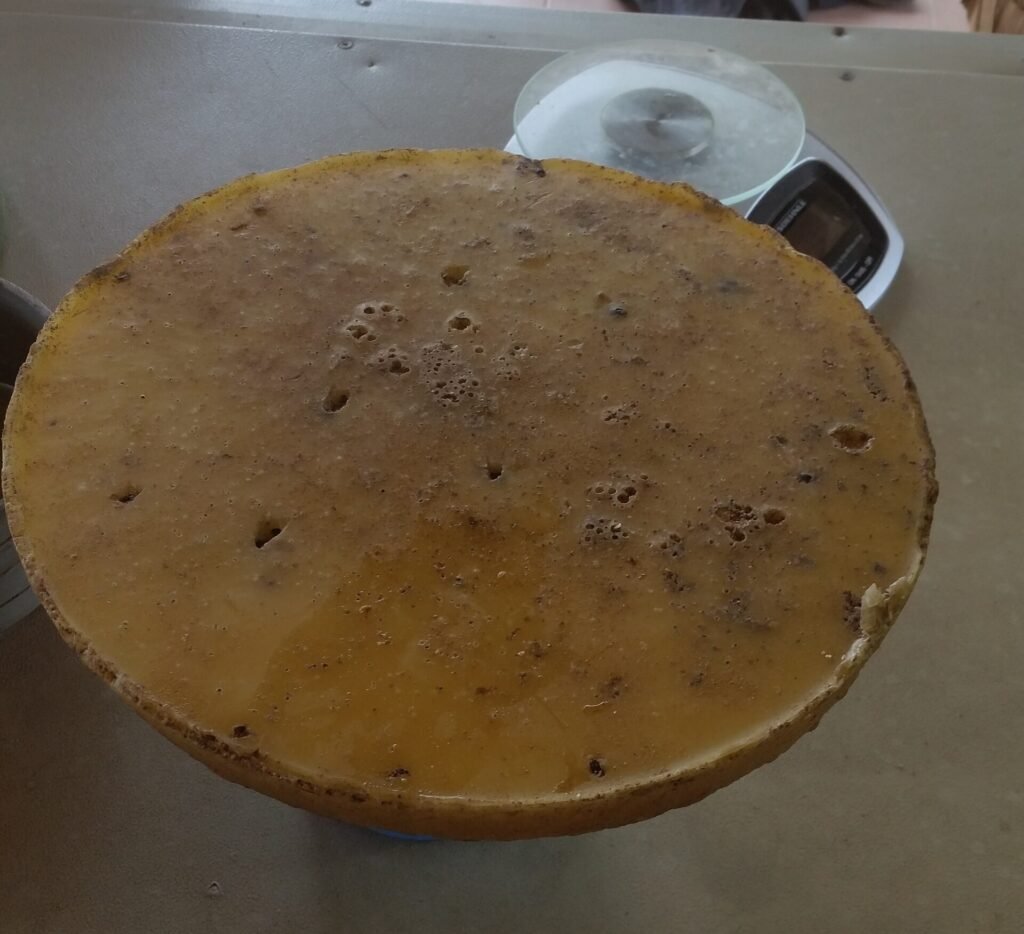
Turn off the heat and leave the pot covered overnight. Wax floats because it’s lighter than water. It sets as a disc on top while dirt sinks. The University of Florida’s solar rendering guide recommends cooling very slowly to reduce cracking (Sanford and Bustamante, UF/IFAS ENY111). Lift the disc out and scrape the soft grey layer off the underside.
Step 5: Re-melt and strain
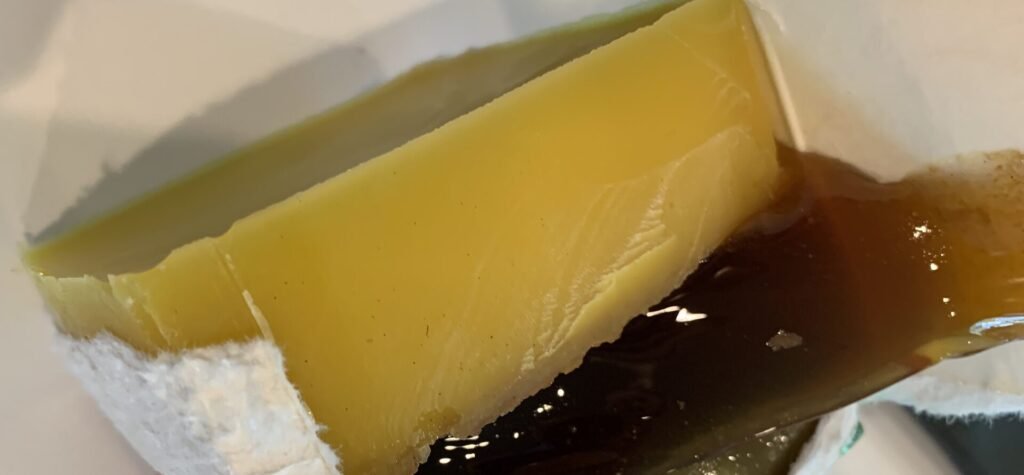
Melt the scraped cake again in a water bath, meaning a smaller container set inside a pot of hot water, and pour it through a fine cloth into a mold. Two passes usually give usable wax from dark comb. It will be darker than cappings wax, and that’s normal. For finished-block uses, our beeswax fire starter guide is a good home for darker wax and slumgum alike.
Fire and Burn Safety
Molten beeswax behaves like cooking fat. The FAO bulletin’s rule is simple:
“Wax should never be heated above 85°C. If wax is heated directly (without water) or above 85°C discolouration occurs.”
R. Krell, Value-Added Products from Beekeeping, FAO Agricultural Services Bulletin 124
Keeping wax in water caps its temperature and protects both the wax and you. The practical rules:
- No direct heat. Always use water, a water bath or a solar melter. Never put a pot of dry wax on a burner, and don’t use a gas flame indoors.
- Stay with it. The U.S. Fire Administration’s cooking-fire advice applies here: stand by your pan, and turn the burner off if you leave (USFA cooking fire safety).
- Lid, not water. Keep a pan lid or baking sheet nearby to smother a fire, as USFA recommends for pan fires. Water thrown on burning wax spatters it.
- Watch the water level. A water bath that boils dry leaves wax sitting on a hot metal bottom.
- Protect skin and eyes. Hot wax sticks to skin. Wear gloves and eye protection when pressing or pouring.
If you’d rather avoid a heat source entirely, a solar melter does the first melt on a sunny day with no fire risk. Our review of the best solar wax melters for backyard beekeepers compares ready-made and DIY options. For where to store finished wax and slumgum safely, see building a honey and wax storage room.

Timing in a Northern Apiary
In eastern North Dakota and western Minnesota, most old comb comes out at two points: spring cleanup of winter deadouts, and fall consolidation. Neither lines up well with solar melting weather. A practical rhythm:
- Spring: sort deadout comb as soon as you can open the boxes. Bag anything suspicious for diagnosis. Put render-bound comb in sealed bins.
- Summer: run the solar melter on hot, clear days for lightly soiled comb. Keep stored comb cold or sealed, because wax moths get active once it warms up. Our guide to storing drawn comb without a freezer covers moth control.
- Late fall and winter: use the hot-water method in a garage or shop with an electric hot plate. Unheated storage over a northern winter freezes out wax moth eggs and larvae in the waiting pile for free.
Frequently Asked Questions
Can I use old brood comb wax to make my own foundation?
It’s better not to. Brood comb wax builds up miticide and pesticide residues that home rendering doesn’t remove. Use it for candles, polish or fire starters, and make foundation or plastic coatings from cappings wax instead.
Does melting old comb kill American foulbrood?
No. American foulbrood spores tolerate heat and freezing and stay viable for decades. Rendering just seals them inside the wax. Comb with foulbrood signs should be diagnosed and destroyed under your state apiarist’s guidance, not recycled.
Why do I get so little wax from dark comb?
Much of old brood comb is cocoons and larval debris, not wax, and the cocoons hold onto melted wax. Soaking for a day or two and pressing the bag during a water melt recovers more, but the yield will always be lower than from cappings.
Can I put old dark comb in a solar wax melter?
Yes, and it’s the safest first melt, with no flame and nothing to boil dry. Expect a lot of wax to stay trapped in the cocoon residue. Many beekeepers run the leftovers through a hot-water melt afterward.
Is it safe to render beeswax on a kitchen stove?
Only in a water bath or in a pot of water on an electric burner, never dry wax over a flame, and never unattended. Wax is hard to clean off kitchen surfaces, so most beekeepers use a dedicated pot outdoors or in a garage.
What can I do with slumgum from old comb?
The FAO bulletin notes that rendering residue can be composted. Many beekeepers also press it into fire starters. Don’t use slumgum from a colony you suspect had foulbrood anywhere near bees.
The Bottom Line
Recycling old comb is worth doing, but sort first. Burn anything that might be foulbrood, soak and water-render healthy dark comb, and keep that darker wax for uses outside the hive. Keep the wax in water, below 85°C, and never leave it unattended. For wax you want to return to your bees, start with cappings or small wax scraps from apiary work instead.



.jpg)