
Reviewed by Daniel M. · Last Updated September 23, 2026 · How we review
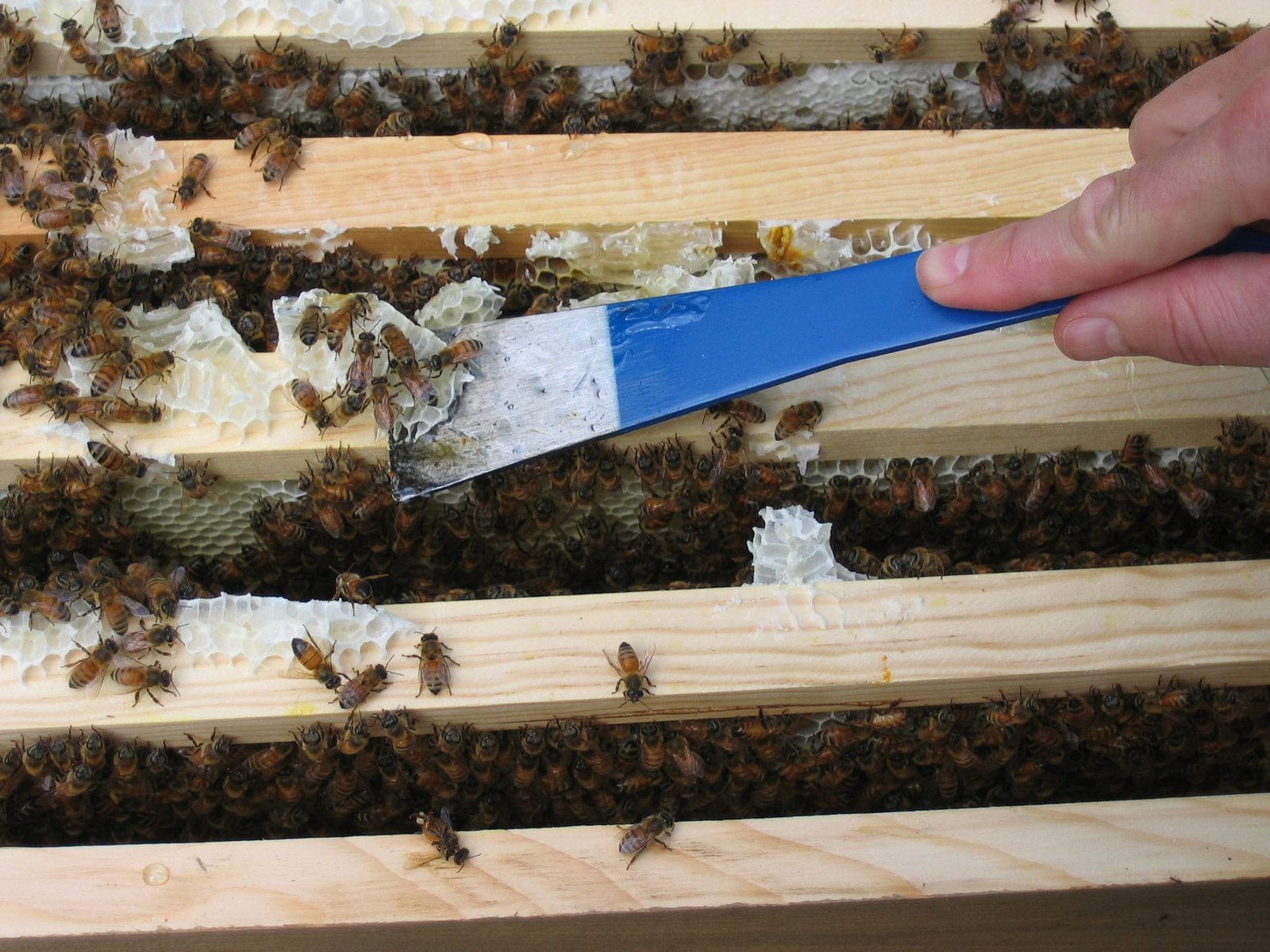
To scrape frames without damaging the foundation, scrape the wood, not the comb face, and do it cold. Hold the hive tool nearly flat along the bars and stop where wood meets comb. To strip old comb off plastic foundation, use long, light top-to-bottom strokes with a wide blade and leave a thin film of wax. Don’t scrape wax foundation at all: removing the comb removes the foundation, so cut it out and start fresh. Cold wax and propolis pop off cleanly; warm, they smear and tear.
This guide is about working on frames that hold foundation. For cleaning and sanitizing bare frames that have already been stripped, see our hive cleaning guide. For heavy propolis on woodenware, see how to clean propolis off frames.
Key Takeaways
- Decide first what you’re saving: the comb, the plastic foundation or just the wooden frame. The method follows from that.
- Scrape cold. A frame from a cold shed or a day in the freezer sheds wax and propolis far more cleanly than a warm one.
- On frames you’re putting back in service, scrape only the wood. The comb face is the bees’ job.
- Plastic foundation can be scraped back to the base. The maker, Acorn Pierco, advises the minimum force needed, in long strokes from top to bottom.
- Wax foundation can’t be scraped clean. Cut the comb out, save the wood and render the wax.
- Don’t wash plastic foundation in water above 200°F. It warps.
Table of Contents
First, Which Job Are You Doing?
“Scraping frames” covers three quite different jobs. Mixing them up is how foundation gets gouged.
| The frame | What you’re saving | How to scrape |
|---|---|---|
| Good comb going back in a hive | Comb, foundation and frame | Wood only: top bar, end bars, bottom bar. Leave the comb alone. |
| Plastic foundation with old, dark or damaged comb | Plastic sheet and frame | Scrape the comb back to the base, wash if needed, re-wax. |
| Wax foundation (wired or not) with comb you don’t want | Wooden frame only | Cut the comb and foundation out. Clean the wood and install new foundation. |
| Foundationless frame | Wooden frame and comb guide | Cut the comb out along the guide. Leave a strip of comb as a new guide if you like. |
Tools That Protect Foundation
- A standard or J-hook hive tool for top bars, end bars and frame rests. Use the flat blade, not the corner.
- A 3- to 4-inch putty knife or paint scraper for plastic foundation. A wide blade spreads the pressure and rides over the cell bases instead of digging in.
- A long serrated or uncapping knife for cutting comb out of wax-foundation frames.
- A tub for scrapings, which are good beeswax (see processing wax scraps), and cold: a freezer or a winter shed.
Skip wire brushes, drill-mounted wheels and heat guns. They damage wax and plastic faster than they clean.

Getting Frames Out Without Tearing Them
A lot of foundation damage happens before any scraping starts. Take the outside frame out first to make room, then slide each next frame sideways into the gap before lifting. Break the propolis at both ends with the hive tool; prying one end only tilts the frame and cracks or bends the foundation. Lift straight up by the ears and keep the comb vertical. A frame grip helps with heavy honey frames.
Scraping Frames You’re Putting Back
On a frame with good comb, you’re only keeping the wood clean so frames slide together at the right spacing.
- Top bars. Push the tool almost flat along the bar. Stop at its edges so you don’t nick the top of the comb.
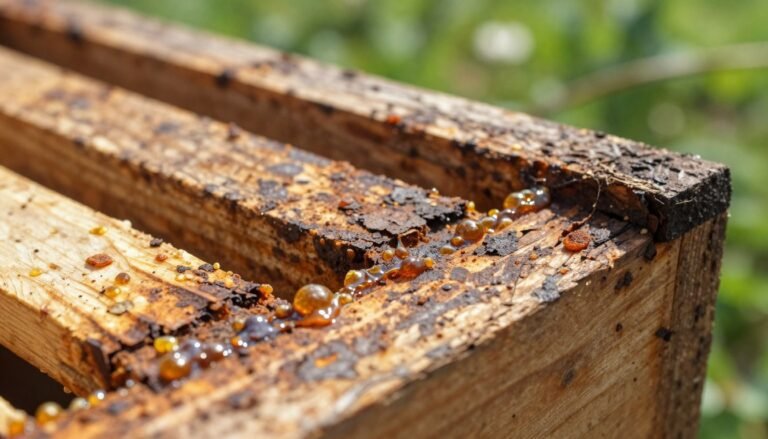
- End bars. Scrape the faces where frames touch. Propolis here spreads frames apart and invites burr comb.
- Bottom bars and ears. Buildup on the ears lifts the frame and throws off the bee space.
Quick burr-comb scraping belongs in inspections; save the thorough job for stored frames. For burr comb between boxes, see how to remove burr comb properly.
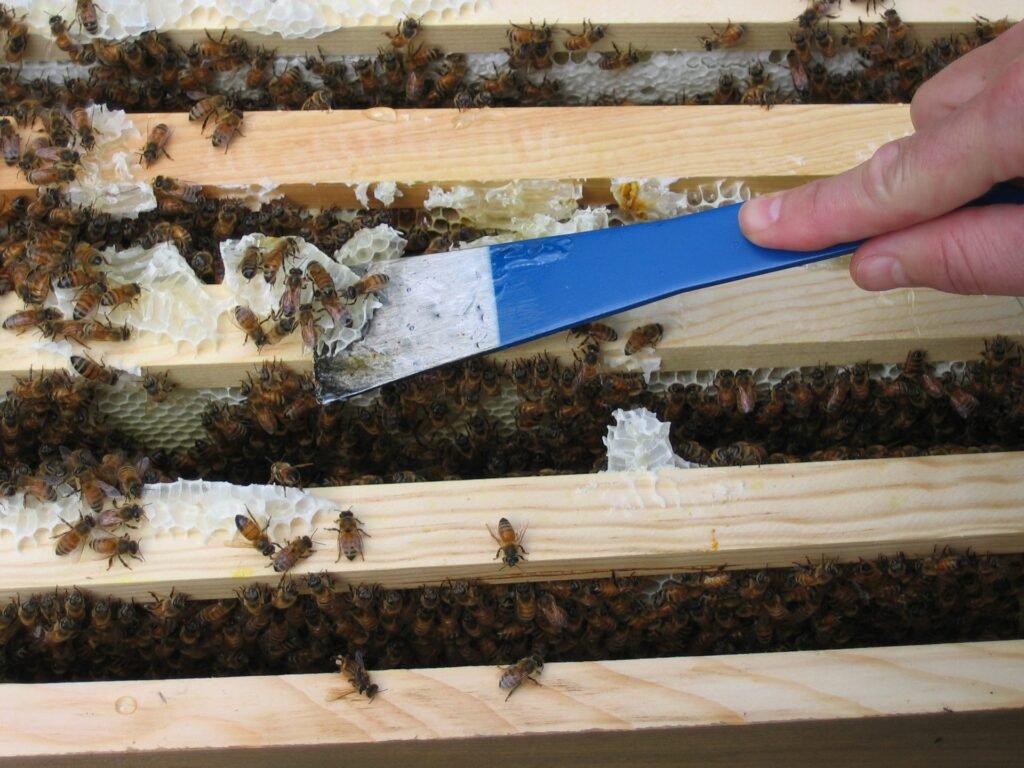
In eastern North Dakota and western Minnesota, winter is the natural season for this job. Frames from an unheated shed are cold right through; bring in one box at a time and scrape before it warms. For storing those frames between uses, see how to store drawn comb without a freezer.
Stripping Plastic Foundation Back to the Base
Plastic foundation is the one kind you can strip and reuse. Acorn Pierco, one of the main makers, publishes cleaning instructions for its plastic frames. They advise using the minimum force needed, scraping in long strokes from top to bottom, and never using water hotter than 200°F, which warps the plastic.
Step 1: Check the history
Only strip frames from colonies that died of known, non-infectious causes, or from routine comb rotation. Plastic from a colony with American foulbrood is not a scraping job. Follow your state’s rules for that equipment. Our guide to cleaning plastic foundation after colony loss covers the disease questions.
Step 2: Chill the frames
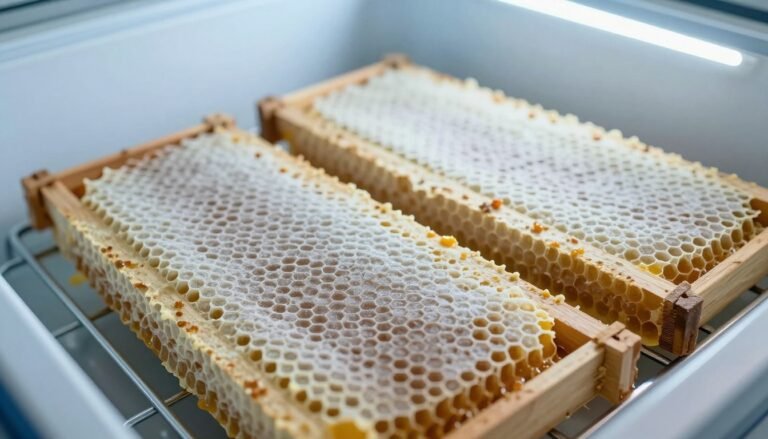
Freeze the frames, or scrape them outdoors on a cold day. Cold comb comes off the plastic in sheets. Utah State University Extension’s equipment cleaning guidance also recommends freezing equipment at 20°F or colder for at least 24 hours before scraping, which also deals with any wax moths in the comb.
Step 3: Scrape in long, light strokes
Set the frame on its end on a bench, over a tub. Hold a wide putty knife at a low angle and draw it from the top bar to the bottom bar. Let the blade ride on the tops of the embossed cell walls. If you feel it catch or dig in, lower the angle and ease off. Turn the frame over and do the other side.
Step 4: Leave the last film of wax, and wash only if needed
You don’t need bare plastic. The thin wax left in the cell bases helps bees accept the sheet, and chasing a perfect finish risks scratching the embossing. A hose or pressure washer clears remaining debris; keep any hot water under 200°F and dry frames out of direct sun.
Step 5: Re-wax before reuse
Brush or roll a thin coat of melted beeswax onto both faces. Heavier coats get drawn faster, but don’t fill the cells. For why this matters, see waxed vs unwaxed plastic foundation. If bees still ignore it, work through how to get bees to draw out plastic foundation.
Why You Don’t Scrape Wax Foundation
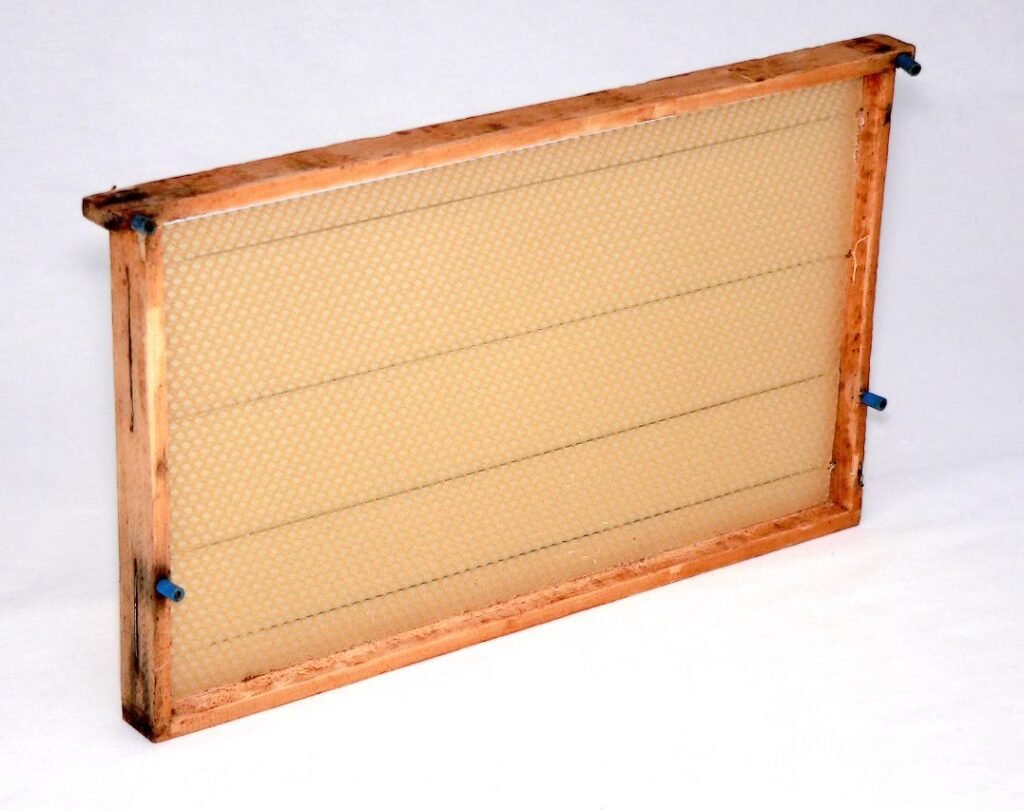
Wax foundation is a thin sheet of embossed beeswax. Once drawn, it becomes the midrib of the comb, so no tool can take the comb off and leave the foundation. The only question is keep or replace:
- Keep it if it’s sound, light to medium brown and free of disease signs. Scrape only the wood.
- Replace it if it’s very dark, heavily drone, damaged, moldy or from a failed colony. Cut the comb out with a knife close to the frame, then scrape the grooves clean so new foundation seats flat. See signs it’s time to melt down old comb.
Common Mistakes and Their Fixes
| Mistake | What happens | Fix |
|---|---|---|
| Scraping warm frames | Wax and propolis smear and grab the blade; foundation tears | Chill first; scrape cold |
| Using the tool’s corner | Gouges wood and punctures plastic cell bases | Use the flat of a wide blade at a low angle |
| Boiling plastic foundation | Plastic warps and won’t hang straight | Keep water under 200°F |
| Scraping plastic to bare, shiny plastic | Bees are slow to draw it | Leave a thin wax film and re-wax |
Frequently Asked Questions
How do you scrape old comb off plastic foundation?
Chill it, then use a wide putty knife in long, light strokes from top to bottom, blade low. Leave a thin film of wax, keep any wash water under 200°F and re-coat with beeswax before reuse.
Can you reuse wax foundation after scraping?
No. Drawn wax foundation is part of the comb, so scraping the comb off removes the foundation too. Cut it out, render the wax and install a new sheet.
Why is it easier to scrape frames when they’re cold?
Cold beeswax and propolis are brittle and snap off in chips. Warm, they’re sticky and drag at the blade and the foundation.
Do I need to scrape the comb on frames I’m putting back in the hive?
No. Scrape only the wood: top bars, end-bar faces and ears. Bees maintain good comb themselves.
Can I scrape frames from a colony that died of disease?
Not until you know the cause. Frames from a colony with American foulbrood shouldn’t be scraped and reused; follow your state apiary rules if foulbrood is suspected.
The Bottom Line
Most foundation damage comes from scraping the wrong thing, warm, with the wrong edge of the tool. Decide what you’re saving. Scrape wood, not comb, on frames going back into service. Strip plastic in long, light, cold strokes and re-wax it. With wax foundation, cut the comb out and start that frame fresh.
.jpg)

