Propolis, the resinous substance bees make to seal and sterilize their hive, has become a popular health supplement sold as tinctures, capsules, throat sprays, and raw chunks. It’s also one of the more genuinely evidence-backed bee products discussed anywhere on this site, with real clinical research behind several specific, well-defined uses, though the strength of that evidence varies considerably depending on the exact claim being made. This guide covers what propolis actually is, what human clinical research actually supports, where the evidence is still thin, and what buyers and beekeepers should know about safety and sourcing.
This article summarizes published research for general education only and is not medical advice. Propolis can trigger allergic reactions, particularly in people sensitive to bee products or bee stings. Talk to a doctor or pharmacist before using it to treat any condition, especially if you are pregnant, breastfeeding, or taking medication.
Table of Contents
- What Propolis Actually Is
- Upper Respiratory Infections: The Strongest Human Evidence
- Oral and Dental Health
- Wound Healing and Skin Applications
- Cardiovascular and Metabolic Claims: Weaker Evidence
- Safety, Allergy Risk, and Sourcing
- How Propolis Is Actually Harvested and Sold
- How This Differs From Honey-Based Health Claims
- Typical Dosing and Forms Used in Research
- Common Mistakes
- Why Regional Variation Complicates the Research
- Frequently Asked Questions
What Propolis Actually Is
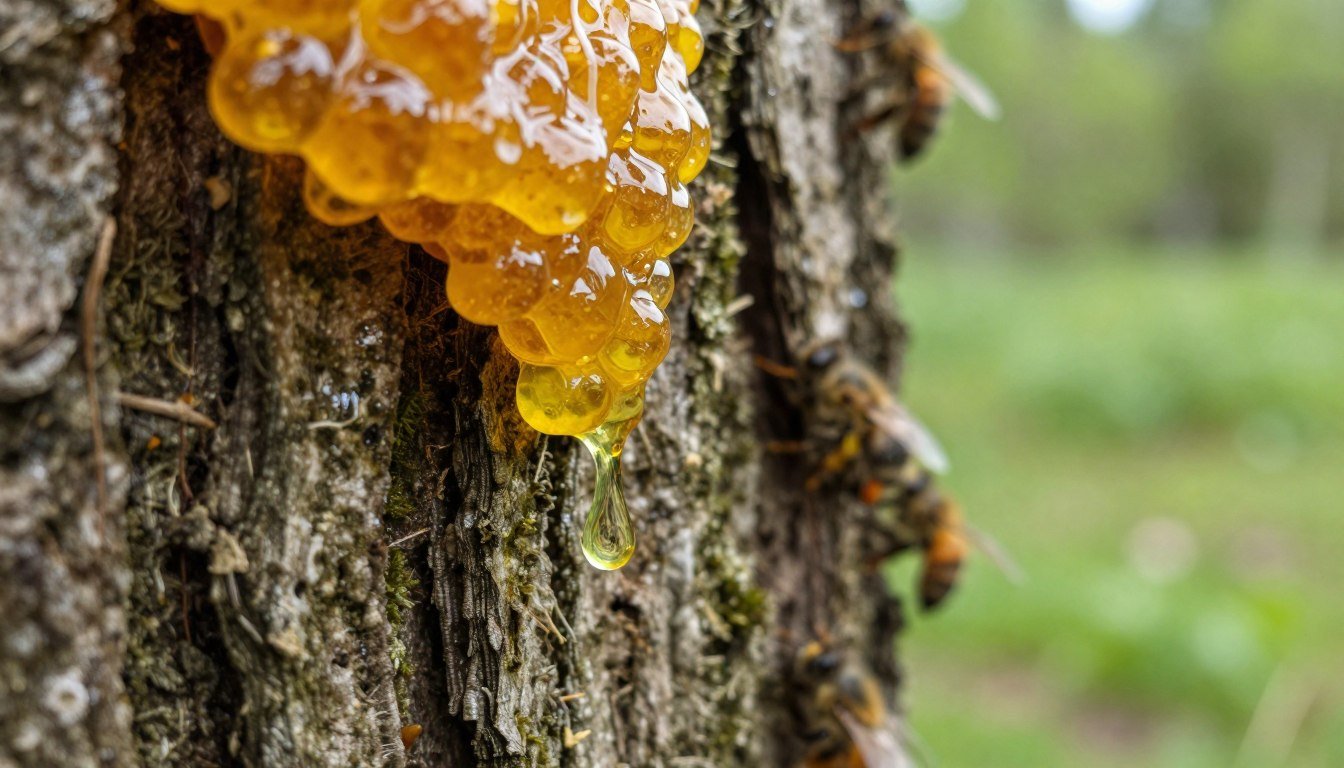
Propolis is not made from nectar or pollen the way honey and bee bread are. Bees collect resinous sap and bud exudate from trees, particularly poplar, birch, and conifer species, and mix it with beeswax and their own salivary enzymes to produce a sticky, variable-colored substance they use to seal cracks in the hive, smooth rough interior surfaces, and coat the inside of the colony with an antimicrobial barrier that helps control the spread of pathogens within such a densely packed, humid environment. Its exact chemical composition varies significantly by region and by which plants are locally available, since bees use whatever suitable resin sources are nearby, meaning propolis from one region can differ meaningfully in its specific compound profile from propolis collected somewhere else, an important caveat for interpreting any single study’s findings.
Why do bees bother making propolis at all instead of just using wax everywhere?
Propolis’s antimicrobial properties give it a defensive function wax alone doesn’t provide; bees use it specifically to line and seal the hive interior against bacteria, fungi, and mold in a way that helps protect a colony of tens of thousands of individuals living in constant close, humid contact from the kind of disease spread that could otherwise devastate a densely packed colony.
Upper Respiratory Infections: The Strongest Human Evidence
Of all the health claims made about propolis, the evidence for reducing upper respiratory infection risk and severity is among the most directly supported by actual human clinical trials rather than only lab or animal research. A standardized propolis extract has been shown in clinical research to reduce the risk of upper respiratory infections by roughly 31% compared to a control group, a genuinely meaningful and specific figure rather than vague marketing language. This lines up with a broader pattern seen across several trials: propolis supplementation is associated with somewhat fewer and somewhat shorter respiratory infections in study participants, making this the health claim about propolis best supported by real, controlled human data rather than preliminary lab findings alone.
Oral and Dental Health
Propolis has a genuinely substantial body of clinical dental research behind it, more so than most other proposed uses. Clinical studies on propolis-containing mouth rinses and dental products have reported measurable reductions in dental plaque, lower counts of cavity-causing bacteria, and reduced gum inflammation in periodontal therapy contexts. This dental research angle connects directly to findings covered elsewhere on this site: propolis has previously been identified as one of the honey-adjacent bee products with real antibacterial activity against Streptococcus mutans, the bacteria most responsible for tooth decay, a specific mechanism that helps explain why the dental research results are as consistent as they are.
Wound Healing and Skin Applications
Both laboratory and some clinical burn and wound studies have found that topical propolis preparations show real antimicrobial activity that can help prevent infection in a healing wound, alongside anti-inflammatory effects that appear to reduce redness and swelling during the healing process. This is a genuinely plausible, mechanistically supported use, propolis’s antimicrobial resin-based origin translates fairly directly to a topical antiseptic application, though as with several other propolis claims, well-designed, larger human clinical trials remain more limited than the promising preliminary results would ideally call for.
Cardiovascular and Metabolic Claims: Weaker Evidence
This is where honest evidence-grading matters most, since propolis marketing frequently promotes cardiovascular and metabolic benefits more confidently than the underlying research currently supports. A randomized controlled trial did find that propolis supplementation affected markers of oxidative stress and lipid metabolism in study participants, and some research suggests propolis may help delay atherosclerosis progression by improving lipid metabolism and modulating cell processes involved in plaque formation. However, the overall body of cardiometabolic research remains considerably smaller and less consistent than the respiratory or dental evidence discussed above, and a genuinely important caveat applies across nearly the entire propolis research field as a whole: the large majority of available studies remain cell-based laboratory work or animal studies, with comparatively few well-designed, sufficiently large, and rigorously controlled human clinical trials completed to date. Readers should treat cardiometabolic propolis claims specifically as promising but preliminary, not settled.
Safety, Allergy Risk, and Sourcing
Propolis carries a genuine and specific allergy risk worth taking seriously: because it’s derived from tree resin, people with existing allergies to poplar, conifer, or related tree resins, as well as people with general bee product sensitivities, can experience allergic skin or respiratory reactions to propolis, sometimes including contact dermatitis from topical use. As with other bee-derived supplements discussed on this site, propolis products sold in the US aren’t subject to the same premarket approval process as pharmaceutical drugs, so sourcing from a reputable producer and starting with a small test dose, particularly for topical use, is a reasonable practical precaution for anyone trying it for the first time.
How Propolis Is Actually Harvested and Sold
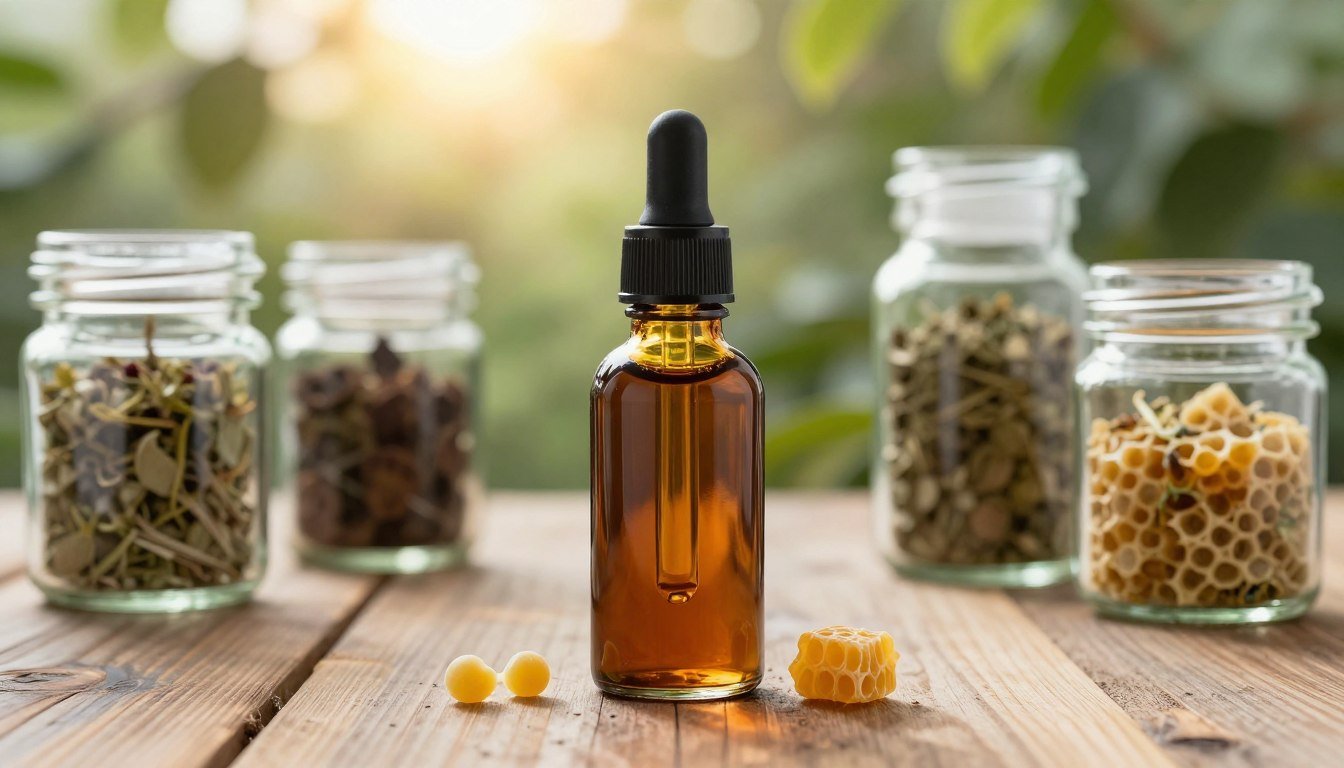
Beekeepers typically collect propolis using a specialized propolis trap, a plastic grid or mesh placed inside the hive that bees instinctively seal with propolis as though caulking an unwanted gap, which is then removed, chilled to make the resin brittle, and flexed to crack the hardened propolis free for collection. Raw propolis collected this way is then usually processed into an alcohol-based tincture, since propolis is not water-soluble and alcohol extraction is the most effective way to pull its active compounds into a usable, shelf-stable liquid form, though solvent-free and capsule forms are also commercially available for people who prefer to avoid alcohol-based tinctures.
How This Differs From Honey-Based Health Claims
It’s worth being explicit about how propolis research differs from the honey-focused health claims covered elsewhere on this site, since the two get casually lumped together as “bee products” despite meaningfully different origins and evidence bases. Propolis is tree-resin-derived rather than nectar-derived, and its antimicrobial and immune-related research, including the respiratory infection findings above, stands on genuinely different underlying chemistry than the findings in this site’s coverage of honey for cough and sore throat or honey and immune support. Propolis’s dental research also connects to, but is distinct from, honey’s own more limited role in oral health discussed in this site’s guide to whether honey is bad for your teeth, which identifies specific honey varieties with antibacterial activity against the same cavity-causing bacteria propolis research targets.
Does propolis have documented antiviral activity, not just antibacterial?
Yes, laboratory research has identified antiviral activity against several virus types in propolis extract, part of why it’s frequently studied alongside its antibacterial properties, though as with many propolis findings, most of this specific antiviral evidence comes from lab and cell-based studies rather than large human clinical trials confirming real-world antiviral benefit.
Typical Dosing and Forms Used in Research
Clinical trials examining propolis for respiratory infection prevention have generally used standardized extract doses in the range of a few hundred milligrams daily, taken over a period of weeks, rather than the raw resin chunks some beekeepers sell directly. Dental research most often examines propolis delivered through a mouth rinse or as an ingredient in toothpaste rather than as an oral supplement, meaning the delivery method itself is part of what’s actually been studied and shouldn’t be assumed interchangeable with, say, swallowing a tincture and expecting the same dental benefit. Because dosing and form vary so much between studies, and because propolis products on the market vary widely in concentration and standardization, following the specific product’s own labeling rather than assuming a single universal “propolis dose” applies is the more sensible practical approach.
How does propolis differ from beeswax, since both come from inside the hive?
Beeswax is a structural material bees secrete from specialized abdominal glands to build comb, essentially a hydrocarbon-based substance with no significant resin content, while propolis is fundamentally plant-resin-based and collected rather than secreted, giving the two substances entirely different chemical compositions and correspondingly different research profiles despite both originating from inside the same hive.
Common Mistakes
A common mistake is treating propolis as a single, standardized substance with uniform effects, when its composition genuinely varies by region and plant source, meaning results from a study using one region’s propolis don’t necessarily transfer directly to a different product sourced elsewhere. Another mistake is accepting broad “boosts immunity” or “cures illness” marketing claims at face value, when the actual, better-supported clinical finding is a specific, moderate reduction in respiratory infection frequency and severity, a real but more limited claim than sweeping general immune-boost language implies. People also sometimes overlook the allergy risk given propolis’s natural origin, assuming “natural” automatically means low-risk, when tree resin allergies are a genuine and not uncommon consideration.
Why Regional Variation Complicates the Research
Brazilian “green propolis,” derived largely from a specific native shrub, has become one of the most heavily studied propolis types internationally, appearing in a disproportionate share of the clinical literature relative to propolis sourced from temperate North American or European hives, which draws instead on poplar, birch, and conifer resins. This matters more than it might seem, because the specific bioactive compounds researchers have identified as most responsible for propolis’s antimicrobial and anti-inflammatory effects, including various flavonoids and phenolic acid derivatives, occur in different concentrations and combinations depending on the resin source. A consumer buying a propolis product sourced from North American hives shouldn’t automatically assume it will replicate results from a study conducted using Brazilian green propolis, even though both are accurately labeled “propolis,” a nuance that responsible product labeling and marketing doesn’t always make clear.
Sources
For additional authoritative detail on this topic, see a peer-reviewed review of propolis’s effects on oral health and microbiota.
Frequently Asked Questions
Should someone with seasonal pollen allergies avoid propolis out of caution?
Not necessarily automatically, since propolis allergy risk tracks more closely with tree resin sensitivity than with pollen or seasonal allergy status specifically, but anyone with a history of significant allergic reactions to bee products, tree resins, or balsam of Peru (a related resin used in some allergy testing) should discuss trying propolis with a doctor first rather than assuming it’s automatically safe simply because it’s natural.
Is propolis being researched for anything beyond the uses covered above?
Yes, preliminary laboratory and animal research has explored propolis for a range of additional applications, including anti-allergic effects on asthma symptoms and general anti-inflammatory activity, but these remain earlier-stage findings without the same level of human clinical confirmation as the respiratory infection and dental research discussed in more detail above.
Is propolis the same thing as royal jelly or bee pollen?
No. Propolis is a resin-based hive-sealing substance made from tree sap and beeswax, entirely distinct from royal jelly (a glandular secretion fed to queen larvae) and bee pollen (collected floral pollen), each with its own separate composition and research base.
What’s the best-supported reason to try propolis?
Based on current clinical research, reducing the frequency and severity of upper respiratory infections and supporting oral/dental health have the strongest human trial evidence behind them, considerably stronger than the cardiovascular and metabolic claims sometimes made in marketing.
Can I be allergic to propolis even if I’m not allergic to honey?
Yes. Propolis allergy is linked more closely to tree resin sensitivities than to other bee product allergies, so someone without a honey or bee sting allergy can still react to propolis, and vice versa.