Reviewed by Sofia T. · Last Updated September 23, 2026 · How we review
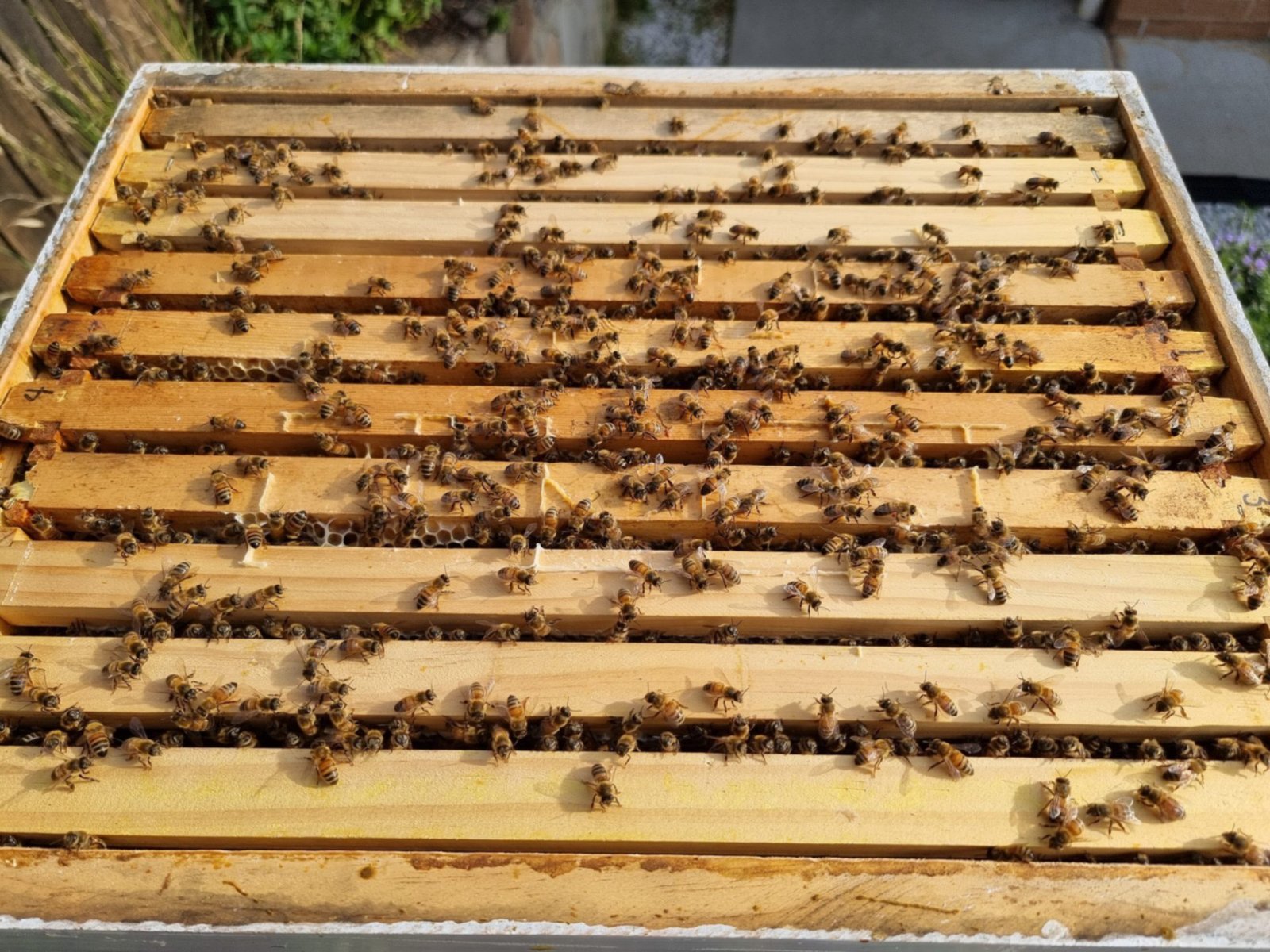
The frame spacing that gives straight comb in a Langstroth hive is 1-3/8 inches (35 mm) center to center. You get it automatically by pushing standard self-spacing frames tight against each other: ten in a 10-frame box, eight in an 8-frame box. Keep that full count whenever the bees are drawing foundation, starter strips or blank frames. Wider spacing, such as nine frames spread evenly in a 10-frame box, only works once the comb is already drawn, and only in honey supers. Spacing is half the job. The other half is a hive that’s level side to side, because bees build comb straight down.
This guide gives the numbers, the box math behind them, and the common mistake that causes most wavy comb: spreading frames out before the bees have drawn them. For spacing hardware, see our separate guide to frame spacers for 10-frame boxes.
Key Takeaways
- Standard Langstroth frames self-space at 1-3/8 inches (35 mm) center to center when pushed together. That’s the spacing for straight brood comb.
- The reference range for European honey bees is about 32–38 mm between comb centers. Brood comb sits at the tight end and honey comb at the wide end.
- Always draw new foundation or blank frames at the full frame count, pushed tight. Nine frames spaced evenly on foundation is the most common cause of fat, wavy and bridged comb.
- A 10-frame box is 14-3/4 inches wide inside. Ten frames take 13-3/4 inches, leaving about an inch of slack. Keep that slack at the walls, not between frames.
- “Nine frames pushed together with a gap at the end” and “nine frames spaced evenly” are different setups. Only the first keeps brood-nest spacing.
- Level the hive side to side. Correct spacing can’t fix comb that hangs out of line with the frames.
Table of Contents
The Numbers at a Glance
| Situation | Center-to-center spacing | How to get it |
|---|---|---|
| Brood box, any stage | 1-3/8 in (35 mm) | Full frame count, pushed together |
| Drawing new foundation (brood or super) | 1-3/8 in (35 mm) | Full frame count, pushed together |
| Foundationless or starter-strip frames | 1-3/8 in (35 mm) | Full count; each blank frame between two drawn combs |
| Honey super, comb already drawn | About 1-1/2 in (38 mm) or wider | Nine frames in a 10-frame box, evenly spaced with a spacer |
| Honey super, wide extracting spacing | About 1-3/4 in (44 mm) | Eight frames in a 10-frame box, drawn comb only |
| Space between comb faces (bee space) | 1/4–3/8 in (6–9.5 mm) | Results from correct spacing |
The super figures are approximate. They depend on the spacer or castellated rail you use, since nine or eight frames spread by hand won’t be perfectly even.
Why 1-3/8 Inches Works
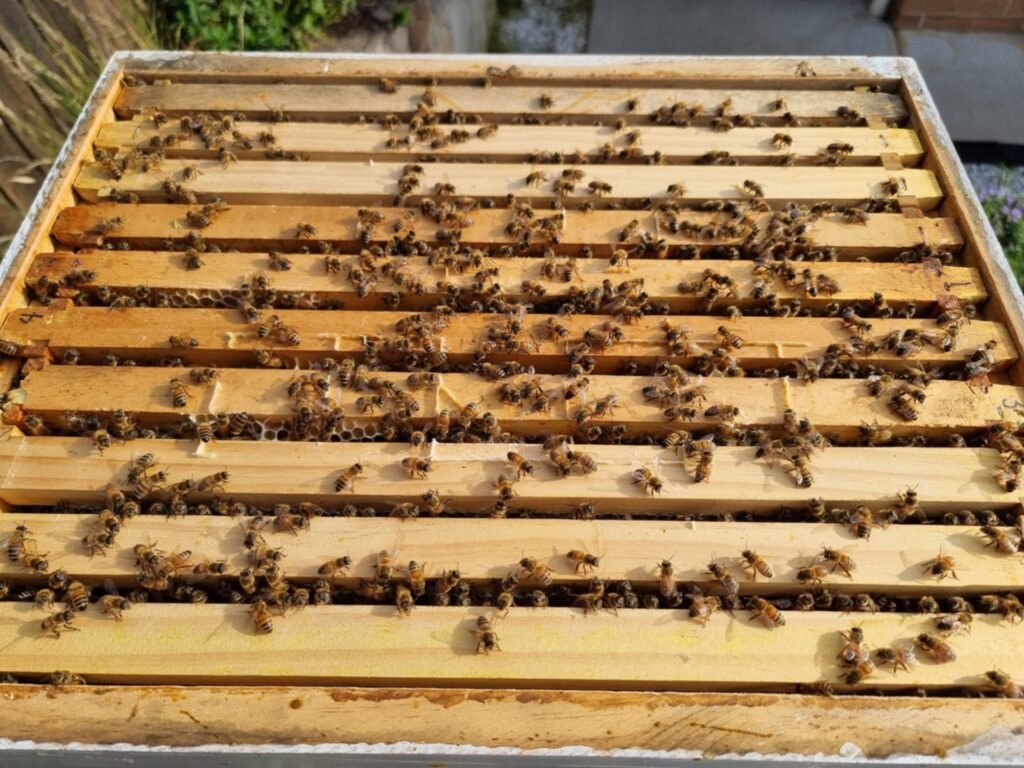
Bees build a comb, leave a walkway about one bee-height wide, then build the next comb. Spacing between comb centers is therefore comb thickness plus that gap. Eva Crane’s reference work on world beekeeping put comb spacing for most European honey bee races at about 35 mm, within a range of 32 to 38 mm. African races space about 32 mm apart. A 2018 study of hive dimensions in Ethiopia cites that range, and also spells out the failure modes: if spacing is too small, “bees cannot rear brood on both sides of the combs.” If it’s too large, “they are forced to build ‘burr or bracing’ comb” in the gaps (Faji et al., International Journal of Livestock Production, 2018).
The two numbers you’ll see in older books reflect the same range. Jan Dzierżon set his top bars 1-1/2 inches (38 mm) apart in the 1830s. Langstroth settled on a fraction over 1-3/8 inches in the 1850s. The American standard followed Langstroth. The brood nest wants the tighter figure, because worker brood comb is thin and the bees need to keep it warm. Honey comb can be drawn thicker, because bees lengthen cells used for storage.
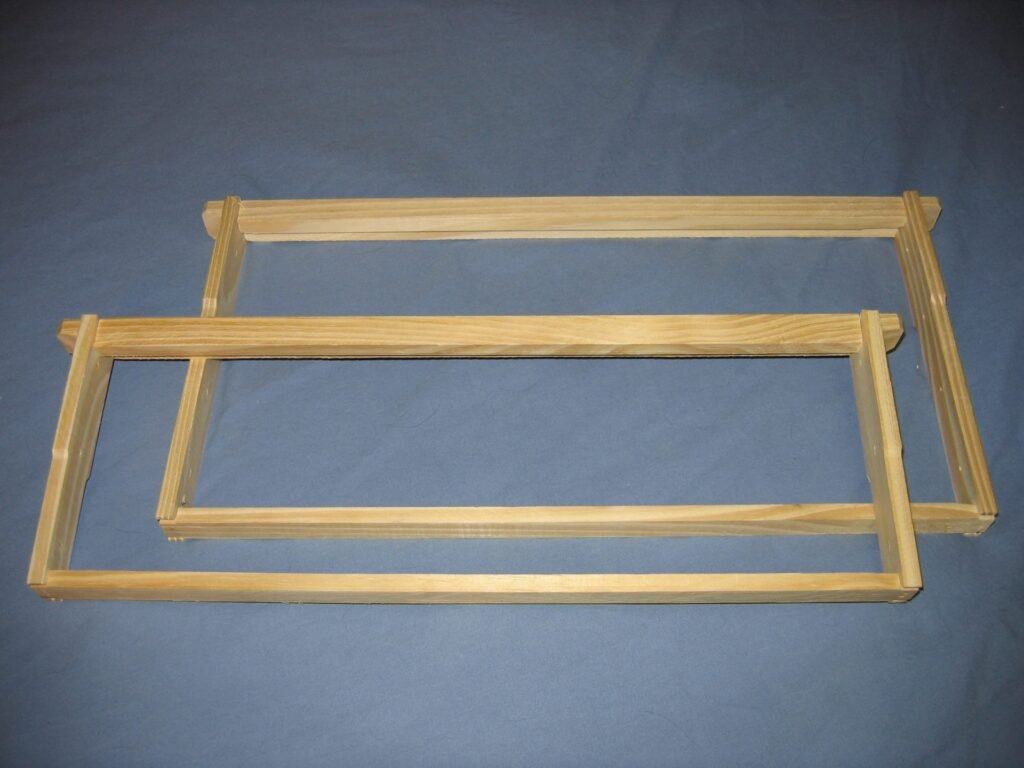
So 35 mm isn’t magic. It’s the tight end of what bees build naturally, and it leaves them no gap wide enough to fill with an extra comb. That’s why the full frame count, pushed tight, is the setting that produces straight comb.
The Box Math: Where the Extra Inch Goes
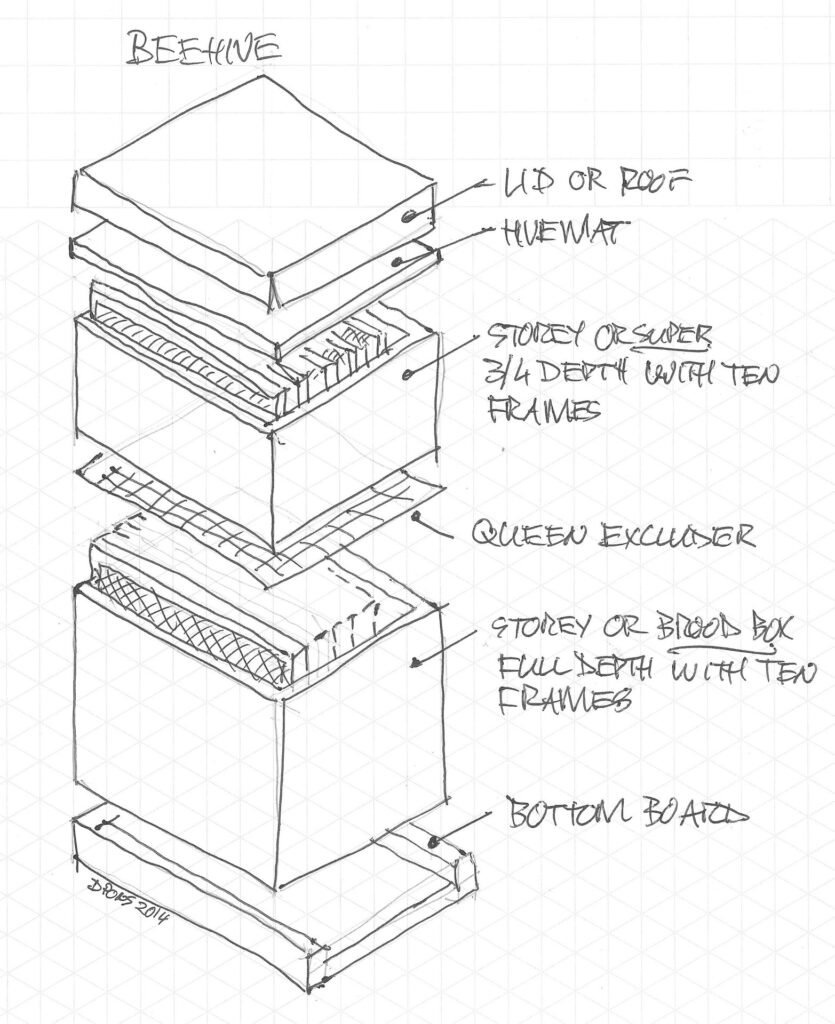
Standard boxes are built slightly wider than their frames, so the frames can slide. Charlotte Anderson’s Langstroth dimension reference gives an inside width of 14-3/4 inches for a 10-frame box and 12-1/2 inches for an 8-frame box.
- 10-frame box: 10 × 1-3/8 in = 13-3/4 in, which leaves about 1 inch of slack.
- 8-frame box: 8 × 1-3/8 in = 11 in, which leaves about 1-1/2 inches of slack.
Where that slack ends up matters. If frames are pushed together in the middle, you get two half-inch gaps against the walls. Bees tolerate those, though they may build a little burr comb on the outer faces. If the frames drift apart after inspections, the inch ends up spread between frames. You then get comb faces too far apart, and the bees fill the space. Pushing frames back together at the end of every inspection is the single most useful spacing habit. A hive tool against the outer frame, sliding the whole set together, takes five seconds.
Some beekeepers use the slack deliberately. Rusty Burlew of Honey Bee Suite runs nine frames in her brood boxes, pushed together in the center, and uses the extra space as working room during inspections:
“I find that ten frames in the brood box become so jammed I can’t easily do a hive inspection.”
Rusty Burlew, Honey Bee Suite
Note what that setup is: nine frames at 1-3/8-inch spacing with the gap at the ends. It is not nine frames spread evenly. Brood-nest spacing is unchanged. The same distinction trips up many new beekeepers.
Undrawn Frames: Always the Full Count
Whenever the bees are building new comb, give them the full frame count, pushed tight. Here’s why this matters so much.
On undrawn foundation, bees don’t measure from the sheet. They build out from their neighbors. At 1-3/8-inch spacing, each comb meets the bee space of the next comb just as it reaches full depth, so it stays flat. Spread nine sheets evenly and each comb has room to keep growing. The bees draw some areas fat, leave others thin, and join neighboring combs with bridges wherever the gap is widest. The result is comb you can’t swap between boxes and a super full of brace comb. That’s the pattern beekeepers report again and again after “trying nine” on new foundation.
The rule applies to supers too. Put ten frames of foundation in a new super, let the bees draw it, and only then decide whether to run that super at nine.
If your bees aren’t drawing the sheets at all, that’s a different problem. See when bees refuse to draw foundation.
Drawn Supers: When Nine Frames Makes Sense
Once supers hold fully drawn comb, spacing them wider has real advantages. Many honey producers run nine frames in a 10-frame super, and some run eight:
- Fatter combs: the bees extend honey cells beyond the edge of the frame wood, so an uncapping knife cuts cleanly without catching on wood.
- Fewer frames to handle: fewer frames to lift, uncap and extract, for roughly the same weight of honey.
- Less cost: nine or eight frames instead of ten per super.
Use a spacer, such as a nine-frame spacer rail or a castellated strip, so the spacing stays even. Frames spread by eye drift, and an uneven gap invites bridging. Keep wide spacing out of the brood nest. The queen won’t lay in thick honey comb, and a brood box of wide-spaced combs means more cells for honey and fewer for brood.
In eastern North Dakota and western Minnesota, one more practical note applies. Overwintered brood boxes should go into winter at the full count. A tight, compact brood nest is easier for the cluster to heat through a Red River Valley January, and there are no wide gaps between combs full of honey.
Foundationless Frames and Starter Strips
Without a full sheet, spacing is the main thing guiding the bees, so it has to be exact:
- Keep the full frame count and push the frames tight. Never spread foundationless frames.
- Place each blank frame between two straight drawn combs. The neighbors act as a template.
- Use a comb guide, such as a wax starter strip, a wedge top bar or a wooden guide, so the first cells start on the center line.
- Check every week while comb is being drawn. Nudge any comb that starts to wander back into line while it’s still soft.
Our guides to starter strips vs full sheets and what causes cross comb in foundationless hives cover the setup in more detail.
Level Matters as Much as Spacing
Bees build comb hanging straight down under gravity. If the hive leans to one side, each comb still hangs plumb, but the frames don’t. The comb drifts across the frame, touches the next frame at the bottom and gets attached to it. Correct spacing can’t fix that.
- Side to side: level. Check with a carpenter’s level across the top of the box, perpendicular to the frames.
- Front to back: a slight forward tilt helps rain drain out of the entrance. It doesn’t affect comb, because the tilt runs along the frames.
- Recheck in spring: frost heave shifts stands on clay soil, which is common across the Red River Valley. A stand that was level in October may not be in April.
See leveling a hive stand for a step-by-step method, and how to fix cross comb if the damage is already done.
For a sourced table of Langstroth frame dimensions by box depth, see our frame guide.
Frequently Asked Questions
What is the correct frame spacing in a Langstroth hive?
1-3/8 inches (35 mm) center to center, which standard frames give you automatically when pushed together. Use it in the brood nest and whenever bees are drawing new comb.
Can I put nine frames in a 10-frame brood box?
Yes, if the nine are pushed together at normal spacing with the extra room at the ends. Don’t spread nine frames evenly in a brood box, especially on foundation. That produces thick, uneven comb.
Should honey supers have nine or ten frames?
Ten while the bees are drawing new foundation. After the comb is fully drawn, nine evenly spaced frames make fatter combs that are easier to uncap. Use a spacer so the gaps are even.
Why do my bees build comb between the frames?
Usually because the frames have drifted apart, there are too few frames in the box, or the hive isn’t level side to side. Push the frames together, restore the full count and check level.
Is 1-1/2 inch spacing better for natural comb?
For honey comb, bees are happy with 1-1/2 inches or more. For brood comb, most European bees build nearer 1-3/8 inches or slightly less. Spacing brood frames at 1-1/2 inches tends to produce thicker, less regular combs. On foundationless frames it can also leave room for more drone comb.
Do frame spacers help get straight comb?
Standard self-spacing frames already set brood spacing, so spacers mainly help in supers, where they hold nine or eight drawn frames evenly. They don’t replace pushing frames together and keeping the hive level.
The Bottom Line
For straight comb, use the full frame count pushed tight at 1-3/8 inches, and keep the hive level side to side. Widen the spacing only in honey supers, only after the comb is drawn, and only with a spacer that keeps the gaps even. Most crooked comb comes from spreading frames too early, not from the frames themselves.