Saving a failing hive starts with an honest, frame-by-frame inspection. Look at queen presence, brood pattern, food stores and signs of disease or pests before you decide the next move.
You usually have three realistic choices: let the box end humanely, combine it with a stronger hive, or attempt revival after diagnosing the issue.
Set clear expectations: the aim is to evaluate the colony’s condition and pick the most effective course, not to apply random remedies that risk spreading disease.
Small populations often lack the workforce to defend, feed the queen, forage or rear brood. That reality guides whether interventions will work within the available time window.
Use data-driven thresholds like resource frames and mite counts. Align actions with your apiary strategy so help for one hive does not harm nearby colonies.
For more on strengthening colonies before winter, see this practical guide and expansion tips: winter hive care and apiary expansion advice.
Key Takeaways
- Inspect every frame for queen, brood, stores and disease before acting.
- Decide: end, combine or revive only after diagnosing the reason for decline.
- Small colonies may lack the workforce; some fixes need weeks to show results.
- Use measurable thresholds (frames, mite counts, pollen) to guide choices.
- Prioritize the health of the apiary over saving one hive at undue risk.
Table of Contents
- Diagnose the weak hive first: frame-by-frame inspection and red flags
- Decide your next step: save, combine, or humanely end the colony
- How to fix a weak beehive with proven, step-by-step actions
- Requeen with purpose: ensuring a laying queen and avoiding common pitfalls
- Combine colonies with caution to preserve bees without spreading problems
- Seasonal strategy in the U.S.: spring boosts, summer issues, fall prep, and winter survival
- Conclusion
- FAQ
Diagnose the weak hive first: frame-by-frame inspection and red flags
A careful frame-by-frame check gives the facts you need before any intervention. Start calmly, work methodically, and record observations for later comparison.
Queen status and brood pattern
Search each frame until you find the queen or confirm her absence. Note whether brood forms a tight worker pattern with eggs and larvae, or a scattered patch and many drones.
Population and resources
Estimate bees per frame and coverage across boxes. Check comb for capped honey and visible pollen bands; low nurse numbers or empty drawn comb often show workforce failure rather than a simple forage gap.
Disease and pests
Screen for varroa with a sugar shake or alcohol wash; aim for ≤2 mites per 100 bees. Look for sunken cappings, ropy brood, deformed wings, or foul odors—these signs change the decision tree and mean do not combine.
- Photograph and document brood, stores, and queen status each inspection.
- Make sure counts, weather, and mite results are logged for follow-up choices.
Decide your next step: save, combine, or humanely end the colony
Choose a clear path after a careful diagnosis: saving, combining, or ending a colony each carries risk and responsibility.
When not to save: signs of transmissible disease, severe mite‑vectored viruses, or American foulbrood mean do not combine. In these cases, ending the hive and sanitizing or burning equipment protects other hives. Even short of that worst case, moving a struggling colony away from the rest of the yard while you diagnose it can stop problems from spreading — see this guide on when to isolate a weak hive from the rest of the apiary for how to make that call.
Assess resources and timing honestly. If there are only a few weeks until winter, or the workforce is tiny, an excellent queen cannot reverse a dying colony without enough bees, drawn comb, and food.
Quick decision checklist
- Confirm the reason for decline before moving brood or bees.
- If disease or AFB is present, kill colony humanely and follow burn/sanitize rules.
- When saving, plan boosts (nurse bees, capped brood, feeding) and set checkpoints over several weeks.
| Action | When | Key steps | Risk to apiary |
|---|---|---|---|
| Save | Reason known, enough bees, weeks available | Feed, add brood frames, manage mites | Low if disease absent |
| Combine | Disease ruled out, strong host hive | Newspaper method, monitor queen acceptance | Moderate if screened |
| End | Transmissible disease or AFB | Humane kill, burn or sanitize equipment | Protects entire yard |
How to fix a weak beehive with proven, step-by-step actions
Start rebuilding by giving the colony clear, staged support that restores worker numbers and food stores.
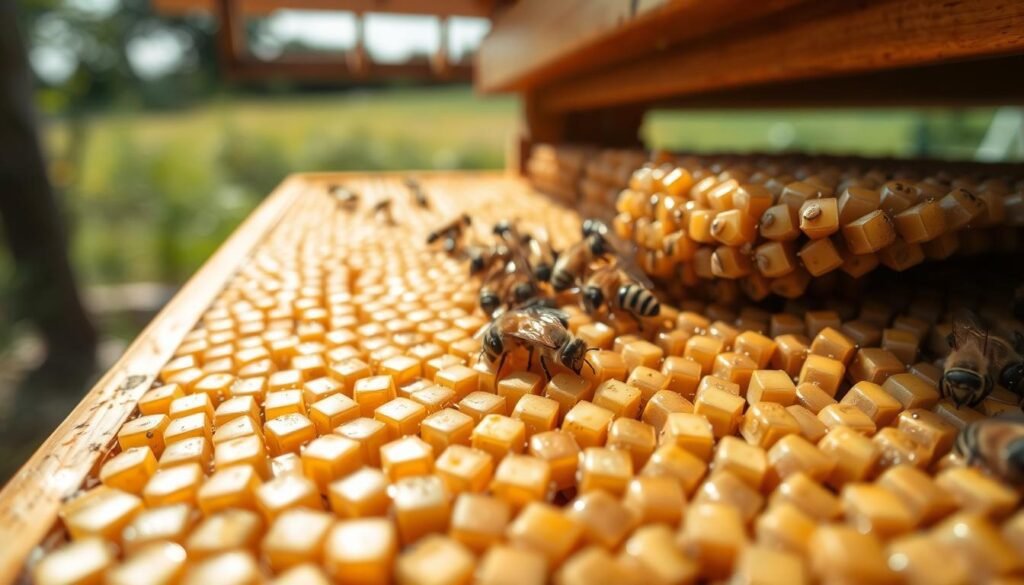
Add nurse bees safely
Place a single frame of uncapped brood in front of a strong hive and confirm the donor queen is not on that frame. Smoke the weak hive entrance gently. Shake the nurse bees from the frame in front of the weak hive so they walk in and blend with minimal fighting.
Feed for growth
Provide about 1/3 gallon of light syrup weekly when less than two frames of honey remain. Offer a pollen substitute patty (~1/4 lb) that the colony can eat in one week. Freeze any leftover patty overnight to kill small hive beetle eggs or larvae.
Control mites correctly
Test varroa and keep counts ≤2 mites per 100 bees. If counts exceed that threshold, treat with a season-appropriate product while considering brood status.
| Action | Detail | Timing |
|---|---|---|
| Add capped brood | One frame in center of bottom brood box; spray with sugar water + Honey B Healthy | Immediate |
| Shift nurse bees | Shake from uncapped brood frame in front of weak hive after smoking entrance | Same day |
| Feeding and supplements | Light syrup weekly; pollen substitute ~1/4 lb; consider SuperDFM and ProHealth | Continuous for 2-3 weeks |
Reassess after 2–3 weeks. If brood area and bee numbers do not expand and the queen is not laying aggressively, plan queen replacement or other next steps. For seasonal timing and related tasks, see seasonal beekeeping tasks.
Requeen with purpose: ensuring a laying queen and avoiding common pitfalls
A planned requeening can restore brood patterns if the underlying issue is a non‑laying queen. Just having a queen in the hive does not guarantee she is functioning. You may face a drone layer, an infertile queen, or laying workers.
Confirm the problem
Look for multiple eggs per cell, a shotgun brood pattern, or large patches of drone brood. These signs point to a faulty queen or laying workers rather than normal variation.
Steps and timing for requeening
Remove the old queen before introducing the new one. Have the replacement queen ready that same day to avoid an extended queenless period that spawns laying workers.
Use an indirect introduction method and resist disturbing the colony during acceptance. Allow up to one week to see eggs and early brood if weather and conditions are normal.
| Task | Action | Purpose |
|---|---|---|
| Verify issue | Inspect brood pattern and egg placement | Detect drone layer or laying workers |
| Remove old queen | Locate and extract before introducing new | Prevent extended queenless time |
| Introduce new queen | Indirect cage method; hold for days | Improve acceptance and queen laying |
| Support | Add capped brood frames and extra frames of stores | Provide workers and food while new queen ramps up |
Make a plan B. If acceptance fails, have another queen, a mated nuc, or a combine option ready. Treat requeening as one part of colony recovery that also needs bees, frames, and food.
Combine colonies with caution to preserve bees without spreading problems
Combining hives can save bees, but only when disease risk is ruled out first. Make sure the weak colony is free of brood disease, Nosema, and uncontrolled mite loads before any merge.

Newspaper method basics and quick checklist
The newspaper method slows integration and cuts fighting. Place one sheet between the boxes, align the entrances, and let scents blend as bees chew through.
Only combine when health checks and timing reduce risk to the apiary.
Remove the failing queen first. Do not move suspect frames; avoid transferring brood or honey if there is any doubt about disease.
- Align boxes and entrance positions so foragers can reorient with minimal drifting.
- Time the combine for fair weather and a nectar flow when possible.
- Provide open frames and a feeder on the receiving hive for stabilization.
- Inspect after several days for calm behavior and single-queen laying.
For a practical guide on assessing and attempting recovery before combining, see this short primer: try saving a failing colony.
Seasonal strategy in the U.S.: spring boosts, summer issues, fall prep, and winter survival
Seasonal planning keeps colonies resilient from spring buildup through winter survival. Start with simple spring actions: add capped brood and light feeding so population can expand and draw fresh comb without crowding.
Space, ventilation, entrance reduction, and resource balance
Spring: give room for brood and wax work. Use drawn frames to speed growth and avoid squeezing bees into too little space, which raises swarm risk.
Summer: monitor population, comb condition, and varroa. Maintain top ventilation and manage the entrance to cut robbing and keep the hive cool.
Fall and winter: build stores and a strong population weeks before cold sets in. Reduce entrances, minimize empty comb that small clusters cannot cover, and add emergency fondant or dry sugar on the top if weight looks low.
- Keep varroa under control all season—high mite loads late in the year prevent recovery.
- Provide at least two frames of honey in the brood box or feed small syrup amounts weekly.
- Limit pollen patties to what will be eaten in a week; freeze leftovers.
For detailed seasonal tasks and ventilation guidance, see seasonal management and a practical ventilation guide.
Conclusion
Successful recovery depends on practical steps and steady follow-up over several weeks. Start with accurate diagnosis, then add capped brood and nurse bees, feed measured syrup and a pollen patty, and keep mite counts low. These moves raise population and bring eggs and brood back on schedule.
If growth stalls after 2–3 weeks, requeen or use a nuc that offers a mated queen and capped brood. Maintain at least two frames of honey in the brood area and freeze leftover patties to reduce small hive beetle pressure at the top.
Document everything. Monitor frames, comb condition, entrance behavior, and honey intake. When disease is present, choose containment over rescue to protect the area and other hives. With clear checkpoints you give the colony the best chance of becoming a strong hive again.
FAQ
What are the first signs I should look for during a frame-by-frame inspection?
Check for a solid brood pattern with few empty cells, presence of eggs and young larvae, adequate bees per frame, and visible stores of honey and pollen. Look for spotty capped brood, lots of drone cells, foul odours, or dead bees at the entrance — these are red flags indicating queen issues, disease, or pests like Varroa mites.
How can I tell if the queen is failing or if laying workers are the problem?
A healthy queen produces tight worker brood in concentric patterns and lays eggs in single cells. A drone layer produces mostly drones; laying workers leave multiple eggs per cell and scattered brood. Inspect frames for eggs spaced evenly in the center and watch for consistent egg-laying over several frames and days.
What metrics define a low colony population and poor resource levels?
Estimate bees per frame — strong colonies cover 8–10 frames in a ten-frame hive during peak season. Weak colonies may cover 1–4. Check capped brood area, honey and pollen stores, and the amount of uncapped brood. Low stores plus low brood indicate urgent feeding and possible combination or requeening.
Which diseases and pests demand immediate action before attempting a save?
American foulbrood (AFB), high Varroa loads, nosema outbreaks, and severe virus symptoms require prompt measures. Confirm with lab tests or visible symptoms like sunken, perforated brood cappings or ropy larval remains. Do not combine hives if AFB or uncontrolled Varroa-vectored viruses are present.
When is it better to combine colonies rather than try to strengthen one?
Combine if the weak colony has a good queen or no queen problems, low foraging but no infectious disease, and you lack the weeks or resources to rebuild. Use the newspaper method if disease has been ruled out. Avoid combining when AFB or high mite loads exist.
What time of season offers the best chance to save a struggling colony?
Spring and early summer are ideal for rebuilding because forage improves and queens can ramp up egg production. Late fall and winter give little time; unless the hive has sufficient stores and a healthy brood pattern, consider humane euthanasia or combining with a strong colony.
How should I add nurse bees safely to boost brood rearing?
Transfer frames of capped (sealed) brood with their attendant nurse bees into the weak hive during calm weather; Mississippi State Extension notes that adding unsealed brood gains little because a weak colony lacks the nurse bees to care for it. For building a small but healthy colony before a flow, see how to grow a small colony before the flow. Gently shake excess bees from donor frames into the target hive entrance after lightly smoking the entrance. Avoid moving frames with pollen or honey that could trigger robbing.
What feeding regimen supports colony growth without causing harm?
Offer light sugar syrup (1:1) in spring for rapid brood rearing, and a pollen substitute or patty when natural pollen is scarce. Provide probiotics and essential oil blends formulated for apiculture to support gut health. Monitor consumption and stop heavy sugar feeding when nectar flow begins to prevent swarming.
What is an acceptable Varroa threshold before treatment is required?
Aim for ≤2 mites per 100 bees in spring and summer to protect brood health. Test using alcohol wash, sugar shake, or sticky boards. If counts exceed thresholds, apply approved miticides or integrated treatments following label directions, rotating methods to reduce resistance.
How do I requeen correctly to restore colony productivity?
Confirm queen failure first. Remove the old queen or queen cells if necessary, introduce a mated queen or a marked queen cell in an appropriate cage, and allow workers several days to accept her. Provide adequate space, food, and a low-stress environment so laying resumes and brood builds up.
What steps minimize disease spread when combining hives?
Only combine after ruling out AFB and severe Varroa. Use the newspaper method to allow gradual acceptance, and inspect both colonies beforehand. Reduce shared equipment, clean combs showing disease, and ensure the receiving colony has enough nurse bees and stores to support extra brood.
How should I adjust hive space, ventilation, and entrance size across seasons?
In spring, add frames and supers to prevent congestion and swarming. During summer, provide ventilation and water sources to manage heat. In fall, reduce entrance size to limit robbing and cold drafts, and ensure adequate stores and insulation for winter survival. Match space to colony population and local forage conditions.
What immediate actions help a colony months away from winter?
Boost brood by feeding light syrup and pollen substitute, control Varroa now, confirm queen vitality, and add frames of brood or nurse bees if available. Build up stores so the colony can thermoregulate and rear winter bees. Timing is critical; allow several weeks for population gains before frost.
Which resources and tools do experienced beekeepers recommend for diagnostics?
Use a clear hive inspection routine, alcohol wash kits for Varroa, a good quality smoker, hive tool, magnifier for brood checks, and record-keeping templates. Local extension services, University of California Cooperative Extension or the USDA resources provide regional disease diagnostics and treatment guidelines.
You can find more background in our guide to beekeeping mistakes that kill colonies: prevention guide.