Reviewed by Daniel M. · Last Updated September 23, 2026 · How we review
To clean an uncapping knife properly, wipe the wax and honey off while the blade is still warm. For an electric knife, do that between frames and again right after you unplug it. Then wash the blade with hot soapy water, keeping water well away from the handle, cord and thermostat on an electric model, and dry it completely before storage. Cold knives are simpler: they can go into a bucket of hot water during uncapping and be washed and dried like any good kitchen knife.
Most cleaning problems come from honey that has cooked onto a hot blade. The routines below follow manufacturer instructions and our own extraction days in eastern North Dakota.
Key Takeaways
- Clean warm, not hot or cold: residue hardens on a cold blade and burns on a very hot one.
- Never immerse an electric uncapping knife. Wash only the blade, unplugged.
- Wipe the blade with a damp cloth every few frames during uncapping. That stops honey caramelizing into black crust.
- Remove old crust with warmth, a plastic scraper and baking soda paste, not steel wool or oven cleaner.
- Dry fully before storage, and check the cord and plug before next season.
Table of Contents
Why Honey Burns Onto a Hot Knife
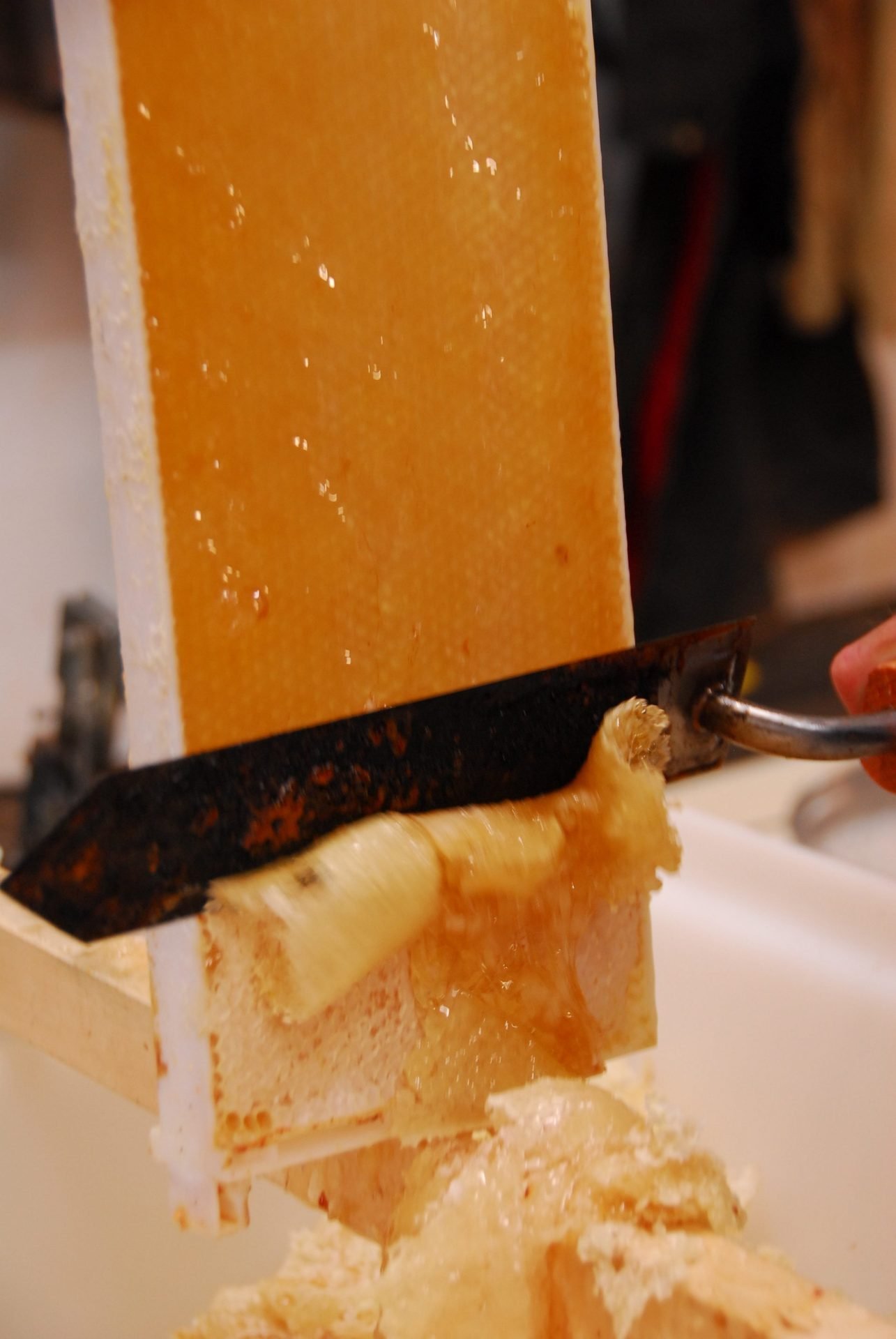
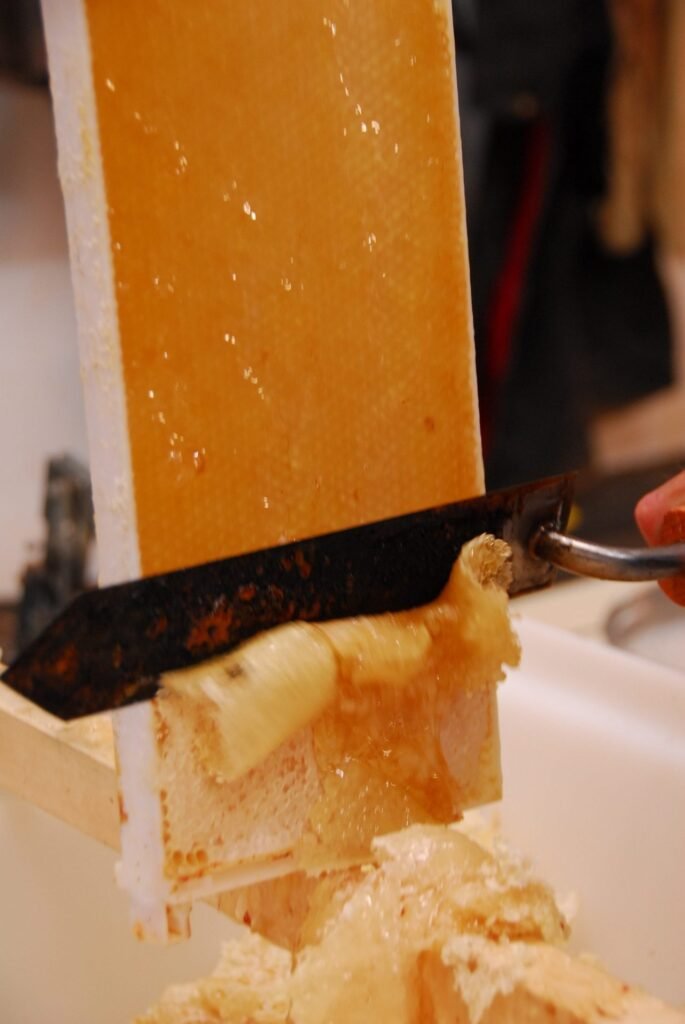
An electric uncapping knife works by heat, not sharpness. Mann Lake’s instructions for its 120-volt heated scraper list a sealed thermostat pre-calibrated to 350°F (±15°F), and other heated knives also run far hotter than wax needs. Beeswax melts at roughly 145°F, so the blade slides through cappings easily. Honey sugars left on a surface that hot darken and caramelize within minutes, however, leaving a black, glassy crust that grips the steel.
That crust drags on the comb, tears cells and flakes dark specks into your cappings. The same manufacturer’s advice puts it simply: “It is easier to clean a warm scraper than hot or cold,” and cleaning before and after each use avoids burning material onto the blade.
Cleaning an Electric (Heated) Uncapping Knife
During uncapping
- Keep a damp cloth or wet paper towel in a shallow dish beside the uncapping tank. Never keep the knife itself in water.
- Every few frames, or whenever you see honey pooling on the blade, wipe both faces and the edges in one pass. The water on the cloth flashes to steam and lifts sugar with it.
- Rest the knife on a heat-proof stand or the edge of the uncapping tank, blade down and off the honey.
When you finish
- Unplug the knife and let it cool for a few minutes, until it’s warm but no longer hot. Wax is still soft at this stage.
- Wipe off the bulk of wax and honey with a rag. Use a plastic or wooden scraper for anything stuck at the heel of the blade.
- Wash only the blade with a cloth dipped in hot, soapy water, holding the knife blade-down so water runs away from the handle. Don’t let water reach the handle, the cord entry or any thermostat housing.
- Rinse the blade with a clean damp cloth.
- Dry thoroughly with a towel, then leave it on the counter until it reaches room temperature before packing it away.
A steam-heated knife is cleaned the same way at the blade. Let the steam generator cool, then drain it according to its instructions.
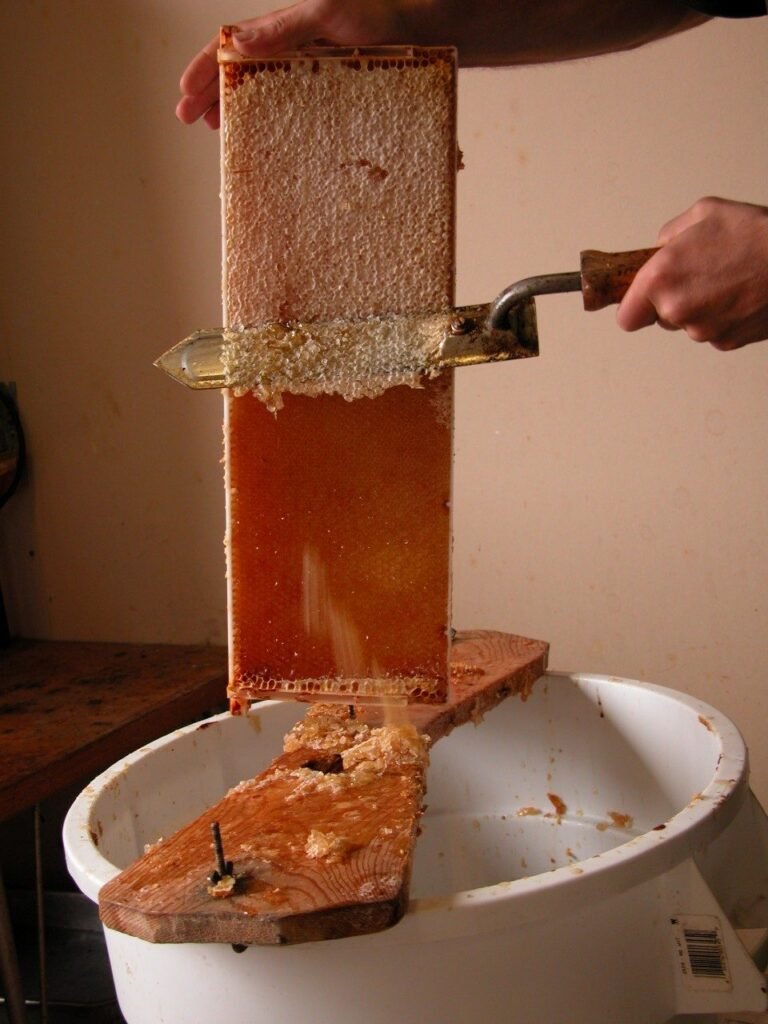
Cleaning a Cold Uncapping Knife
Cold knives are sharp, often serrated blades with no electrical parts, so they can be washed normally. Betterbee’s cold uncapping knife instructions recommend a bucket of hot water beside the uncapping station both to warm the knife and to clean it. They also suggest alternating two knives: one working while the other warms in the water.

After uncapping, wash the knife in hot soapy water, rinse and dry it immediately. Dishwashers are hard on wooden and some plastic handles, so hand-washing is safer unless the maker says otherwise. Never leave it hidden in a sink of soapy water where someone can grab the edge.
| Knife type | Can it be submerged? | Best cleaning moment | Main risk |
|---|---|---|---|
| Electric heated knife | No, wipe and wash the blade only | Warm, just after unplugging | Burnt-on honey; water in the element or thermostat |
| Steam-heated knife | No, wipe and wash the blade only | Warm, just after the steam is off | Scalds from steam and hot water |
| Cold knife | Yes (hand-wash preferred) | Anytime; hot water between frames | Cuts; rust on carbon-steel blades |
For how the three styles compare in use, see our guide to cold knives vs. heated knives vs. uncapping planes.
Removing Burnt-On Honey and Old Wax
If a knife was put away dirty or has built up a black crust over several seasons, work from gentlest to strongest:
- Warm it. Plug the knife in for a minute or two, or warm a cold knife in hot water, then unplug it. Wipe with a damp cloth.
- Soak the crust, not the knife. Lay a hot, wet cloth over the unplugged, cool blade for 10 to 15 minutes. Caramelized sugar is water-soluble, just slow to dissolve.
- Scrape with plastic or wood. A plastic pan scraper or a wooden craft stick removes softened crust without scratching the steel.
- Use a mild abrasive. A paste of baking soda and water, or a powdered stainless-steel cleaner used according to its label, removes stubborn stains. Rub along the blade, not across it, then rinse well.
Forums often suggest oven cleaner and steel wool. Both work, but oven cleaner is a caustic product on a honey-contact surface near an electrical fitting, and steel wool leaves scratches that trap honey next time. Save them for a knife you would otherwise throw away, and rinse thoroughly.
Mistakes That Ruin Uncapping Knives
- Dunking an electric knife in water, hot or cold. This is a shock hazard, and water in the element or thermostat is the usual reason heated knives stop working.
- Leaving it plugged in during breaks. Honey on an idle hot blade burns quickly.
- Prying frames with it. Manufacturers warn against using heated knives as a prying tool; use a hive tool.
- Storing it damp or sticky. Honey attracts moisture and pests.
If you uncapped frames from a colony later diagnosed with American foulbrood, the spores are in the honey and wax on your tools. Clean the knife meticulously and follow our guide to sanitizing extracting equipment after sick colonies for the rest of your gear.
Off-Season Storage
At season’s end, clean the knife fully and inspect it:
- Check the cord for cracks or heat damage and the plug for looseness. Replace, don’t tape.
- Dry the blade completely. A light wipe of food-grade mineral oil protects a carbon-steel cold knife; stainless usually needs nothing.
- Store it in a sleeve or box in a dry room, not a damp garage or honey house floor, along with your cappings scratcher and other uncapping tools.
For the rest of your gear, see cleaning and maintaining honey extractors and rendering cappings wax cleanly. If your knife is beyond saving, our uncapping knife buying guide covers replacements.
Frequently Asked Questions
Can I put an electric uncapping knife in water to clean it?
No. Manufacturer instructions for heated uncapping tools specifically say not to put the knife in water or other liquids because of shock risk. Wipe and wash only the blade, with the knife unplugged, and keep water away from the handle and cord.
Why does honey turn black on my hot knife?
Heated knives run far hotter than the roughly 145°F needed to melt beeswax; one manufacturer’s heated scraper is set at 350°F. Honey left on the blade caramelizes and then chars. Wiping the blade with a damp cloth every few frames prevents it.
Can an uncapping knife go in the dishwasher?
Never an electric or steam knife. A one-piece stainless cold knife may survive a dishwasher, but hand-washing is gentler on handles and edges, and wax residue can end up coating the dishwasher.
What is the best thing to remove burnt honey from an uncapping knife?
Warmth and a hot, wet cloth first, since caramelized sugar dissolves given time. Then a plastic scraper and, if needed, baking soda paste or a stainless-steel cleaning powder. Rinse well.
Does an electric uncapping knife need sharpening?
Rarely. Heated knives cut mainly with heat, so a clean blade matters more than a sharp one. Cold knives do rely on their edge and can be touched up with a knife sharpener suited to the blade type.
The Bottom Line
Clean an uncapping knife while it’s warm, wipe it often during use so honey never gets the chance to burn on, and keep water away from anything electrical. A knife cared for that way will outlast many seasons of extraction.