Reviewed by Thomas B. · How we review
Shared feeders are one of the most overlooked ways disease moves through an apiary. Any time bees from more than one colony feed from the same syrup, water, or pollen source, they can pick up and carry home more than just calories, and the effects are not always obvious right away.
The risk is not hypothetical. Nosema spores, several bee viruses, and even fungal spores can survive in syrup residue or on wet feeder surfaces long enough to infect the next colony that comes along to visit. Understanding exactly how this happens, and which habits actually reduce the risk, is a core part of basic, everyday apiary biosecurity.
This becomes especially important for beekeepers running more than one hive, hobbyists sharing equipment with a neighbor, or anyone using an open community-style feeder that any bee in the area can access. Even a well-run apiary can quietly develop a feeder-related problem if the equipment side of the routine gets less attention than the inspections themselves.
Key Takeaways
- Shared feeders let bees from different colonies contact the same contaminated surface or syrup.
- Nosema spores and several bee viruses can survive in syrup residue and on wet feeder parts.
- Open, community-style feeders carry more risk than a dedicated feeder assigned to one colony.
- Cleaning and disinfecting feeders between uses meaningfully lowers transmission risk.
- Watching for early signs of disease helps catch a feeder-related problem before it spreads apiary-wide.
Table of Contents
- How Shared Feeders Spread Disease Between Colonies
- Common Pathogens Linked to Shared Feeding Equipment
- How Long Pathogens Survive on Feeder Surfaces
- Feeder Types and Their Relative Risk
- Best Practices to Reduce Disease Spread
- Signs Your Apiary May Have a Feeder-Related Problem
- Conclusion
- FAQ
How Shared Feeders Spread Disease Between Colonies
A shared feeder works something like a public drinking fountain for bees. Every visiting bee leaves behind a small amount of whatever it’s carrying, and every bee that feeds afterward picks some of that up in turn.
Foraging bees from multiple hives, and sometimes from neighboring apiaries, will readily use the same syrup source if it is left in the open or positioned where more than one colony has easy access. This is especially common with community feeding stations set up during a nectar dearth, when many beekeepers in an area feed at once to help their colonies survive.
The basic mechanism is fairly straightforward: a bee carrying Nosema spores or a virus in its gut defecates or regurgitates trace amounts near the feeding surface. The next bee to visit, whether from the same hive or a different one, picks up that contamination along with its meal. Because bees also drift between nearby hives and rob weaker colonies, a single contaminated feeder can end up seeding disease across several colonies within days.
This risk connects closely to drifting between hives and feeding practices that avoid triggering robbing, since both drift and robbing behavior multiply the number of colonies exposed to whatever a shared feeder is carrying.
Common Pathogens Linked to Shared Feeding Equipment
Several of the pathogens beekeepers worry about most can survive in a feeder environment long enough to pose a real transmission risk.
- Nosema (apis and ceranae): These microsporidian parasites spread primarily through fecal contamination, and syrup left in a feeder that multiple colonies visit is an efficient way for spores to move between hives. See the differences between Nosema ceranae and Nosema apis for how each strain behaves.
- Viruses (DWV, IAPV, sacbrood): Several honeybee viruses can be present in trace amounts of regurgitated fluid, making shared feeding surfaces a plausible transmission route alongside the more commonly discussed Varroa mite vector.
- Chalkbrood spores: While chalkbrood is primarily a brood-stage fungal disease, spores can be tracked on the bodies of foraging bees and deposited at a shared feeding site.
- Foulbrood spores (less common but possible): American and European foulbrood spread mainly through robbing and contaminated equipment, but a heavily used communal feeder is not a location any cautious beekeeper wants near a suspect colony.
Beekeepers managing a possible Nosema problem often start with a simple diagnostic step; see how to test for Nosema spores at home before deciding on treatment with something like Fumagilin-B.
How Long Pathogens Survive on Feeder Surfaces
Not all contamination disappears once the last bee leaves for the day. How long a pathogen remains a threat depends heavily on the organism, the surface it lands on, and the local weather.
Nosema spores are notably hardy. They can persist for weeks in a shaded, damp environment, particularly inside a feeder with residual syrup that never fully dries out. Direct sunlight and dry conditions shorten spore viability considerably, which is one reason many beekeepers position feeders where they get some sun exposure rather than tucking them into permanently shaded corners.
Viruses tend to be more fragile outside a living host, degrading fairly quickly once exposed to air and light, but a feeder that stays wet and shielded from sun can still offer enough of a window for transmission between visits just hours apart. Fungal spores associated with chalkbrood are similarly persistent in damp, undisturbed material, which is part of why routine drying and airing out of feeder parts matters as much as the initial cleaning.
The practical takeaway is simple: a feeder that is rinsed but left wet and shaded retains more risk than one that is scrubbed, rinsed, and allowed to dry completely in the sun before its next use.
Feeder Types and Their Relative Risk
Not every feeder setup carries the same risk. The design and placement of a feeder has a direct effect on how many different colonies can access it.
Open Community Feeders
An open community feeder, often just a trough or open container of syrup set out for an entire apiary or neighborhood, is the highest-risk option. Any bee that finds it can feed there, meaning a single contaminated visitor can expose dozens of colonies in one afternoon.
Entrance and Boardman-Style Feeders
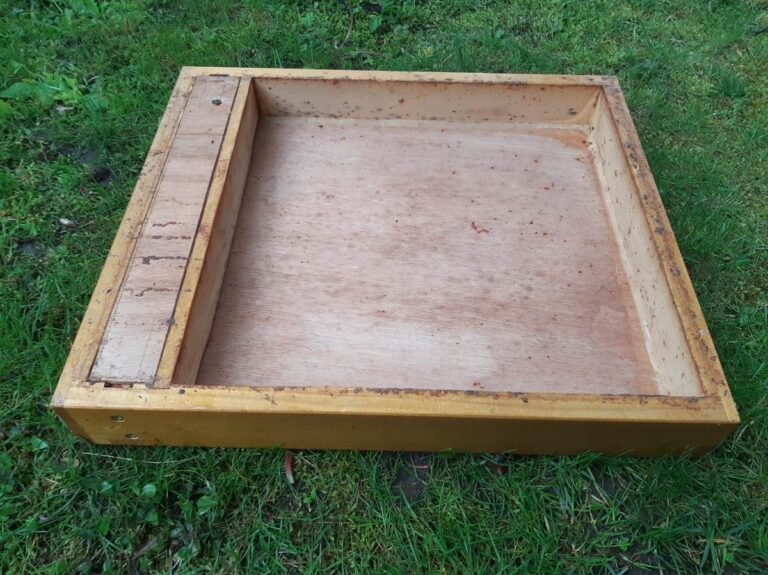
Feeders positioned at the hive entrance, like a Boardman feeder, sit in a spot other colonies’ foragers and robbers can more easily discover, particularly during a dearth when robbing pressure is high.
Internal Feeders (Frame, Top, and Hive-Top)
Frame feeders, top feeders, and other internal designs that sit inside the hive body are the lowest-risk option, since they are much harder for bees from another colony to access without triggering an active robbing event, which is usually noticed and stopped quickly. This is one reason many experienced beekeepers gradually shift toward internal feeders as their apiary grows, even though they can be slightly more involved to fill and inspect.
Best Practices to Reduce Disease Spread
A handful of consistent habits go a long way toward keeping feeder-related disease spread to a minimum, and none of them require expensive equipment or specialized training. Most beekeepers can build these into an existing feeding routine without adding much extra time.
- One feeder per colony: Assign each hive its own feeder rather than rotating a single feeder between colonies without cleaning it first.
- Clean and disinfect between uses: Rinse residual syrup and scrub feeders regularly; see this guide on cleaning feeders between bee colonies and a broader look at using a bleach solution for beekeeping equipment.
- Avoid open community feeding when possible: Feed colonies individually rather than setting out a shared trough, especially during a nectar dearth when robbing pressure is already elevated.
- Quarantine new or suspect colonies: Keep new packages, nucs, or any colony showing symptoms away from shared equipment; see how to quarantine a suspect diseased hive.
- Sanitize hive tools too: Feeders are not the only shared surface worth worrying about; see how to sanitize hive tools between colonies.
These habits fit naturally into a broader apiary biosecurity plan for small beekeepers, which covers feeder hygiene alongside other routine precautions.
Signs Your Apiary May Have a Feeder-Related Problem
Catching a problem early makes it far easier to contain, since disease that has already spread across several hives is much harder to manage than a single early case caught during a routine check. Watch for these warning signs after introducing or sharing feeding equipment:
- Dysentery symptoms: Streaking near the hive entrance can point to Nosema; compare against other causes with this guide on dysentery versus Nosema in bees.
- Sudden weakness in multiple colonies at once: If several hives in the same yard weaken around the same time, shared equipment is worth investigating as a common factor.
- Unusual robbing activity: A spike in fighting or robbing behavior at the entrance often coincides with elevated disease transmission risk.
- A failing or superseded queen soon after: Colony stress from disease sometimes shows up first as queen problems; see signs of a failing queen for what to look for.
Conclusion
Shared feeders absolutely can spread disease between colonies, and the risk is highest with open, communal setups. Assigning each hive its own feeder, cleaning equipment regularly, and avoiding open community feeding during high-risk periods are simple, low-cost habits that meaningfully cut that risk.
Combined with routine hive inspections and a basic quarantine protocol for new or suspect colonies, good feeder hygiene is one of the easier pieces of apiary biosecurity to get right, and one of the most overlooked by beekeepers just starting out. A few extra minutes spent rinsing and drying a feeder before the next fill is a small price to pay compared with treating an outbreak that has already spread across an entire apiary.
As with most biosecurity habits, consistency matters more than perfection. A beekeeper who cleans feeders most of the time will still be far better off than one who never does, and building the habit early makes it far easier to maintain once a colony count starts to grow.
FAQ
Can bees really catch diseases from a shared feeder?
Yes. Nosema spores and several bee viruses can survive in syrup residue or on wet feeder surfaces long enough for the next visiting bee to pick them up, especially at open or communal feeding stations.
Are entrance feeders like Boardman feeders riskier than internal feeders?
Generally yes. Feeders positioned at the hive entrance are easier for foragers and robbers from other colonies to discover, while internal feeders sitting inside the hive body are harder for outside bees to access without triggering a noticeable robbing event.
How often should feeders be cleaned to reduce disease risk?
Rinse and inspect feeders at every refill, and give them a full scrub with a mild bleach solution between uses or whenever switching a feeder from one colony to another.
Is it safe to use a community feeding station during a nectar dearth?
Open community feeders carry more risk than individual feeders because they concentrate bees from many colonies in one place. If a community feeder must be used, spacing it away from apiaries and monitoring for illness afterward helps limit the downside.
Can robbing spread the same diseases as shared feeders?
Yes. Robbing exposes a weaker colony directly to a stronger one’s stored resources and any pathogens they carry, and it often follows the same patterns of contamination as a shared feeder, just concentrated into a single aggressive event.
What is the single most effective habit for reducing feeder-related disease spread?
Assigning one feeder to one colony and cleaning it properly between fills addresses the majority of the risk, since it removes the shared-surface contact that lets pathogens move between hives in the first place.
Should new packages or nucs use a shared feeder with established colonies?
No. New colonies should be kept on their own dedicated feeder and ideally quarantined briefly until they show no signs of illness, since they may be carrying pathogens from their originating operation.
Does the type of syrup or feed used affect disease transmission risk?
The syrup itself is not usually the source of pathogens, but sugar water that sits too long can ferment or grow mold, and a fermenting feeder is more attractive to robbing bees, which indirectly raises transmission risk through increased contact between colonies.
Further Reading
Sources
For additional authoritative detail on this topic, see USDA APHIS’s National Honey Bee Surveys program.