Reviewed by Thomas B. · Last Updated September 27, 2026 · How we review
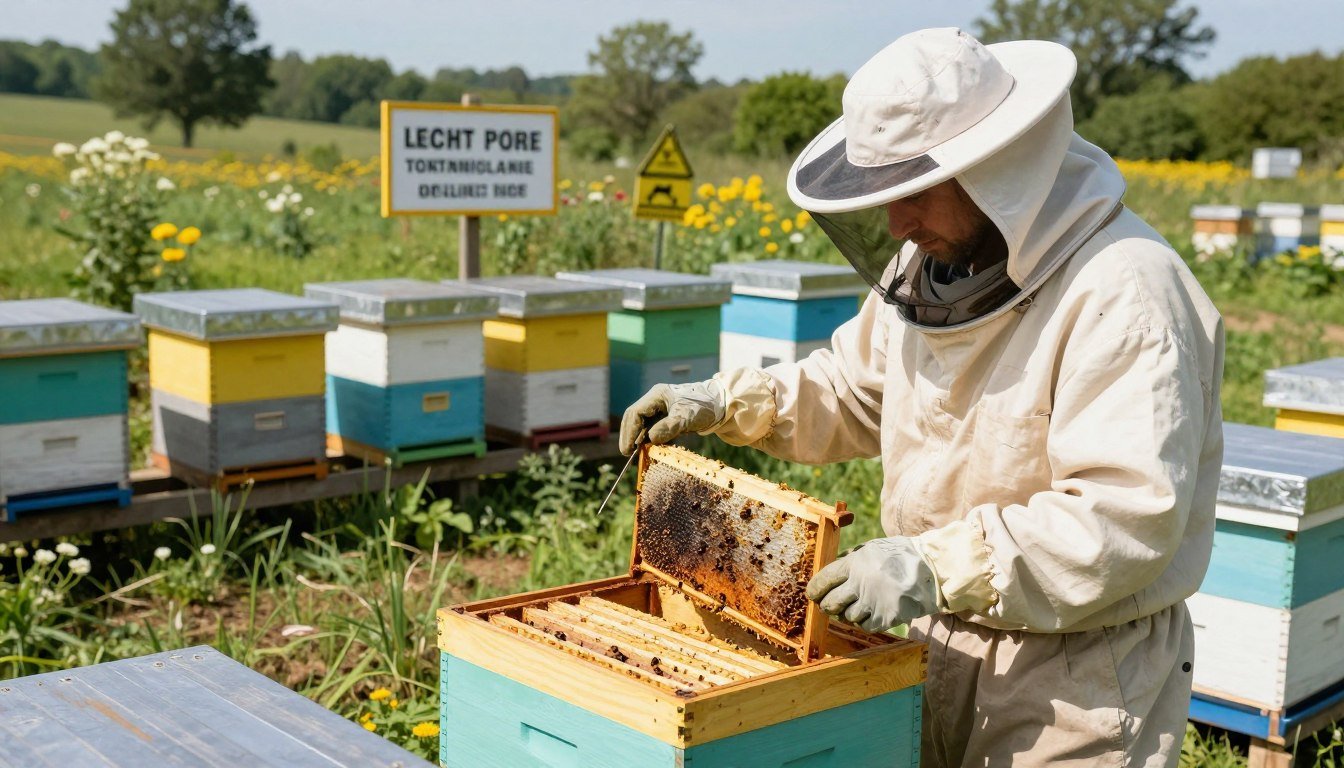
To quarantine a hive you suspect is diseased, isolate it where it stands. Reduce the entrance or fit a robbing screen, mark the hive, and stop every frame, box, tool and drop of honey from leaving it. Work it last, with its own tool and fresh gloves. Then confirm what you are dealing with within a few days: field tests, a free sample to the USDA Bee Research Laboratory, and a call to your state apiary program. The quarantine ends only when you know the diagnosis. The most common mistake is moving the suspect hive “out of the way,” which spreads the problem instead of containing it.
This guide covers a colony already in your apiary that shows possible disease signs. Isolating newly bought bees or swarms is a different job, covered in our guide to setting up a quarantine yard.
Key Takeaways
- Quarantine in place. Moving a suspect colony carries disease to a new site and leaves spores behind at the old one.
- Robbing is the main threat in the first days. A weakened, diseased colony is easy to rob, and robbers carry foulbrood to their own hives.
- Nothing leaves the hive until you have a diagnosis: no frames, supers, honey or feeders.
- The USDA-ARS Bee Research Laboratory in Beltsville, Maryland, diagnoses brood samples from U.S. beekeepers at no charge.
- What happens next depends on the diagnosis. Confirmed American foulbrood (AFB) usually means destroying the frames. European foulbrood (EFB) and other brood problems often don’t.
Table of Contents
Why You Quarantine in Place
Foulbrood moves between colonies in a few predictable ways. The Honey Bee Health Coalition’s guide for beekeepers and veterinarians lists them in one sentence:
“The spread of both AFB and EFB between colonies occurs when bees drift from infected colonies to healthy ones, when bees rob an infected colony that has weakened, or when beekeepers move infected equipment or honey.”
Each quarantine step targets one of those routes. Moving the hive helps with none of them. Foragers that return to the old spot drift into neighbouring hives. Spores stay in the soil, on the stand and in any comb debris left behind. The move puts a stressed, weakened colony into a new set of robbers. Unless your state apiary inspector tells you to move it, leave it where it is.
AFB is the reason to be strict. Its cause, Paenibacillus larvae, forms spores that the HBHC says can remain in equipment and honey for decades. EFB, caused by Melissococcus plutonius, doesn’t form spores, but it spreads through the same routes.
Step 1: Close Off Robbing and Drift
Do this the day you see the signs, before you close the hive.
- Reduce the entrance to one or two bee-widths, or fit a robbing screen. A weak colony can defend a small entrance. See our guide to robbing screens.
- Close every other gap: upper entrances, cracked boxes, a propped lid, a loose inner cover.
- Clean up every drip. Honey or wax scraps on the ground or the hive lid start robbing within minutes. Bag them and take them out of the yard.
- Stop open feeding anywhere in the yard. If the colony needs feed, use an internal feeder with plain sugar syrup.
- Don’t fully seal a living colony for days. Bees shut in without ventilation overheat and die, and a dead colony is harder to sample and easier to rob once it is opened.
- Mark the hive clearly so no one borrows from it. Our quarantine labeling system uses a two-layer label that stays readable.
If the colony is already dead or nearly dead, seal it completely and remove it from the yard to a bee-proof shed, as the UK National Bee Unit’s apiary hygiene fact sheet advises for any dead colony, so robbers can’t reach it. Leave the comb in place for sampling.
Step 2: Lock Down the Equipment
Until you know the diagnosis, treat everything that touched this hive as contaminated.
| Item | Quarantine rule |
|---|---|
| Frames and boxes | Stay on this hive. No swapping, no “borrowing” a frame of brood or honey. |
| Honey supers | Stay on or come off into sealed storage. Don’t extract with other honey. Don’t feed the honey to any colony. |
| Hive tool | Use a dedicated tool, then disinfect it at the AFB level (see our tool disinfection guide) |
| Gloves | Disposable nitrile, bagged and thrown away after each visit |
| Bee brush, frame grip | Keep with this hive or replace |
| Smoker | Fine to use; scrub the bellows before the next yard |
| Feeder | Stays with this hive |
Work the suspect hive last on every visit to the yard, and don’t visit another yard afterward on the same day if you can avoid it. If you already extracted supers from this colony, keep that honey separate and read our guide to sanitizing extractors after sick colonies.
Step 3: Confirm What You Are Dealing With
Sunken, greasy or perforated cappings and discolored larvae can come from AFB, EFB, sacbrood, parasitic mite syndrome, or even chilled brood. The HBHC guide recommends using several methods to confirm a diagnosis.
| Test | What it tells you | Notes |
|---|---|---|
| Rope (matchstick) test | Suspected AFB if the contents rope out more than about 2 cm (1 inch) | Use a cell with a gooey, not dried-out, larva. See our rope test guide. |
| Holst milk test | Suspected AFB if diluted skim milk clears within about 15 minutes | Cheap home test; supports but doesn’t replace a lab result |
| Lateral-flow field kit | AFB or EFB result in minutes | See our field test kit guide |
| Alcohol wash | Mite load; very high counts point to parasitic mite syndrome | Do it even if you suspect foulbrood |
| Lab diagnosis | Confirmed identification | USDA Beltsville lab, free for U.S. beekeepers |
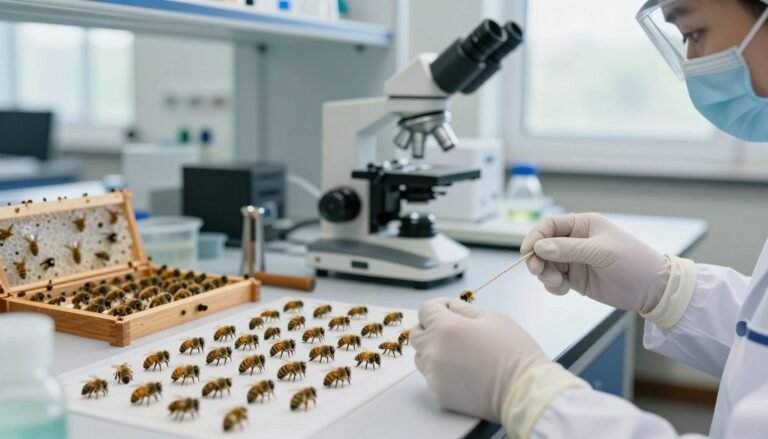
The USDA-ARS Bee Research Laboratory runs a free bee disease diagnosis service. According to its submission instructions, a brood comb sample should be at least 2 by 2 inches, contain as much of the dead or discolored brood as possible, and hold no honey. Send it in a paper bag or loosely wrapped in paper towel or newspaper, in a sturdy cardboard box. Don’t use plastic, aluminum foil or waxed paper, which the lab says promote decomposition and mold. If you can’t cut comb, the probe you used on a diseased larva can be wrapped in paper and mailed. Include a short description of the problem and your contact details. Our guide to collecting a bee disease sample walks through it.
For side-by-side field signs, see American vs. European foulbrood and our brood disease field signs.
Step 4: Report and Decide
The HBHC notes that AFB is a reportable disease in some states and advises contacting the state apiary inspector and following their instructions. In North Dakota, the Department of Agriculture’s Apiary Program offers free inspections. In Minnesota, the Department of Agriculture offers inspections for a fee. An inspector can confirm field signs and help you plan. Call before you destroy or move anything.
What happens next depends on the diagnosis:
- AFB confirmed. The HBHC guide says all brood and honey frames from colonies with confirmed AFB must be destroyed, by burning and burying where local rules allow, or by double-bagging for a landfill. Boxes, covers and bottom boards can be destroyed, or sterilized by scorching followed by hot-wax dipping, or by irradiation where a facility accepts bee equipment. Early in the season, and only where state rules allow, the adult bees may be shaken onto new foundation. Otherwise the colony is killed. Our guide to burning comb after AFB covers the practical side.
- EFB confirmed. The HBHC says colonies with EFB may recover on their own, and watchful waiting is an option. A shook swarm onto new comb is another. See whether a hive with EFB can be saved.
- Something else (sacbrood, chalkbrood, parasitic mite syndrome, chilled brood). Lift the quarantine and treat the actual cause. For mites, that means treating now.
About antibiotics. Since January 1, 2017, U.S. beekeepers need an order or prescription from a veterinarian to buy antibiotics for bees. Antibiotics don’t kill AFB spores and won’t save larvae that are already infected. They are not a substitute for quarantine or destroying infected comb. The details are in our guides to oxytetracycline for foulbrood and tylosin for AFB.
Step 5: Protect the Rest of the Yard
A diseased colony is rarely the only question in a yard. While you wait for results:
- Inspect every other colony in the yard. Shake the bees off the brood frames and look at every cell. Use clean tools and fresh gloves, and work from the strongest, healthiest-looking colonies toward the suspect one.
- Freeze equipment movement out of that yard. After confirmed AFB, the HBHC advises not using equipment from that yard elsewhere in your operation for one year.
- Record everything: which colony, what you saw, what you sent and when, and which other yards shared equipment with this one in the past season. Our disease log template has the fields.
- Keep checking. Recheck the whole yard every one to two weeks for at least a month. Spores or bacteria that reached other colonies won’t show up in their brood right away.
The broader rules for keeping disease in one yard are in our guide to preventing disease spread between apiaries.
Frequently Asked Questions
Should I move a suspected diseased hive away from my other hives?
No, unless an apiary inspector tells you to. Moving it sends returning foragers drifting into nearby hives, leaves contaminated debris behind, and exposes a weak colony to new robbers. Isolate it where it stands.
How long should a suspect hive stay in quarantine?
Until you have a diagnosis. If it turns out to be AFB, until the infected frames are destroyed and the rest of the yard has been rechecked. For EFB, until the brood has stayed clear for at least one full brood cycle.
Can I seal a diseased hive completely?
Only if the colony is dead or about to be euthanized. A living colony shut in for days without ventilation will overheat. Reduce the entrance or use a robbing screen instead.
Where can I get a bee disease sample tested for free?
The USDA-ARS Bee Research Laboratory in Beltsville, Maryland, diagnoses samples from U.S. beekeepers at no charge. In North Dakota, the Department of Agriculture’s Apiary Program also offers free inspections.
Can I use antibiotics on a colony with suspected foulbrood?
Only with a veterinarian’s order or prescription, and only as part of a plan that includes destroying infected comb for AFB. Antibiotics don’t kill AFB spores and can mask symptoms, which makes diagnosis harder.
Is honey from a quarantined hive safe to eat?
Foulbrood doesn’t harm people, but the honey can carry spores that infect other colonies. Never feed it to bees or leave it where bees can reach it, and ask your inspector before selling it.
The Bottom Line
Quarantine a suspect hive where it stands. Shut down robbing, keep every piece of equipment and every drop of honey with that hive, and get a diagnosis within days, not weeks. The diagnosis decides the rest. Until you have it, treat the hive as if it were AFB.