Reviewed by Thomas B. · Last Updated September 24, 2026 · How we review
Most problems you find in drone brood are one of three things: Varroa mites breeding in the capped drone cells, chalkbrood or chilling at the cool edge of the brood nest, or drone brood growing in worker cells because the queen has failed or workers have started laying. Only the first two are diseases or disorders of the brood itself. The third is a queen problem that looks like disease. Foulbrood and sacbrood can also show up in drone comb, and their signs are the same as in worker brood.
Drone brood is worth checking on purpose. Mites prefer it, and it usually sits at the edges of the nest where chilling and chalkbrood start. That often makes it the first place trouble shows. This guide covers what healthy drone brood looks like, the signs of each problem, and a quick way to check.
Key Takeaways
- Healthy drone brood has domed, bullet-shaped cappings in patches of larger drone cells, usually at the edges of frames. That is normal from spring through summer.
- Domed drone cappings scattered through flat worker brood mean a drone-laying queen or laying workers. That is a queen problem, not a disease.
- Varroa prefers drone brood. The UK National Bee Unit estimates drone cells attract about eight times more mites than worker cells, so uncapping drone pupae is an early warning.
- Chalkbrood hits drone brood hardest because it sits at the cooler edge of the nest. Look for white or gray mummies in drone cells and at the entrance.
- Sunken, dark, or perforated drone cappings need the same foulbrood checks as worker brood, including a rope test.
Table of Contents
- What Healthy Drone Brood Looks Like
- Drone Brood in Worker Cells: A Queen Problem, Not a Disease
- Varroa in Drone Brood
- Chalkbrood and Chilling at the Edge of the Nest
- Foulbrood, Sacbrood and Bald Brood in Drone Comb
- A Ten-Minute Drone Brood Check
- Frequently Asked Questions
What Healthy Drone Brood Looks Like
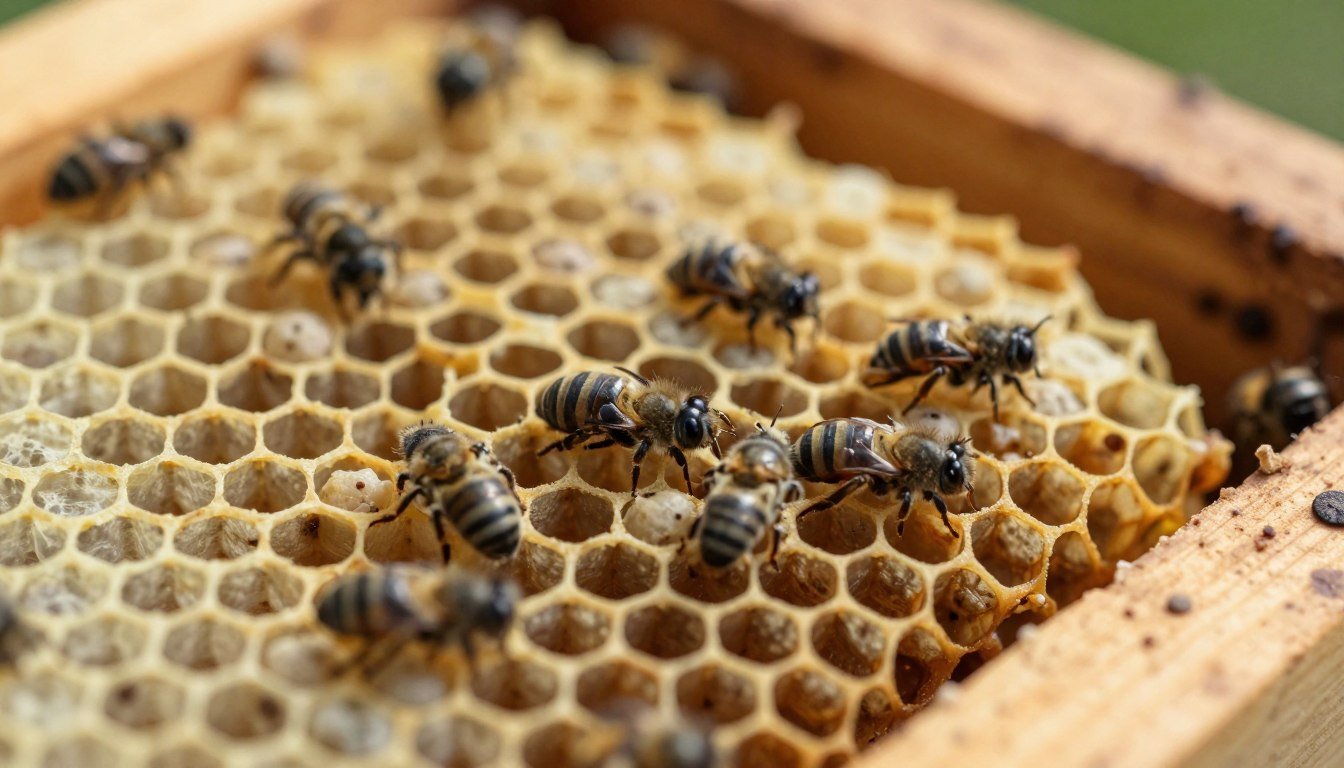
Drone cells are bigger than worker cells. When they are capped, the wax domes up into a rounded, bullet-like shape that stands clearly above the flat worker cappings around it. In a healthy colony, drone brood sits in patches of drone-sized comb, usually along the bottom and side edges of frames or on comb the bees built themselves. The UK National Bee Unit’s foulbrood and brood disorders leaflet notes that these domed cappings are present in virtually all colonies in summer.
Drones take about 24 days to develop from egg to adult, several days longer than workers. That longer time is why mites prefer them. In eastern North Dakota and western Minnesota, colonies usually start rearing drones in April or May as pollen comes in. Drone rearing then tapers off after the main flow, and in late summer workers start pushing drones out. Seeing a lot of drone brood in May is normal. Seeing none at all in June in a strong colony is unusual but not a disease.
| What you see in drone brood | Most likely cause | Disease? | Next step |
|---|---|---|---|
| Domed cappings in patches of large cells at frame edges | Normal drone rearing | No | Use it to sample for mites |
| Domed cappings scattered through worker comb, little or no worker brood | Drone-laying queen or laying workers | No, a queen problem | Check the eggs and look for the queen |
| Mites on pupae when uncapped; chewed or perforated cappings; bees with crumpled wings | Varroa, possibly with virus damage | Yes, a parasite plus viruses | Count mites; plan treatment |
| White, gray, or black hard mummies in drone cells, often at the edge of the nest | Chalkbrood | Yes, fungal | Improve colony strength and ventilation |
| Dead brood of all ages together at the outer edge after a cold snap | Chilled brood | No, a disorder | Shrink the space; avoid long cold inspections |
| Sunken, greasy, perforated cappings; brown remains that rope out | American foulbrood | Yes, bacterial and reportable | Stop moving frames; test and call your state |
| Lines of uncapped, healthy-looking pupae | Bald brood from wax moth tunneling | No, a pest disorder | Control wax moth; no brood treatment |
Drone Brood in Worker Cells: A Queen Problem, Not a Disease
The drone brood problem beekeepers ask about most often is not a disease at all. When a queen runs out of sperm, was poorly mated, or has been lost and replaced by laying workers, unfertilized eggs end up in worker-sized cells. Those larvae grow into drones that are too big for the cell. The workers cap them with the same domed cap they would use on drone comb, so you see bullet cappings scattered through the brood nest. The brood pattern is usually irregular, with capped pupae mixed in with empty cells and larvae of different ages.
There are two possible causes: a drone-laying queen or laying workers. Both causes are a sign that something has gone wrong with the queen.
To tell them apart, look at the eggs. A drone-laying queen still lays one egg per cell, centered at the base. Laying workers leave several eggs in a cell, often stuck to the walls, and there is no queen to find. Because the fix is completely different in each case, work through our detailed guides to diagnosing laying workers and finding a failing queen on the frames before you requeen. None of these colonies needs a disease treatment.
Varroa in Drone Brood
Varroa mites reproduce inside capped brood, and they strongly prefer drone cells. The National Bee Unit’s fact sheet on drone brood removal says drone brood attracts, on average, eight times more mites than worker brood. The reason is the longer capped period, which lets a female mite raise more daughters. That makes drone brood a useful early warning.
Signs of mite damage in drone brood
- Reddish-brown, oval mites on white pupae when you pull them out of the cell. White flecks on the cell walls are mite droppings.
- Perforated or chewed drone cappings, and pupae that the workers have pulled out partway.
- Drones emerging with crumpled or stubby wings and short abdomens. These point to deformed wing virus, which mites inject as they feed. See our guide to deformed wing virus signs.
- In advanced cases, parasitic mite syndrome. The brood pattern goes spotty, larvae look melted or sit oddly in their cells, and the adult population drops.
How to check with an uncapping fork
The National Bee Unit’s fact sheet on estimating Varroa populations describes the method:
- Choose sealed drone brood at the purple-eyed stage.
- Slide the uncapping fork under the cappings and lift the pupae out.
- Count the pupae that have mites on them.
The sheet says you need to sample about 300 drone pupae for an accurate estimate. It treats more than 5 mites per 100 drone pupae as needing urgent treatment and fewer than 3 as acceptable. Those are UK thresholds. US guidance from the Honey Bee Health Coalition bases treatment decisions on an alcohol wash of adult workers. So use the drone fork as a quick screen, and confirm with a wash before you treat. For timing, see our Varroa life cycle guide and seasonal treatment calendar.
Dead drone brood is not always a disease sign. If you use drone frames to trap mites, the brood you cut out or freeze is dead on purpose. Workers also pull drone larvae out when food runs short. Our guide to brood pattern collapse in a nectar dearth covers that.
Chalkbrood and Chilling at the Edge of the Nest
Chalkbrood is a fungal disease caused by Ascosphaera apis. Larvae swallow spores with their food, and the fungus grows best just below normal brood-nest temperature. Drone brood is especially exposed to that.
Drone brood appear to suffer more from chalkbrood, as they are at the periphery of the brood nest and more likely to become chilled.
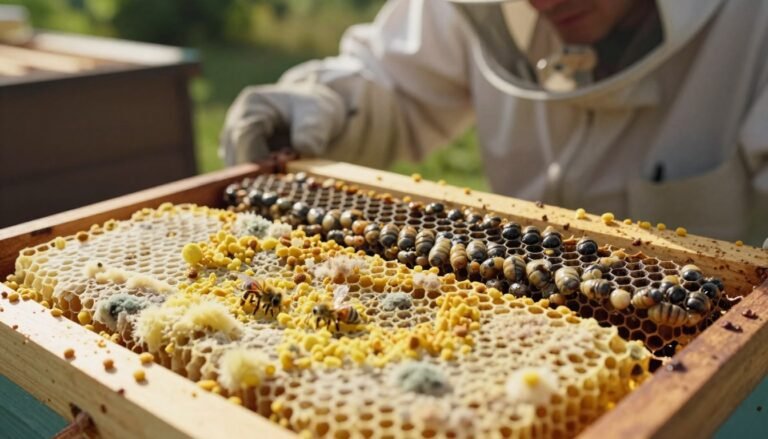
The USDA’s Bee Research Laboratory describes dead larvae as usually chalk white, sometimes mottled with brown or black, and found on the outer edges of the brood nest. In drone cells, look for hard, shrunken mummies that rattle when you tap the frame. You will also find them on the bottom board and at the entrance. The disease tends to flare in a cool, wet Red River Valley spring, when colonies are expanding faster than their bees can keep the edges warm. Our guides cover what works against chalkbrood and how to prevent it.
Chilled brood looks different. It is not a disease, and it kills brood of all ages together, usually on the outermost frames after a cold night or a long inspection in cold weather. The dead brood turns gray, then brown to black. There are no fungal mummies. Our guide to sacbrood vs chilled brood gives six checks to tell them apart.
Foulbrood, Sacbrood and Bald Brood in Drone Comb
Bacterial and viral brood diseases do not skip drone brood. The signs just appear on domed cappings instead of flat ones.
American foulbrood
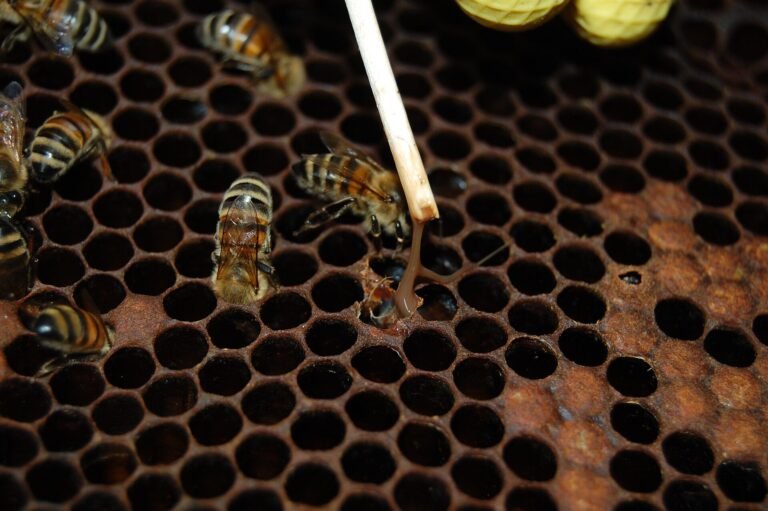
Look for drone cappings that sink, darken, look greasy, or have ragged holes, with coffee-brown remains underneath. A matchstick drawn slowly out of an affected cell pulls a brown thread. The National Bee Unit gives this rope as 10 to 30 mm long. Treat any positive result as suspected American foulbrood. Stop moving frames, and follow our step-by-step rope test guide and your state’s reporting rules.
European foulbrood and sacbrood
European foulbrood kills larvae mostly before they are capped. They look twisted, melted, and yellowish, and they don’t rope. Sacbrood kills larvae just after capping. The larva lifts out whole as a fluid-filled sac with a dark, raised head. Both look the same in drone cells as in worker cells.
Bald brood
Bald brood is pupae developing in cells with no caps. The pupae look plump and healthy. According to the National Bee Unit, it is not a disease. It is usually caused by wax moth larvae tunneling under the cappings, which leaves straight lines of bald cells across the frame. It can also happen when frames are pushed too close together and the bees uncap brood to make room. The brood normally emerges fine. Cells with ragged edges and chewed or discolored pupae are a different matter and point to disease or mites.
A Ten-Minute Drone Brood Check
Step 1: Note where the drone brood is
Drone brood in patches at the frame edges is normal. Drone brood scattered through the center of the worker nest means you need to check the queen.
Step 2: Check the eggs
One centered egg per cell means a queen is laying. Several eggs per cell, stuck to the walls, point to laying workers.
Step 3: Uncap purple-eyed drone pupae
Uncap a patch and count how many pupae have mites. If many do, run an alcohol wash the same day.
Step 4: Scan the edges and the bottom board
Look for chalk-white or black mummies, and for the gray-to-black dead brood that follows a cold snap.
Step 5: Look closely at any sunken or holed caps
Probe suspect cells with a disposable stick and burn it afterward. Anything that ropes needs a lab or inspector confirmation. Our guide to inspecting brood for disease without missing eggs covers the full frame-by-frame routine.
Frequently Asked Questions
Is a lot of drone brood a sign of disease?
No. Patches of drone brood at frame edges are normal in spring and summer. It is drone brood scattered through worker cells that signals a problem, and that problem is the queen or laying workers, not an infection.
Why do Varroa mites prefer drone brood?
Drone brood stays capped longer than worker brood, so a mite can raise more offspring in it. The National Bee Unit estimates drone brood attracts about eight times more mites than worker brood.
How many mites in drone brood is too many?
UK National Bee Unit guidance treats more than 5 mites per 100 drone pupae as urgent and under 3 as acceptable, based on about 300 pupae sampled. In the US, confirm with an alcohol wash of adult bees before you treat.
Why does chalkbrood show up in drone cells first?
Drone brood usually sits at the cooler edges of the brood nest. The chalkbrood fungus grows best in brood that is slightly chilled.
Can American foulbrood infect drone brood?
Yes. It shows up the same way as in worker brood: sunken, greasy, perforated cappings and brown remains that rope out. Treat any ropy drone cell as suspected foulbrood.
What does bald drone brood mean?
Uncapped but healthy-looking pupae, often in straight lines, usually mean wax moth larvae are tunneling under the cappings. It is not a disease, and the brood normally emerges.
The Bottom Line
Check drone brood on purpose at every spring and summer inspection. Where it is tells you about the queen. Mites on the pupae give you an early count before worker brood shows damage. Mummies at the edges point to chalkbrood or chilling. Any sunken, ropy cell calls for a foulbrood test before you move a single frame.