Reviewed by Thomas B. · Last Updated September 24, 2026 · How we review
The rope test is a quick field check for American foulbrood (AFB). Push a matchstick or toothpick into a capped brood cell with a sunken, dark, or perforated capping, stir the dead larva, and slowly pull the stick out. If the brown remains stretch into an elastic thread and then snap back, AFB is likely. The UK National Bee Unit gives that thread as 10 to 30 mm long. A positive result is strong evidence but not a diagnosis. Stop moving frames and equipment, get the sample confirmed, and contact your state apiary program.
This guide covers how to pick the right cell, how to do the test step by step, how long a positive rope really is (sources differ), what can fool you, and what North Dakota and Minnesota beekeepers are expected to do next.
Key Takeaways
- Test cells whose cappings are sunken, darkened, greasy, or perforated, and whose remains are still soft and brown. Fresh white larvae and dried scales both give false negatives.
- A positive AFB rope is coffee-brown and elastic, stretches roughly 1 to 3 cm, and snaps back. European foulbrood remains are watery and rarely rope.
- Use a stick you can burn, never your hive tool. Burn the stick afterward.
- Confirm with a lateral flow kit, a lab, or an inspector. Honey Bee Health Coalition guidance is to use more than one method.
- Antibiotics do not cure AFB. They need a veterinarian in the US, and they only mask symptoms. Burning infected colonies, done in coordination with your state program, is the standard response.
Table of Contents
- Which Cells to Test
- How to Do the Rope Test, Step by Step
- Reading the Result: How Long Is a Positive Rope?
- What Can Fool the Rope Test
- Confirming a Positive Result
- After a Positive: North Dakota and Minnesota Rules
- Frequently Asked Questions
Which Cells to Test
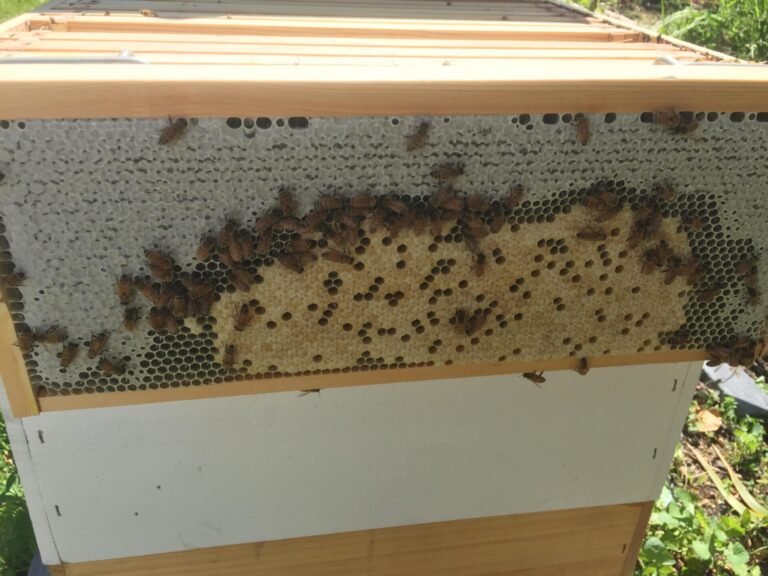
AFB is caused by the spore-forming bacterium Paenibacillus larvae. Young larvae pick up spores in their food, and the infection kills them after their cells are capped. That is why the warning signs are in the cappings. The National Bee Unit’s foulbrood advisory leaflet describes cappings that turn sunken and dark, sometimes moist or greasy-looking, with jagged, off-center holes where bees have tried to clear the cell. It warns that perforated cappings alone are not diagnostic, because sacbrood, European foulbrood, and parasitic mite syndrome can cause them too.
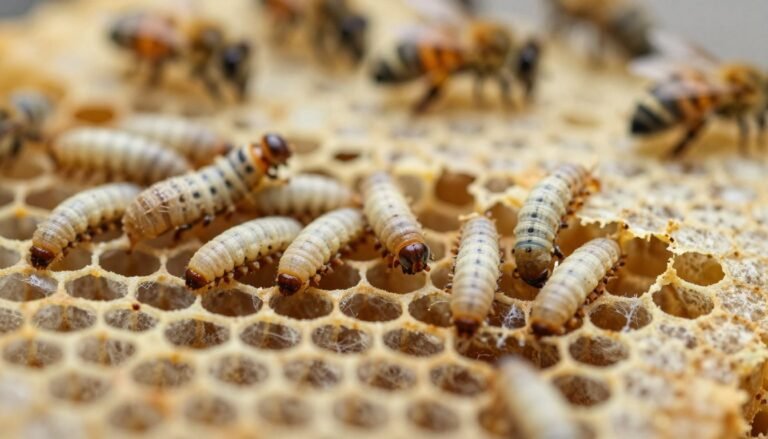
Pick a cell where the capping is sunken and discolored and the larva underneath has collapsed into a light-to-dark brown, slimy mass. The Honey Bee Health Coalition’s foulbrood guide puts it this way: choose a cell that looks infected but not dehydrated, where the remains are still gooey. Test several suspect cells, not just one.
You may also see a scale, which is the dried remains of a larva lying flat on the lower wall of the cell. AFB scales stick so tightly that bees cannot remove them. The USDA’s Diagnosis of Honey Bee Diseases handbook notes that a fine, threadlike tongue from a dead pupa sometimes sticks up from the scale. Scales are too dry to rope, but they are a strong sign on their own. Hold the frame with light coming over your shoulder to spot them.
How to Do the Rope Test, Step by Step
Step 1: Get a disposable probe
Use a wooden matchstick, toothpick, coffee stirrer, or clean twig. Never use your hive tool or a knife you will use on other colonies, because AFB spores survive for decades on equipment.
Step 2: Open the capping if needed
If the capping is intact but sunken, break it with the tip of the probe.
Step 3: Stir the remains
Push the stick into the dead larva and give it a gentle twist or two to catch the remains.
Step 4: Withdraw slowly
Pull the stick straight out slowly and steadily. Watch whether the remains come out as a thread and how far it stretches before it breaks or snaps back.
Step 5: Repeat in other cells
Test at least three suspect cells, with a fresh stick each time. One odd cell proves little. A consistent result across several cells is what counts.
Step 6: Contain everything
Put used sticks in a bag or straight into your smoker, and burn them. Close the colony, and do not move frames, honey, or bees out of it. Clean your gloves and tools before you open another hive. Our guide to disinfecting hive tools after AFB and EFB covers how.
For a demonstration, Oregon State University Extension has a short video, Spotting American Foulbrood in your bee colony, in which OSU Honey Bee Lab staff show AFB symptoms and a ropiness check on an infected frame.
Reading the Result: How Long Is a Positive Rope?
Most guides say “if it ropes, it’s AFB” and stop there. The major references actually give different lengths, which confuses new beekeepers.
| Source | What counts as positive for AFB | What they say about EFB |
|---|---|---|
| National Bee Unit (UK government) | A brown, mucus-like thread 10 to 30 mm long. Called a reliable test for AFB | Brown and sticky but cannot be drawn into a rope |
| Honey Bee Health Coalition (US) | Contents stretch up to about an inch (2.5 cm), then snap back | Dead larvae do not rope out |
| BeeAware (Australia) | A dark-brown thread 3 to 5 cm long | A short, usually under 1.5 cm, light gray mass |
| USDA Agriculture Handbook 690 | Soft, becoming sticky to ropy; coffee-brown | Watery; rarely sticky or ropy |
They agree on the pattern. An elastic, coffee-brown thread that springs back looks like AFB. A short, watery, grayish smear looks more like European foulbrood. Length alone does not settle it. By the National Bee Unit and Coalition figures, 1 to 3 cm is positive. BeeAware treats anything under 1.5 cm as more like EFB. So look at the color and elasticity as well, and always confirm. Timing matters too. AFB remains go through a ropy stage, then a tacky stage, and then dry into a scale, so the same colony can give a long rope in one cell and none in the next.
If a matchstick is inserted and slowly withdrawn into a cell with a dark, slimy looking cell capping, the remains can be drawn out in a brown, mucus-like thread or ‘rope’ 10-30 mm long (Figure 20). This is a reliable test for the presence of AFB.
What Can Fool the Rope Test
- Testing too early. A larva that has only just died may still be dull white and not ropy yet.
- Testing too late. Dried scales will not rope at all. Look for flat, tight scales instead.
- European foulbrood with secondary bacteria. BeeAware notes that EFB with the secondary bacterium Paenibacillus alvei can rope more than usual and look like AFB. Only a lab can reliably tell the two apart.
- Other brood problems. Sacbrood larvae lift out whole as a fluid-filled sac. Chalkbrood leaves hard mummies. Small hive beetle slime covers honey and pollen as well as brood. None of these rope like AFB. Our guide to what causes slimy brood covers the lookalikes.
- Relying on smell. Odor comes late and is unreliable. Our foulbrood smell guide explains why.
The Honey Bee Health Coalition warns that any of the three field methods can give false results: visual signs, the rope test, and a kit. It says to use more than one. For the full side-by-side, see American vs European foulbrood.
Confirming a Positive Result
- Lateral flow kit. These are antibody strip tests you can run in the field in a few minutes. Our guide to the Vita AFB/EFB field test kit explains how to read one.
- A lab sample. The Honey Bee Health Coalition says to cut out about 2 by 2 inches of comb containing the suspect cells, or coat a stick with the contents of several cells. Wrap the sample in paper, not plastic or foil. The USDA Bee Research Laboratory in Beltsville has long run a free diagnosis service. USDA plans to close the Beltsville campus (widely reported in 2026), so confirm it is still accepting samples before you ship. In North Dakota, the National Agricultural Genotyping Center in Fargo includes AFB in its PCR pathogen panel. Our guide to laboratory testing for bee diseases covers the options.
- An inspector. A trained apiary inspector can confirm in the field and advise on what comes next.
After a Positive: North Dakota and Minnesota Rules
North Dakota
Everyone who keeps bees in North Dakota must be licensed with the Department of Agriculture and register their apiary locations, according to the NDDA apiary program. Its inspectors check for American foulbrood. The state’s apiary rules (N.D. Admin. Code 7-02-02-00.2) say colonies with American foulbrood “must be treated with an approved antibiotic or destroyed.” Under the beekeeping chapter of the Century Code (4.1-16-15), the agriculture commissioner can also quarantine an area to control disease. Before you treat or destroy anything, call the NDDA apiary program. The rule’s antibiotic option now requires a veterinarian, as explained below.
Minnesota
Minnesota’s old apiary disease statute (Minnesota Statutes chapter 19) has been repealed. The Minnesota Department of Agriculture’s apiary program now offers fee-based inspections, mainly for beekeepers who move colonies across state lines. In practice that leaves the decision largely with you, along with the risk to every beekeeper within flight range. Call the MDA anyway if you want an inspection. If you move bees out of state, the destination state’s AFB rules apply.
Antibiotics are not a cure
It’s important to note that antibiotics do not treat AFB, but only mask the symptoms, and that antibiotics should only be used as a last resort for EFB.
Since January 1, 2017, the three antibiotics used against foulbrood in the US (oxytetracycline, tylosin, and lincomycin) have required a veterinarian’s feed directive or prescription. The Coalition’s guidance is to burn and bury infected colonies in coordination with state apiary officials and the local fire marshal. Kill the bees after dark, when the foragers are home. Burn frames, comb, and bees in a pit, then bury the ashes, and scorch scraped boxes. Shaking bees onto new foundation early in the season can be an alternative. Our guide to burning comb after American foulbrood goes through it. Then follow our guides to disinfecting wooden equipment, what to keep from a dead colony, and quarantining used equipment. For prevention, catching AFB early starts with a routine for inspecting brood for disease.
Frequently Asked Questions
How long should the rope be for American foulbrood?
The UK National Bee Unit gives 10 to 30 mm. The Honey Bee Health Coalition says up to about an inch before it snaps back. Australia’s BeeAware says 3 to 5 cm. Color and elasticity matter as much as length. Look for a coffee-brown thread that springs back.
Does a positive rope test prove my hive has AFB?
No. It is strong field evidence. European foulbrood with secondary bacteria can occasionally rope, so confirm with a kit, lab, or inspector before you destroy anything.
Can I use my hive tool for the rope test?
No. AFB spores survive on equipment for decades. Use a disposable stick and burn it afterward.
What if the dead brood is dry and will not rope?
It may have dried into a scale. Look for dark scales lying flat on the lower wall of the cell that bees cannot remove, and send a comb sample for testing.
Do I have to report American foulbrood in North Dakota?
North Dakota’s apiary rules say colonies with AFB must be treated with an approved antibiotic or destroyed. Beekeepers must be licensed and register their hives. Contact the NDDA apiary program as soon as you get a positive field test.
Can antibiotics save a hive with American foulbrood?
Not really. The Honey Bee Health Coalition says antibiotics only mask AFB symptoms, and spores remain in the comb. In the US they also require a veterinarian.
The Bottom Line
Pick a sunken, dark capping with soft brown remains. Stir with a stick you can burn and withdraw it slowly. If you get an elastic, coffee-brown thread that snaps back, treat the colony as AFB-positive: close it up, move nothing, confirm the result, and call your state program before deciding what to destroy.