Table of Contents
- What the Vita Test Kit Is
- How Lateral-Flow Testing Works
- Lateral-Flow Test vs. the Rope Test
- Step-by-Step Field Testing
- Reading and Interpreting Results
- Accuracy and Limitations
- What to Do After a Positive Result
- Cost and Practical Use Case
- Who Should Keep One On Hand
- Testing for EFB vs. AFB: Why It Matters
- Storage and Shelf Life of Test Kits
- Getting a Good Sample
- Disinfecting Tools Between Colonies When Testing Multiple Hives
- Building Testing Into a Commercial Biosecurity Protocol
- Understanding False Positives and False Negatives
- Using a Field Test to Teach Newer Beekeepers
- Keeping Records of Test Results
- Where to Buy and What to Check
- Common Mistakes
What the Vita Test Kit Is
The Vita test kit is a lateral-flow immunoassay device — the same underlying technology used in rapid home medical tests — designed to give a field-usable positive/negative result for American foulbrood (AFB) or European foulbrood (EFB) within minutes, without needing a lab submission. It works by detecting specific bacterial proteins from a brood sample rather than relying on the visual and smell-based cues the traditional rope test uses.
How Lateral-Flow Testing Works
A small sample of suspect larval or brood material is mixed with a provided extraction buffer, then applied to the test strip’s sample well — if target bacterial proteins are present, they bind to antibodies on the strip and produce a visible colored line, similar in principle to how a rapid antigen test works for other diseases. This antibody-based detection is more specific to the actual pathogen than the rope test’s reliance on visual and olfactory symptom recognition, which can be genuinely ambiguous in early-stage or atypical presentations.
Lateral-Flow Test vs. the Rope Test
| Factor | Vita Lateral-Flow Test | Rope Test |
|---|---|---|
| Basis | Antibody detection of bacterial proteins | Visual/olfactory symptom recognition |
| Cost per test | Per-strip cost, ongoing | Free (no materials needed) |
| Specificity | Higher — detects actual pathogen presence | Lower — can be ambiguous in early or atypical cases |
| Speed | Minutes | Immediate but interpretation-dependent |
The rope test remains a genuinely useful free, no-equipment first check, and many experienced beekeepers can identify classic AFB presentations reliably by rope test alone — the lateral-flow kit’s real value is in ambiguous cases where visual symptoms alone leave real doubt, or as a confirmatory second check before committing to antibiotic treatment or a destruction response.
Step-by-Step Field Testing
Follow the specific kit’s included instructions precisely, since exact sample preparation and buffer ratios affect result reliability, but the general process involves: collecting a small sample of suspect larval material, mixing it with the provided extraction buffer according to the kit’s specified ratio, then applying several drops of the mixed solution to the test strip’s sample well and waiting the specified development time (typically several minutes) before reading the result.
Reading and Interpreting Results
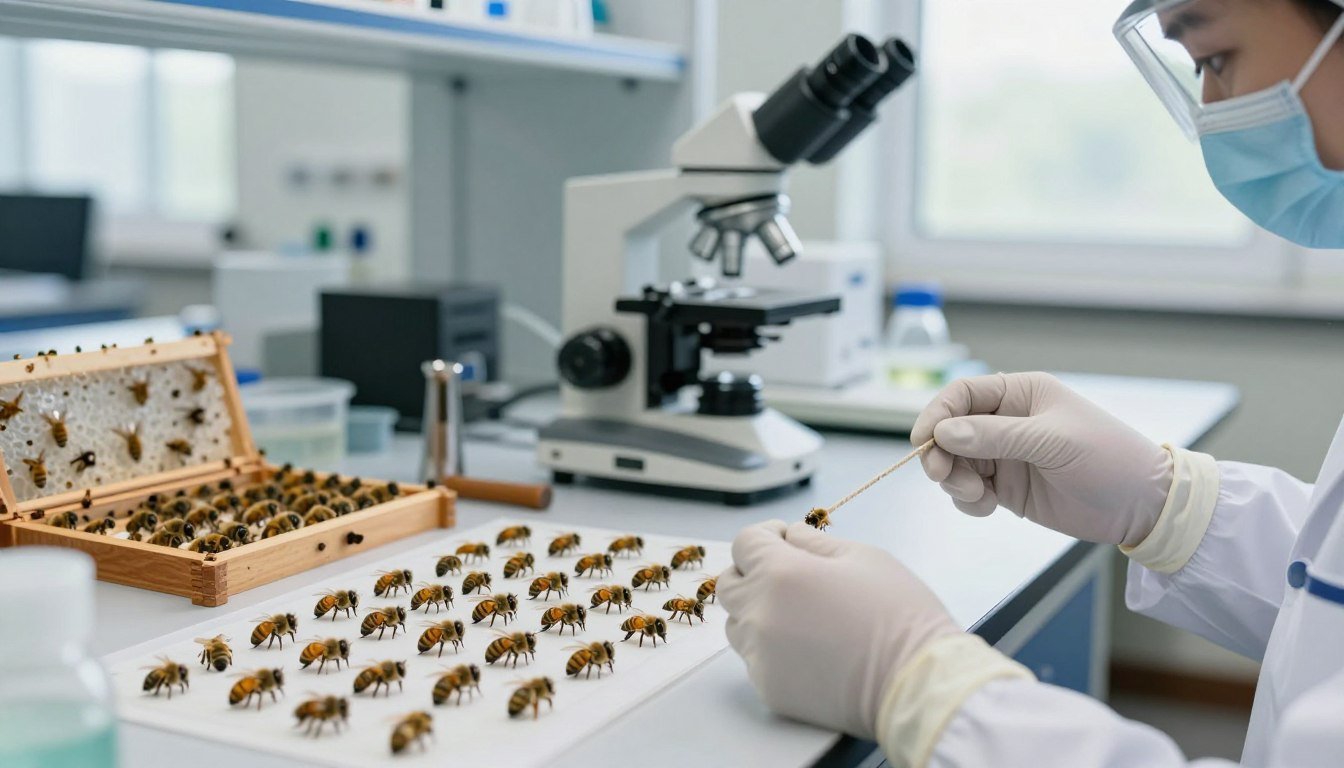
Like most lateral-flow tests, results are read as line patterns — a control line confirms the test ran correctly, and a second line’s presence or absence indicates a positive or negative result for the target pathogen, following the specific kit’s included reading guide. A test with no control line at all is invalid and should be discarded and repeated with a fresh strip, since it indicates a testing error rather than a genuine negative result.
Accuracy and Limitations
Lateral-flow tests are generally more specific than visual symptom assessment alone, but like any field test, they’re not a complete substitute for full laboratory confirmation in genuinely uncertain or high-stakes situations — a positive result from a reputable field kit is generally considered reliable enough to act on, but a lab submission remains the gold standard for definitive confirmation, especially for a first suspected case in a new apiary or before making major decisions like colony destruction.
What to Do After a Positive Result
A positive AFB result should be reported to your state apiarist’s office, as covered in our guides to Tylan and Terramycin antibiotic treatment, since AFB is a reportable disease in most U.S. states regardless of your chosen treatment path. Quarantine the affected colony immediately to prevent disease spread via drifting bees, robbing, or shared equipment while you determine next steps with your state apiarist and, if pursuing antibiotic suppression rather than destruction, your prescribing veterinarian.
Cost and Practical Use Case
Per-test cost is a real ongoing expense compared to the rope test’s zero material cost, which is why most beekeepers use lateral-flow kits selectively — for genuinely ambiguous cases, as a confirmatory check before major decisions, or as part of a more formal biosecurity protocol for commercial operations — rather than testing every routine inspection as a matter of course. For a hobbyist with one or two hives and no history of disease pressure, keeping a kit on hand for the rare ambiguous case is more practical than routine testing.
Who Should Keep One On Hand
Beekeepers in regions with documented AFB pressure, commercial operations wanting a more rigorous biosecurity protocol than visual inspection alone, and anyone who has previously dealt with a genuinely ambiguous brood-disease presentation are the clearest candidates for keeping a lateral-flow kit in their toolkit. A beginner with a small, disease-free apiary can reasonably rely on the free rope test and routine visual inspection, adding a lateral-flow kit later if a genuinely uncertain case arises.
Testing for EFB vs. AFB: Why It Matters
Because AFB and European foulbrood call for genuinely different management responses — EFB is often manageable through requeening and colony strengthening without antibiotics, while AFB more often warrants antibiotic suppression or destruction depending on severity — correctly distinguishing between the two matters practically, not just academically. Some lateral-flow kits test for both pathogens with separate strips or a combination device; confirm exactly what your specific kit tests for before relying on a negative result to rule out the disease you’re actually concerned about, since a kit testing only for AFB tells you nothing about EFB status.
Storage and Shelf Life of Test Kits
Store unused test strips according to the manufacturer’s specified temperature range and away from humidity, since lateral-flow test components can degrade under poor storage conditions in ways that compromise result reliability without any obvious visible sign. Check the expiration date before using a kit that’s been sitting in storage for a while, particularly if you don’t test frequently enough to cycle through kits before they expire — an expired or improperly stored kit can produce an unreliable result while still appearing to function normally.
Getting a Good Sample
Collect sample material from larvae showing actual symptoms — discolored, sunken, or otherwise abnormal-looking brood — rather than randomly sampling healthy-looking cells, since testing asymptomatic brood provides little useful information regardless of test type. If multiple frames show suspect symptoms, sampling from the frame with the most pronounced or numerous symptomatic cells generally gives the clearest result, since a very early-stage or extremely mild case can sometimes produce a weaker, harder-to-read signal even with a genuinely present infection.
Disinfecting Tools Between Colonies When Testing Multiple Hives
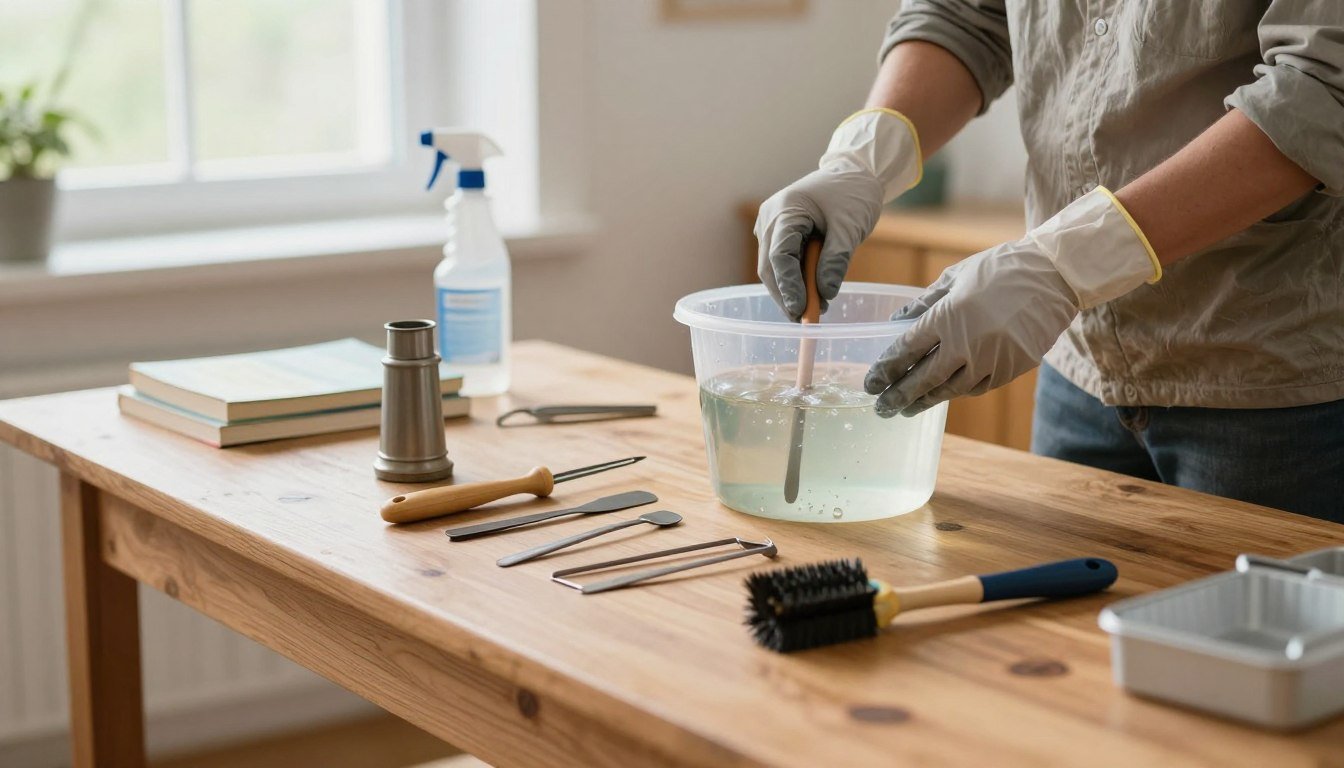
If testing multiple colonies during the same apiary visit, disinfect your hive tool and any reusable sampling implements between colonies, since spreading contaminated material between hives during your own inspection and sampling process would defeat the purpose of testing for disease control in the first place. Use single-use sample collection materials where practical, and follow the same tool-disinfection practices covered in our broader disease-prevention guidance for any inspection involving suspect disease symptoms.
Building Testing Into a Commercial Biosecurity Protocol
Larger operations managing multiple yards benefit from a documented, systematic testing protocol rather than ad-hoc testing only when symptoms are already obvious — some commercial beekeepers build periodic lateral-flow testing into routine seasonal inspections, particularly for yards with any disease history, treating it as a standard biosecurity input rather than an emergency-only tool. This is a genuinely different use pattern than a hobbyist keeping one kit on hand for rare ambiguous cases, and the ongoing per-test cost is easier to justify at commercial scale where a genuine outbreak’s cost (lost colonies, quarantine disruption, treatment expense) is correspondingly larger.
Understanding False Positives and False Negatives
No field test is perfectly infallible — a false positive can occur from sample contamination or a testing error, while a false negative can occur from an inadequate sample size, an extremely early-stage infection with low bacterial protein concentration, or a degraded/expired test strip. If a result seems inconsistent with what you’re visually observing in the colony (a strong positive test but no visible symptoms at all, or a negative result despite classic AFB symptoms), consider retesting with a fresh kit or pursuing lab confirmation rather than accepting an inconsistent result at face value.
Using a Field Test to Teach Newer Beekeepers
Because a lateral-flow result gives a clearer, less subjective outcome than judging rope-test stringiness or symptom appearance, some experienced beekeepers use a field test kit as a teaching tool alongside the rope test when training newer beekeepers to recognize foulbrood — pairing the objective test result with the visual/olfactory symptoms helps a beginner build genuine pattern recognition for future field diagnosis, rather than relying solely on test kits going forward.
Keeping Records of Test Results
Log every test performed — date, colony, sample source, result, and any follow-up action taken — regardless of whether the result is positive or negative, since this record becomes valuable if a pattern emerges across seasons or if you ever need to demonstrate a documented biosecurity history to a state inspector or when selling colonies or equipment. A simple spreadsheet or notebook entry takes little time and provides real value well beyond the immediate testing decision.
Where to Buy and What to Check
Purchase test kits from reputable beekeeping supply retailers rather than an unverified third-party source, and check the manufacturing and expiration dates on arrival rather than assuming fresh stock — a kit that’s been sitting in a warehouse or shipping container for an extended period, especially through temperature extremes, may already have reduced shelf life remaining by the time it reaches you.
Common Mistakes
Not following the kit’s specific sample-preparation ratios precisely, using guesswork instead of the included instructions, is the most common source of unreliable results. Treating a negative field test result as a guarantee the colony is disease-free, when a single ambiguous or borderline case might warrant lab confirmation instead, overstates the field test’s certainty. Using an expired kit, or one stored outside its specified temperature range, without checking the expiration date risks an unreliable result presented with false confidence.
Sources
Lateral-flow immunoassay mechanism and testing procedure reflect publicly available manufacturer documentation for commercial AFB/EFB field test kits, alongside general USDA/university extension guidance on American and European foulbrood diagnosis. For current, authoritative detail, see USDA APHIS’s National Honey Bee Surveys program.
FAQ
Is a lateral-flow test more accurate than the rope test?
Generally more specific, since it detects actual bacterial proteins rather than relying on visual/olfactory symptom recognition, which can be ambiguous in early-stage or atypical presentations — though a full lab submission remains the gold standard for definitive confirmation.
What should I do if my field test comes back positive?
Quarantine the colony immediately and report it to your state apiarist’s office, since AFB is a reportable disease in most U.S. states — then determine next steps (antibiotic suppression under veterinary guidance, or destruction) based on severity and your state’s guidance.
Do I need a lateral-flow kit if I can already do a rope test?
Not necessarily for routine use — the rope test remains a useful free first check for classic presentations; the field kit’s real value is for genuinely ambiguous cases or as a confirmatory check before major treatment decisions.
What does an invalid test result mean?
A missing control line means the test didn’t run correctly and should be discarded and repeated with a fresh strip — it doesn’t indicate a genuine negative result.
Can one kit test for both AFB and EFB?
Some kits offer separate strips or a combination device for both, but confirm exactly what your specific kit tests for — a negative result on an AFB-only test tells you nothing about EFB status.
How long do lateral-flow test kits stay usable?
Check the manufacturer’s printed expiration date and specified storage temperature range — an expired or improperly stored kit can produce an unreliable result while still appearing to function normally, so don’t rely on an old kit without checking these first.